How to Organize Cleaning Supplies So Cleaning Takes Less Time
There are some days when cleaning feels harder than the actual mess.
You notice fingerprints on the bathroom mirror—but the glass cleaner is downstairs.
There are crumbs under the kitchen table—but the broom is in the garage.
Something spills upstairs, and suddenly cleaning it means walking through the house looking for the right spray, cloth, or brush.
None of these things takes very long to clean.
Finding what you need is what makes cleaning feel like a bigger job.
A simpler cleaning routine starts by changing where your supplies live.
Instead of storing every cleaning product together because that's where cleaning supplies are "supposed" to go, keep the things you use most often close to the places where you actually use them.
It's a small shift, but it removes unnecessary steps from everyday cleaning.
And when cleaning becomes easier to start, it's usually easier to keep up with too.
Why Cleaning Supplies Become So Hard to Manage
Most homes accumulate cleaning products gradually.
A bottle gets tucked under the kitchen sink. Another ends up in the laundry room. Extra sprays collect in a closet. Specialty cleaners get pushed behind things we use more often.
Before long, we have plenty of cleaning supplies—but not necessarily a system for using them.
The problem usually isn't that you need better storage.
It's that the supplies aren't living where your routines happen.
When every small cleaning task requires gathering supplies from somewhere else, we naturally put more of those tasks off until later.
Instead, think about cleaning supplies as part of the room they support.
The goal isn't to create a perfectly organized collection of bottles.
The goal is to make everyday cleaning take less effort.
1. Start With the Cleaning Tasks You Actually Do
Before reorganizing anything, pay attention to how you really clean your home.
Not how you think you should clean.
Think about the little jobs that happen over and over again.
Wiping the kitchen counters.
Cleaning a bathroom mirror.
Quickly wiping down a sink.
Cleaning the dining table after dinner.
Sweeping crumbs from the kitchen floor.
Wiping muddy paw prints near an entry.
These repetitive tasks are the best place to start because they're where a simple system can save you time every single week.
For each space, ask:
What do I reach for most often when I clean this room?
Those are the supplies that deserve the easiest-to-reach homes.
2. Keep Everyday Supplies Near Where You Use Them
This is the biggest change you can make.
Instead of creating one central location for every cleaning product in the house, create small cleaning zones near the places where cleaning actually happens.
That doesn't mean filling every room with cleaning products.
It means strategically placing a few frequently used essentials where they remove an extra step from your routine.
In the kitchen
You might keep:
an everyday surface cleaner
a few microfiber cloths
dish soap
a scrub brush
dishwasher supplies
In the bathrooms
You might keep:
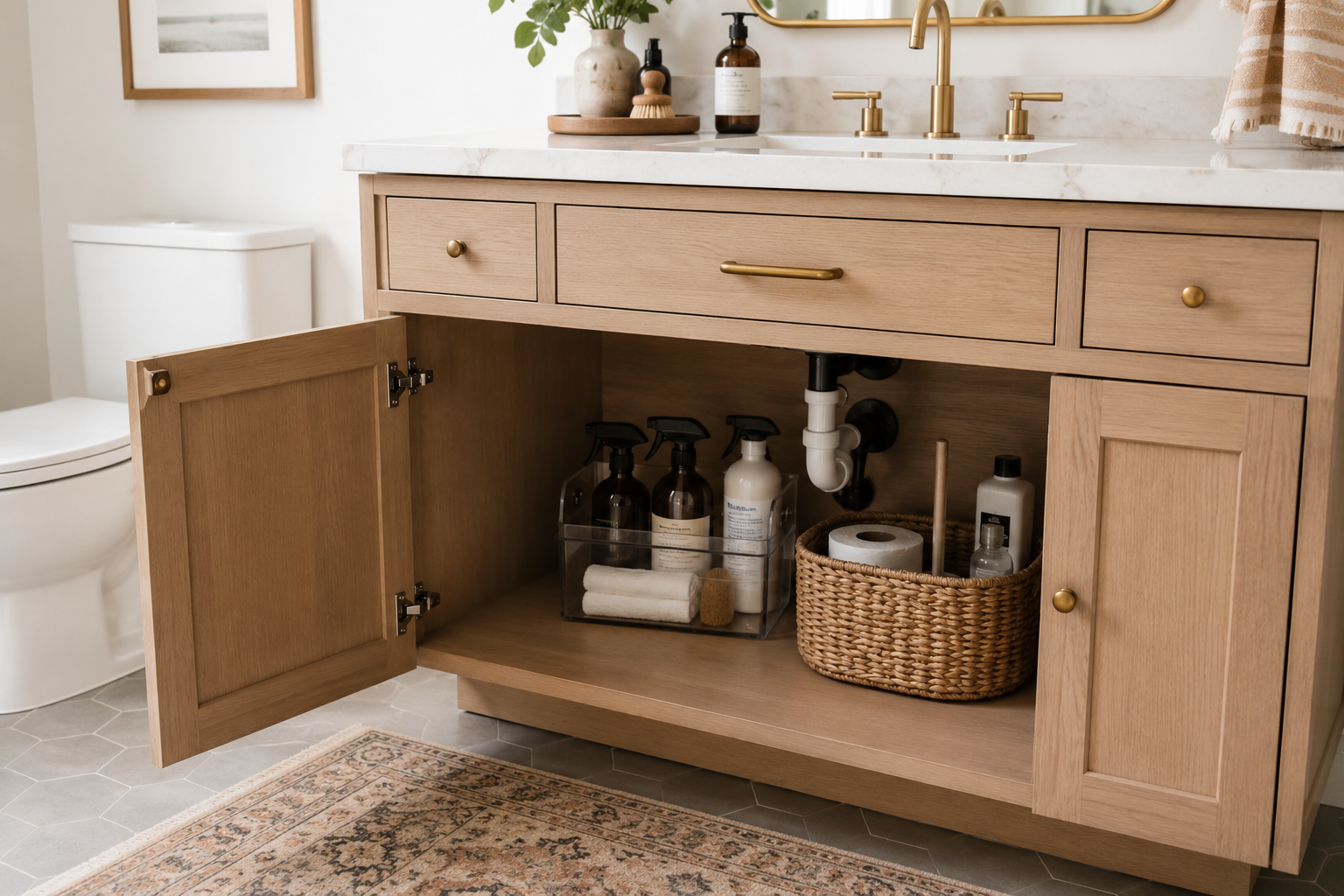
bathroom cleaner
glass cleaner
a cleaning cloth or sponge
toilet cleaner and brush
Near the main living area
Depending on your home, it may be helpful to have quick access to:
a microfiber cloth
a small duster
a handheld vacuum or nearby vacuum
The exact supplies will be different in every home.
That's the point.
Your cleaning system should support the way you live—not someone else's idea of an organized cleaning cabinet.
3. Create Small Cleaning Kits for Repetitive Jobs
Some cleaning routines require two or three things every time.
Instead of storing those items separately, group them together.
A small bathroom cleaning kit, for example, could hold the spray and cloths you use for quick sink and mirror cleanups.
A kitchen cleaning kit might contain the supplies you use after dinner.
These don't need elaborate containers.
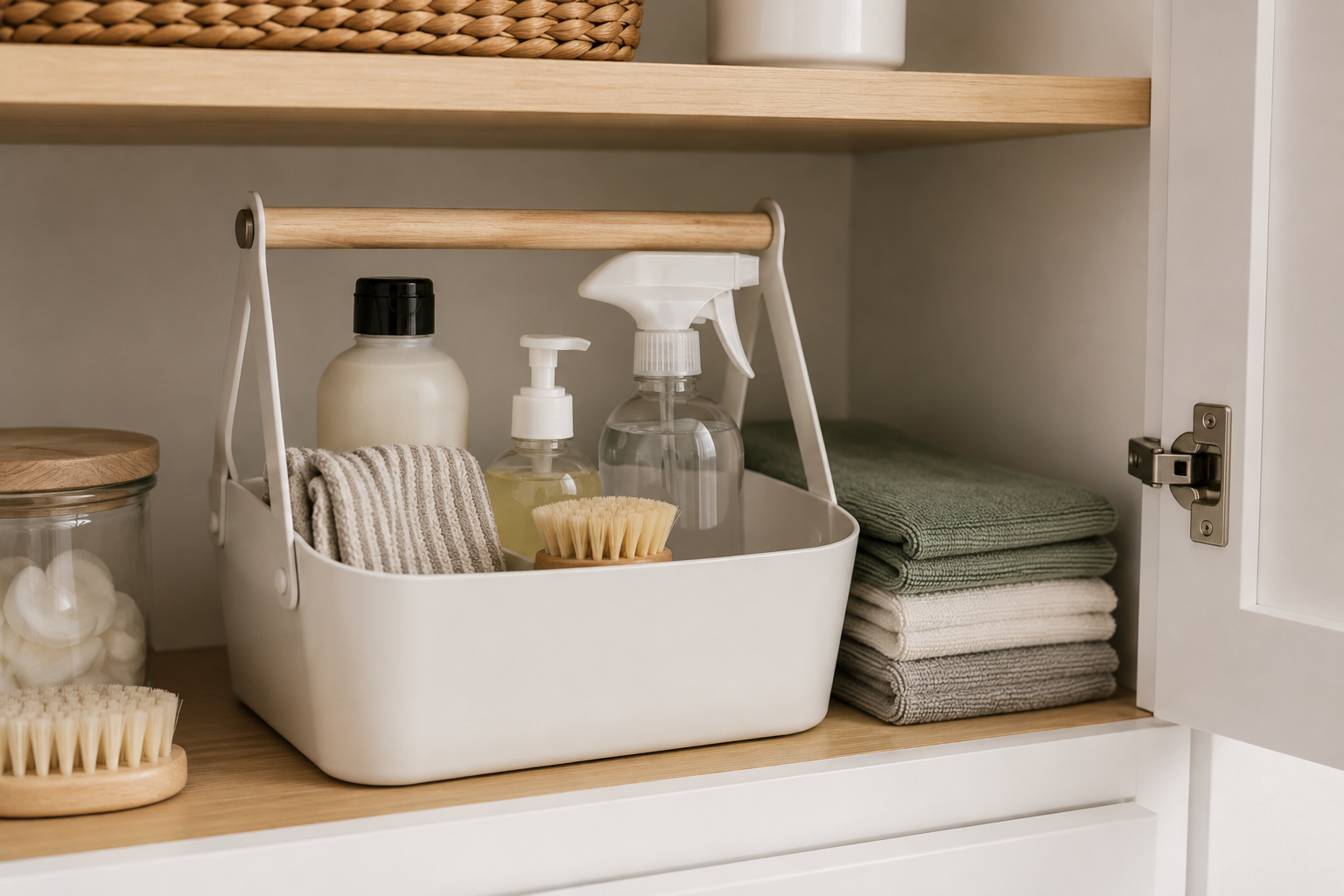
A simple handled caddy, small bin, or basket can work beautifully.
The container isn't the system.
Keeping the things you use together in one easy-to-grab place is the system.
That's what saves time.
4. Separate Everyday Cleaning From Deep Cleaning
One reason cleaning storage becomes cluttered is that everyday products get mixed together with things we rarely use.
Oven cleaner.
Silver polish.
Carpet treatment.
Specialty stain removers.
Extra refills.
These products can be useful, but they don't need to take up the easiest-to-reach spaces in your home.
Keep your everyday cleaning supplies accessible and move occasional-use products to a secondary storage area.
That might be:
a laundry room cabinet
a utility closet
a garage shelf
a higher cabinet
a labeled storage bin
This creates a simple hierarchy.
Daily-use supplies stay close. Occasional-use supplies can live farther away.
You aren't getting rid of useful products.
You're simply giving the most convenient space to the things that make everyday life easier.
5. Stop Keeping Too Many Versions of the Same Thing
Cleaning cabinets have a way of collecting duplicates.
Three partially used surface sprays.
Several different glass cleaners.
Specialty products purchased for one specific mess.
Bottles we tried but didn't particularly like.
Before organizing everything, pull out what you have and look for overlap.
You probably don't need a different cleaner for every surface in your home.
Keep the products you actually use and finish those before buying more.
Fewer bottles make it easier to see what you have, easier to find what you need, and easier to keep your cleaning areas organized.
Simple is enough.
6. Give Refills and Backstock Their Own Home
Extra cleaning supplies are useful.
They're also one of the easiest ways to overwhelm your everyday cleaning areas.
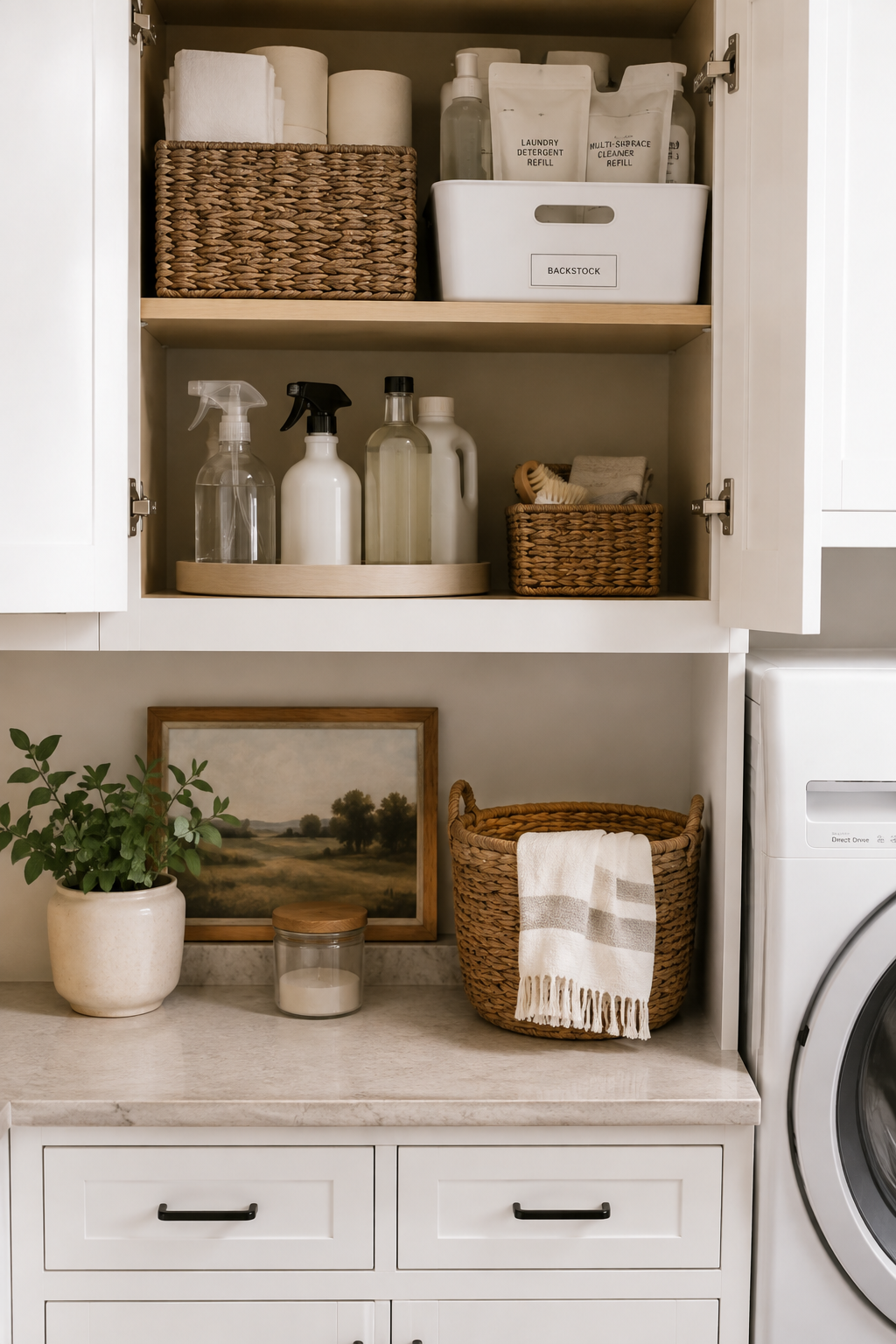
If you buy refills or multipacks, keep the extras together in one designated backstock location rather than distributing them throughout the house.
Then your bathroom cabinet doesn't need three bottles of the same cleaner.
It only needs the one you're currently using.
When it runs out, you know exactly where to find the replacement.
This also makes it much easier to see what you already own before buying more.
7. Make the System Easy to Reset
Any organization system works better when putting things away takes almost no effort.
Avoid creating cleaning storage that requires you to carefully rearrange bottles every time you use something.
Keep categories broad.
Give frequently used items enough space.
Use containers only when they make things easier to grab or return.
And leave a little breathing room.
If the cleaning caddy is packed so tightly that you have to remove three bottles to reach one, the system is working against you.
The goal is simple:
Use it. Put it back. Move on with your day.
8. Let Your Cleaning Supplies Follow Your Routine
There is no rule that says every cleaning product has to live in the same cabinet.
Your home might work better with supplies in several small zones.
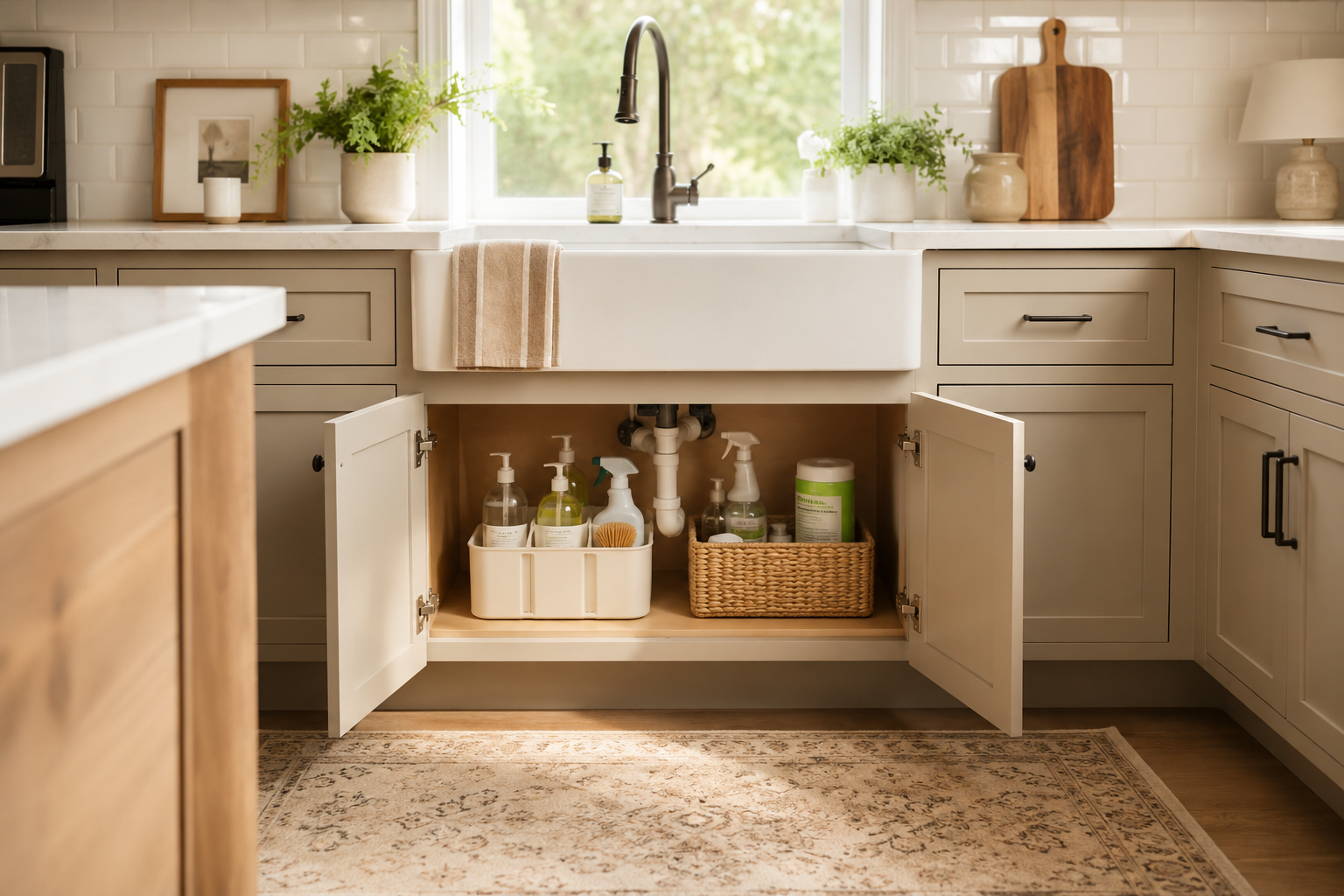
Maybe kitchen cleaners live under the kitchen sink.
Bathroom supplies stay in each bathroom.
Laundry products live beside the washer.
The vacuum lives near the rooms where you use it most.
And specialty products live together in one less-accessible storage area.
Instead of asking:
"Where should cleaning supplies go?"
Ask:
"Where would this be easiest to use?"
That question creates a very different kind of organized home.
One designed around your actual life.
Calm Favorites
You don't need a collection of organizing products to make this system work.
But a few simple tools can make cleaning supplies easier to use and return.
A lightweight handled caddy keeps the supplies used for one routine together and makes them easy to carry when needed.
Simple bins can keep categories from spreading across a cabinet while still making it easy to see what's inside.
Keeping a small stack near the areas where you regularly wipe surfaces removes another step from quick cleanups.
A turntable can help in deeper cabinets where bottles tend to disappear behind one another.
When cabinet space is limited, unused vertical space can sometimes hold lightweight cleaning essentials without taking over the shelf below.
The best cleaning organizer isn't the one that holds the most.
It's the one that makes the things you actually use easier to reach.
A Simpler Cleaning Routine Starts With Fewer Steps
An organized home shouldn't require more work to maintain.
It should quietly remove friction from the things you already do.
Putting cleaning supplies near where you use them won't eliminate cleaning.
But it can eliminate the unnecessary searching, gathering, carrying, and putting away that makes a five-minute task feel much bigger.
Start with one room.
Notice the cleaning task you repeat most often.
Put what you need nearby.
Then live with the system for a while.
If it makes the routine easier, you've created something worth keeping.
Because creating a calmer home isn't about cleaning everything all the time.
It's about creating simple systems that make taking care of your home feel a little easier every day.
Final Thoughts
Cleaning will always be part of taking care of a home, but it doesn't have to feel harder than it needs to.
Sometimes the biggest difference isn't a new cleaning routine or a better product.
It's simply having what you need where you need it.
Start with one space where you find yourself cleaning often. Pay attention to what you repeatedly leave the room to find, and give those few essentials a convenient home nearby.
Then stop there.
You don't need to reorganize every cleaning supply in your house in one afternoon.
One bathroom. One kitchen cabinet. One small cleaning kit.
Small changes like these remove little points of friction from your day—and those are often the systems that make a home noticeably easier to live in.
Because the goal isn't to spend more time cleaning.
It's to create a home that's easier to take care of, so you can spend less time thinking about it.
You May Also Like
If you're creating simpler systems throughout your home, you may also like: