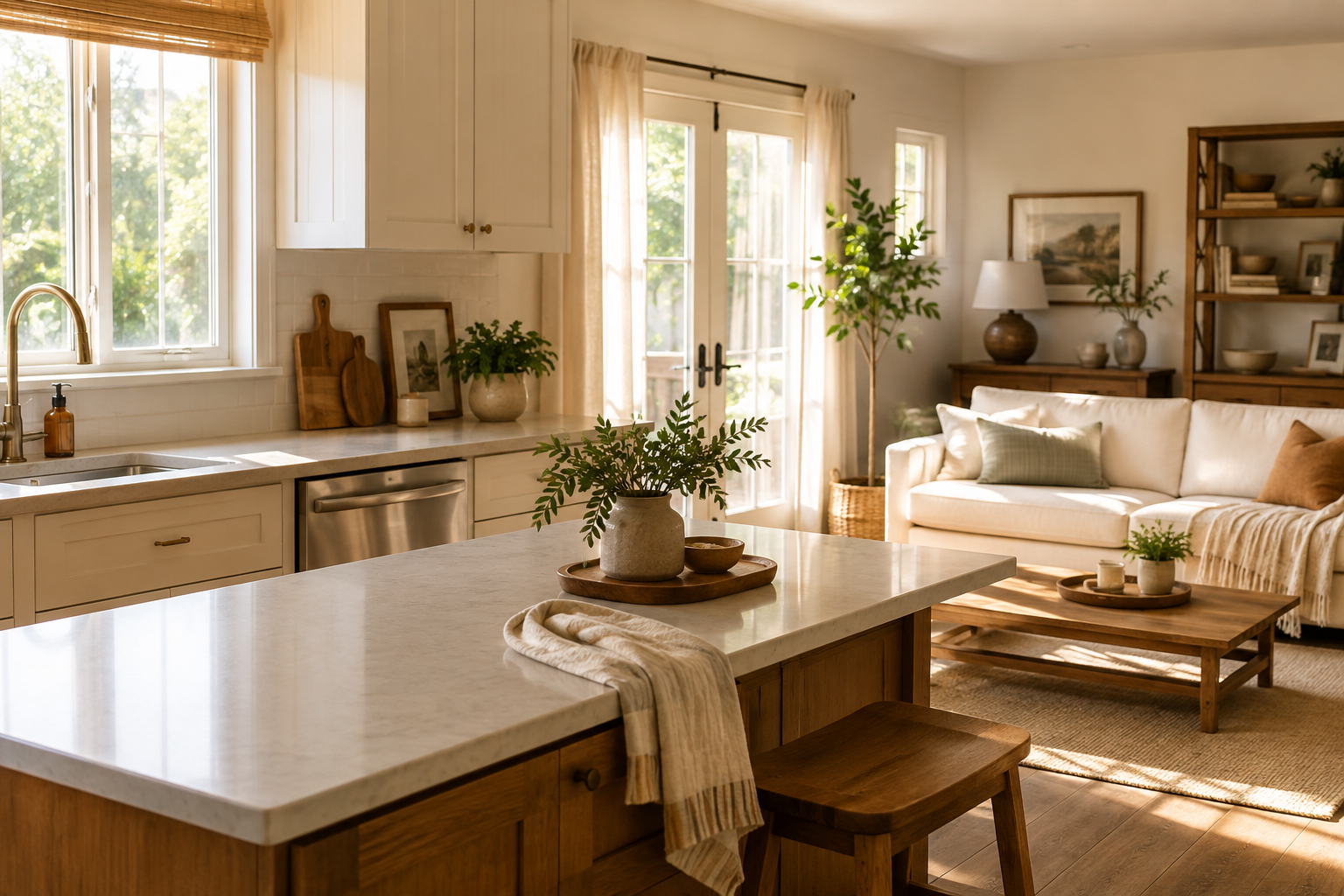
The Simple Morning Reset That Makes Coming Home Feel Easier
A simple morning reset can make coming home feel calmer. A few small habits in the kitchen, bedroom and entryway help close out the morning and create a more peaceful space to return to.
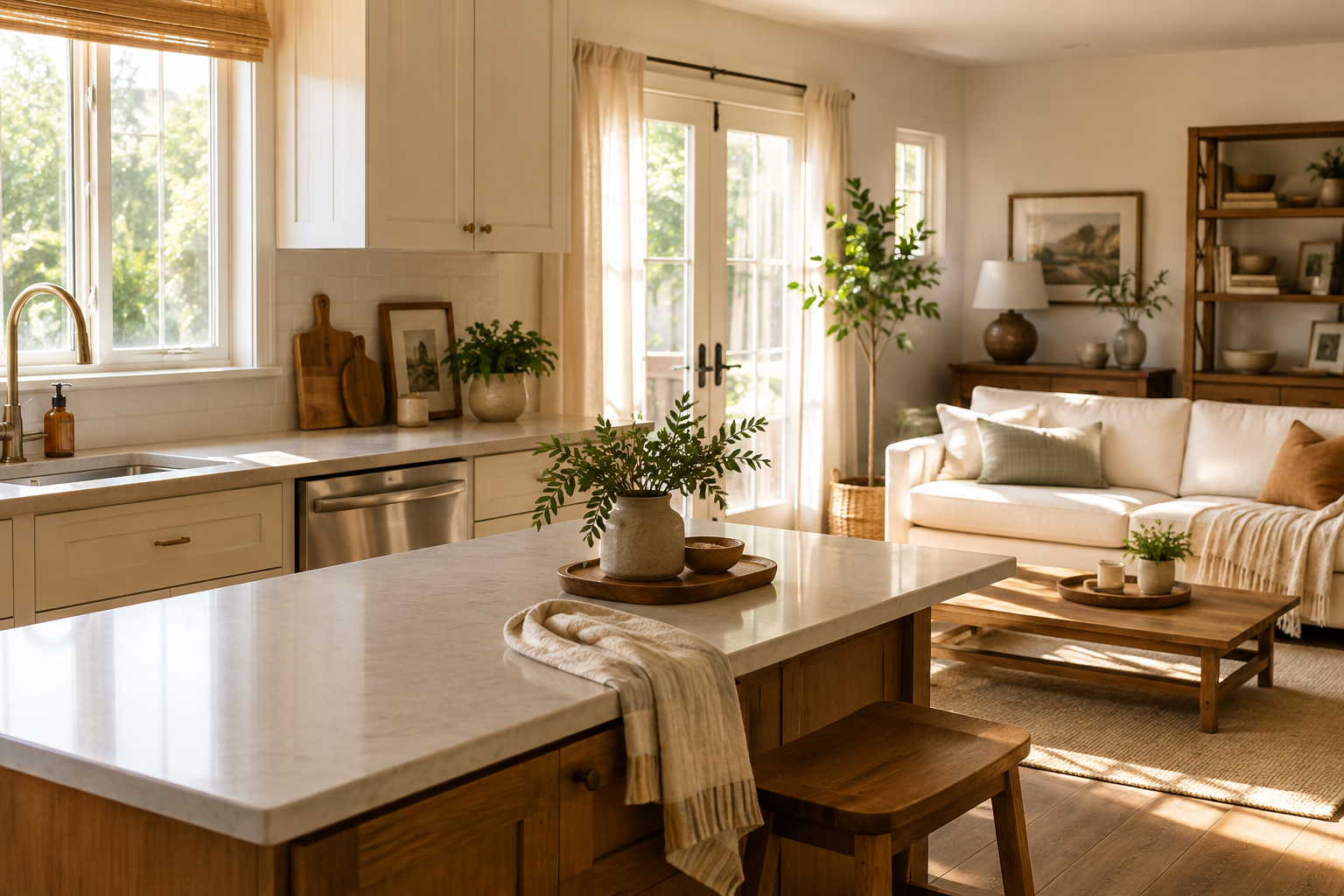
There is something especially comforting about walking through the door at the end of a long day and finding your home feeling calm.
The kitchen counter is mostly clear. The breakfast dishes aren't waiting in the sink. The living room feels settled. Your bed is made—or at least pulled together.
Nothing is perfect.
But instead of immediately noticing everything that needs your attention, you get to simply come home.
That feeling doesn't require waking up an hour earlier or following an elaborate morning routine.
It comes from a simple morning reset: a few small things you do before leaving the house that make your home easier to return to later.
Because sometimes the kindest thing you can do for your evening self happens in the morning.
Why Mornings Can Leave So Much Behind
Mornings are busy.
Coffee gets made. Breakfast happens. Everyone gets dressed. Bags are packed. Someone can't find something. The dishwasher may need unloading. Laundry may still be sitting where you left it.
And then everyone leaves.
The problem isn't that your house became terribly messy overnight.
It's that dozens of small signs of the morning can remain behind.
A coffee mug beside the sink.
Breakfast dishes on the counter.
A blanket on the sofa.
Shoes near the door.
Clothes on the bedroom floor.
Mail you meant to move.
None of those things is a big problem by itself. But when you walk back into all of them at once, your home can immediately feel like another responsibility.
A morning reset helps interrupt that cycle.
You aren't cleaning the house before you leave.
You're simply closing out the morning.
Think of It as Resetting, Not Cleaning
This distinction matters.
If your morning reset starts feeling like another cleaning routine, it probably won't last.
The goal isn't to vacuum, scrub bathrooms, fold three loads of laundry or leave every room looking untouched.
A reset is much smaller.
You're returning the most-used spaces in your home to a comfortable starting point.
Think:
Clear. Put away. Straighten. Move on.
That might take five minutes one morning and ten minutes another.
Some mornings, you may only manage two things.
That's okay.
The goal is not a perfect house.
The goal is to make coming home feel a little easier.
1. Start With the Kitchen
If you only reset one space before leaving, make it the kitchen.
The kitchen tends to collect evidence of the entire morning—coffee mugs, breakfast dishes, food containers, water bottles, crumbs, mail and things that were set down while everyone was rushing around.
You don't need to deep clean it.
Instead, give yourself one simple goal:
Leave the sink and main counter reasonably clear.
Put breakfast dishes in the dishwasher.
Return food to the refrigerator or pantry.
Put coffee supplies back where they belong.
Wipe the main prep area if it needs it.
That's enough.
When you come home later, you'll have a usable kitchen instead of the morning waiting for you.
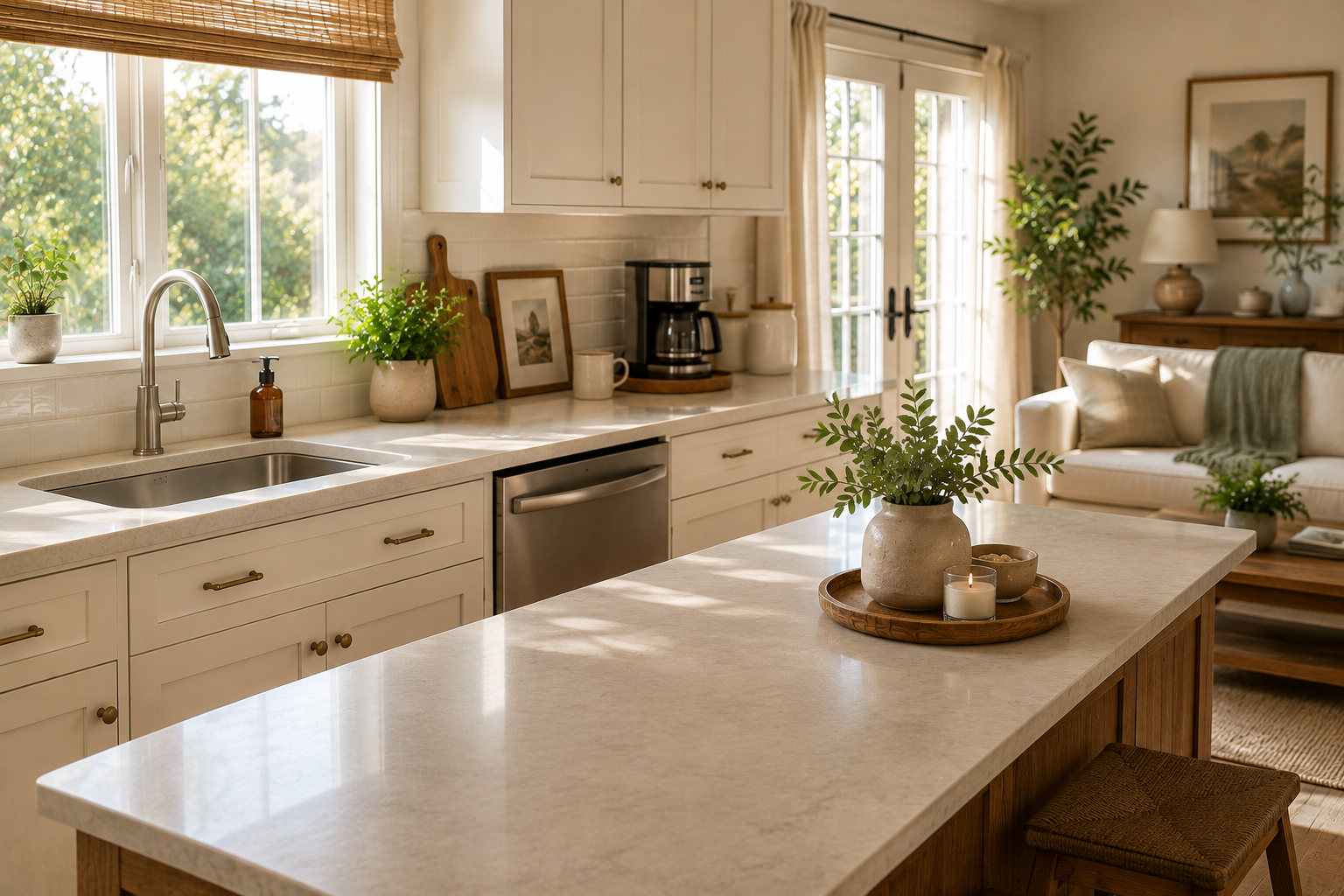
2. Pull the Bed Together
Making the bed can sound like one more thing you're supposed to do every morning.
It doesn't need to be.
Forget perfect corners and decorative pillows.
Simply pull the sheets and comforter back into place and straighten the pillows.
It takes a minute or two, but it changes how the entire room feels.
More importantly, it gives you something calm to return to at the end of the day.
A bedroom doesn't have to look styled to feel restful.
Sometimes it just needs to feel reset.
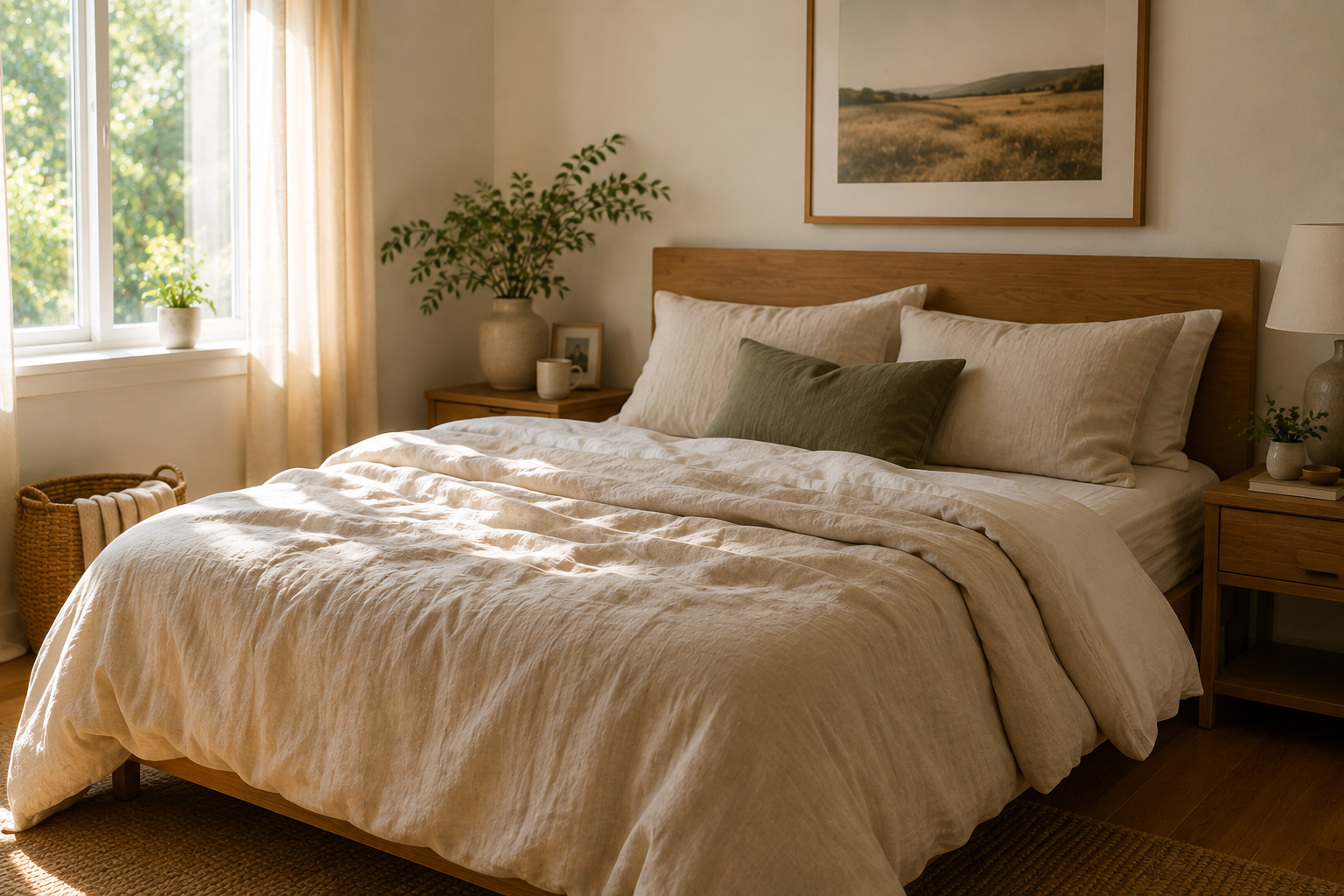
3. Give the Main Living Space a Quick Visual Reset
Look at the room you're most likely to see when you come home.
What are the few things making it feel unsettled?
Maybe the sofa cushions need straightening.
Maybe a blanket needs folding.
Maybe two glasses need to go to the kitchen.
Maybe toys need to go into a basket.
This isn't the time to organize the room.
Simply return the obvious out-of-place things to their homes.
A two-minute visual reset can make a surprisingly big difference because your eyes aren't immediately landing on unfinished tasks when you return.
4. Close the Morning's Open Loops
Some clutter isn't really clutter.
It's an unfinished task.
The lunch container sitting on the counter.
The hair dryer left on the bathroom vanity.
The cereal box that never made it back into the pantry.
The shoes pulled from the closet and abandoned while you chose another pair.
Before you leave, look for a few of those open loops and close them.
Put the cereal away.
Return the hair dryer.
Move the shoes.
Hang the jacket.
These tiny actions keep the morning from spilling into the rest of the day.
5. Reset Your Landing Zone
The entryway is where leaving and coming home meet.
A simple system here can make both easier.
Before walking out the door, take a few seconds to make sure yesterday's things aren't still occupying today's landing zone.
Put away the shoes that don't need to be there.
Hang the jacket that was dropped over a chair.
Move yesterday's mail.
Return reusable bags to their spot.
You aren't trying to create an empty entryway.
You're simply making room for yourself to come home again.
6. Choose One Thing Your Evening Self Will Appreciate
This may be the most important part of the morning reset.
Ask yourself:
What is one small thing I could do right now that would make tonight easier?
Maybe it's starting the dishwasher.
Maybe it's moving laundry into the dryer.
Maybe it's clearing the kitchen island.
Maybe it's filling the dog's water bowl.
Maybe it's putting something by the door that you'll need later.
The answer will change from day to day.
That's what makes this a system instead of a rigid routine.
You're responding to the way your household actually lives.
Your Morning Reset Doesn't Have to Look the Same Every Day
Some mornings are calm.
Others are not.
There will be mornings when you have ten minutes and mornings when everyone is running late.
Your system needs to work for both.
On a busy morning, your reset might simply be:
Dishes into the dishwasher
Food put away
Bed pulled together
Obvious clutter returned to its home
Done.
On an easier morning, you might reset the living room, start a load of laundry or clear the entryway too.
Don't let an ideal routine become the reason you abandon a useful one.
Simple is enough.
Make the Reset Easier With Better Systems
If the same things are difficult to put away every morning, pay attention.
That friction is useful information.
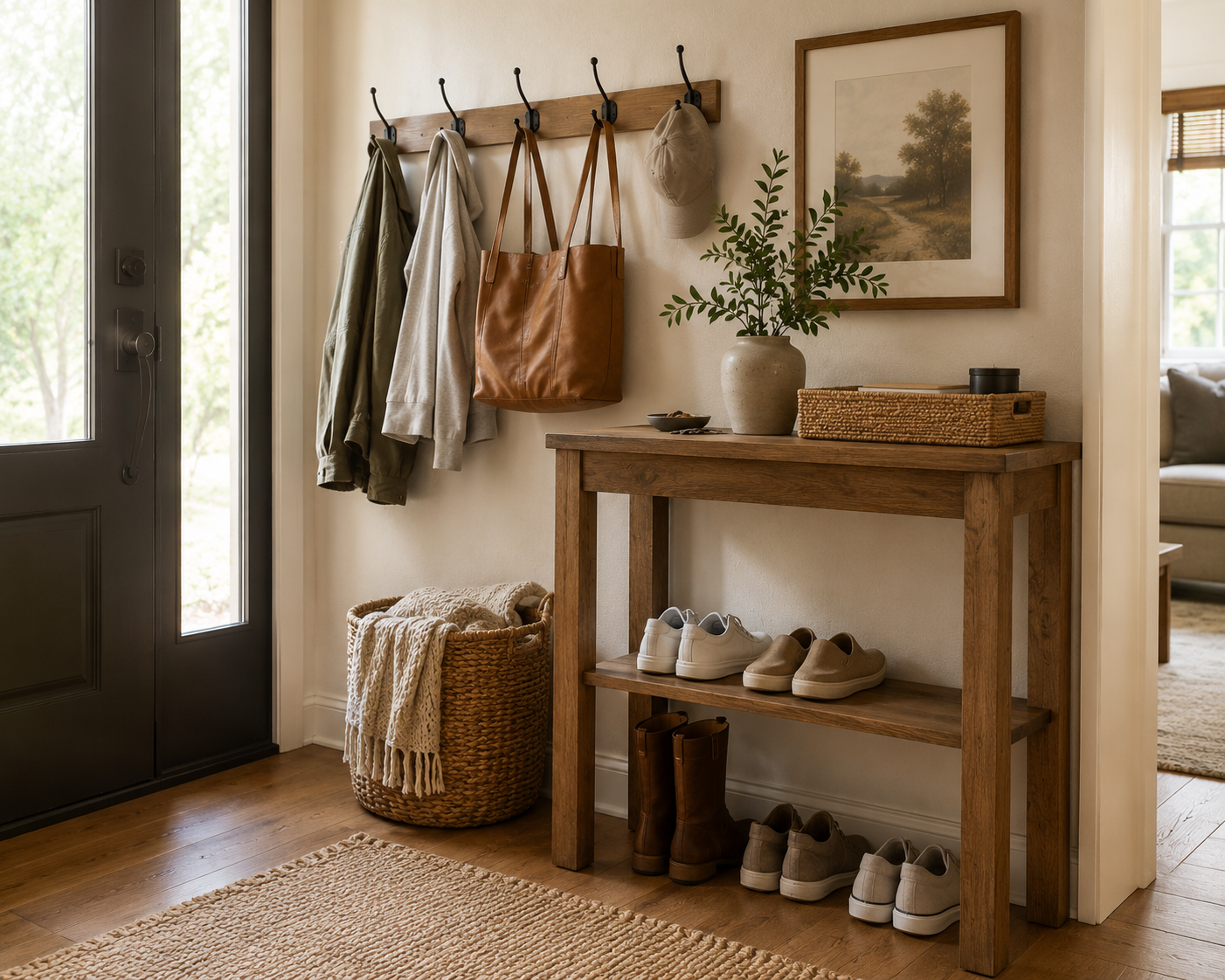
If shoes constantly collect by the door, maybe they need a basket or a more convenient home.
If breakfast supplies stay on the counter because putting them away is inconvenient, reconsider where they're stored.
If blankets are always left on the sofa, place a basket nearby.
If mail repeatedly lands on the kitchen counter, create a simple drop zone somewhere else.
Organization works best when putting something away is almost as easy as leaving it out.
Instead of asking yourself to become more disciplined, look for ways to make your home support the habits you already have.
That's how systems begin to stick.
Don't Turn the Reset Into Another Standard You Have to Meet
There will be mornings when you leave dishes in the sink.
The bed won't get made.
Someone will be looking for their keys while you're trying to get out the door.
Life happens.
The morning reset isn't successful because you complete every step every day.
It's successful because it gives you an easy way to bring your home back to a calmer starting point whenever you can.
Do three things.
Do one thing.
Start again tomorrow.
A calm home isn't created by getting everything right.
It's created through small systems you can return to again and again.
A Simple Morning Reset
When you need an easy place to start, use this:
Kitchen: Put away breakfast and clear the main work surface.
Bedroom: Pull the bed together.
Living Space: Return a few obvious things to their homes.
Open Loops: Put away anything left behind from getting ready.
Entryway: Clear enough space to make coming home easier.
One Favor for Later: Do one small thing your evening self will appreciate.
That's it.
No complicated routine.
No perfect house.
Just a few small actions that close out one part of the day before you begin the next.
Calm Favorites
This morning reset doesn't require buying anything.
In fact, the best place to begin is by using what you already have.
But if one recurring trouble spot makes your reset harder, a simple organizing tool can support the system.
A convenient basket can give reusable bags, everyday accessories or other frequently used items an easy place to return to before you leave.
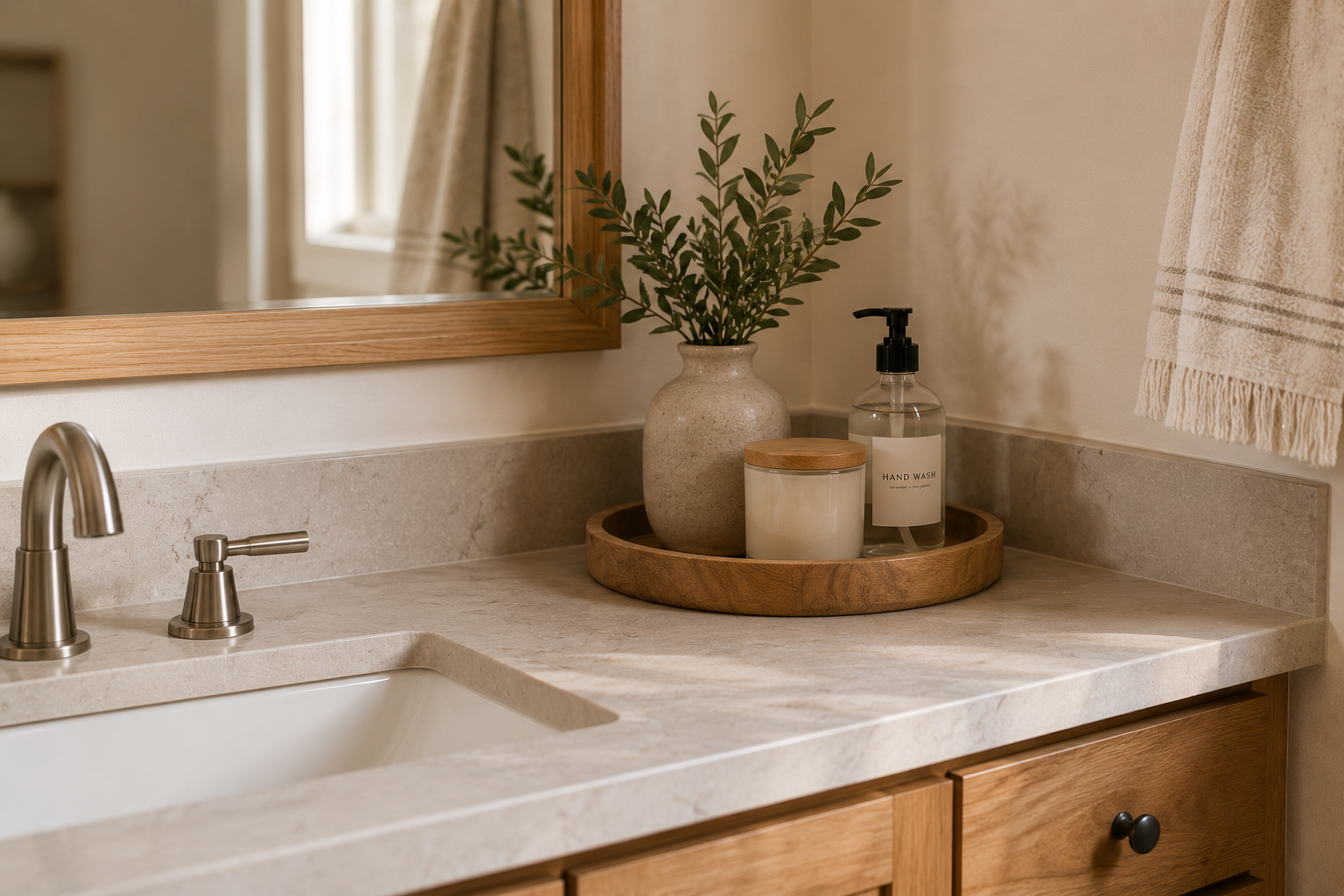
A tray can contain the few items that legitimately stay on a kitchen or bathroom counter, making the surrounding surface faster to clear.
Keeping a basket close to where blankets or children's items are actually used makes a quick living-room reset easier.
Hooks can create an obvious home for jackets, bags and other frequently used items so putting them away requires almost no extra effort.
You don't need all of these. Look at the place where your morning repeatedly gets stuck and solve that one problem first. The product isn't the solution.
The easier system is.
Final Thoughts
A calmer home doesn't always require a big organizing project.
Sometimes it begins with putting away the breakfast dishes.
Straightening the sofa.
Pulling up the comforter.
Clearing one counter.
Small actions can change the way a home feels because they remove little pieces of unfinished business from your surroundings.
And when you walk through the door later, you aren't greeted by everything you didn't get done.
You're simply home.
That's the real purpose of a morning reset.
Not to make your home perfect before you leave.
To make coming back to it feel just a little easier.
Small changes create peaceful homes.
You May Also Like

Why Your Home Keeps Getting Cluttered Again—and the Simple Systems That Help
Does it feel like clutter comes back almost as soon as you put it away? The problem may not be how much you're tidying, but the systems underneath it. These simple changes can make everyday clutter easier to manage and help your home feel calmer.

You clear the kitchen counter.
You put away the shoes by the door. You straighten the living room, carry the random things upstairs, and finally deal with the pile that's been sitting on the dining room table.
For a little while, your home feels lighter.
And then, somehow, the clutter starts creeping back.
The counter collects mail. Shoes appear by the door again. Something gets set on the stairs because it needs to go upstairs. The dining room table slowly becomes a landing place for everything that doesn't have an obvious place to go.
It can make you wonder why it's so hard to keep your home organized.
But when clutter keeps returning to the same places, the problem usually isn't that you need to try harder.
It's often a sign that your home needs a simpler system.
An organized home isn't one where nothing ever gets left out. It's a home where the things you use every day have easy places to go—and putting them away feels almost as natural as setting them down.
That's what makes organization easier to maintain.
Not perfection.
Not more storage.
Just simple systems that support the way you actually live.
Why Clutter Keeps Coming Back
Most clutter doesn't appear because we're careless.
It appears because we're busy.
We walk through the door carrying keys, sunglasses, mail, a water bottle and maybe a grocery bag. Something has to get set down.
We make coffee before we're fully awake.
We change clothes quickly.
We open packages.
We bring things from one room to another.
We live in our homes.
And every one of those little moments creates a decision:
Where does this go?
When the answer isn't obvious—or the correct place is inconvenient—the easiest option is usually to set it down.
That's how clutter begins.
One item becomes three. Three become a pile. Eventually the pile feels like something you'll deal with later.
A better organization system removes some of those decisions.
Instead of asking yourself where something belongs every time you use it, your home begins answering the question for you.
1. Pay Attention to Where Clutter Naturally Lands
Before you buy an organizer or rearrange a closet, notice where things already collect.
Your clutter is giving you information.
If shoes are always beside the door instead of inside the bedroom closet, your family may need shoe storage closer to where they actually take their shoes off.
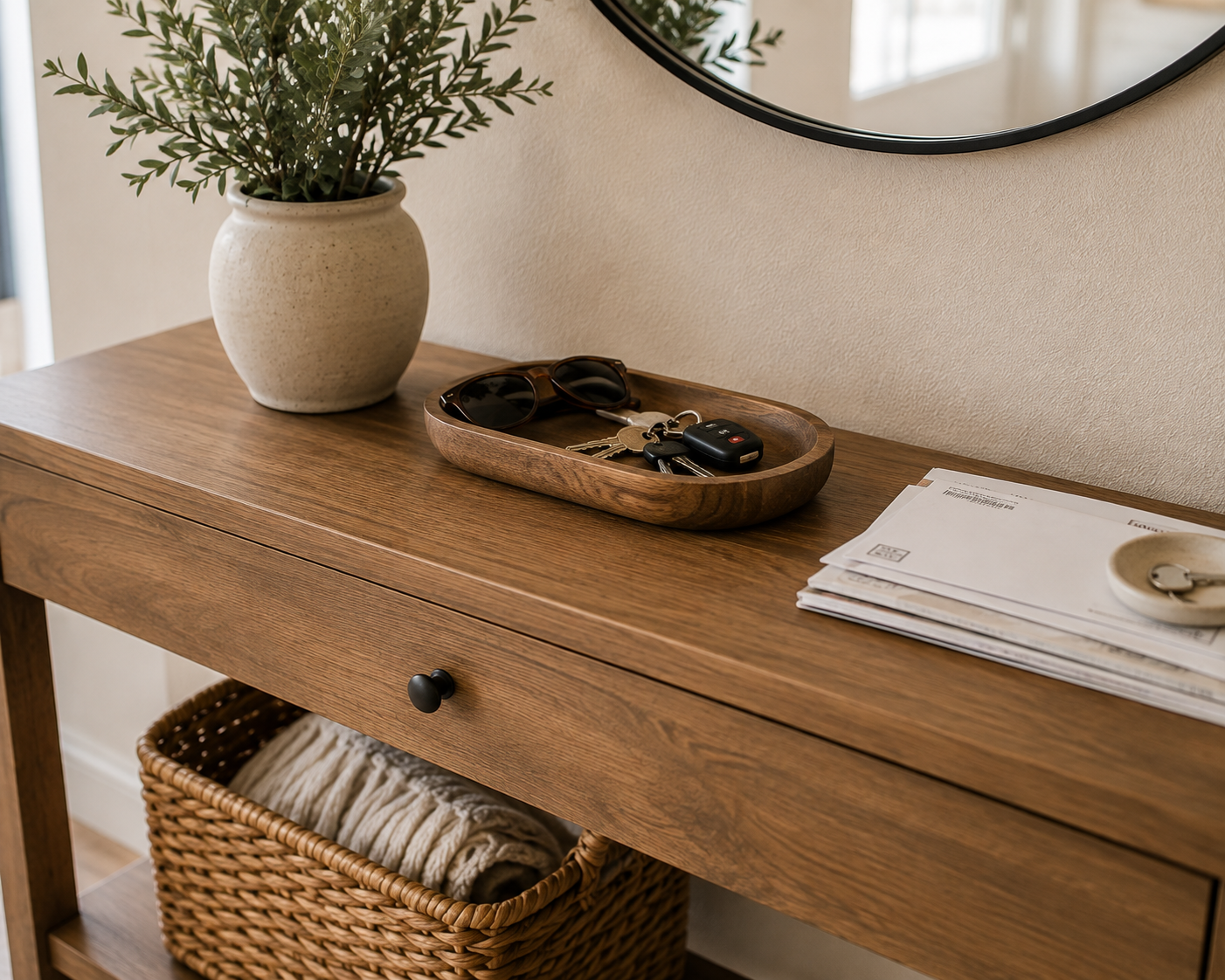
If mail always lands on the kitchen counter, you may simply need a designated place for incoming papers.
If blankets are constantly piled on the sofa, a basket nearby may make more sense than storing them across the room.
Instead of fighting where things naturally land, build a simple system around the way your household already behaves.
That's often the difference between an organization system that looks good for a week and one you can actually maintain.
2. Give Everyday Things an Easy Home
You've probably heard that everything should have a place.
But there's another part that's just as important:
That place needs to be easy to use.
If putting something away requires opening a closet, moving three things, lifting a lid and fitting the item perfectly into a container, there's a good chance it will eventually end up sitting outside the container instead.
Think about the things you reach for constantly:
Keys.
Shoes.
Chargers.
Mail.
Dog leashes.
Water bottles.
Remote controls.
Cleaning supplies.
These everyday items deserve especially easy homes.
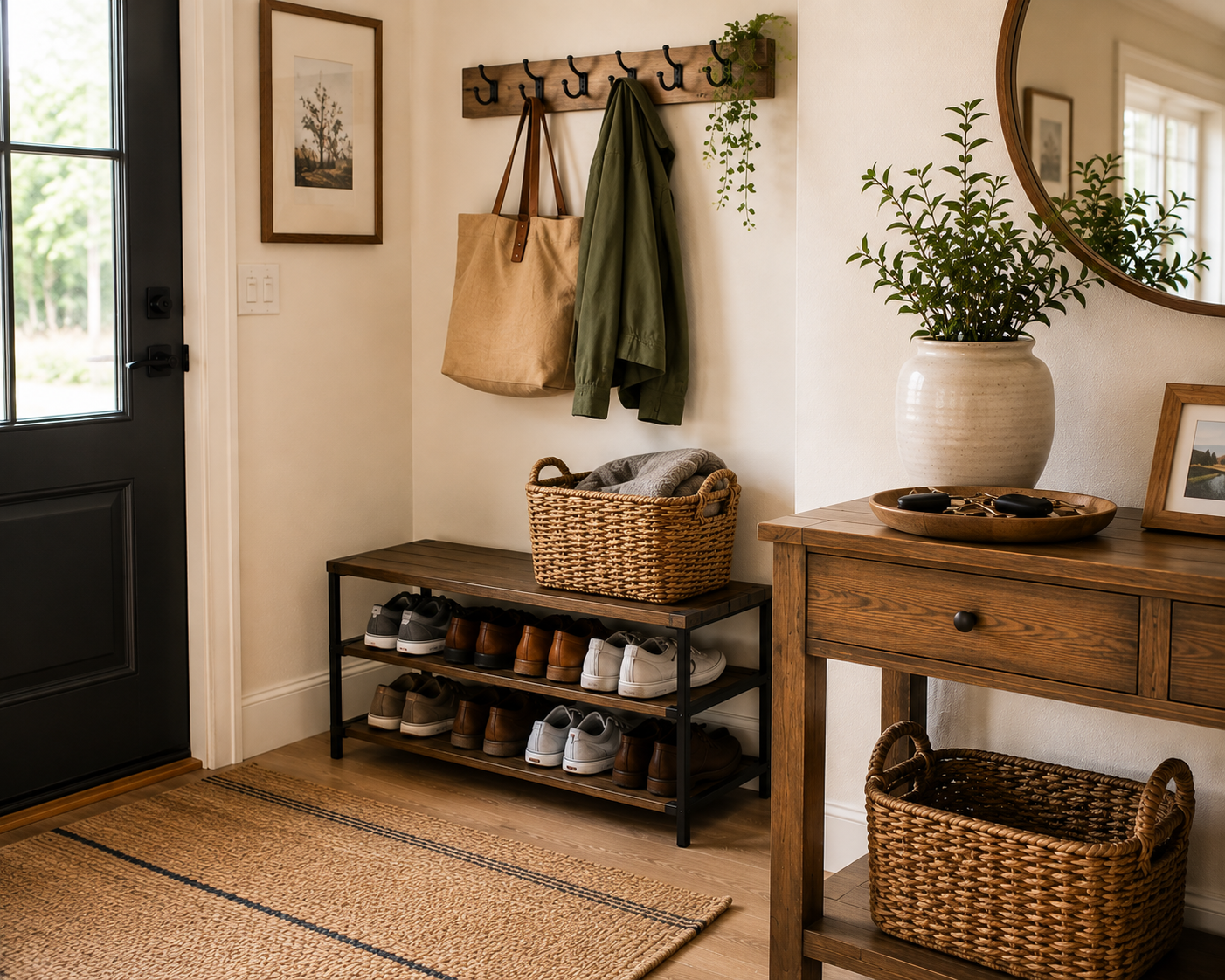
A small tray, hook, basket, drawer or open shelf may be all you need.
The goal isn't to create the prettiest storage system.
The goal is to make the easiest choice the organized choice.
3. Create Small Landing Zones Where Life Happens
Some of the most useful organization systems aren't hidden inside closets.
They're right where daily life happens.
A tray near the entry can catch keys and sunglasses.
A basket near the stairs can hold things that need to go upstairs.
A small spot for incoming mail can keep papers from spreading across the kitchen.
A hamper where clothes actually come off is much more useful than one placed where you think a hamper should go.
These little landing zones give everyday clutter somewhere to pause without taking over the room.
The important part is keeping them intentional.
A landing zone shouldn't become permanent storage. It simply makes the next step easier.
When the basket fills, take the items upstairs.
When the mail tray starts accumulating, sort it.
When the return basket has something in it, take it with you the next time you leave.
Small systems work because they fit naturally into routines you're already doing.
4. Make Putting Things Away Easier Than Leaving Them Out
Here's a simple test for any organization system:
How much effort does it take to put something away?
If backpacks land on the floor every afternoon, hooks near the place where everyone walks in may work better than repeatedly asking people to carry them somewhere else.
If your kitchen counter constantly collects things that belong elsewhere, a nearby drop zone may help intercept them.
If laundry piles up because the hamper is in the wrong room, move the hamper.
Good organization doesn't depend on everyone remembering complicated rules.
It reduces friction.
Whenever clutter repeatedly appears somewhere, ask:
What would make putting this away easier?
Sometimes the answer is surprisingly small.
One hook.
One basket.
One drawer.
One designated spot.
Small changes like these are often what make a home easier to maintain.
5. Stop Asking One Space to Do Too Much
Clutter often builds when one surface quietly becomes responsible for everything.
The kitchen counter becomes the mail station, charging station, school-paper station, grocery-unloading area and place where everyone leaves whatever they're carrying.
The entryway becomes shoe storage, coat storage, backpack storage, sports-equipment storage and package-return storage.
Eventually the space can't keep up.
When this happens, you don't necessarily need more storage.
You may need clearer categories.
Ask yourself what the space actually needs to support.
Maybe the entryway only needs to hold the things your family uses when leaving the house.
Maybe the kitchen counter only needs to support food preparation and one small everyday station.
Giving a space a clear job makes it easier to recognize what belongs there—and what doesn't.
6. Create a Simple Reset Instead of Constantly Tidying
Even the best systems won't keep a home completely clutter-free.
Things will still get left out.
That's normal.
The goal isn't to spend your entire day putting things away the moment they're used.
Instead, create a small reset point in your routine.
Maybe it's five minutes before you go upstairs for the night.
Maybe it's while the coffee brews in the morning.
Maybe everyone puts away a few things before settling in for the evening.
You're not cleaning the entire house.
You're simply returning everyday things to the homes you've already created for them.
Once your systems are working, a reset becomes much easier because you aren't standing in the middle of the room wondering where everything belongs.
You're just putting things back.
7. When Clutter Returns, Fix the System
This may be the most important shift of all.
If the same pile keeps appearing, don't automatically assume you need to be more disciplined.
Get curious about it.
Why does this keep landing here?
Where are these items supposed to go?
Is that place convenient?
Does everyone know where they belong?
Is the storage already too full?
Is there an unnecessary step making the system harder than it needs to be?
Recurring clutter is often a clue.
Once you start seeing it that way, maintaining your home can feel very different.
Instead of constantly battling the mess, you begin adjusting the systems underneath it.

Start With the Spot That Bothers You Most
You don't need to reorganize your whole house.
In fact, don't.
Look around your home and find one place where clutter keeps returning.
Maybe it's the kitchen counter.
The entryway.
The bathroom vanity.
The chair in your bedroom.
The stairs.
Then ask:
What keeps ending up here—and why?
Choose one category and give it a simple, convenient home.
Live with that change for a while.
If it works, keep it.
If it doesn't, adjust it.
Organization should support your life—not give you another set of rules to follow.
Our Calm Home Favorites
Creates an easy landing place for keys, sunglasses and the little things you reach for every day.
Keeps blankets, everyday necessities or items headed to another room contained without making them difficult to reach.
Give bags, jackets, hats and dog leashes an easy place to land the moment you walk through the door.
Keeps everyday shoes contained near the place where they naturally come off.
Creates a simple boundary for mail, returns or other small categories that tend to collect around the house.
Final Thoughts
A home that gets cluttered isn't a home that's failing.
It's a home that's being lived in.
The goal isn't to stop every pair of shoes, piece of mail or coffee cup from ever being left out.
The goal is to make it easier to know what happens next.
When everyday things have easy homes, surfaces have clear purposes and small resets are built into your routine, clutter becomes much easier to manage.
And when something keeps ending up in the same place?
Don't immediately try harder.
Look at the system.
Sometimes the smallest adjustment—a basket where things naturally collect, a hook where a bag always lands or a tray where keys are already being dropped—is enough to make everyday life feel a little easier.
You don't need to fix your whole home today.
Start with one recurring pile. Give it a better place to land.
Simple is enough.
You May Also Like
Your Home Isn’t Hard to Maintain—It’s Missing These 5 Simple Organization Setups
The 15-Minute Evening Reset That Helps Your Home Stay Calm
The Entryway Drop Zone That Makes Coming Home Feel Instantly Calmer
The Kitchen Counter System That Keeps Your Kitchen Looking Clean Every Day
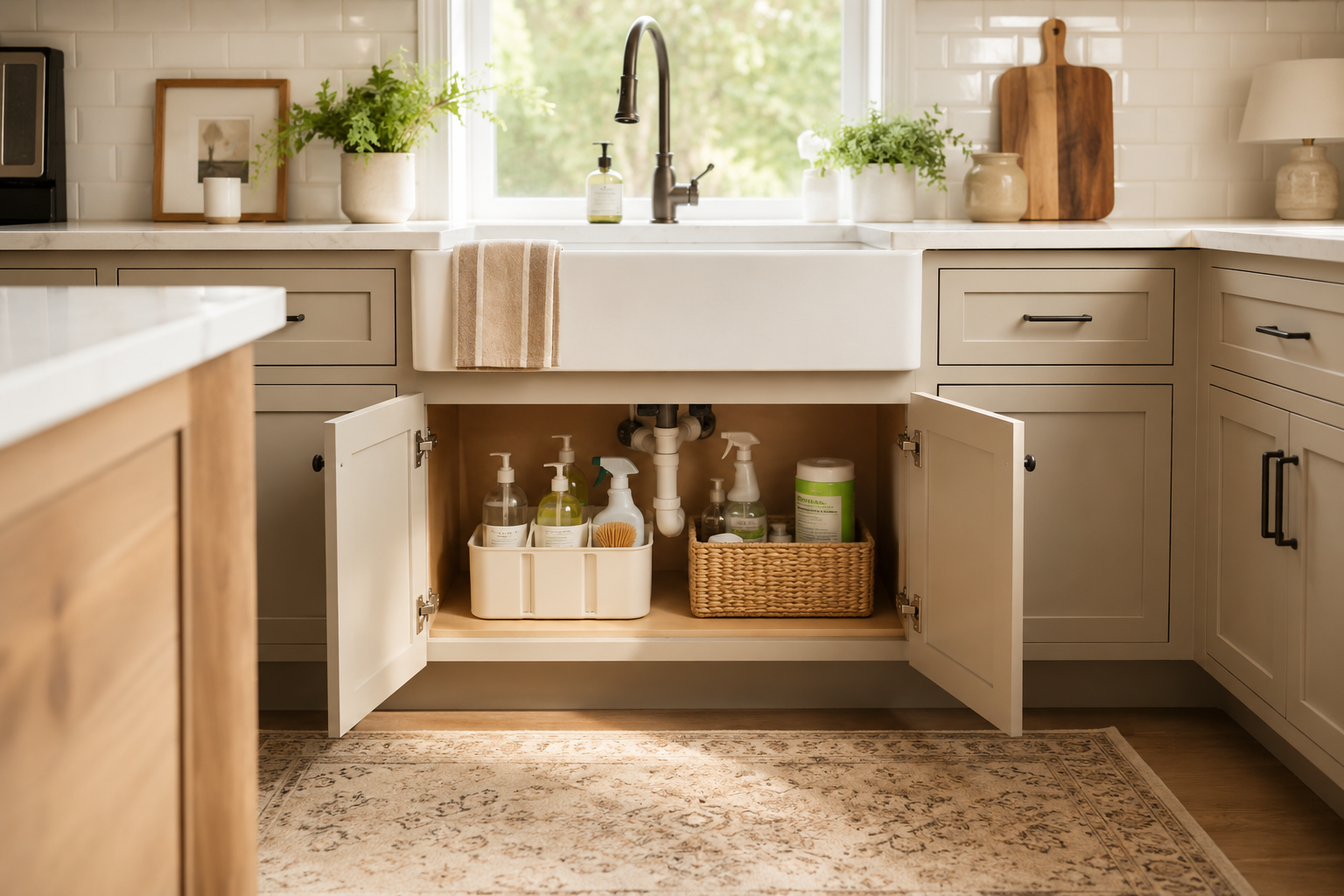
How to Organize Cleaning Supplies So Cleaning Takes Less Time
Simple cleaning systems make everyday routines easier by keeping the supplies you use most close to where you need them.
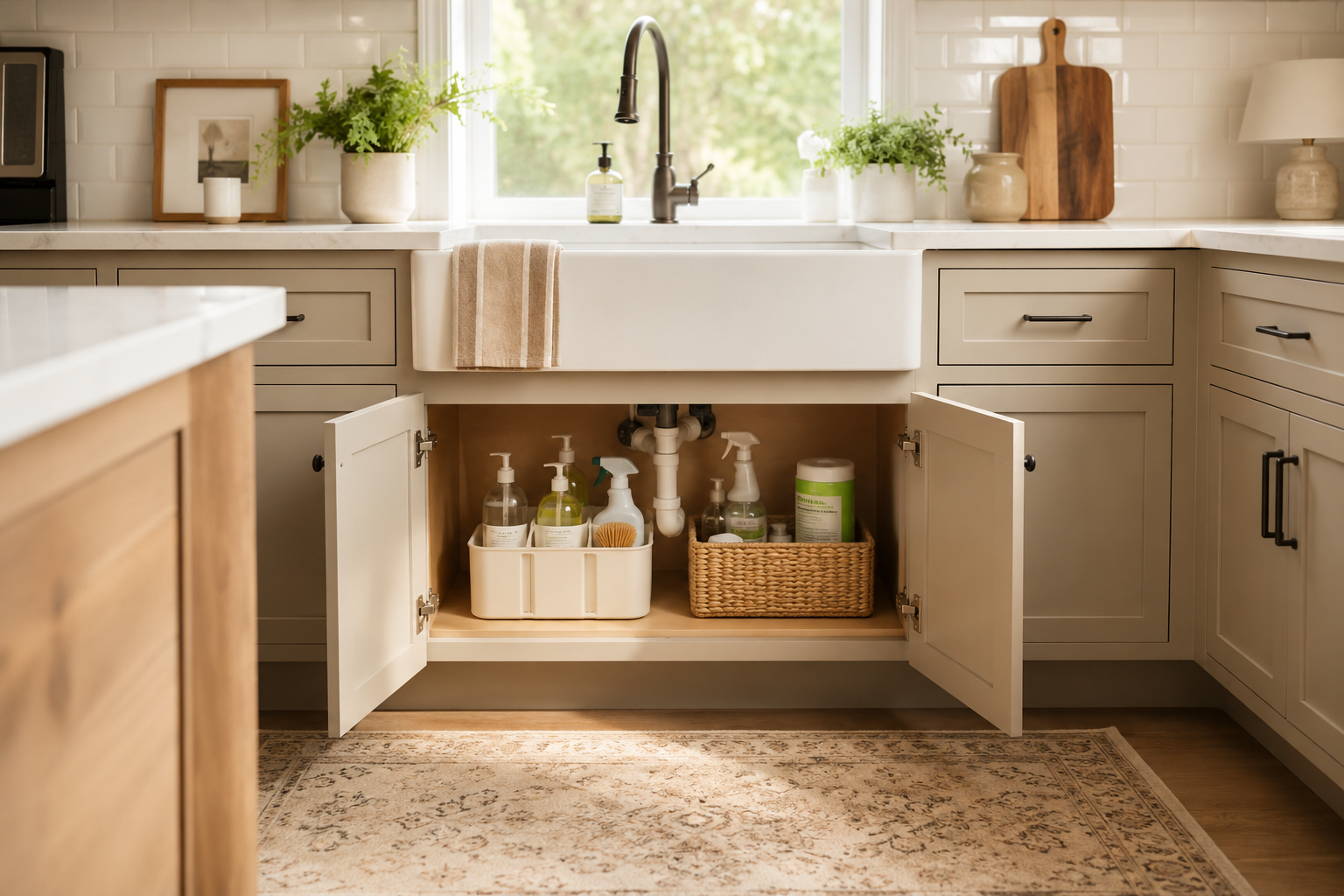
There are some days when cleaning feels harder than the actual mess.
You notice fingerprints on the bathroom mirror—but the glass cleaner is downstairs.
There are crumbs under the kitchen table—but the broom is in the garage.
Something spills upstairs, and suddenly cleaning it means walking through the house looking for the right spray, cloth, or brush.
None of these things takes very long to clean.
Finding what you need is what makes cleaning feel like a bigger job.
A simpler cleaning routine starts by changing where your supplies live.
Instead of storing every cleaning product together because that's where cleaning supplies are "supposed" to go, keep the things you use most often close to the places where you actually use them.
It's a small shift, but it removes unnecessary steps from everyday cleaning.
And when cleaning becomes easier to start, it's usually easier to keep up with too.
Why Cleaning Supplies Become So Hard to Manage
Most homes accumulate cleaning products gradually.
A bottle gets tucked under the kitchen sink. Another ends up in the laundry room. Extra sprays collect in a closet. Specialty cleaners get pushed behind things we use more often.
Before long, we have plenty of cleaning supplies—but not necessarily a system for using them.
The problem usually isn't that you need better storage.
It's that the supplies aren't living where your routines happen.
When every small cleaning task requires gathering supplies from somewhere else, we naturally put more of those tasks off until later.
Instead, think about cleaning supplies as part of the room they support.
The goal isn't to create a perfectly organized collection of bottles.
The goal is to make everyday cleaning take less effort.
1. Start With the Cleaning Tasks You Actually Do
Before reorganizing anything, pay attention to how you really clean your home.
Not how you think you should clean.
Think about the little jobs that happen over and over again.
Wiping the kitchen counters.
Cleaning a bathroom mirror.
Quickly wiping down a sink.
Cleaning the dining table after dinner.
Sweeping crumbs from the kitchen floor.
Wiping muddy paw prints near an entry.
These repetitive tasks are the best place to start because they're where a simple system can save you time every single week.
For each space, ask:
What do I reach for most often when I clean this room?
Those are the supplies that deserve the easiest-to-reach homes.
2. Keep Everyday Supplies Near Where You Use Them
This is the biggest change you can make.
Instead of creating one central location for every cleaning product in the house, create small cleaning zones near the places where cleaning actually happens.
That doesn't mean filling every room with cleaning products.
It means strategically placing a few frequently used essentials where they remove an extra step from your routine.
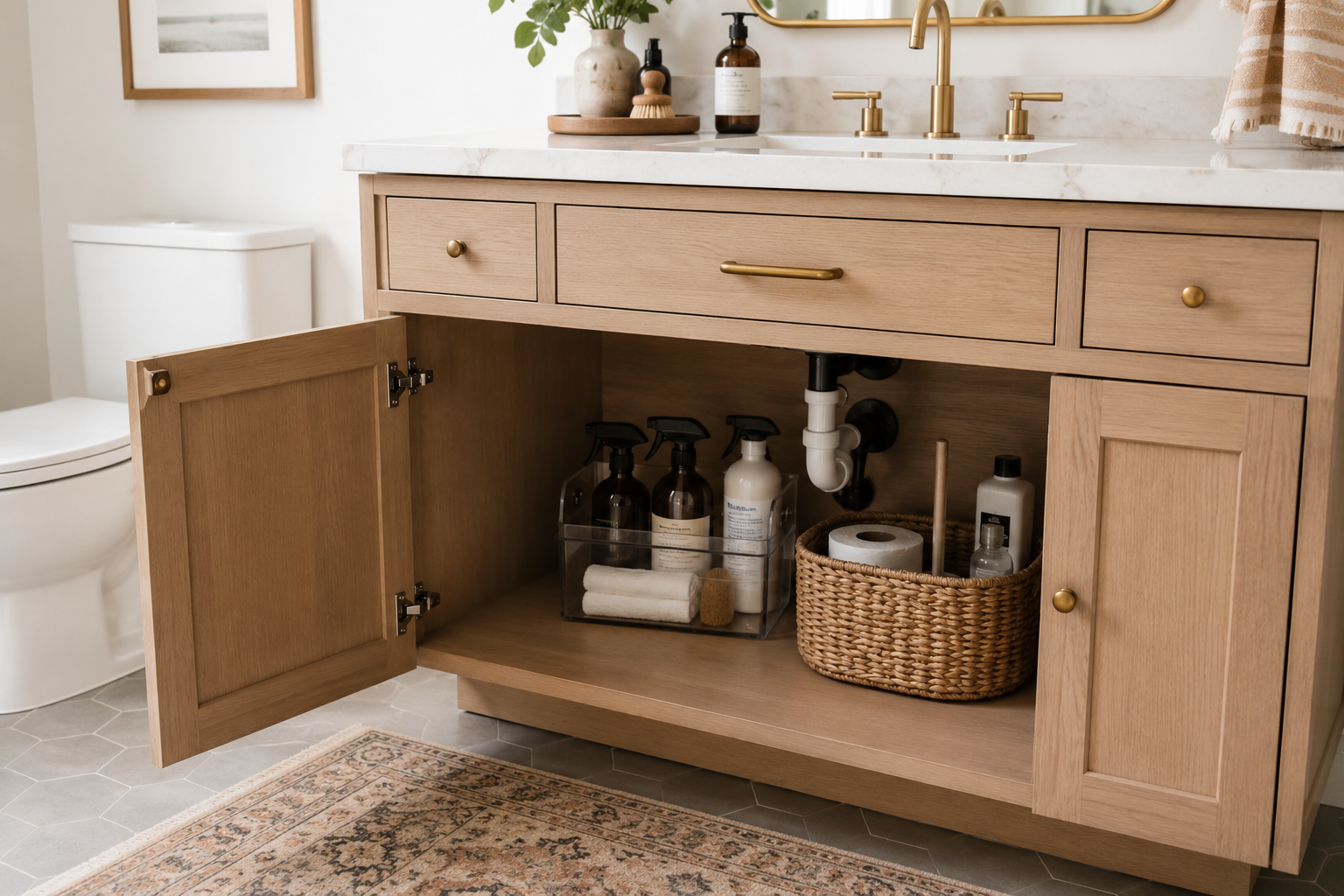
In the kitchen
You might keep:
an everyday surface cleaner
a few microfiber cloths
dish soap
a scrub brush
dishwasher supplies
In the bathrooms
You might keep:
bathroom cleaner
glass cleaner
a cleaning cloth or sponge
toilet cleaner and brush
Near the main living area
Depending on your home, it may be helpful to have quick access to:
a microfiber cloth
a small duster
a handheld vacuum or nearby vacuum
The exact supplies will be different in every home.
That's the point.
Your cleaning system should support the way you live—not someone else's idea of an organized cleaning cabinet.
3. Create Small Cleaning Kits for Repetitive Jobs
Some cleaning routines require two or three things every time.
Instead of storing those items separately, group them together.
A small bathroom cleaning kit, for example, could hold the spray and cloths you use for quick sink and mirror cleanups.
A kitchen cleaning kit might contain the supplies you use after dinner.
These don't need elaborate containers.
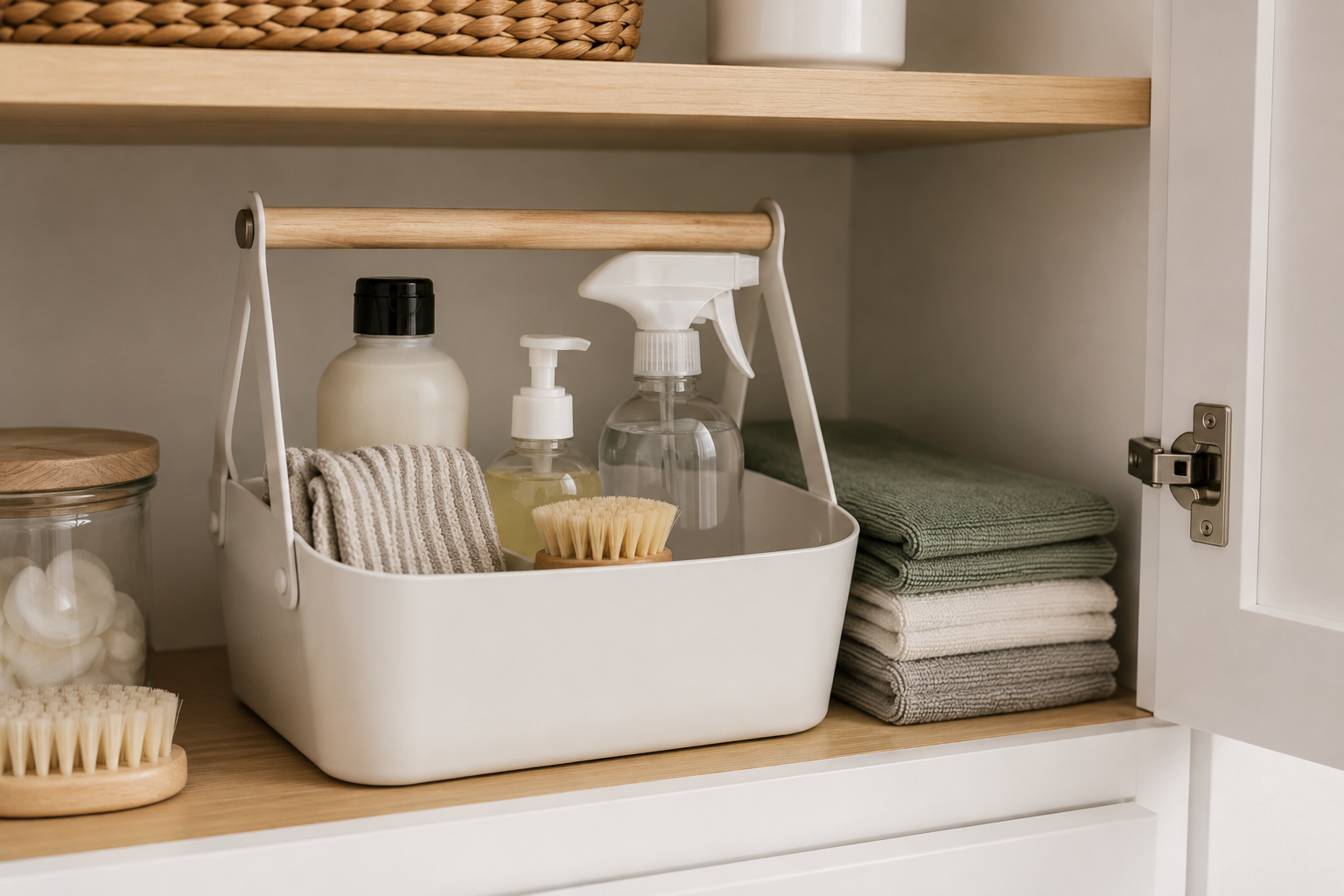
A simple handled caddy, small bin, or basket can work beautifully.
The container isn't the system.
Keeping the things you use together in one easy-to-grab place is the system.
That's what saves time.
4. Separate Everyday Cleaning From Deep Cleaning
One reason cleaning storage becomes cluttered is that everyday products get mixed together with things we rarely use.
Oven cleaner.
Silver polish.
Carpet treatment.
Specialty stain removers.
Extra refills.
These products can be useful, but they don't need to take up the easiest-to-reach spaces in your home.
Keep your everyday cleaning supplies accessible and move occasional-use products to a secondary storage area.
That might be:
a laundry room cabinet
a utility closet
a garage shelf
a higher cabinet
a labeled storage bin
This creates a simple hierarchy.
Daily-use supplies stay close. Occasional-use supplies can live farther away.
You aren't getting rid of useful products.
You're simply giving the most convenient space to the things that make everyday life easier.
5. Stop Keeping Too Many Versions of the Same Thing
Cleaning cabinets have a way of collecting duplicates.
Three partially used surface sprays.
Several different glass cleaners.
Specialty products purchased for one specific mess.
Bottles we tried but didn't particularly like.
Before organizing everything, pull out what you have and look for overlap.
You probably don't need a different cleaner for every surface in your home.
Keep the products you actually use and finish those before buying more.
Fewer bottles make it easier to see what you have, easier to find what you need, and easier to keep your cleaning areas organized.
Simple is enough.
6. Give Refills and Backstock Their Own Home
Extra cleaning supplies are useful.
They're also one of the easiest ways to overwhelm your everyday cleaning areas.
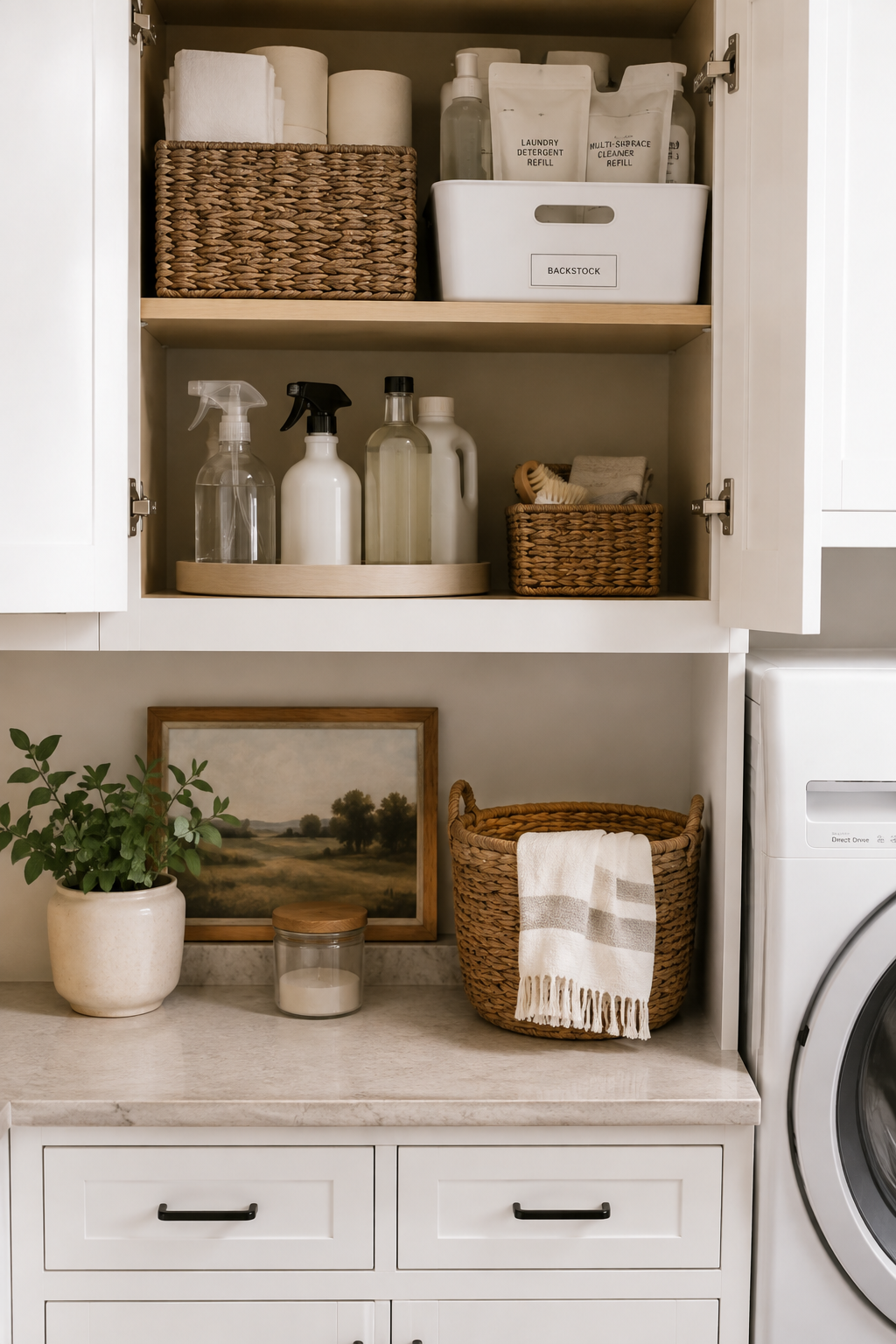
If you buy refills or multipacks, keep the extras together in one designated backstock location rather than distributing them throughout the house.
Then your bathroom cabinet doesn't need three bottles of the same cleaner.
It only needs the one you're currently using.
When it runs out, you know exactly where to find the replacement.
This also makes it much easier to see what you already own before buying more.
7. Make the System Easy to Reset
Any organization system works better when putting things away takes almost no effort.
Avoid creating cleaning storage that requires you to carefully rearrange bottles every time you use something.
Keep categories broad.
Give frequently used items enough space.
Use containers only when they make things easier to grab or return.
And leave a little breathing room.
If the cleaning caddy is packed so tightly that you have to remove three bottles to reach one, the system is working against you.
The goal is simple:
Use it. Put it back. Move on with your day.
8. Let Your Cleaning Supplies Follow Your Routine
There is no rule that says every cleaning product has to live in the same cabinet.
Your home might work better with supplies in several small zones.
Maybe kitchen cleaners live under the kitchen sink.
Bathroom supplies stay in each bathroom.
Laundry products live beside the washer.
The vacuum lives near the rooms where you use it most.
And specialty products live together in one less-accessible storage area.
Instead of asking:
"Where should cleaning supplies go?"
Ask:
"Where would this be easiest to use?"
That question creates a very different kind of organized home.
One designed around your actual life.
Calm Favorites
You don't need a collection of organizing products to make this system work.
But a few simple tools can make cleaning supplies easier to use and return.
A lightweight handled caddy keeps the supplies used for one routine together and makes them easy to carry when needed.
Simple bins can keep categories from spreading across a cabinet while still making it easy to see what's inside.
Keeping a small stack near the areas where you regularly wipe surfaces removes another step from quick cleanups.
A turntable can help in deeper cabinets where bottles tend to disappear behind one another.
When cabinet space is limited, unused vertical space can sometimes hold lightweight cleaning essentials without taking over the shelf below.
The best cleaning organizer isn't the one that holds the most.
It's the one that makes the things you actually use easier to reach.
A Simpler Cleaning Routine Starts With Fewer Steps
An organized home shouldn't require more work to maintain.
It should quietly remove friction from the things you already do.
Putting cleaning supplies near where you use them won't eliminate cleaning.
But it can eliminate the unnecessary searching, gathering, carrying, and putting away that makes a five-minute task feel much bigger.
Start with one room.
Notice the cleaning task you repeat most often.
Put what you need nearby.
Then live with the system for a while.
If it makes the routine easier, you've created something worth keeping.
Because creating a calmer home isn't about cleaning everything all the time.
It's about creating simple systems that make taking care of your home feel a little easier every day.
Final Thoughts
Cleaning will always be part of taking care of a home, but it doesn't have to feel harder than it needs to.
Sometimes the biggest difference isn't a new cleaning routine or a better product.
It's simply having what you need where you need it.
Start with one space where you find yourself cleaning often. Pay attention to what you repeatedly leave the room to find, and give those few essentials a convenient home nearby.
Then stop there.
You don't need to reorganize every cleaning supply in your house in one afternoon.
One bathroom. One kitchen cabinet. One small cleaning kit.
Small changes like these remove little points of friction from your day—and those are often the systems that make a home noticeably easier to live in.
Because the goal isn't to spend more time cleaning.
It's to create a home that's easier to take care of, so you can spend less time thinking about it.
You May Also Like
If you're creating simpler systems throughout your home, you may also like:
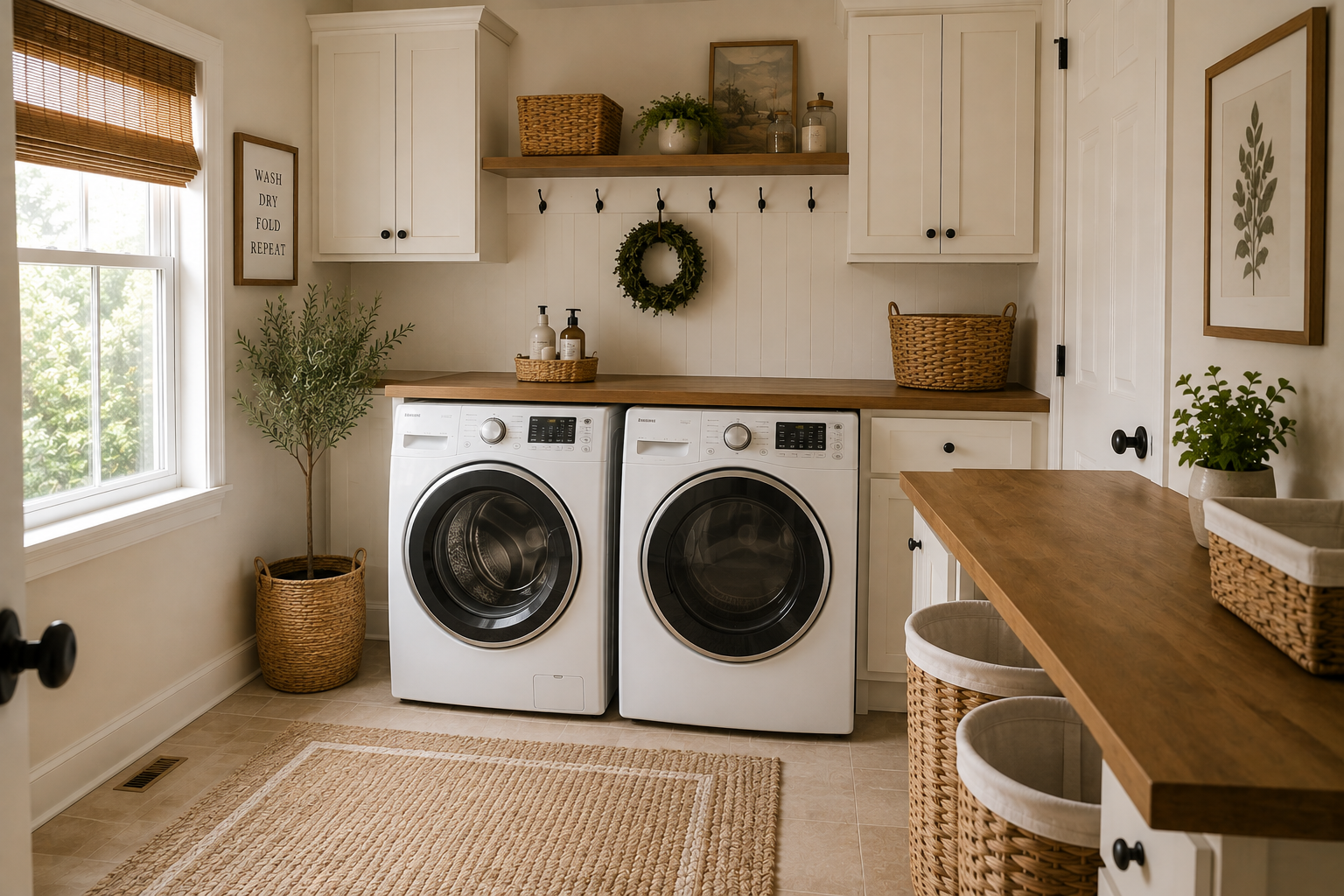
The Laundry Room System That Keeps Clothes Moving
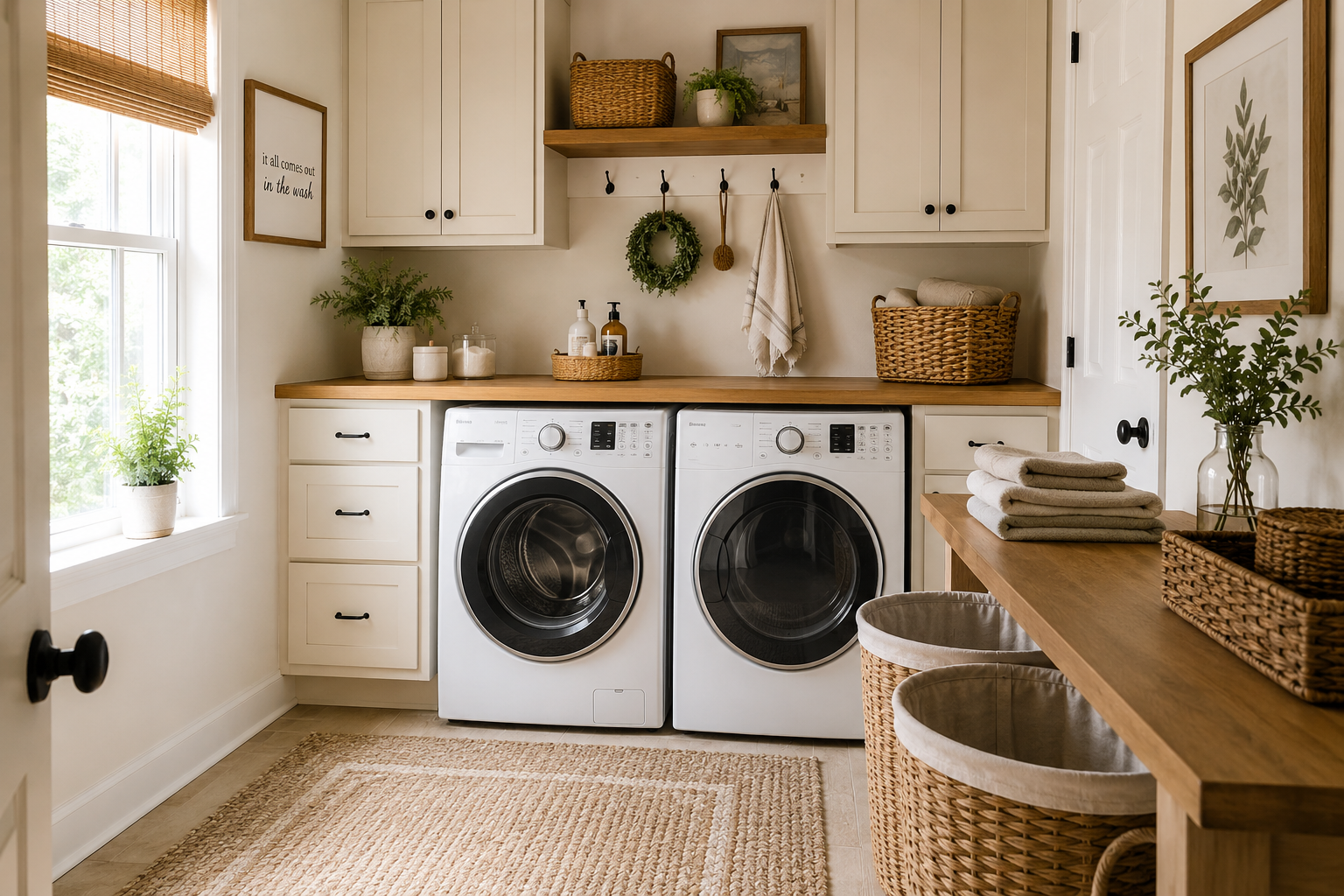
Laundry doesn't need to feel like a never-ending chore. A simple system can keep clothes moving from dirty to washed, dried, folded and put away—while helping your laundry room and your home feel calmer.
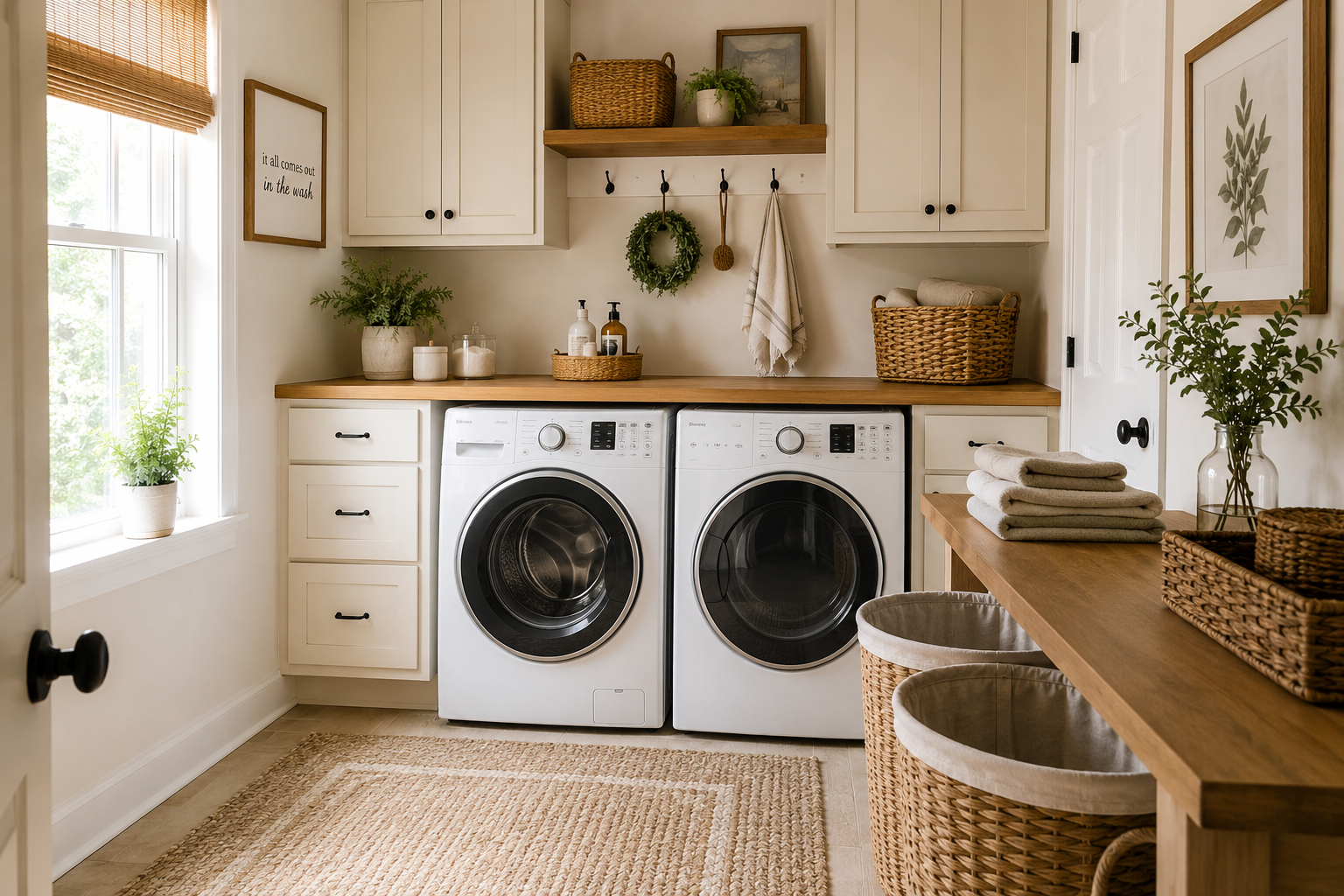
Laundry has a way of making a home feel more chaotic than it really is.
A basket of clean clothes waits to be folded. Another load sits forgotten in the dryer. Dirty clothes collect on bedroom floors while a stack of folded clothes waits to make its way upstairs.
And somehow, even though you're doing laundry all week, it never actually feels finished.
The problem may not be that you need to do laundry more often.
It may simply be that your laundry doesn't have a clear path through your home.
A functional laundry system gives clothes somewhere to go at every stage:
Dirty → Wash → Dry → Fold → Put Away
When each step naturally leads to the next, laundry becomes less of a project and more of a routine that quietly keeps moving.
You don't need a picture-perfect laundry room to make that happen.
You just need a system that works.
Why Laundry So Easily Gets Stuck
Most laundry clutter is really just unfinished laundry.
Think about where clothes tend to collect:
On bedroom floors waiting to be washed
In overflowing hampers
In the washing machine waiting to be moved
In the dryer long after the cycle ends
In baskets waiting to be folded
On beds or chairs waiting to be put away
Every pile marks a place where the process stopped.
That's why adding more storage to your laundry room doesn't always solve the problem.
Instead of asking, "Where can I store more things?" ask:
"What would make it easier for the laundry to move to the next step?"
That one shift turns laundry-room organization into a system instead of a storage project.
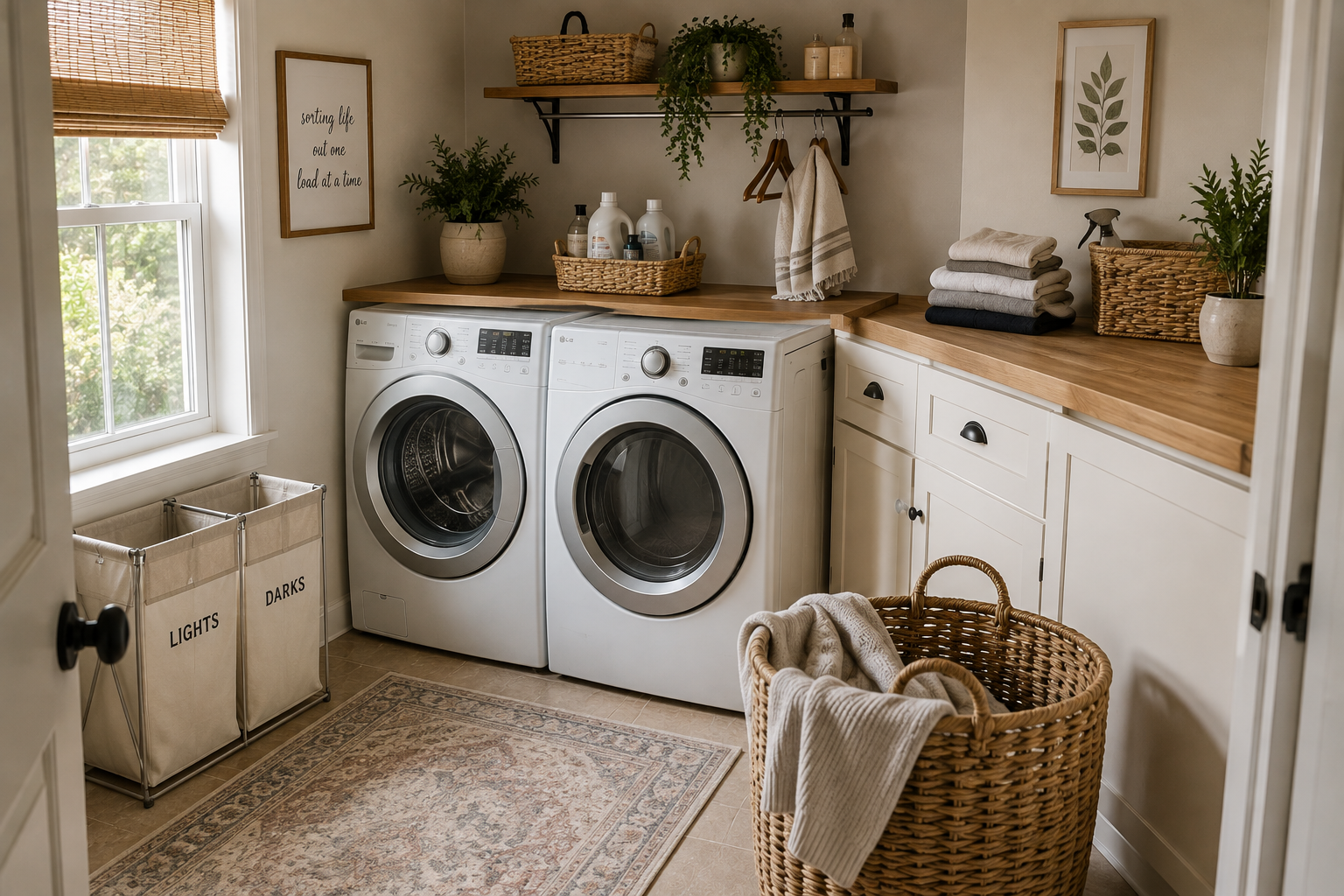
1. Start With a Better Dirty-Laundry System
Your laundry system starts long before clothes reach the washing machine.
If dirty clothes regularly end up on bathroom floors, bedroom chairs, or beside the hamper, don't assume everyone needs to try harder.
Look at the system first.
Place hampers where clothes naturally come off—usually bedrooms, closets, or bathrooms.
Then keep sorting as simple as possible.
Your household might use:
One hamper for everything
A divided hamper for lights and darks
Separate hampers for each family member
One additional basket for towels or delicates
There isn't one correct way.
The best hamper system is the one your household can use without thinking about it.
If five categories create five piles on the floor, you don't need better labels.
You need fewer categories.
Simple is enough.
2. Give Laundry a Trigger
One reason laundry becomes overwhelming is that we often wait until the hamper tells us there's a problem.
Instead, create a simple trigger for starting a load.
Maybe you start one when the hamper is three-quarters full.
Maybe towels are always washed on the same day.
Maybe you put a load in before making breakfast.
You don't necessarily need a complicated laundry schedule.
You simply need something that removes the constant question:
"Should I do laundry today?"
Small routines prevent laundry from becoming an all-day weekend project.
3. Keep Everyday Supplies Where You Use Them
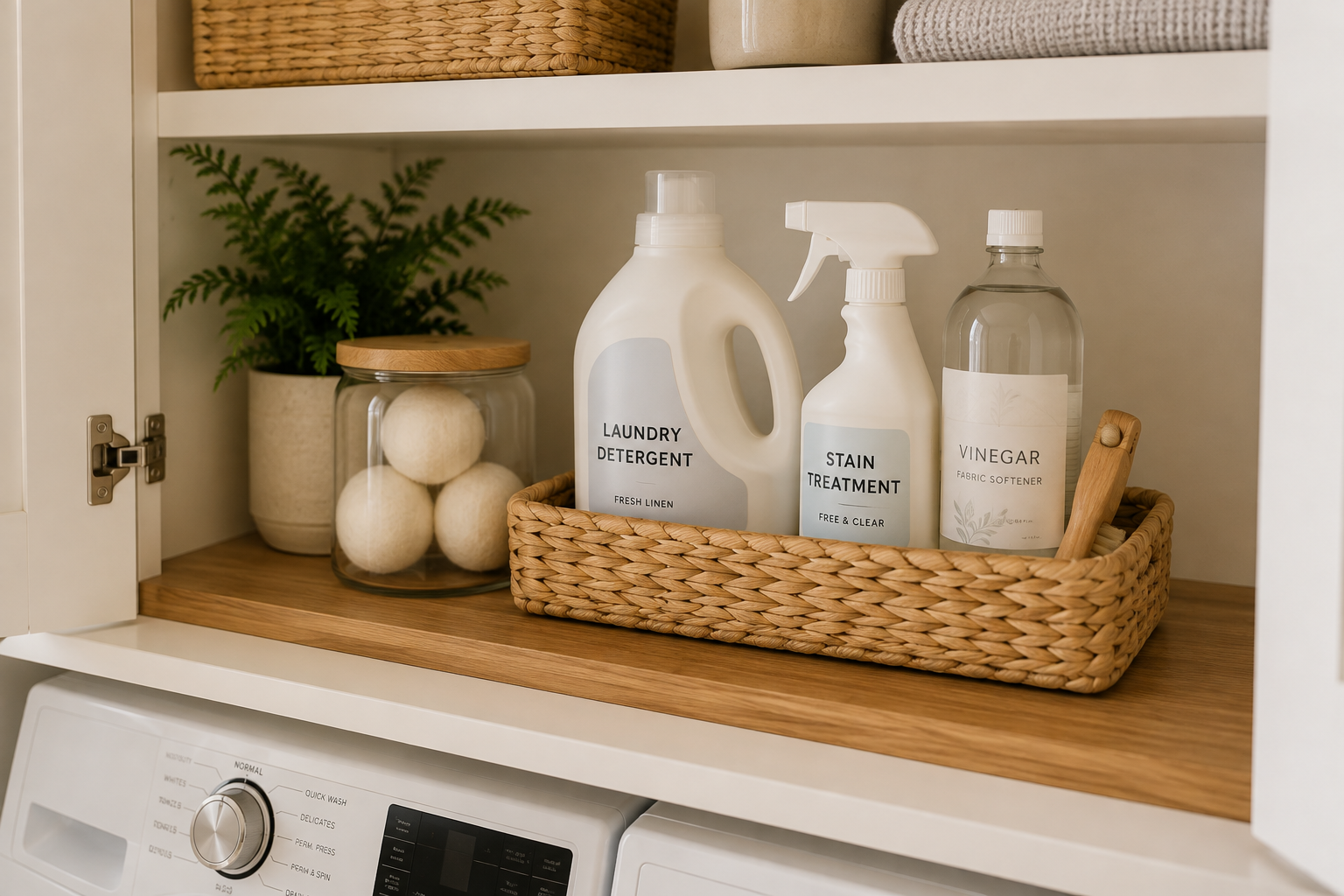
Detergent, stain remover, dryer sheets, wool dryer balls, and other everyday supplies should be easy to reach.
That doesn't mean everything needs to be poured into matching containers.
If transferring detergent into a pretty jar gives you another job to maintain, leave it in the original container.
Organization should make life easier—not create more work.
Keep frequently used supplies together on a shelf, inside a cabinet, or on a simple tray near the washer.
Move backup products and less-used supplies farther away.
The things you use most should always be the easiest things to reach.
4. Create a Small Zone for Clothes That Need Attention
Every laundry room seems to collect a few things that don't fit neatly into the normal routine.
The shirt with a stain.
The sweater that needs to air dry.
The pants missing a button.
The sock waiting for its match.
Without a designated place, these items tend to sit on top of the washer indefinitely.
Give them a small holding zone instead.
A shallow basket can hold pieces that need attention.
A small container can collect unmatched socks.
A hanging rod or fold-down rack can give air-dry clothing somewhere to go.
The key word is small.
You don't want to create a new place to store unfinished tasks forever.
You simply want a temporary landing place until you can finish them.
5. Make Moving the Load Almost Automatic
One of the easiest places for laundry to stall is inside the washing machine.
The goal isn't to become better at remembering it.
The goal is to create a cue that does the remembering for you.
You might:
Set a timer when the washer starts
Start laundry before a routine you already have
Move the load after breakfast
Transfer it before leaving for an errand
Use your washer's notification feature if it has one
Tie laundry to something that already happens in your day.
The fewer things your brain has to remember, the easier the routine becomes.
Good systems carry some of the mental load for you.
6. Protect One Folding Surface
Clean laundry often gets stuck because there isn't an obvious next step after it leaves the dryer.
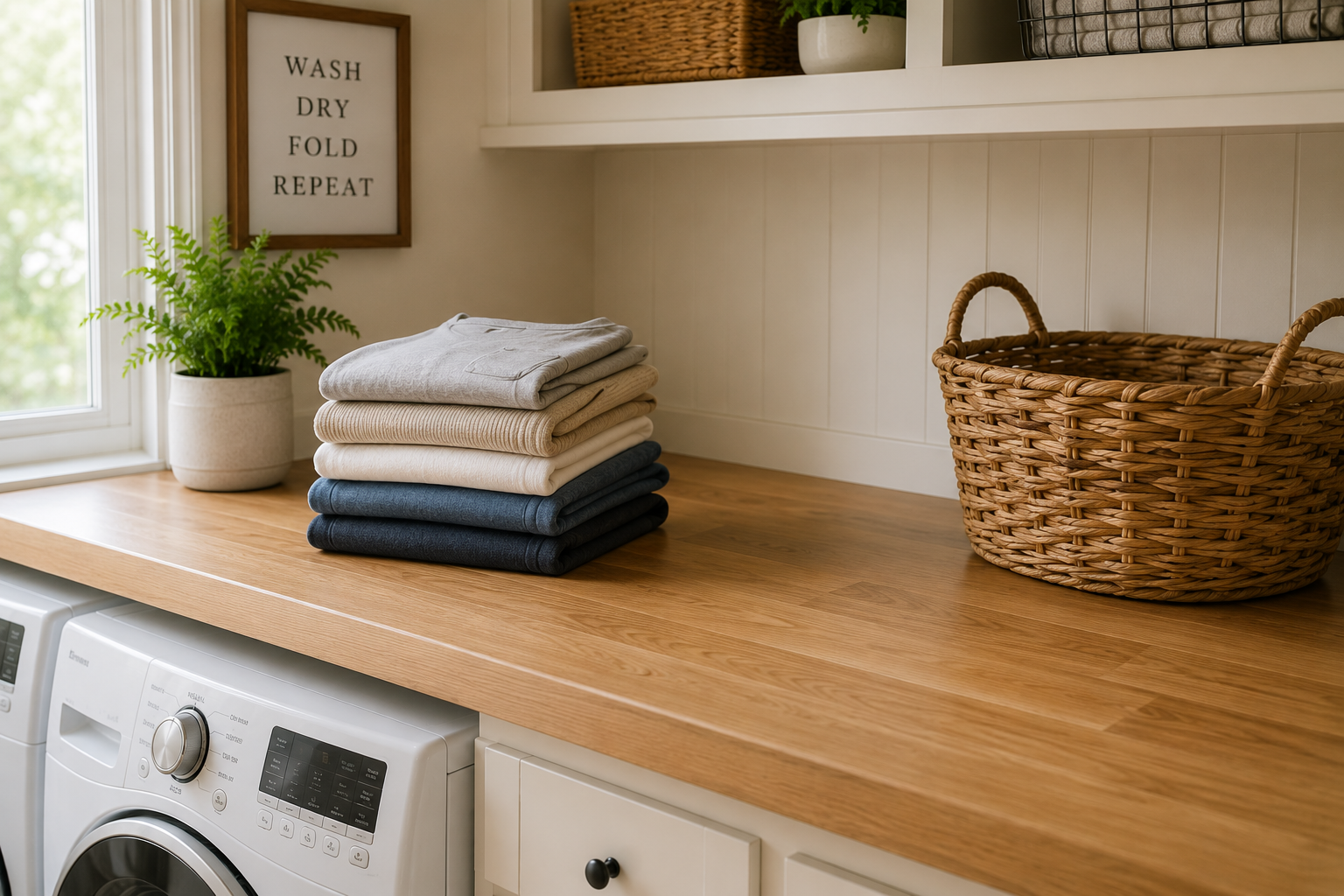
Choose one predictable folding spot.
It could be:
A laundry-room counter
The top of the washer and dryer
Your bed
A folding table
A kitchen island
You don't need a large laundry room.
You just need a surface that's available when you need it.
If you have a laundry counter, resist letting it become permanent storage for shopping bags, cleaning products, packages, and miscellaneous household items.
A clear folding surface removes one more obstacle between dry and done.
7. Make "Put Away" Part of the System
Laundry isn't finished when it's folded.
It's finished when it's put away.
If clean clothes regularly live in baskets for several days, look at what makes that final step difficult.
Are drawers too full?
Are closets overcrowded?
Is everyone's clothing mixed together in one basket?
Does the basket get carried upstairs and then forgotten?
Sometimes the best laundry-room solution happens somewhere else in the house.
Try sorting folded clothing by person before it leaves your folding area.
If it helps, give each family member a basket.
When the basket is full, it goes directly to that person's room.
And if putting clothes away still feels unusually difficult, take a look inside the dresser or closet.
Making room where clothing actually belongs may improve your laundry routine more than another laundry organizer ever could.
8. Finish With a Two-Minute Laundry Reset
When the last load is finished, spend two minutes resetting the space.
Put the detergent back.
Clear the folding surface.
Empty the lint trap.
Return empty baskets.
Hang anything that needs to finish drying.
And check the washer one last time.
The room doesn't need to look perfect.
You're simply making tomorrow's first load easier.
That's what a reset should do.
Our Calm Favorites
You don't need a room full of organizing products to create a better laundry routine.
These are the kinds of simple tools that can support the system and make each step a little easier.
Makes it easier to sort clothes as they're collected so they're ready when it's time to start a load.
Lightweight baskets make clean clothes easier to sort, carry, and return to the rooms where they belong.
Creates a designated place for air-dry clothing without permanently taking up valuable floor space.
Creates one contained place for unmatched socks or clothing that needs a little extra attention.
Final Thoughts
A calmer laundry room isn't really about having a beautiful laundry room.
It's about making an everyday task easier to finish.
When dirty clothes have a landing place, supplies are easy to reach, folding has a clear surface, and clean clothes have a simple path back to where they belong, laundry stops getting stuck in quite so many places.
You don't have to fix the entire routine at once.
Notice where your laundry usually stops.
Start there.
One hamper. One basket. One clear counter. One small routine.
Because the goal isn't to become better at doing laundry.
It's to create a system that asks a little less of you every time you do it.
Less friction. Fewer piles. A calmer home.
You May Also Like
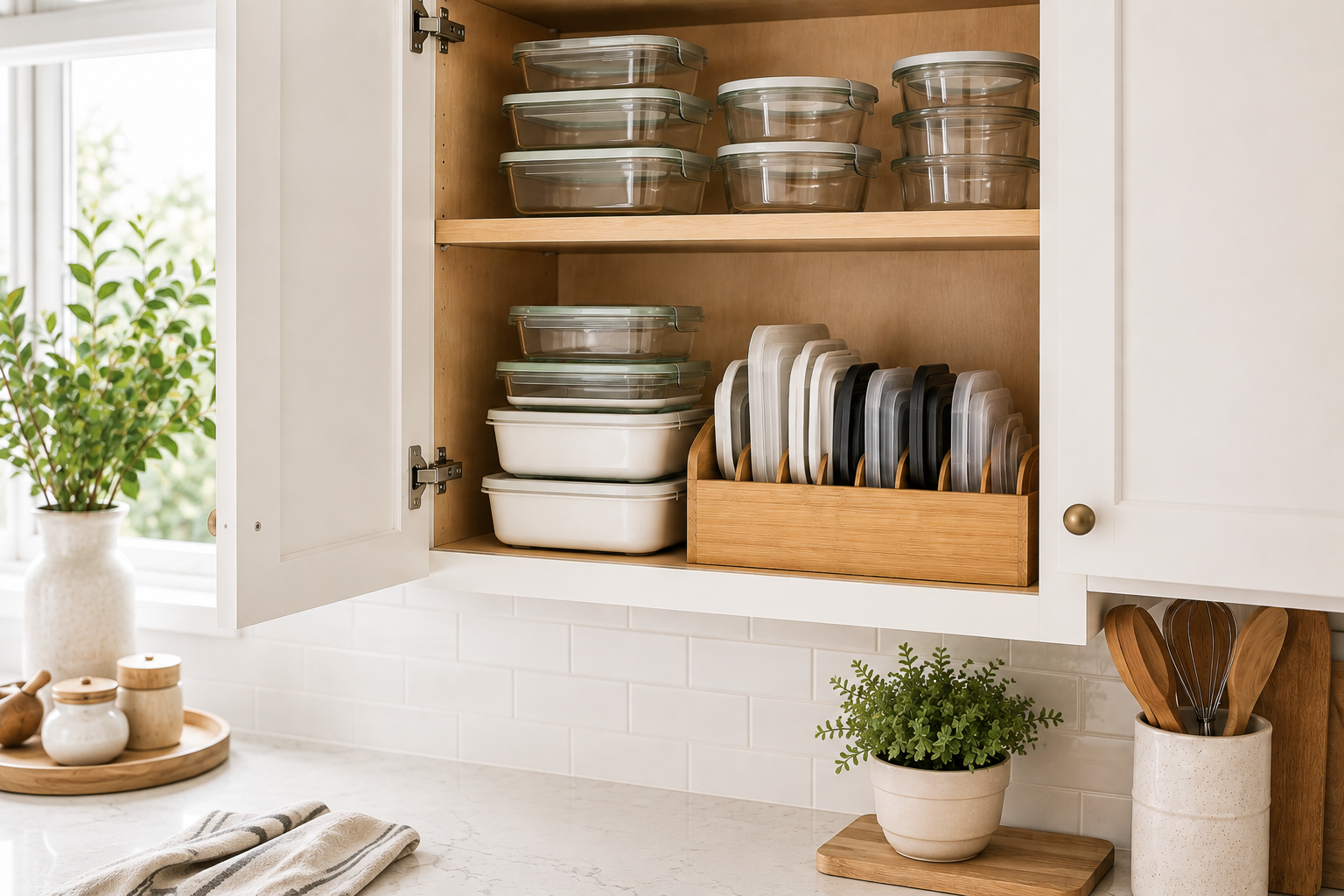
How to Organize Food Storage Containers Without the Frustration
A practical system for organizing food storage containers and lids so your kitchen cabinet stays neat, functional, and easy to maintain.
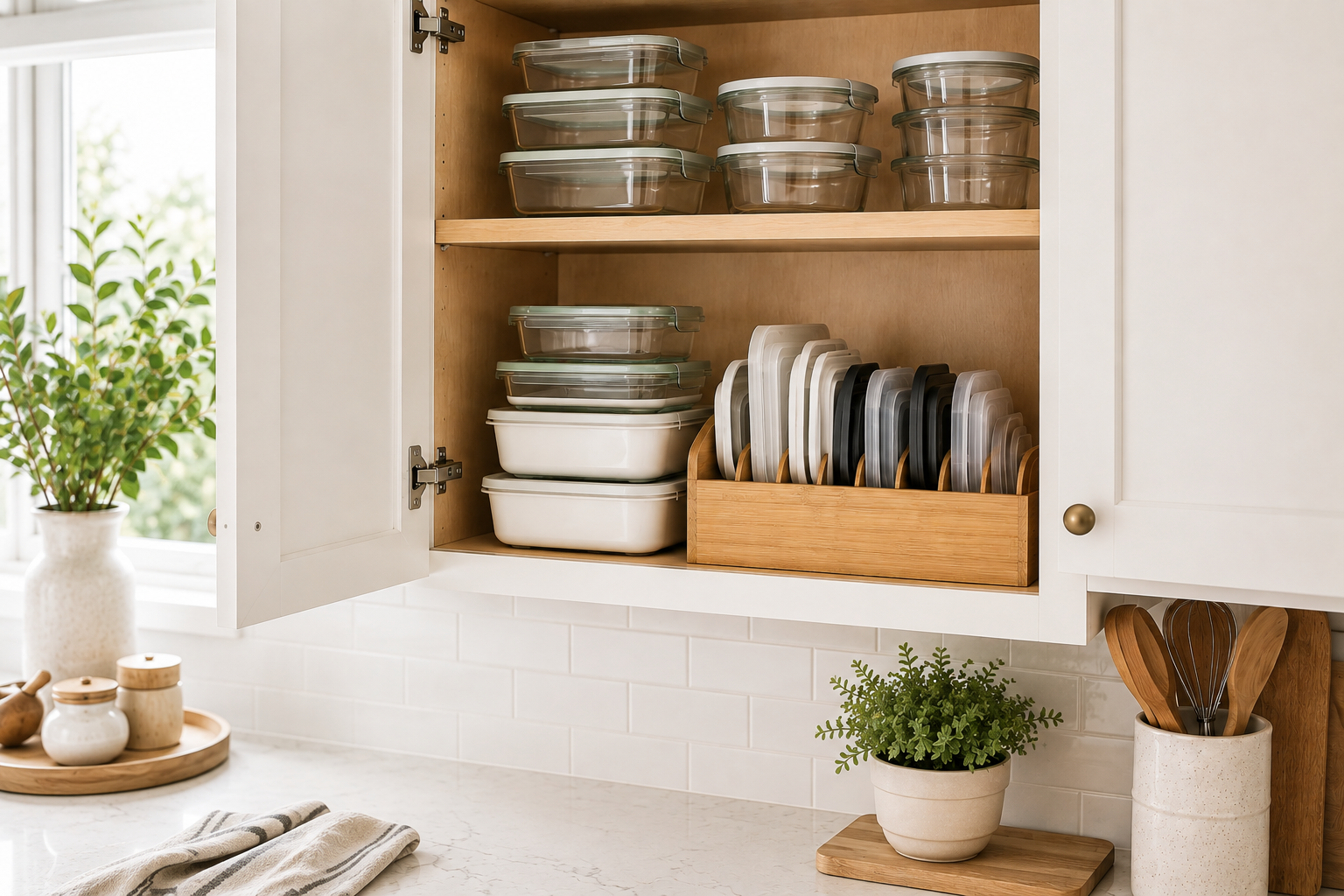
Have you ever opened the cabinet where you keep your food storage containers only to have a lid tumble onto the counter—or discovered the one container you need doesn't have a matching top?
You're not alone.
Food storage containers are one of the most frequently used items in the kitchen, which also makes them one of the easiest areas to become disorganized. Between mismatched lids, overflowing stacks, and containers collected over the years, even an organized kitchen can have one cabinet that feels frustrating.
The good news is that organizing food storage containers doesn't require buying an entirely new matching set. A few simple systems can help you find what you need quickly, keep the cabinet organized, and make putting everything away after unloading the dishwasher much easier.
Why Food Storage Containers Become So Frustrating
Most food storage cabinets don't become cluttered because people aren't organized.
They become cluttered because there's no simple system for putting everything away.
Containers get stacked too high.
Lids are tossed together in one pile.
Different brands don't nest well.
Extra containers slowly accumulate over time.
Instead of creating more storage, the goal is to create a system that makes everyday use simple.
1. Keep Only the Containers You Actually Use
The easiest way to improve any food storage cabinet is to start with less.
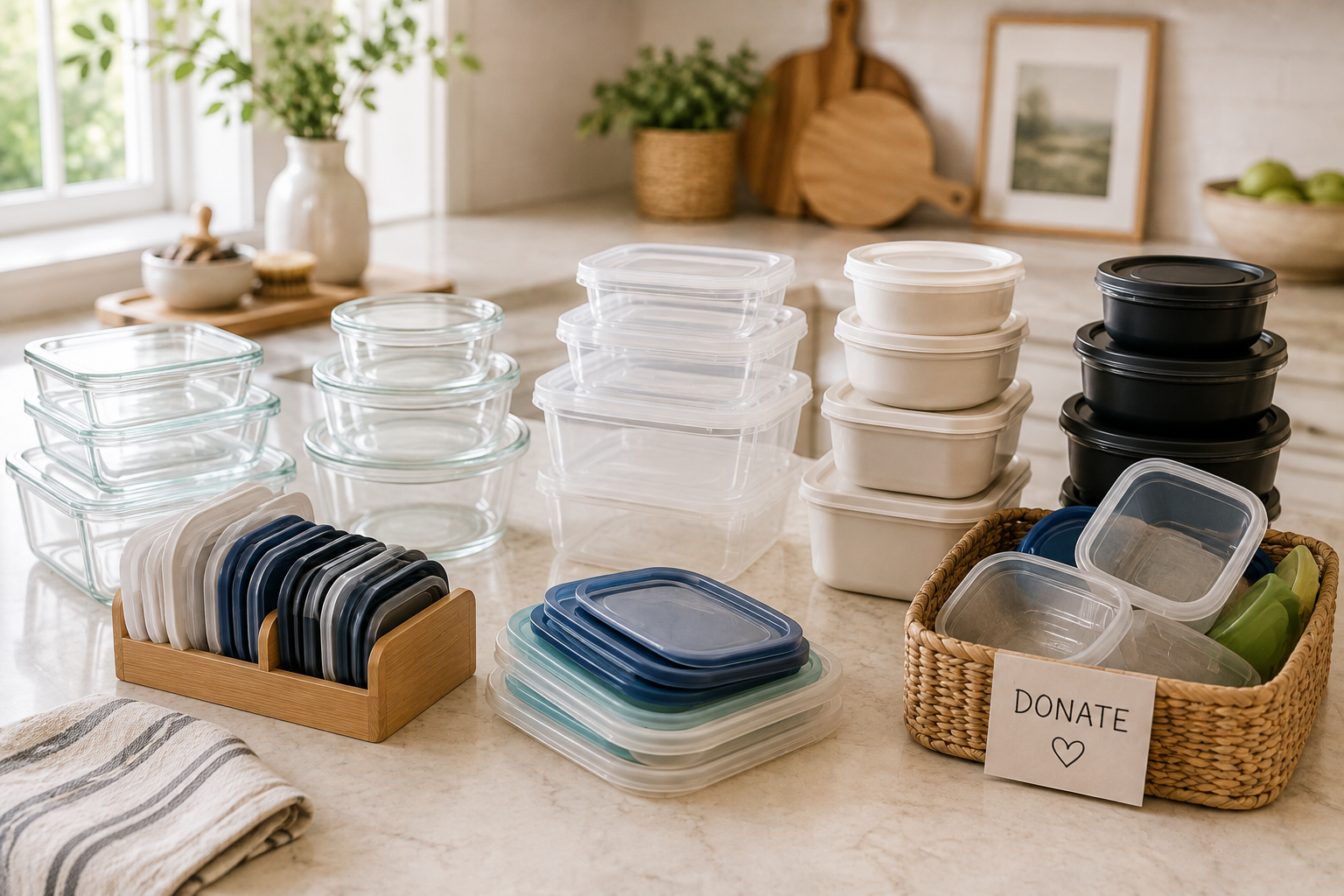
Take every container and lid out of the cabinet.
Recycle cracked containers, stained plastic, and anything missing its matching piece.
If you have several different brands that don't stack together, keep the ones you reach for most often and donate the rest.
A smaller collection that's easy to maintain is far more useful than an overflowing cabinet full of containers you rarely use.
2. Separate Containers and Lids
Containers and lids work best when they each have their own dedicated space.
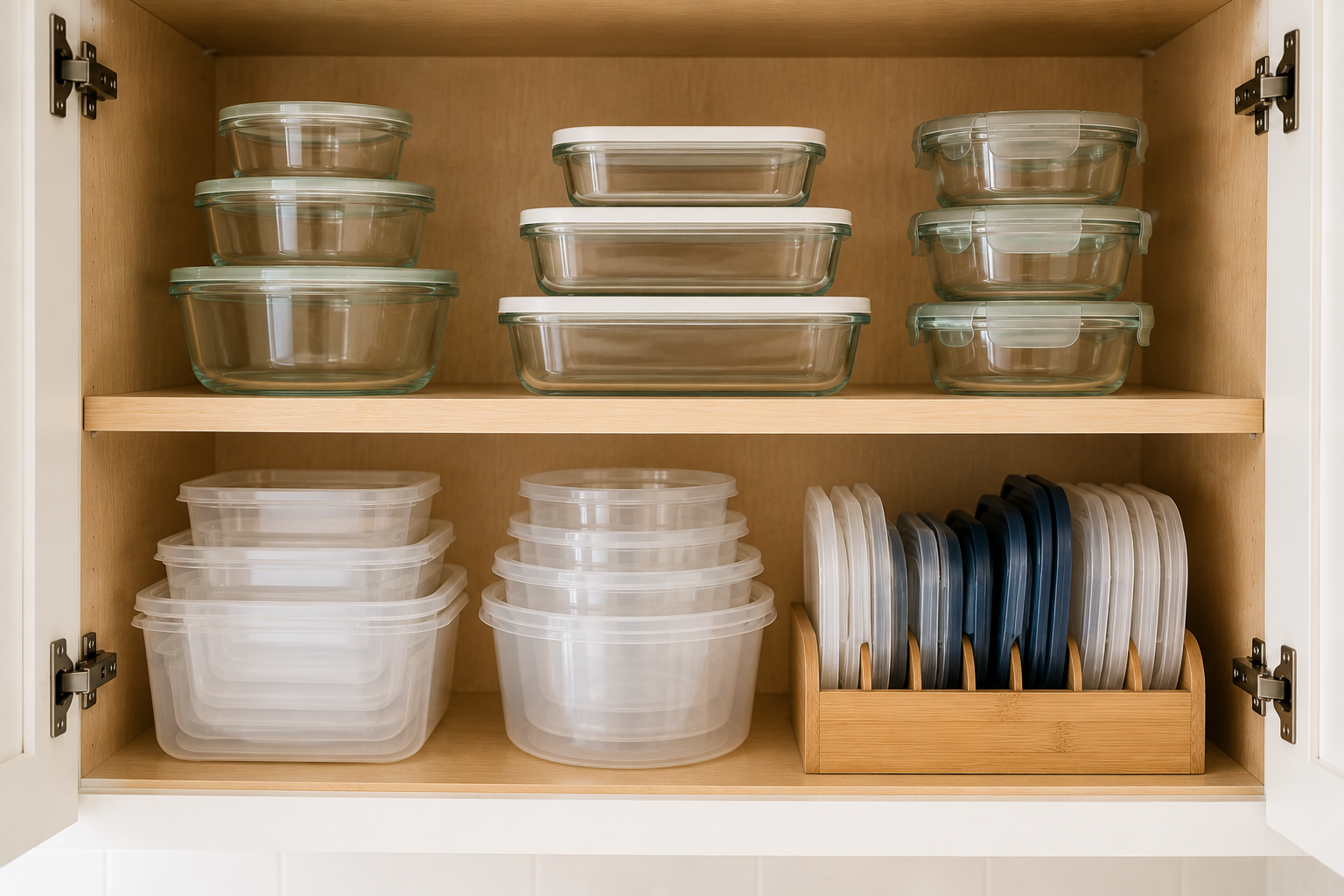
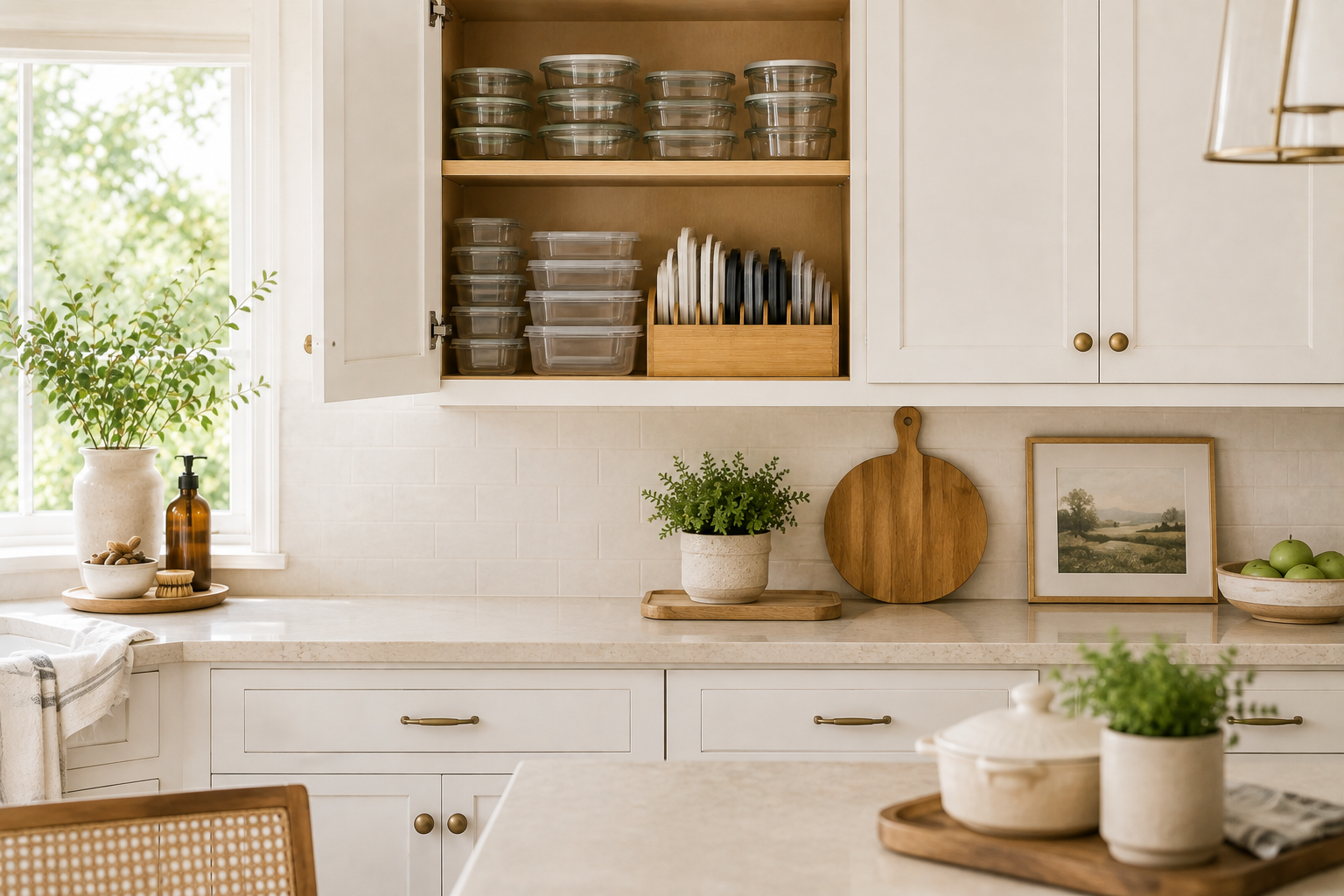
Instead of snapping lids onto every container, stack containers together by size and store lids upright in a divider.
This makes every piece easier to see while preventing unstable stacks from falling over every time you open the cabinet.
3. Stack Similar Sizes Together
Rather than building one tall tower of containers, create several smaller stacks.
For example:
Snack-size containers
Medium meal-prep containers
Leftover containers
Large family-size containers
Grouping similar sizes keeps stacks stable and makes it much easier to return containers after they've been washed.
4. Give Every Lid a Home
Lids are usually the biggest source of frustration.
Instead of tossing them into one pile, stand them vertically inside a bamboo or acrylic divider.
Grouping similar sizes together allows you to quickly flip through them instead of digging through a tangled stack.
A dedicated lid organizer is one of the simplest improvements you can make.

5. Leave a Little Empty Space
A cabinet that's packed completely full is difficult to maintain.
Leaving a little breathing room allows containers to be returned quickly without rearranging everything each time.
Think of empty space as part of your organizing system—not wasted storage.
A little extra room makes everyday routines feel much easier.
6. Keep the System Simple
You don't need dozens of organizers.
You don't need matching containers.
You don't need a picture-perfect cabinet.
You simply need a system that's easy to maintain after unloading the dishwasher.
Simple systems are the ones that last.
7. Spend One Minute Resetting the Cabinet
Every few days, take one minute to:
Return lids to their divider.
Restack leaning containers.
Put stray pieces back where they belong.
Recycle damaged containers when you notice them.
Small resets prevent small messes from becoming overwhelming projects.
Calm Favorites
Keeps food storage lids standing upright so they're easy to find without digging through a messy pile.
Nested containers reduce clutter and make putting everything away much faster.
Keeps everyday pantry staples visible, organized, and easy to grab.
Adds another storage level for larger containers without creating unstable stacks.
Makes deep cabinets easier to access while keeping everything visible.
Perfect for leftovers and meal prep while helping keep the refrigerator organized.
A simple place to organize bag clips, reusable food bags, and other small kitchen accessories.
Final Thoughts
An organized food storage container cabinet isn't about having perfectly matching containers.
It's about creating a simple system that's easy to maintain every day.
When containers stack neatly, lids have a designated home, and everything is easy to put away after unloading the dishwasher, your kitchen feels calmer—and everyday routines become just a little easier.
Remember, organization isn't about perfection.
It's about creating simple systems that support the way you live.
You May Also Like
The Entryway Drop Zone That Makes Coming Home Feel Instantly Calmer
Create a welcoming entryway that stays organized with simple drop zone systems for shoes, coats, keys, bags, and everyday essentials. Learn practical ideas that make coming home feel calmer and your daily routine easier.
Have you ever walked through the front door only to feel like your home is already asking something from you?
Shoes are scattered across the floor. Keys disappear into random piles. Mail lands on the kitchen counter. Jackets end up draped over dining chairs. Before you've even had a chance to relax, clutter has already started following you from room to room.
It isn't because you're disorganized.
It's because your home may be missing one simple system.
An entryway drop zone creates a designated place for the things that enter and leave your home every day. Instead of making dozens of small decisions every time you walk through the door, your routine becomes automatic. Everyone knows where shoes belong. Keys always have a home. Bags aren't left in random rooms.
Small systems like this don't just reduce clutter—they make coming home feel calmer.
The best part is that you don't need a large mudroom or a professionally designed entryway to make it work. Whether your front door opens into a spacious foyer, a hallway, or directly into your living room, you can create a drop zone that fits your space and your everyday routine.
Why Entryways Become Clutter Magnets
The front door is one of the busiest places in your home.
Every day, items move in and out constantly:
Shoes
Keys
Wallets
Purses
Backpacks
Jackets
Sunglasses
Mail
Water bottles
Dog leashes
Without designated homes, these everyday essentials naturally end up wherever they're dropped.
Over time, that small pile by the front door spreads to nearby counters, dining tables, and kitchen islands. The clutter doesn't stay in one place—it slowly travels through your home.
Creating a drop zone isn't about adding more storage.
It's about creating one simple routine that makes every arrival and departure easier.
Start With What Your Family Uses Every Day
Before buying baskets or hooks, spend a few days paying attention to what actually lands near your front door.
Ask yourself:
What do we carry in every day?
What do we grab before leaving?
What constantly ends up on the floor?
What do we waste time searching for?
Your answers become the foundation of your drop zone.
A household with young children may need backpack storage and shoe baskets.
A dog owner might need a dedicated place for leashes and waste bags.
Someone who works from home may only need a tray for keys, sunglasses, and outgoing mail.
The goal isn't to copy someone else's entryway.
It's to build one that supports the way your family already lives.
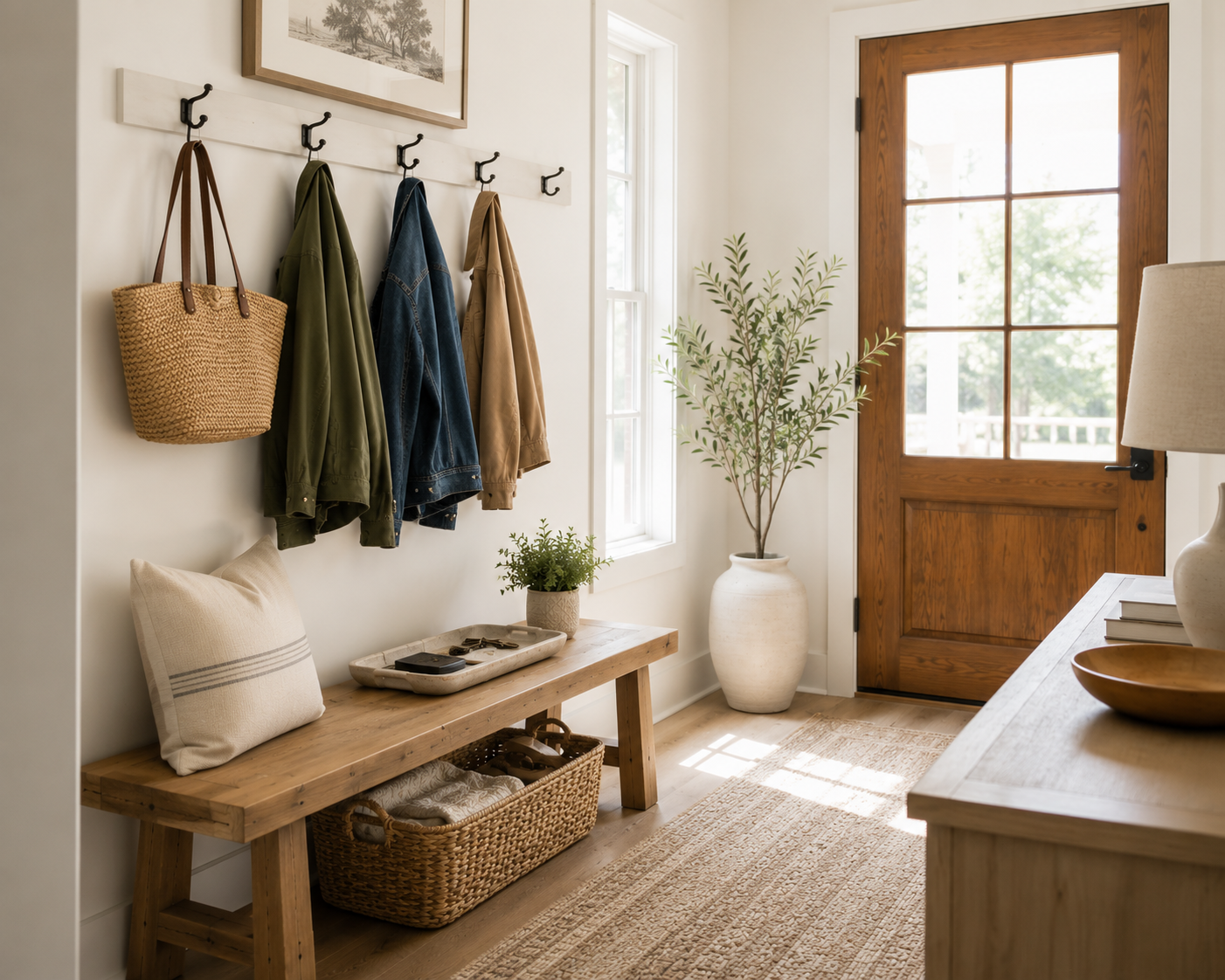
Create Simple Zones
One of the easiest ways to keep an entryway organized is by giving every category its own home.
Instead of thinking about organizing individual items, organize by purpose.
For example:
Shoes
Place a basket, tray, or low shoe rack near the door so shoes naturally come off in one location.
Jackets
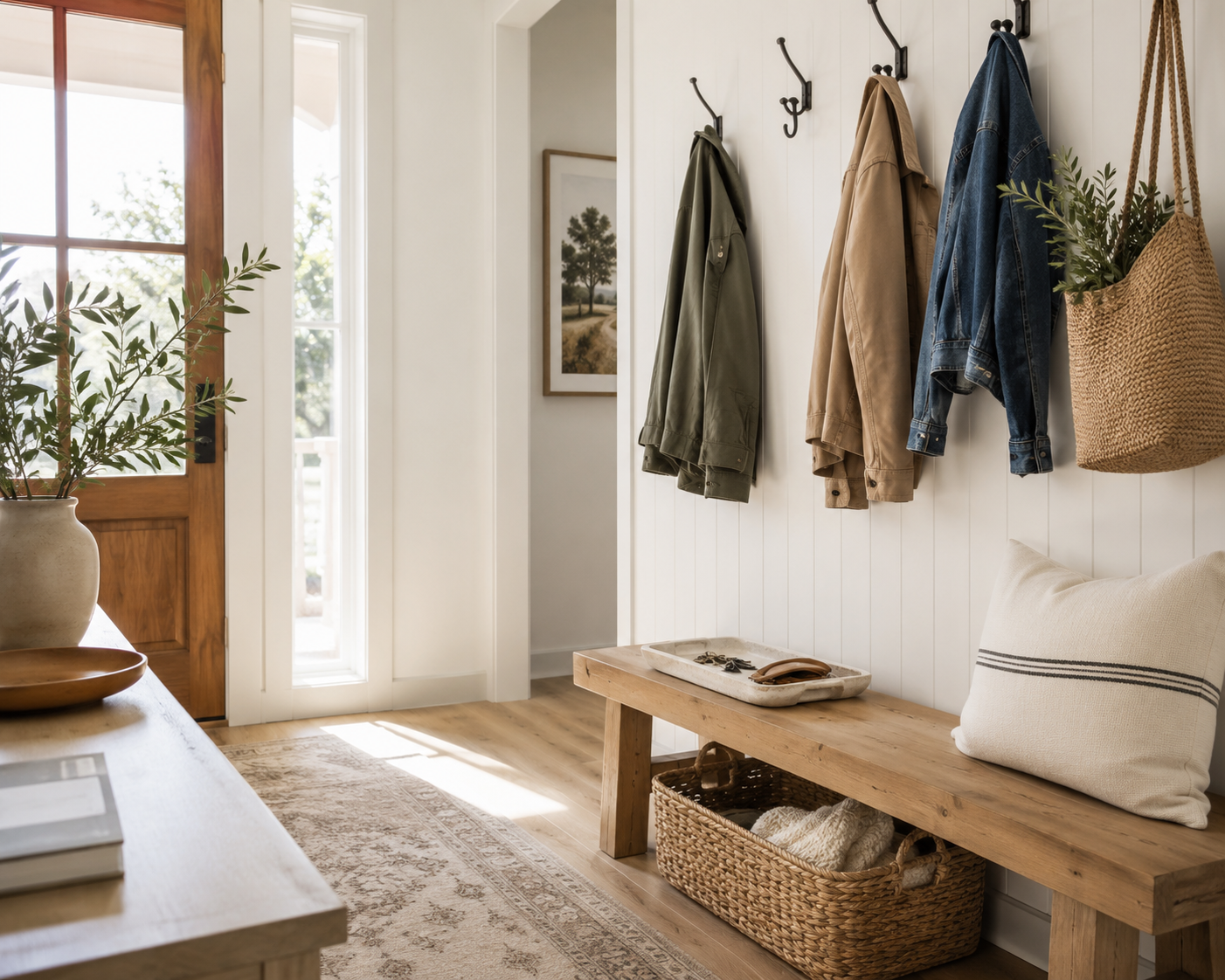
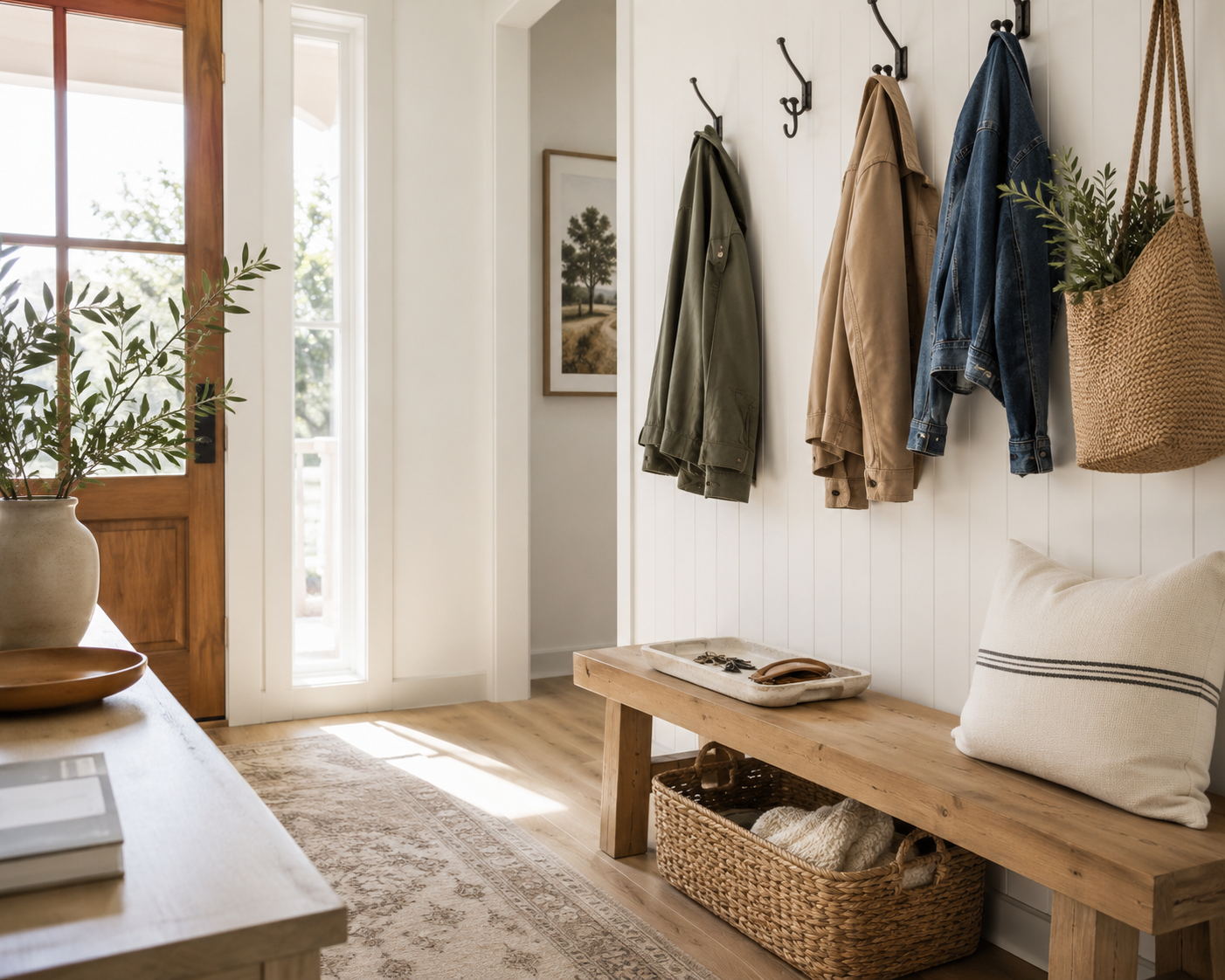
Install sturdy wall hooks that everyone can reach. Hooks are often easier to use than closets for everyday coats.
Keys and Wallets
Use a decorative catchall tray on a console table or floating shelf so these essentials never disappear into random piles.
Instead of carrying mail into the kitchen, create a small basket labeled "To Sort." This keeps paper contained until you're ready to go through it.
Bags
Assign each family member a hook or basket for backpacks, purses, reusable shopping bags, or work totes.
Simple zones reduce daily decision-making, making it easier for everyone to maintain the system.
Keep the System Simple
The most successful entryway drop zones aren't filled with dozens of organizers. They're built around a few thoughtful systems that are easy to maintain every day.
Instead of creating storage for every possible item, focus on the things your family actually uses.
If something doesn't belong in the entryway, don't create permanent storage for it.
Keeping the space simple makes it easier to keep tidy.
Here are a few habits that help the system last:
Return keys to the tray every time you come home.
Hang coats before walking into the rest of the house.
Place shoes on the rack or in the basket instead of the floor.
Empty the mail basket once or twice each week.
Return reusable shopping bags to their hook after unloading groceries.
These tiny habits take only seconds, but together they prevent clutter from building up over time.
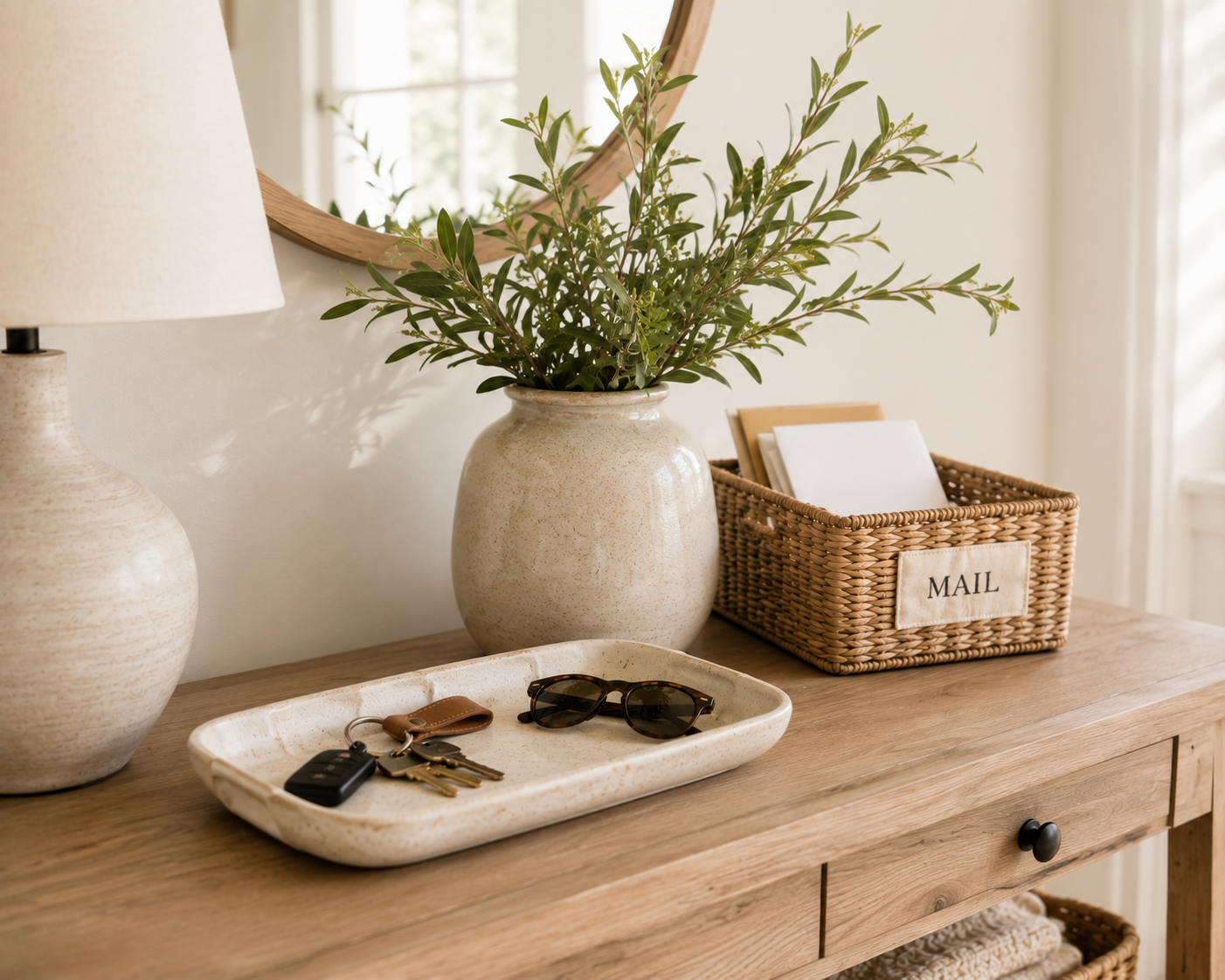
Make It Easy for Everyone to Use
The best organizing systems don't rely on perfect habits—they make the right choice the easiest choice.
Think about every member of your household.
Can children reach the hooks?
Is there a place for backpacks?
Can guests easily see where to leave their shoes or coats?
Does everyone know where to return keys?
When your system is easy to use, it naturally becomes part of your routine.
If someone has to open several doors, move other items, or search for storage, they're much less likely to put things away.
Organization should remove friction—not create it.
Don't Forget Seasonal Changes
Your entryway needs change throughout the year.
In winter, you may need room for boots, heavy coats, hats, and gloves.
During summer, sandals, baseball caps, sunglasses, and beach bags may become everyday essentials.
Rather than trying to store everything year-round, rotate seasonal items every few months.
This simple habit keeps your entryway feeling open instead of overcrowded.
When the seasons change, take five minutes to remove anything you no longer use every day.
A little maintenance keeps the system working without requiring a major reorganization.
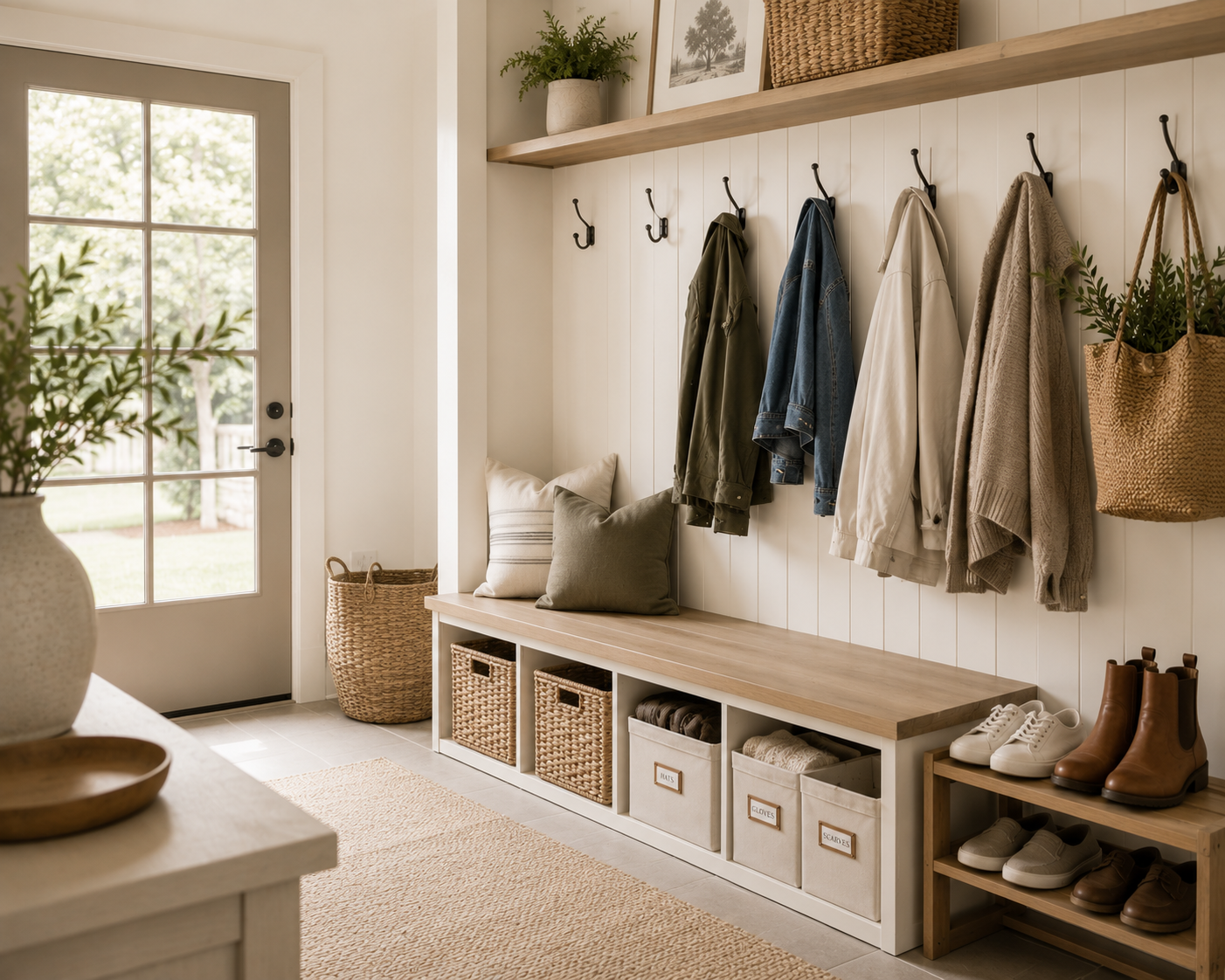
Small Spaces Can Still Have Great Systems
You don't need a large foyer to create an organized entryway.
Even a narrow hallway can become an effective drop zone with a few simple additions.
Consider using:
A slim floating shelf for keys and mail
Wall-mounted hooks instead of bulky furniture
A narrow shoe rack
One woven basket for everyday accessories
A small bench with hidden storage underneath
When floor space is limited, think vertically.
Using wall space allows you to keep everyday essentials organized without making your entryway feel crowded.
Remember, it's not about the size of the space.
It's about giving everyday items a consistent home.
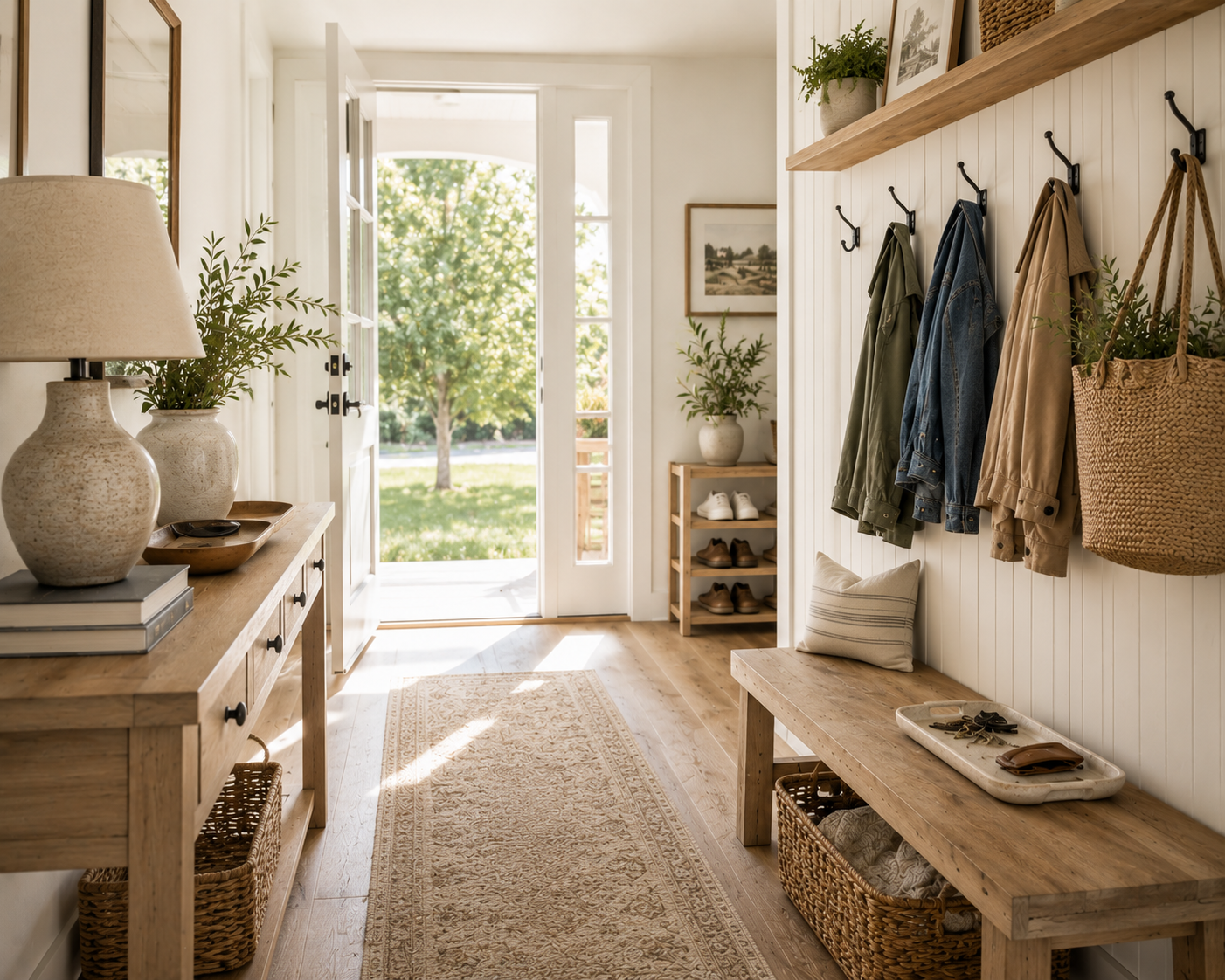
Our Calm Favorites
These are a few of our favorite products for creating a simple, functional entryway that supports everyday routines. Each one helps reinforce the system without adding unnecessary clutter.
A simple tray gives keys, wallets, sunglasses, and loose change a permanent home so they're easy to grab on your way out the door.
Wall hooks make it easy for everyone to hang jackets, backpacks, purses, and reusable shopping bags instead of leaving them on chairs or the floor.
Perfect for shoes, dog supplies, scarves, hats, or seasonal accessories while adding warmth and texture to your entryway.
Keeps everyday footwear contained near the door without taking up unnecessary space, helping floors stay clear and easy to clean.
Final Thoughts
Your entryway is more than just the place where you come and go—it's the first space that welcomes you home each day.
When it has a simple system, your entire home feels calmer from the moment you walk through the door.
Remember, you don't need a large mudroom or custom built-ins to create an organized entryway. A few intentional zones, a handful of practical storage solutions, and consistent daily habits are often all it takes.
Start with one small change. Add a tray for your keys. Install a few hooks. Place a basket by the door for shoes.
Those simple systems quickly become everyday routines, and those routines help create a home that feels lighter, more welcoming, and easier to live in.
A calm home begins at the front door. And sometimes, the smallest changes make the biggest difference.
You May Also Like
Continue creating a calmer home with these helpful organization guides:

The 15-Minute Evening Reset That Helps Your Home Stay Calm
Discover a simple 15-minute evening reset routine that helps your home stay calm, organized, and ready for tomorrow. Learn how a few intentional habits each evening can reduce clutter, simplify your mornings, and make everyday life feel easier.

Some homes seem to stay tidy almost effortlessly.
The secret usually isn't that someone spends hours cleaning every evening. It's that they have a simple reset routine that prevents small messes from turning into overwhelming clutter.
A 15-minute evening reset gives your home a fresh start every morning. Instead of waking up to dishes in the sink, shoes by the door, and yesterday's clutter waiting for you, you begin the day with calm.
The goal isn't perfection.
It's creating a home that supports your everyday life.
Why Evening Resets Work
Mess doesn't usually appear all at once.
It builds one coffee mug, one unopened package, one jacket on the chair, and one pile of mail at a time.
An evening reset interrupts that cycle before it grows.
Instead of spending hours catching up every weekend, you're maintaining your home in small, manageable pieces.
Small resets create lasting calm.
Step 1: Put Away the Easy Things First (3 Minutes)
Start with the quickest wins.
Walk through your main living spaces carrying a basket.
Pick up:
Shoes
Jackets
Water bottles
Toys
Books
Mail
Random household items
Return everything to its home.
You'll be surprised how much calmer your home feels after just a few minutes.
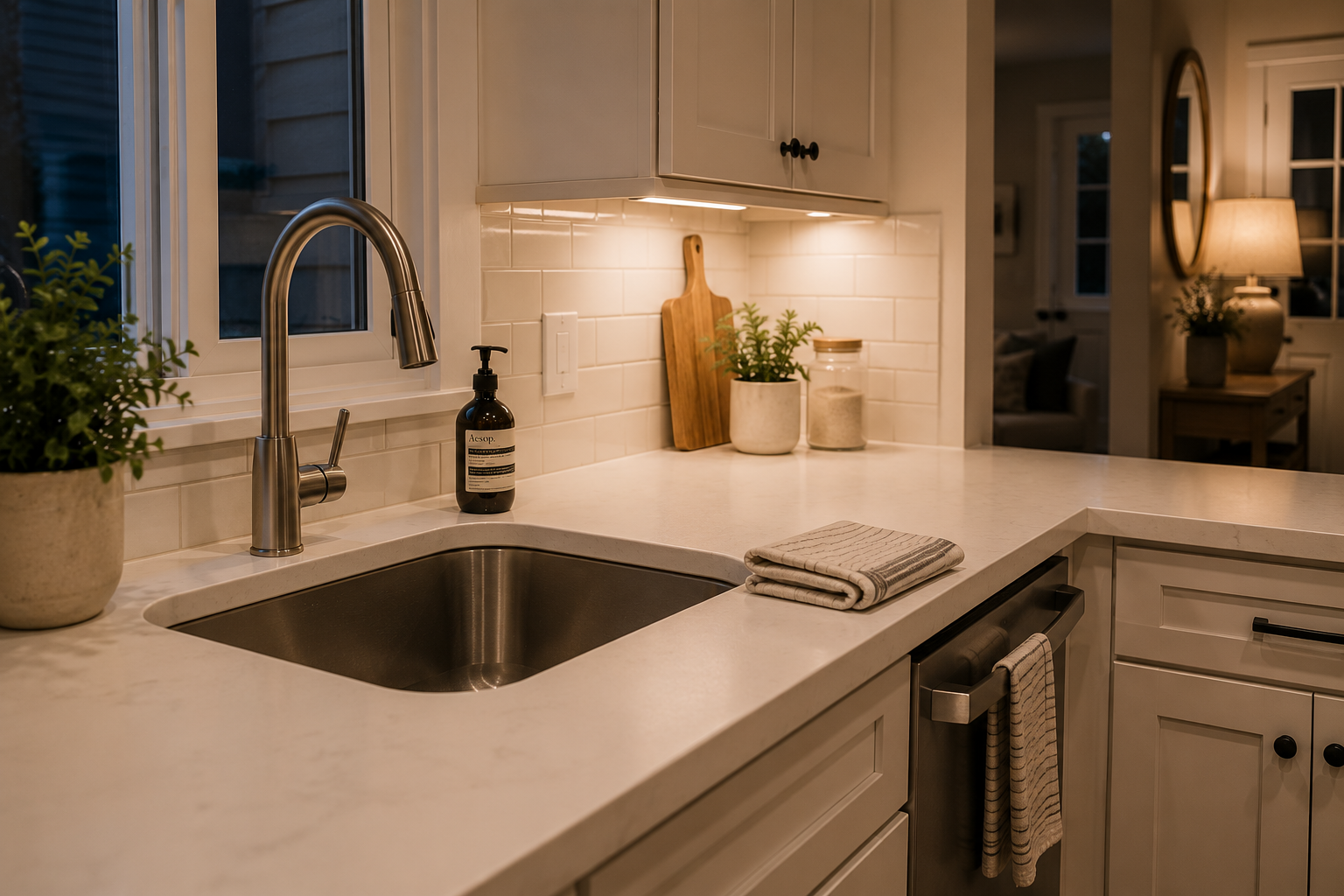
Step 2: Reset the Kitchen (5 Minutes)
The kitchen sets the tone for tomorrow morning.
Take a few minutes to:
Load or run the dishwasher
Wipe the counters
Put food away
Empty the sink
Straighten hand towels
You don't need a deep clean.
You're simply giving tomorrow's version of yourself a fresh start.
Step 3: Prepare for Tomorrow (4 Minutes)
Reduce tomorrow's decisions tonight.
Simple ideas include:
Set out coffee supplies.
Put your purse or work bag by the door.
Charge electronics.
Review tomorrow's calendar.
Refill water bottles.
Lay out gym clothes.
These tiny actions make mornings noticeably smoother.
Step 4: End With One Calm Space (3 Minutes)
You don't need every room to be perfect.
Choose one area to finish completely.
Maybe it's:
the living room
the kitchen island
the entryway
your bedside table
Ending your evening with one peaceful space creates a sense of completion and helps your home feel intentionally cared for.

A Simple Evening Reset Checklist
Every evening:
✔ Return items to their homes
✔ Reset kitchen counters
✔ Load the dishwasher
✔ Put tomorrow's essentials by the door
✔ Empty the sink
✔ Fold blankets
✔ Turn off lights in finished rooms
✔ Enjoy one calm space before bed
The goal isn't doing everything.
It's creating consistency.
Calm Home Organization Favorites
These are a few of my favorite products that make an evening reset simpler and help create everyday systems that are easy to maintain. They aren't about creating a perfect home—they're about making it easier to keep your home calm, functional, and ready for tomorrow.
Decorative Catch-All Tray
A simple catch-all tray gives keys, wallets, sunglasses, and mail a designated home, helping entry tables, kitchen counters, and other flat surfaces stay clear.
Woven Storage Basket
Perfect for quickly gathering blankets, books, toys, or other everyday items during your evening reset. It's an easy way to tidy a room in just a few minutes.
Bamboo Drawer Organizer
Create designated spaces for everyday essentials so everything has a home and is easy to put away after each use.
Microfiber Cleaning Cloths
Keep a few within easy reach for quickly wiping kitchen counters, tables, and other surfaces before bed, making your morning feel like a fresh start.
Slim Velvet Hangers
Matching slim hangers help closets stay neat, save space, and make putting away clean laundry quick and effortless.
These simple products support the system—they don't replace it. Small habits paired with practical organizing solutions make it easier to maintain a calm home every day.
Final Thoughts
Your home doesn't stay calm because you clean more.
It stays calm because you reset it regularly.
Fifteen intentional minutes each evening can prevent hours of weekend catch-up, reduce everyday stress, and help you wake up to a home that feels peaceful instead of overwhelming.
Small habits create lasting change.
And sometimes the smallest routine becomes the one that makes the biggest difference.
The Linen Closet System That Makes Everyday Life Simpler
Learn how to organize your linen closet with simple systems that make towels, sheets, guest supplies, and everyday essentials easy to find. Create a functional linen closet that stays organized and makes daily routines simpler.
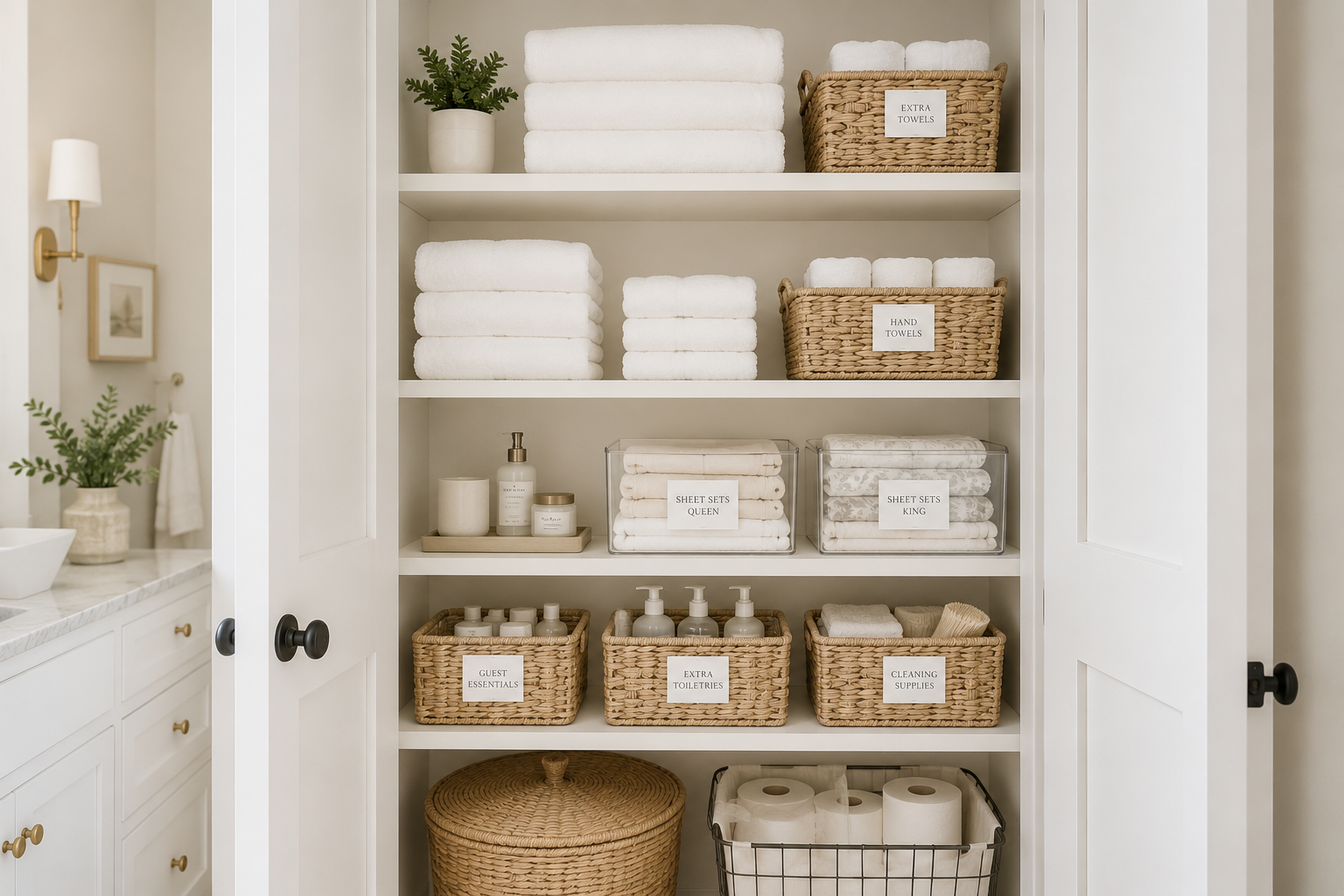
A linen closet should make everyday routines easier—not create frustration every time you need a clean towel or fresh sheets.
If you've ever stood in front of an overflowing closet searching for a matching pillowcase, digging through stacks of towels, or wondering where the guest toiletries disappeared, you're not alone.
The goal isn't perfectly folded towels or magazine-worthy shelves. The goal is creating simple systems that help you find what you need quickly and keep everything easy to put away.
In this guide, I'll show you how to organize your linen closet so it supports your daily routines, simplifies laundry day, and makes preparing for guests almost effortless.
Start by Emptying Everything
Take everything out of the closet so you can see exactly what you're working with.
Group similar items together:
Bath towels
Hand towels
Washcloths
Bed sheets
Pillowcases
Blankets
Guest supplies
Toiletries
Cleaning linens
Once everything is visible, it's much easier to decide what deserves space.
Keep Only What You Actually Use
Most linen closets contain far more than most families need.
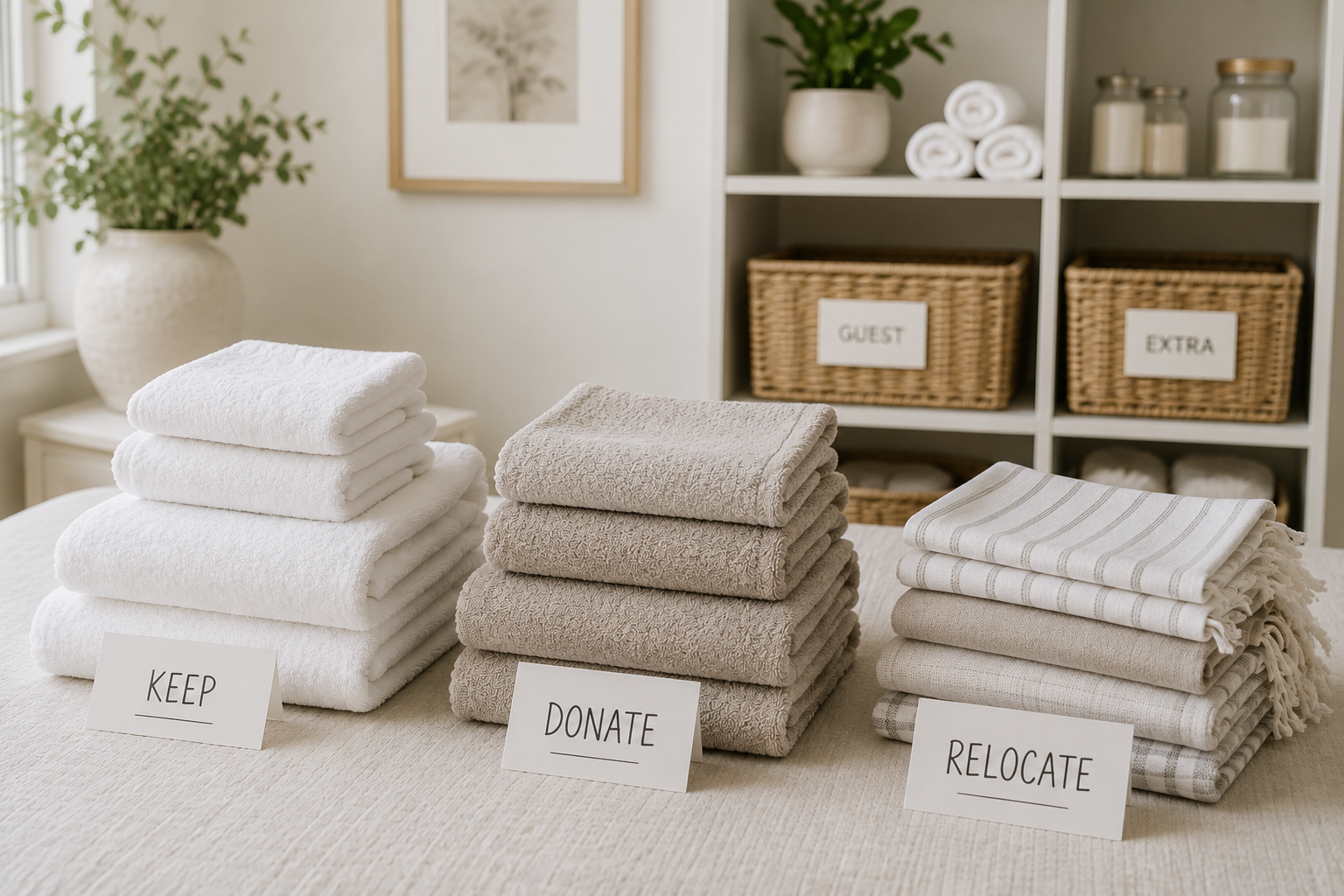
Donate or relocate:
Worn-out towels
Mismatched sheet sets
Extra blankets that never get used
Expired toiletries
Duplicate travel items
A little empty space makes your closet much easier to maintain.
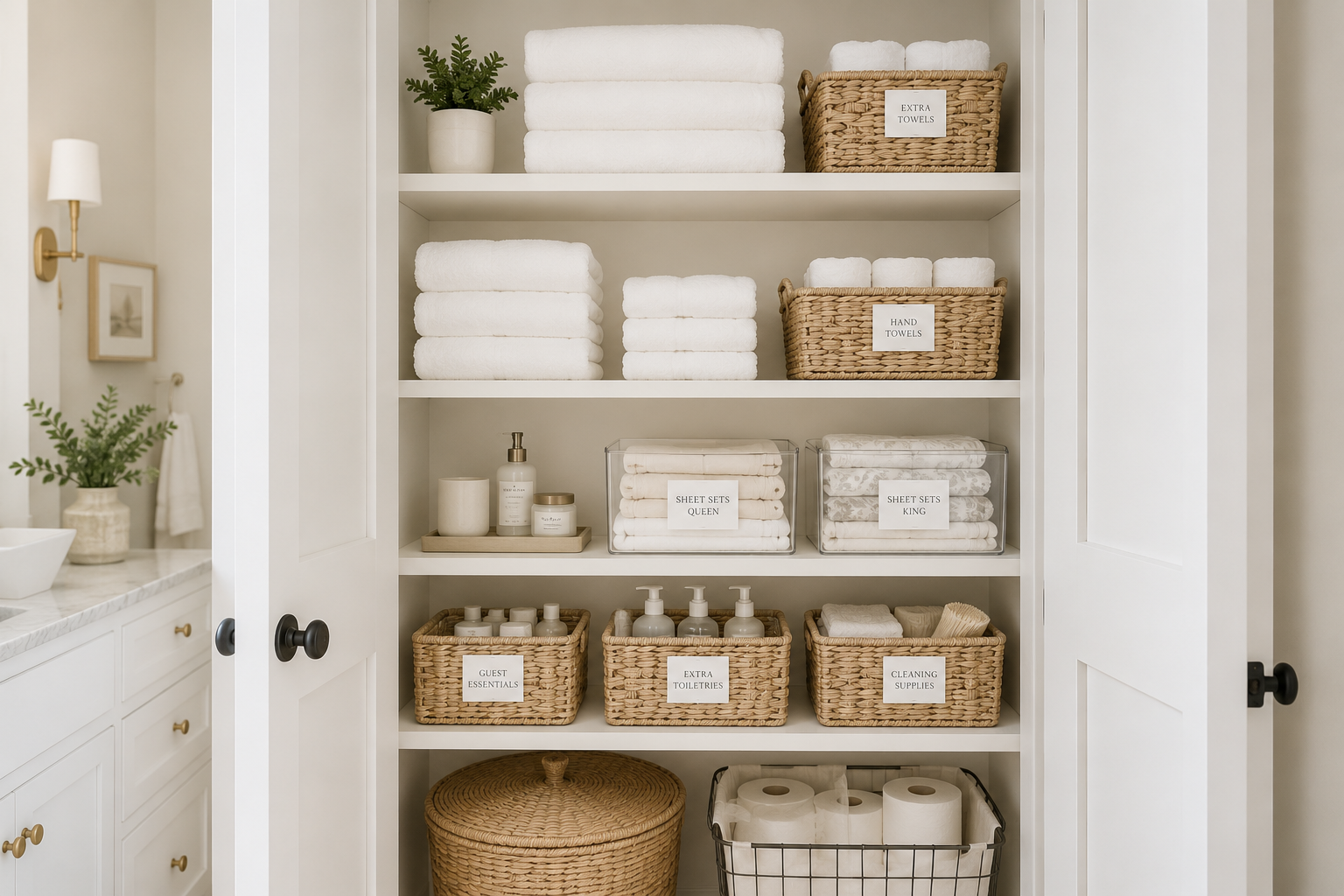
Give Every Category Its Own Home
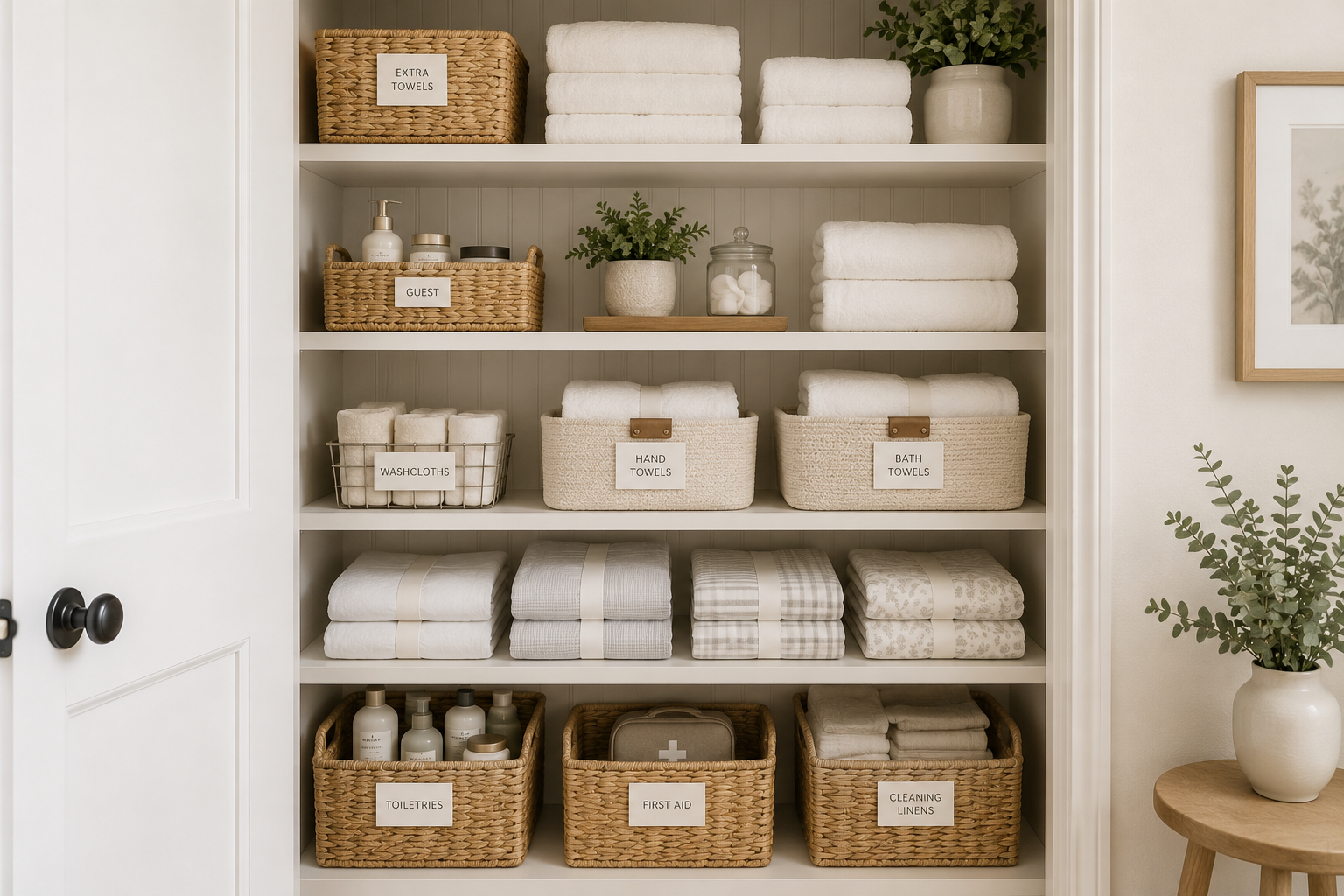
Instead of organizing by shelf, organize by purpose.
Create simple zones like:
Everyday Towels
Keep bath towels, hand towels, and washcloths together so grabbing what you need takes seconds.
Bedding
Store each sheet set inside one matching pillowcase so every set stays together.
Guest Essentials
Create one basket containing:
Guest toiletries
Extra toothbrushes
Travel-size shampoo
Soap
Tissues
When company arrives, everything is already together.
Extra Blankets
Fold and store blankets vertically when possible so each one is easy to remove.
Make Laundry Day Easier
One of the biggest benefits of an organized linen closet is simplifying laundry.
Instead of wondering where everything belongs:
Towels return to the towel section.
Sheets return to the bedding shelf.
Guest supplies go back into one basket.
Extra paper products stay together.
The easier it is to put things away, the easier it is to stay organized.
Keep Frequently Used Items Within Reach
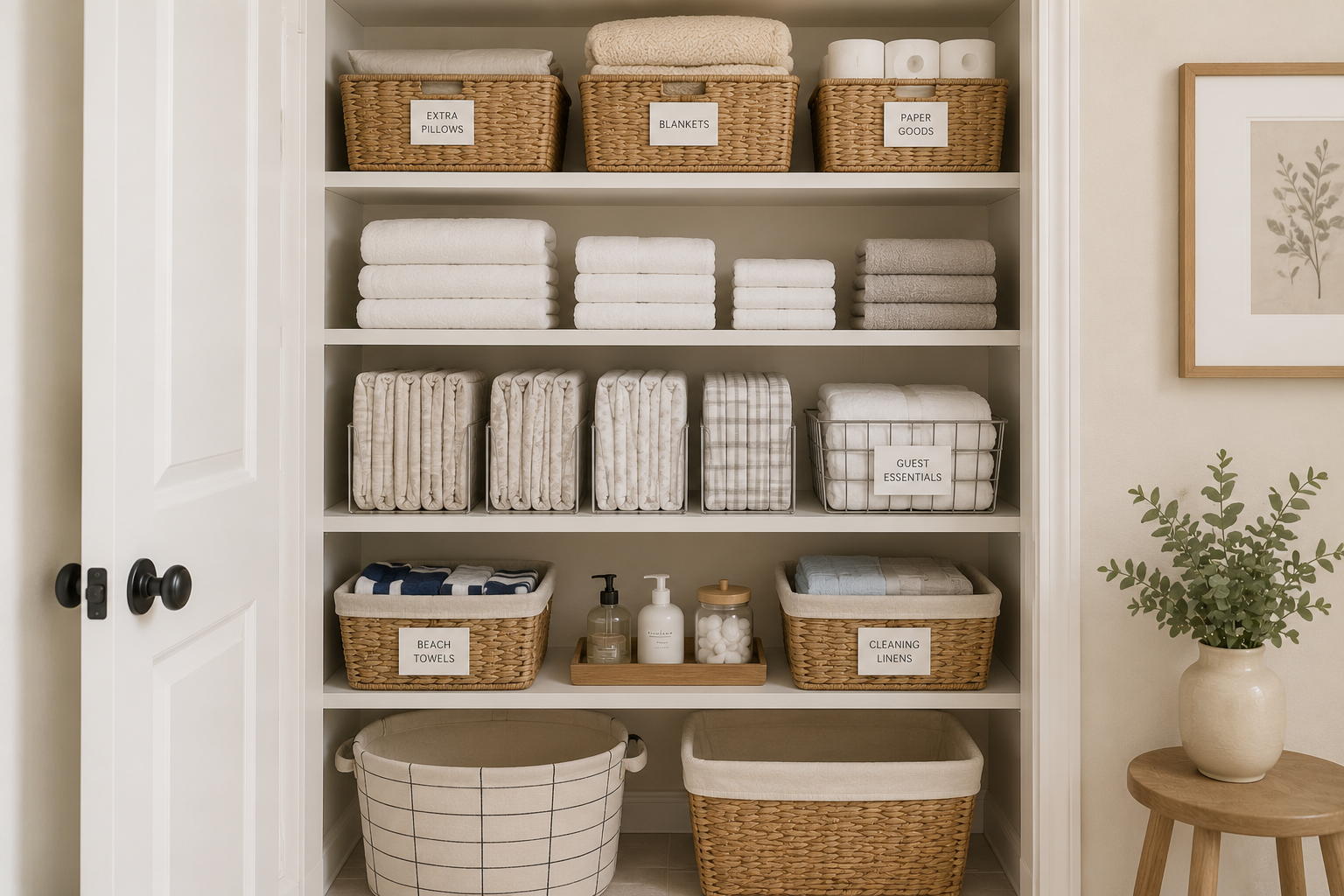
Place everyday essentials between waist and eye level.
Reserve higher shelves for:
Seasonal blankets
Extra pillows
Backup paper products
Lower shelves work well for:
Bulk towels
Laundry baskets
Larger storage bins
A little planning makes daily routines noticeably easier.
Create a Five-Minute Monthly Reset
Your linen closet doesn't need constant attention.
Once each month:
Refold anything that's become messy.
Return misplaced items.
Replace used guest supplies.
Check toiletries for expiration dates.
Donate anything you no longer use.
Small resets prevent overwhelming reorganizing projects later.
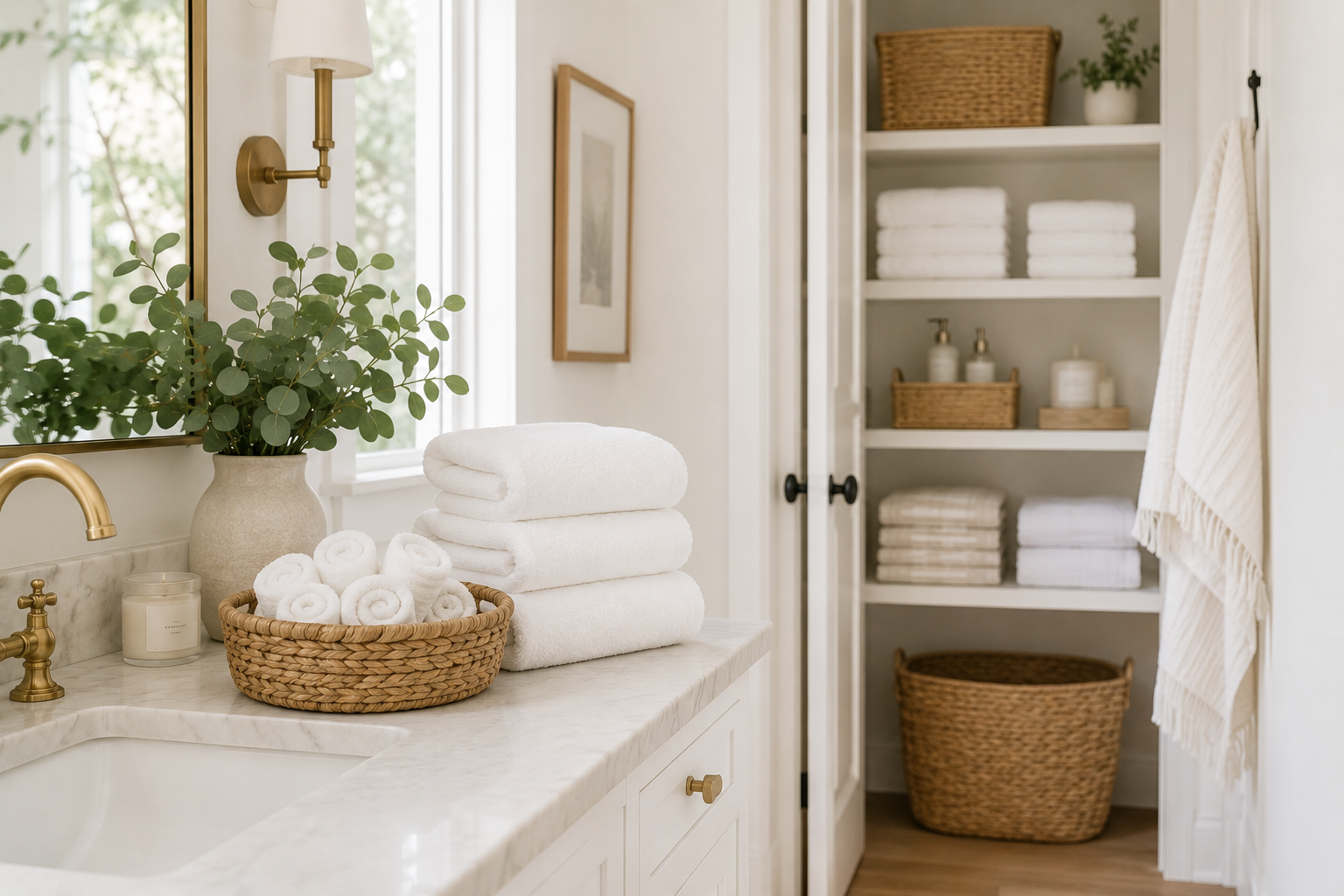
Calm Home Organization Favorites
These simple products help create a linen closet that's easy to maintain and supports your everyday routines.
Use baskets to group guest supplies, extra toiletries, cleaning cloths, or backup essentials so everything stays together.
Perfect for storing first-aid supplies, travel toiletries, or seasonal items while keeping everything visible.
If your linen closet includes robes or garment storage, slim hangers maximize space and create a neat, consistent look.
Simple labels make it easy for everyone in the household to know where items belong, helping the system stay organized.
These favorites support the system—they don't replace it. A few thoughtfully chosen organizing tools make it easier to keep your linen closet functional, organized, and ready for everyday life.
Final Thoughts
An organized linen closet isn't about perfectly folded towels—it's about making everyday life simpler.
When every towel, sheet set, and guest item has a designated home, laundry feels easier, preparing for visitors takes less effort, and busy mornings become just a little less stressful.
Simple systems create calmer homes, and small changes like organizing your linen closet can make a surprising difference in your daily routine.
You May Also Like
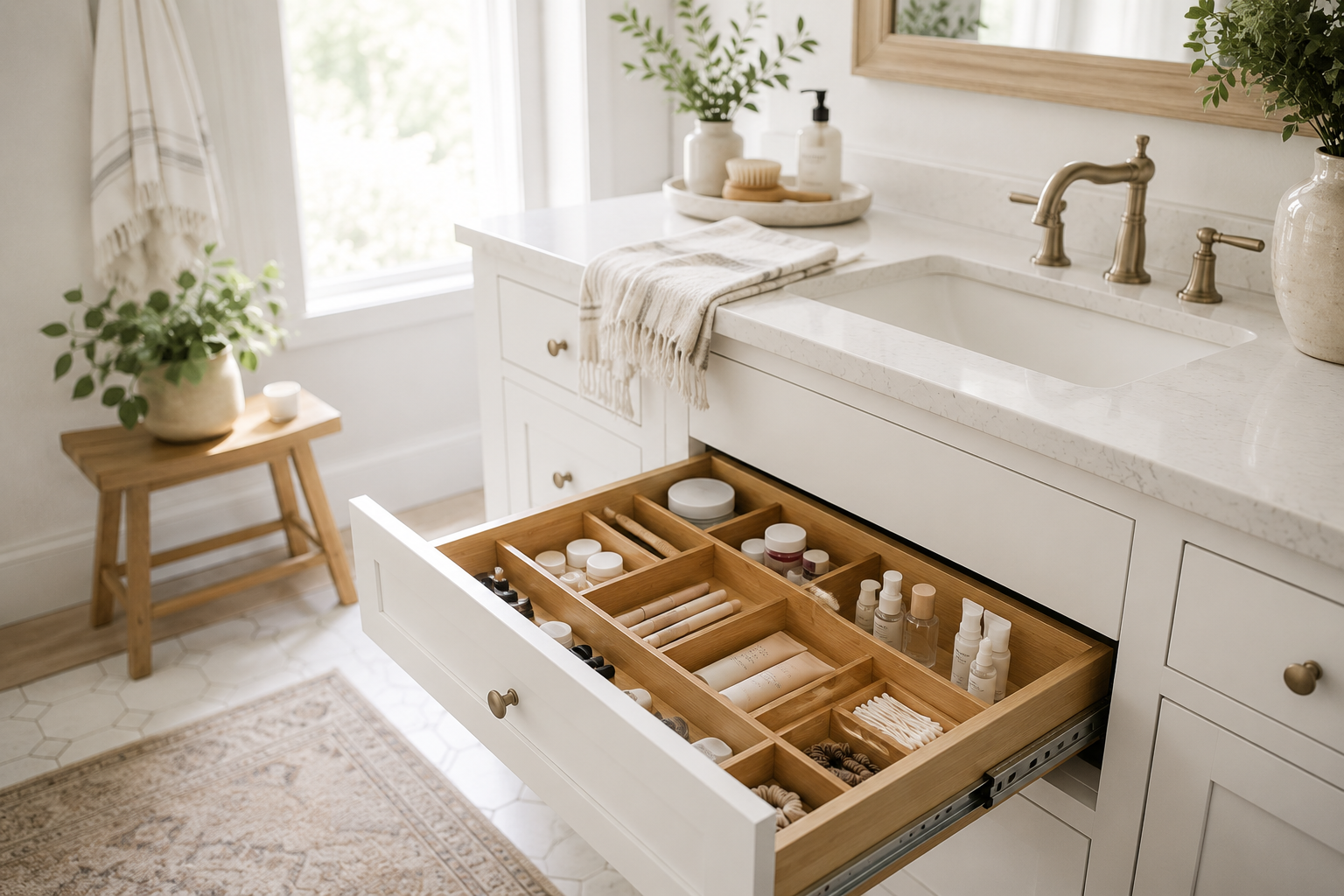
Simple Bathroom Drawer Systems for Calm Mornings
Discover simple bathroom drawer organization ideas that make busy mornings easier with practical systems that reduce clutter and help create a calmer home.
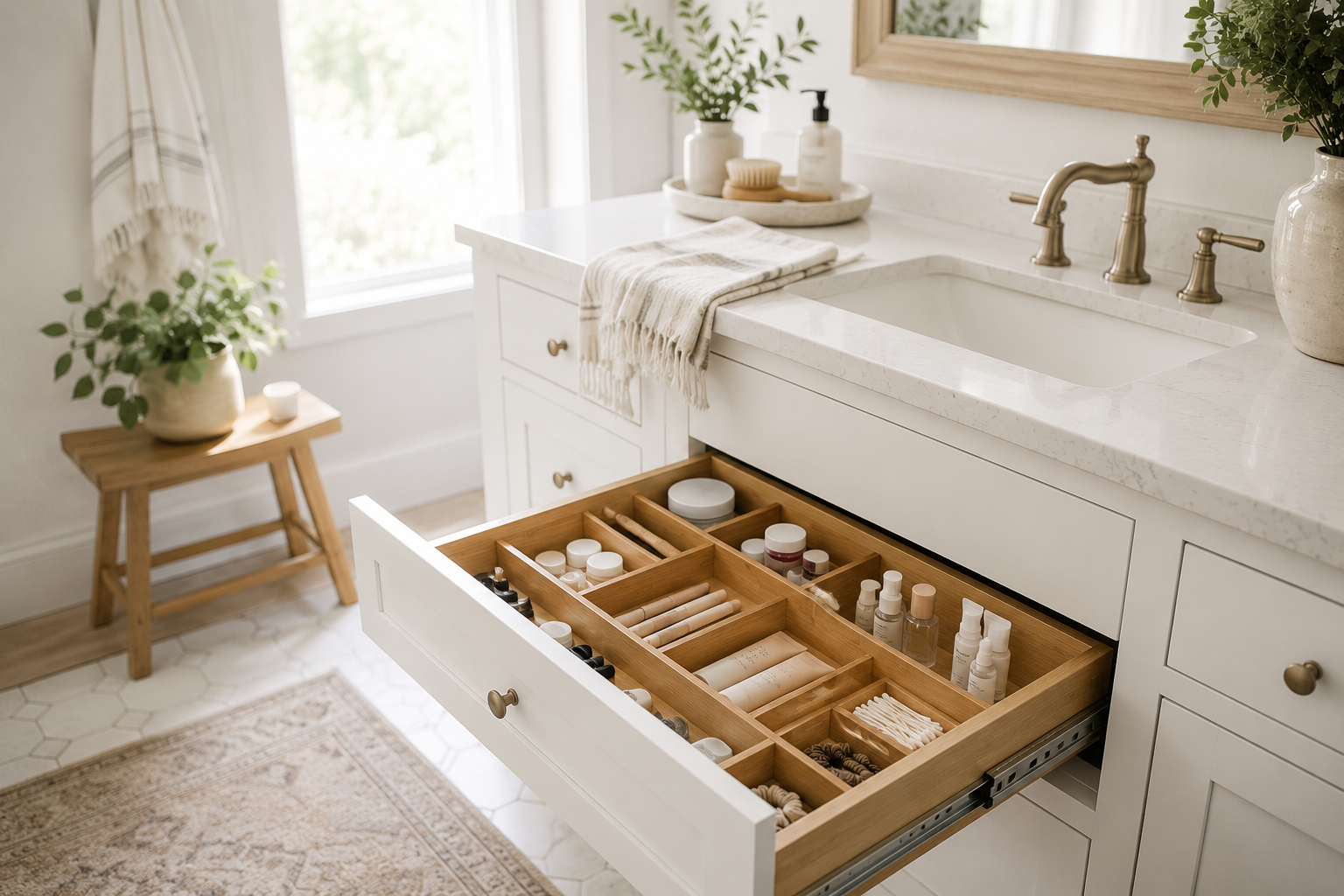
Does getting ready each morning ever feel more chaotic than it should?
You reach for your toothbrush, but it's buried under hair ties. Your favorite lipstick has disappeared again. Cotton swabs, makeup brushes, and skincare products all seem to migrate into one crowded drawer.
The problem usually isn't that you have too much.
It's that your drawers don't have simple systems.
A few thoughtful changes can turn your bathroom drawers into organized spaces that help your mornings feel calmer, smoother, and far less rushed.
Why Bathroom Drawers Become Cluttered
Bathroom drawers collect dozens of small items.
Without simple categories, everything ends up mixed together.
You may find:
Makeup mixed with skincare
Hair accessories scattered everywhere
Extra travel products taking up space
Empty sample bottles
Duplicate products hiding in the back
Instead of organizing by product type alone, organize around your daily routine.
When everything supports how you actually get ready each morning, the entire space becomes easier to maintain.
Step 1: Empty Every Drawer
Start by removing everything.
Sort items into simple categories like:
Daily skincare
Makeup
Hair products
Dental care
Personal care
First aid
Extras and backups
Throw away expired products and move anything that belongs somewhere else.
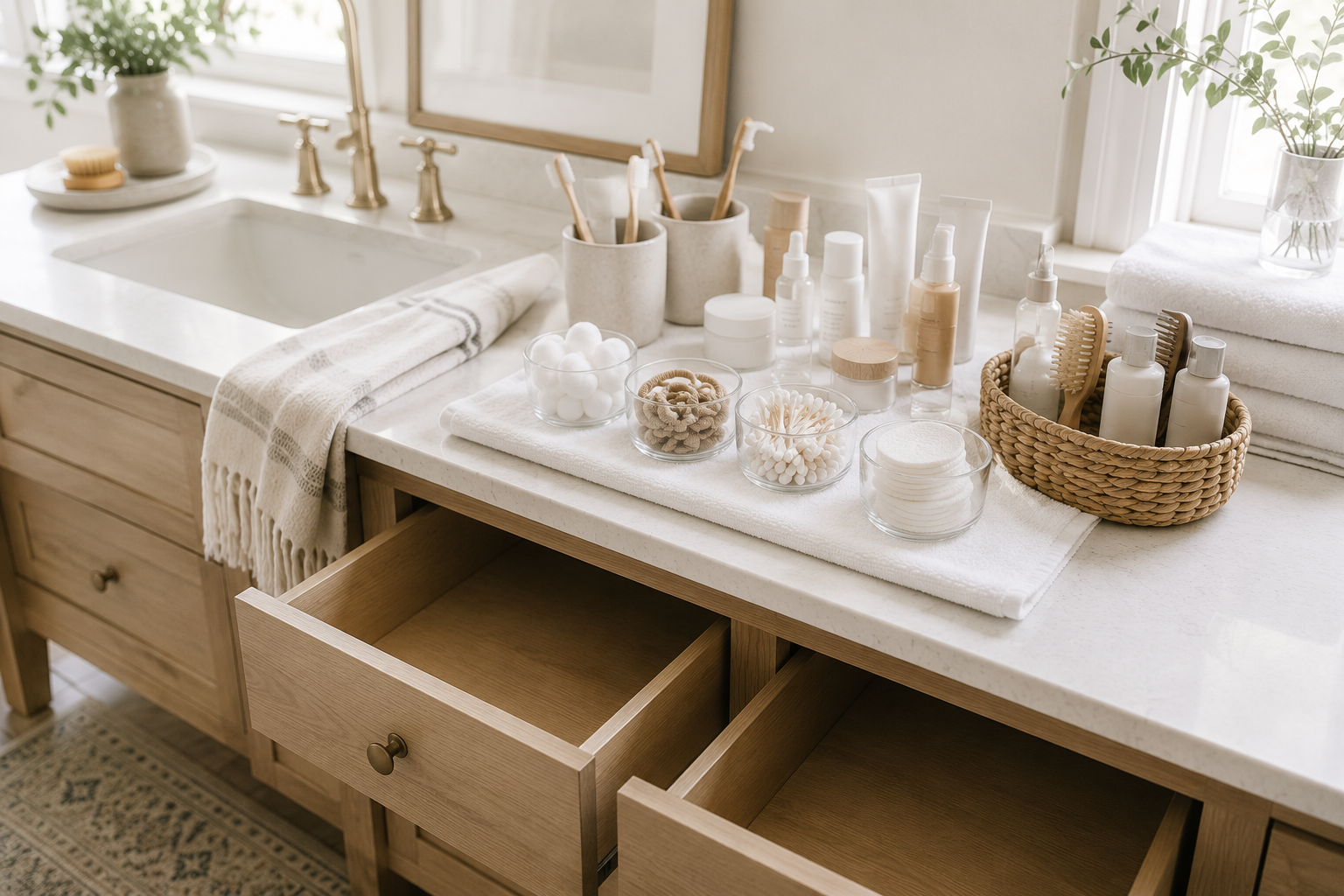
Step 2: Create Daily Routine Zones
Instead of organizing by product size, organize by how often you use each item.
For example:
Morning Routine
Toothbrush
Toothpaste
Facial cleanser
Moisturizer
Makeup
Keep everyday makeup together so it's easy to grab.
Hair Care
Store brushes, elastics, clips, and styling tools together.
Personal Care
Keep nail clippers, tweezers, and cotton swabs in one section.
Grouping items by routine means you're moving less during busy mornings.
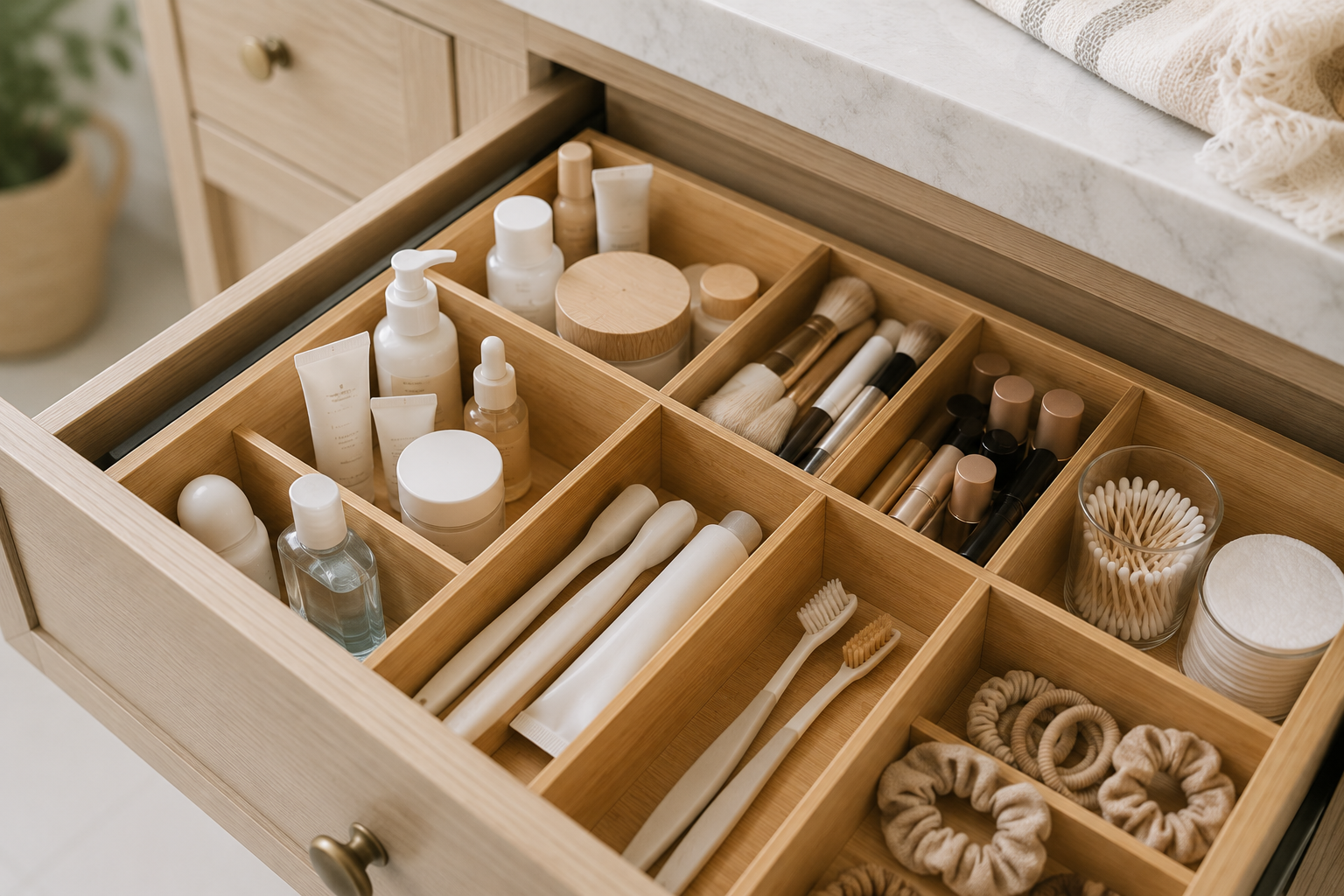
Step 3: Use Drawer Dividers
Drawer dividers help prevent products from sliding together every time you open the drawer.
Simple bamboo dividers or acrylic organizers work well for:
Makeup brushes
Lip products
Toothbrushes
Razors
Cotton rounds
Small bottles
The goal isn't perfection.
It's making every item easy to find.
Step 4: Keep Only Daily Essentials in Prime Space
The items you reach for every morning deserve the easiest access.
Store backups somewhere else.
Giving your daily essentials room to breathe makes your morning routine faster and more peaceful.
Step 5: Reset in Two Minutes
Bathroom drawers don't need major reorganizing every month.
Once each week:
Return items to their sections.
Throw away empty containers.
Restock essentials.
Wipe the drawer clean.
A quick reset keeps the entire system working.
Calm Home Favorites
These products make it easier to create bathroom drawer systems that stay organized and support calmer, less stressful mornings.
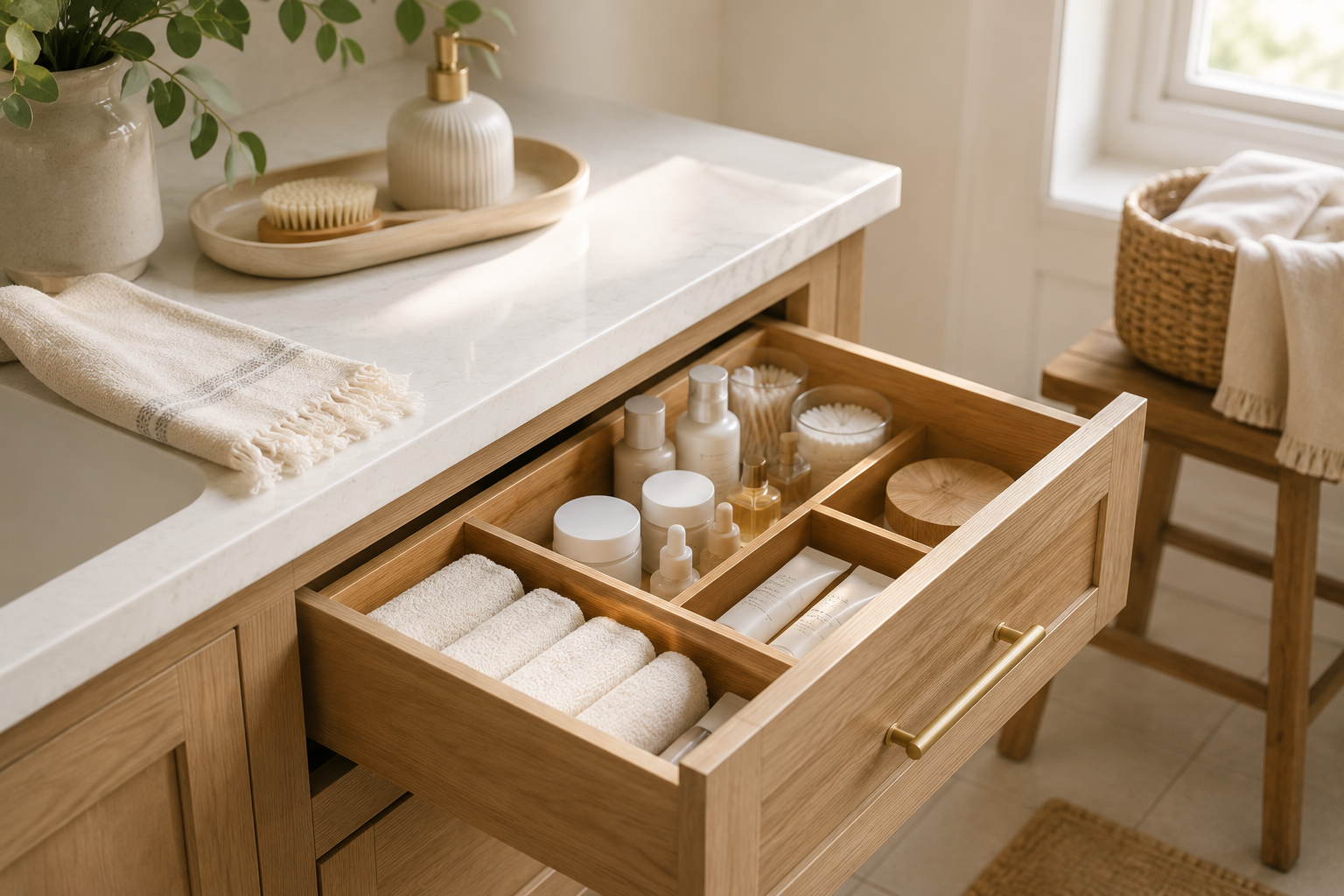
Keep skincare, makeup, dental care, and everyday essentials neatly separated with customizable bamboo trays that make items easy to find and help drawers stay organized.
Perfect for organizing makeup, skincare, and small personal care items so everything stays visible and accessible.
Keep cotton swabs, cotton rounds, hair ties, and other small items neatly contained while reducing visual clutter.
Simple labels make it easy for everyone in the household to maintain the organization system over time.
Ideal for quick weekly drawer resets, helping keep the vanity clean with just a few minutes of maintenance.
Final Thoughts
Bathroom drawer organization isn't about creating perfectly styled drawers you'll never touch.
It's about removing small frustrations that slow you down every morning.
When every item has a simple home, getting ready becomes quicker, easier, and more peaceful.
Small systems like these help your mornings begin with less stress—and that's one more step toward creating a calmer home and a simpler life.
You May Also Like
How to Finally Organize That Junk Drawer So Everyday Life Feels Easier
A cluttered junk drawer doesn't have to stay that way. Learn how to organize a junk drawer with simple systems that make everyday essentials easy to find, reduce clutter, and help your kitchen feel calmer and more functional.
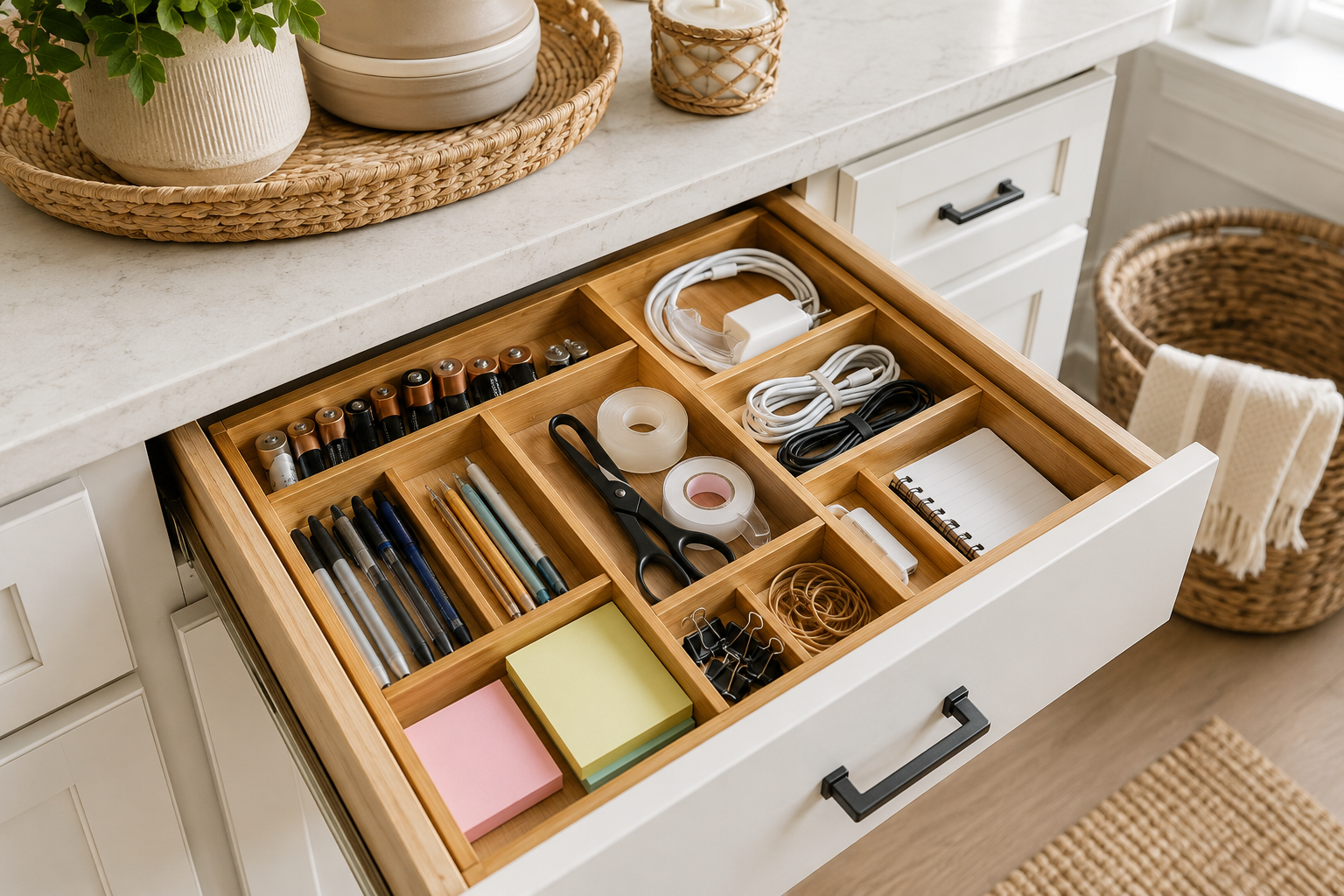
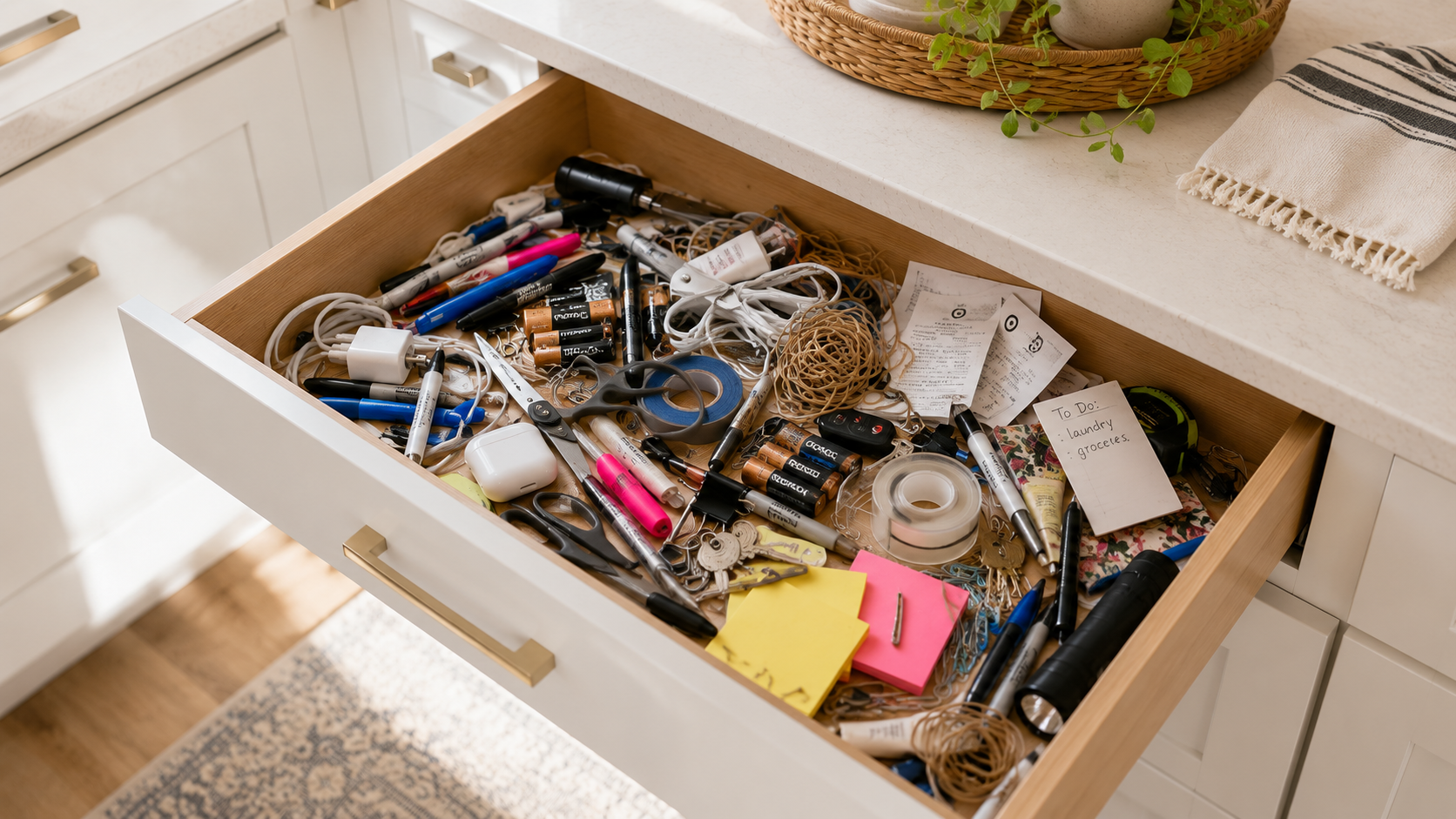
If opening your junk drawer feels like digging through a pile of random cords, batteries, pens, and takeout menus, you're not alone.
Almost every home has one.
The good news? A junk drawer doesn't have to disappear—it just needs a simple system.
When everything has a place, you can find what you need in seconds instead of wasting time searching. It's one small project that can make everyday routines feel noticeably easier.
Today we'll create a junk drawer that works with your life instead of against it.
Why Junk Drawers Become So Overwhelming
The problem usually isn't having a junk drawer.
It's that everything gets tossed into one space without any simple organization.
Over time, useful items become buried beneath things you no longer need.
Before long, finding one battery or a pair of scissors turns into a frustrating search.
A few thoughtful systems can completely change that.
Step 1: Empty Everything Out
Take everything out of the drawer.
Place it on the counter where you can see it all.
Don't organize as you remove items.
Simply create one pile.
This gives you a clear picture of what's actually living in your drawer.
Step 2: Throw Away the Obvious Trash
You'll probably find:
Old receipts
Dead batteries
Broken pens
Expired coupons
Random screws
Dried-out markers
Instruction manuals you no longer need
Removing these first makes the rest of the project much easier.
Remember:
Small changes create peaceful homes.
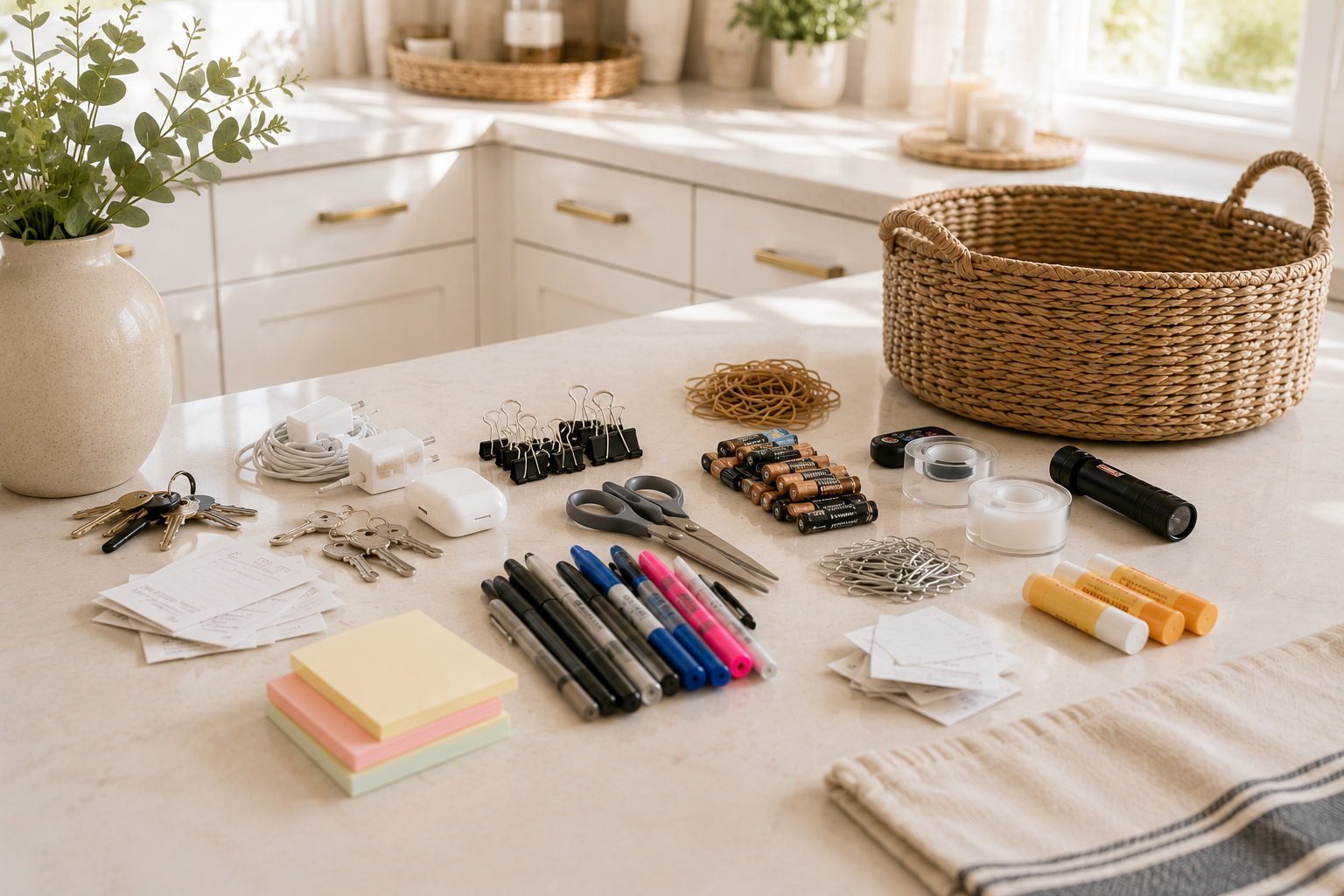
Step 3: Group Similar Items Together
Now begin making simple categories.
Examples include:
Pens & Pencils
Batteries
Tape & Glue
Chargers & Cords
Scissors
Flashlights
Sticky Notes
Rubber Bands
Small Tools
Gift Cards
You'll quickly notice which categories deserve their own space.
Step 4: Give Every Category a Home
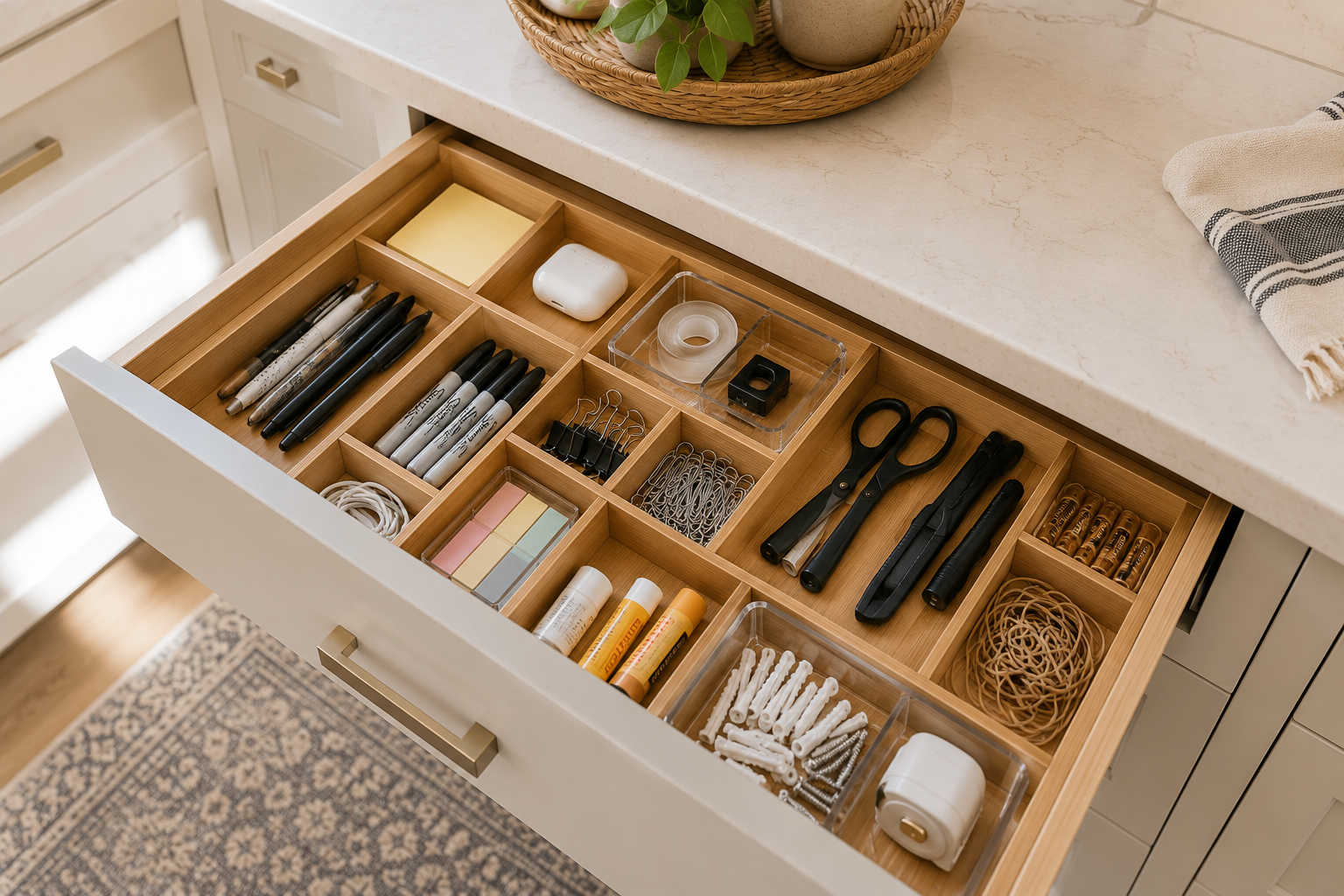
This is where the transformation happens.
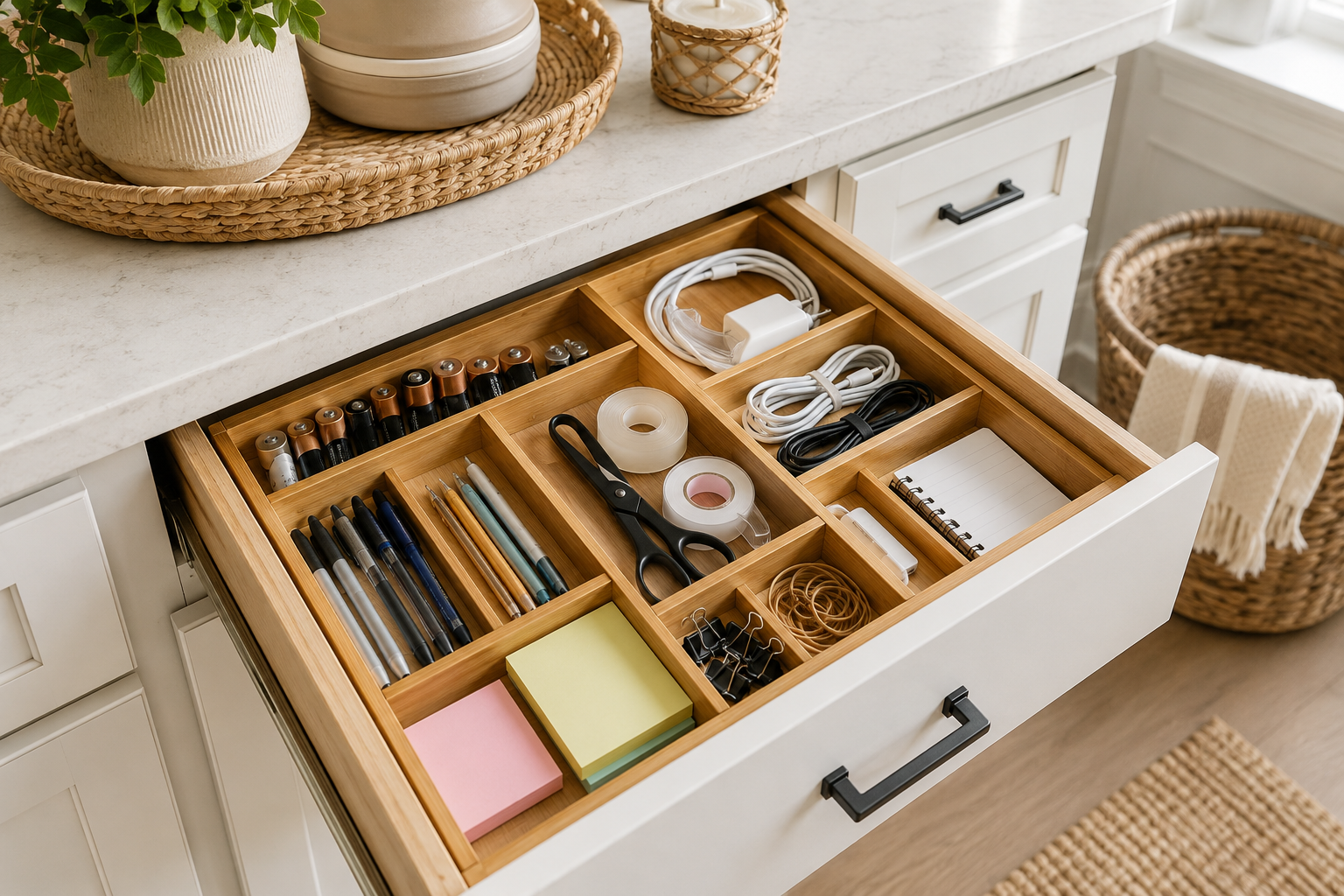
Instead of tossing everything back into the drawer, create small sections using drawer organizers.
The organizers aren't what solve the problem.
The system does.
When every category has a designated home, everyone in the family knows exactly where things belong.
Simple Organizers That Work Well
These are a few inexpensive products that help maintain your new system.
Affiliate Recommendations
Bamboo Drawer Organizer
Expandable Drawer Dividers
Small Acrylic Organizer Trays
Rechargeable Battery Organizer
Cable Cord Wraps
Label Maker (optional)
Step 5: Create Simple Rules
The easiest junk drawers stay organized because they have just a few simple habits.
Try these:
Don't let mail pile up.
Return items after using them.
Remove trash immediately.
Limit duplicates.
Do a five-minute reset once a month.
That's it.
No complicated maintenance.
What Doesn't Belong in a Junk Drawer?
Some items deserve another home.
Consider relocating:
Important documents
Prescription medication
Large tools
Valuable jewelry
Keys you never use
Large charging cables
Office supplies used daily
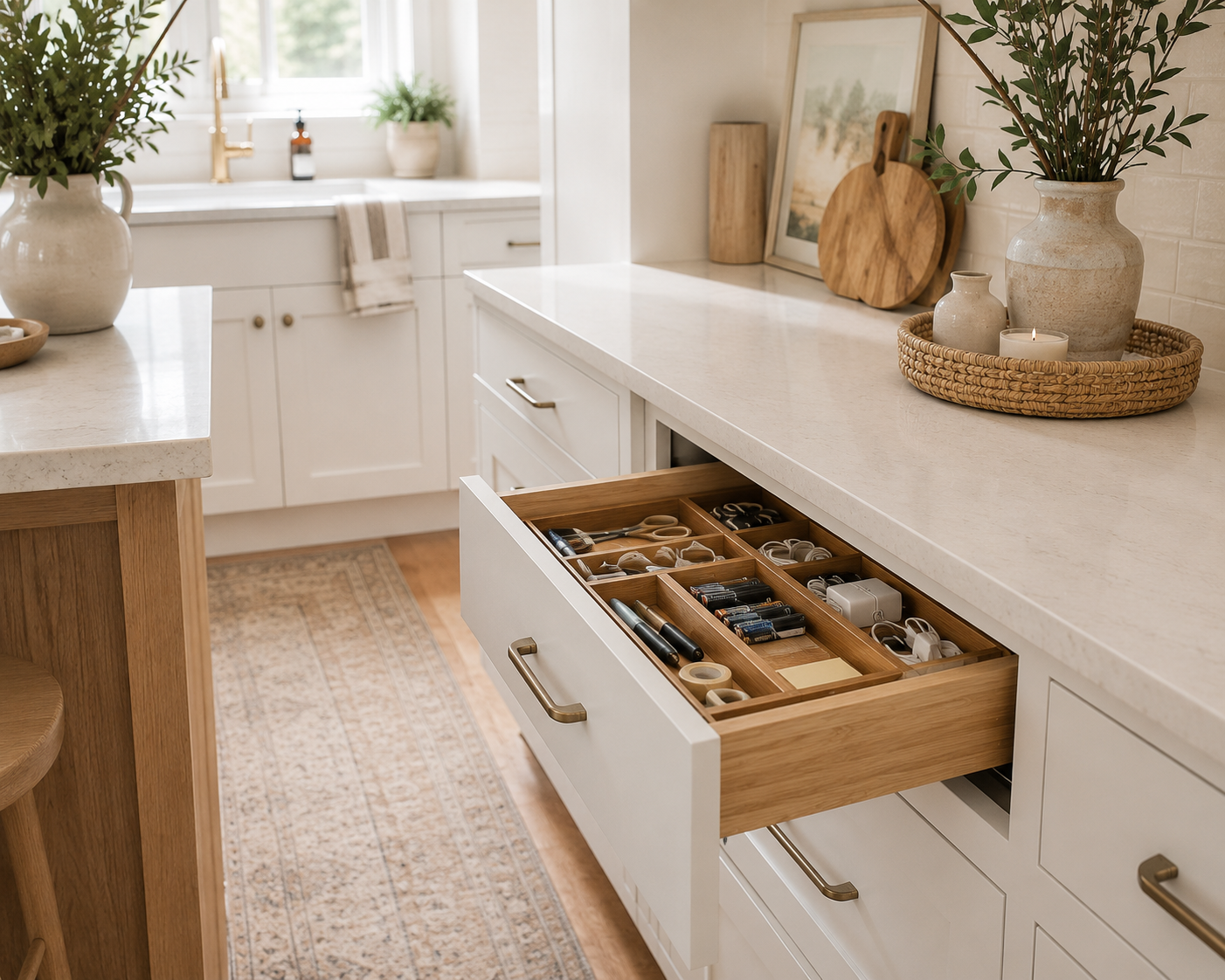
The junk drawer should only hold small everyday essentials.
Quick Calm Tip
You don't need to organize your entire kitchen today.
One drawer is enough.
Every small project builds confidence—and every simple system makes your home feel a little calmer.
Frequently Asked Questions
How often should I organize my junk drawer?
A quick five-minute reset once a month is usually enough.
What's the best organizer for a junk drawer?
Expandable bamboo organizers work well because they fit many drawer sizes and create flexible sections.
Is it okay to have a junk drawer?
Absolutely. The goal isn't to eliminate it—it's to give it a simple system that supports your everyday routines.
Calm Home Organization Favorites
These are a few of my favorite products for creating a junk drawer that stays organized. Remember, the products aren't what create the system—they simply make it easier to maintain.
Bamboo Expandable Drawer Organizer
Adjustable compartments create dedicated spaces for everyday essentials like pens, scissors, tape, and sticky notes, making it easy to find what you need and return items to their proper place.
Acrylic Drawer Organizer Trays
Small clear trays are perfect for grouping loose items like paper clips, batteries, thumbtacks, and rubber bands so they don't end up scattered throughout the drawer.
Battery Storage Organizer
Keeping batteries together in one organized case makes them easy to find when you need them and helps prevent half-used batteries from getting mixed with new ones.
Reusable Cable Ties
A few simple cable ties keep charging cords neatly bundled so they don't become tangled with everything else in the drawer.
Compact Label Maker
If multiple family members use the drawer, simple labels can help everyone know where items belong, making it easier to maintain your new system over time.
Final Thoughts
A junk drawer isn't a sign that your home is disorganized.
It's simply a space that needs a little structure.
When every item has a home, everyday tasks become easier, frustrations disappear, and your kitchen feels calmer without requiring more work.
Remember, creating a peaceful home isn't about perfection.
It's about building simple systems that make everyday life easier.
You May Also Like
The 10-Minute Kitchen Reset That Makes Your Home Feel Cleaner Every Day
Your Home Isn’t Hard to Maintain—It’s Missing These 5 Simple Organization Setups
The Hidden Clutter That Makes Your Home Feel Messy (Even When It’s Clean)