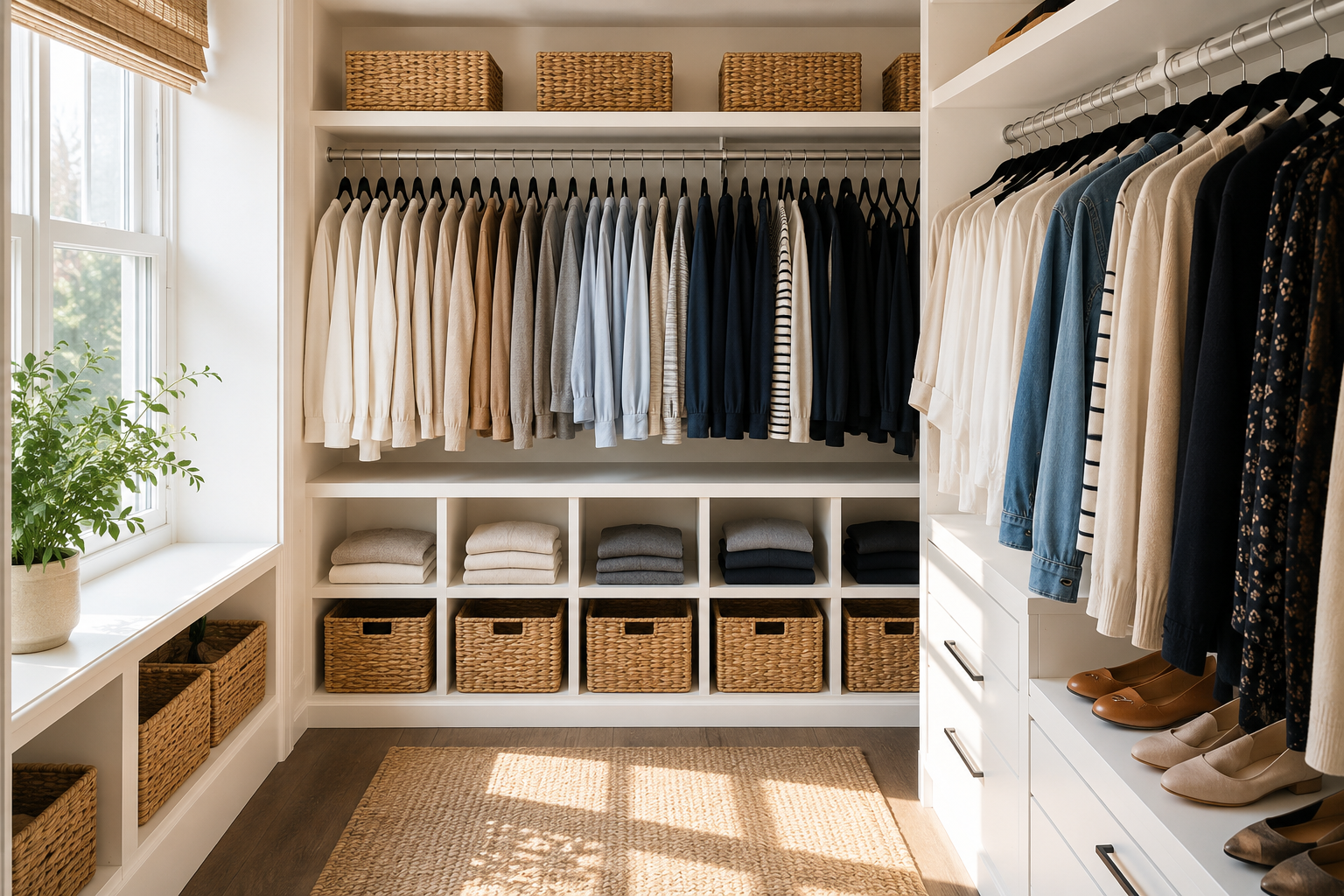
A Closet Organization System You'll Actually Keep Up
A well-organized closet isn't about perfection—it's about creating simple systems that make everyday life easier. Learn how to build a closet organization system that's easy to maintain, reduces everyday stress, and helps your home feel calmer.
Create a simple closet system that makes everyday routines easier—not one that's impossible to maintain.
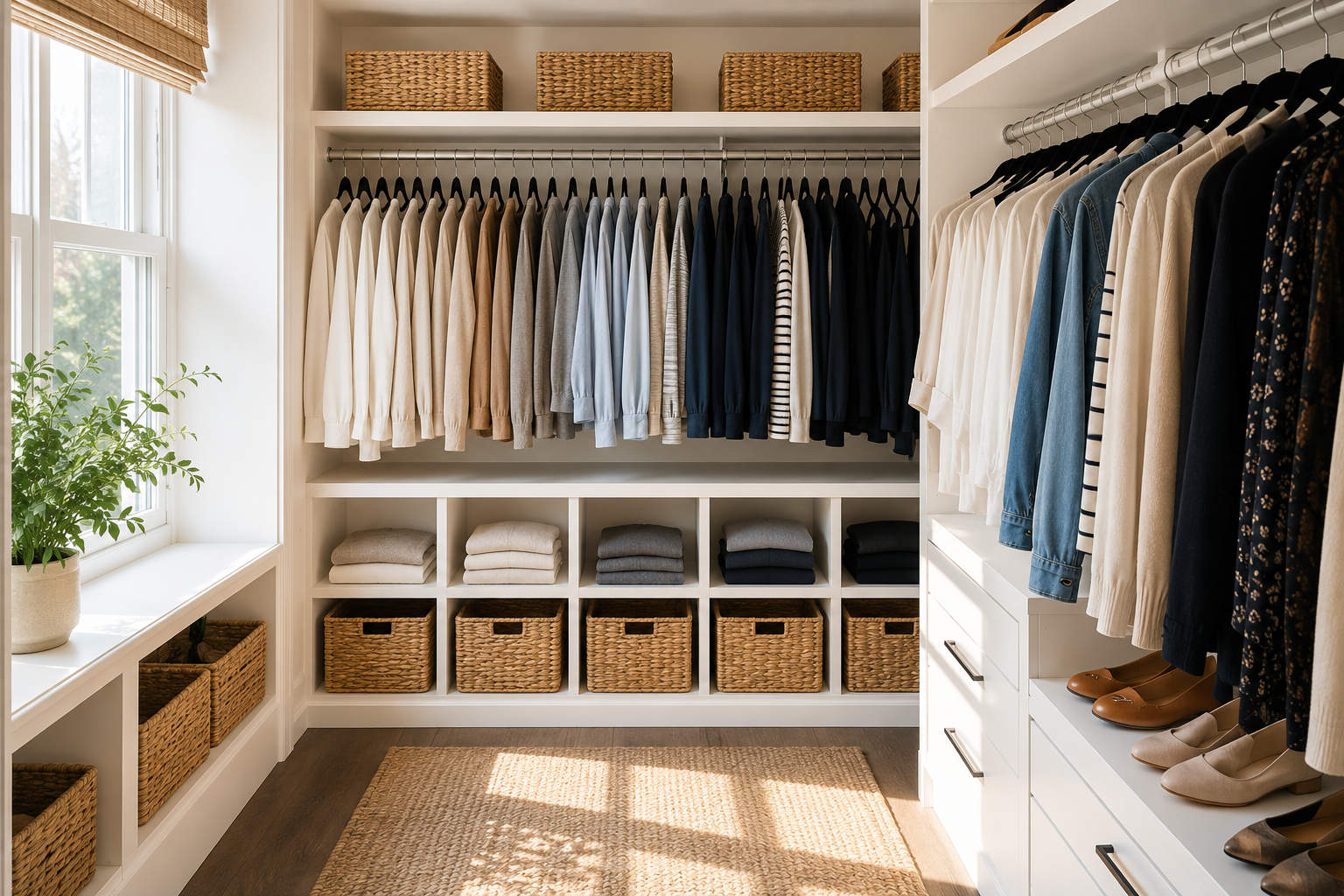
Some mornings, getting dressed feels harder than it should.
You slide hangers back and forth searching for one shirt. A sweater slips from the shelf. Shoes have gathered near the door, and yesterday's outfit is still draped over a chair because putting everything away felt like one more task at the end of a busy day.
It doesn't take long before a closet that once felt organized begins to feel overwhelming again.
If you've ever wondered why that happens, you're not alone.
The problem usually isn't that your closet is too small. It isn't that you need more organizing products, either.
More often, it's because the system wasn't designed for real life.
A closet should quietly support your everyday routine. It should make mornings feel calmer, laundry easier to put away, and getting ready something you rarely have to think about.
That's what sustainable organization looks like.
It's not about creating a perfect closet.
It's about creating one that's easy to keep.
Why Perfect Systems Usually Don't Last
Many closets look beautifully organized on the day they're finished.
Every hanger matches. Every sweater is folded just right. Every basket is perfectly labeled.
But life doesn't stay picture perfect.
Laundry piles up.
Work gets busy.
Kids borrow sweatshirts.
Seasons change.
The systems that last aren't the ones that require constant attention. They're the ones that make putting things away almost automatic.
The easier it is to maintain your closet, the more likely it is to stay organized.
That's why the goal shouldn't be perfection.
It should be simplicity.
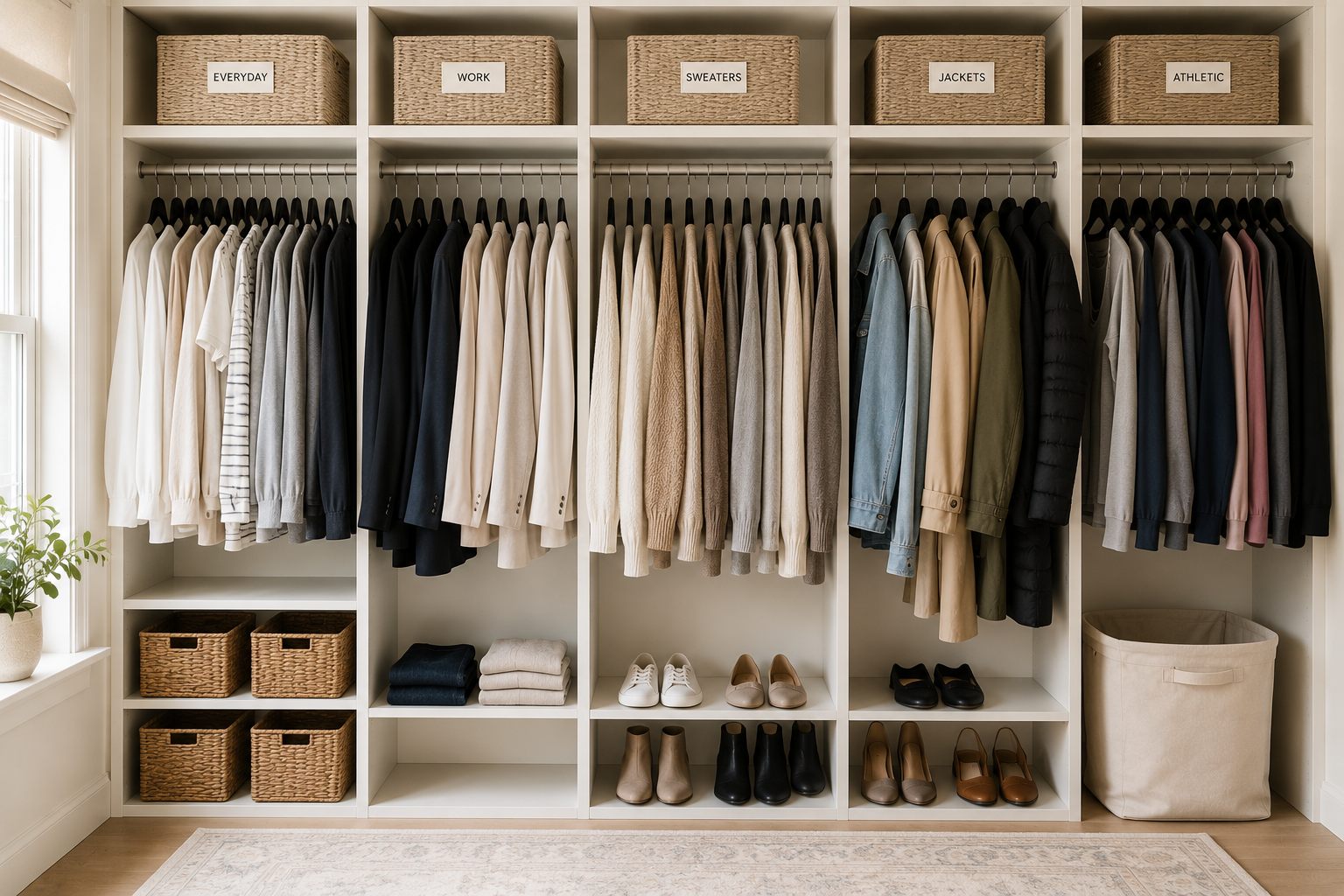
Organize Around Your Daily Routine
Instead of thinking about where every individual item belongs, think about how you naturally move through your mornings.
What do you reach for most often?
Those are the items that deserve the easiest access.
Create simple sections like:
Everyday Clothing
Work Clothes
Athletic Wear
Sweaters
Jackets
Shoes
Accessories
These broad categories are easier to remember than complicated organizing systems.
When everything has an obvious home, putting laundry away becomes faster because there are fewer decisions to make.
Good organization removes decisions.
That's what makes it sustainable.
Make It Easier to Put Things Away Than Leave Them Out
One of the biggest reasons closets become messy isn't because people don't care.
It's because the system asks too much of them.
If hanging one shirt means squeezing it between overcrowded hangers…
If folded clothes immediately topple over…
If finding the right basket takes longer than leaving something on the floor…
The system is working against you.
Instead, look for small ways to remove friction.
Leave a little extra space between hanging clothes.
Avoid overfilling shelves.
Keep frequently used items within easy reach.
When putting something away takes only a few seconds, you're much more likely to do it consistently.
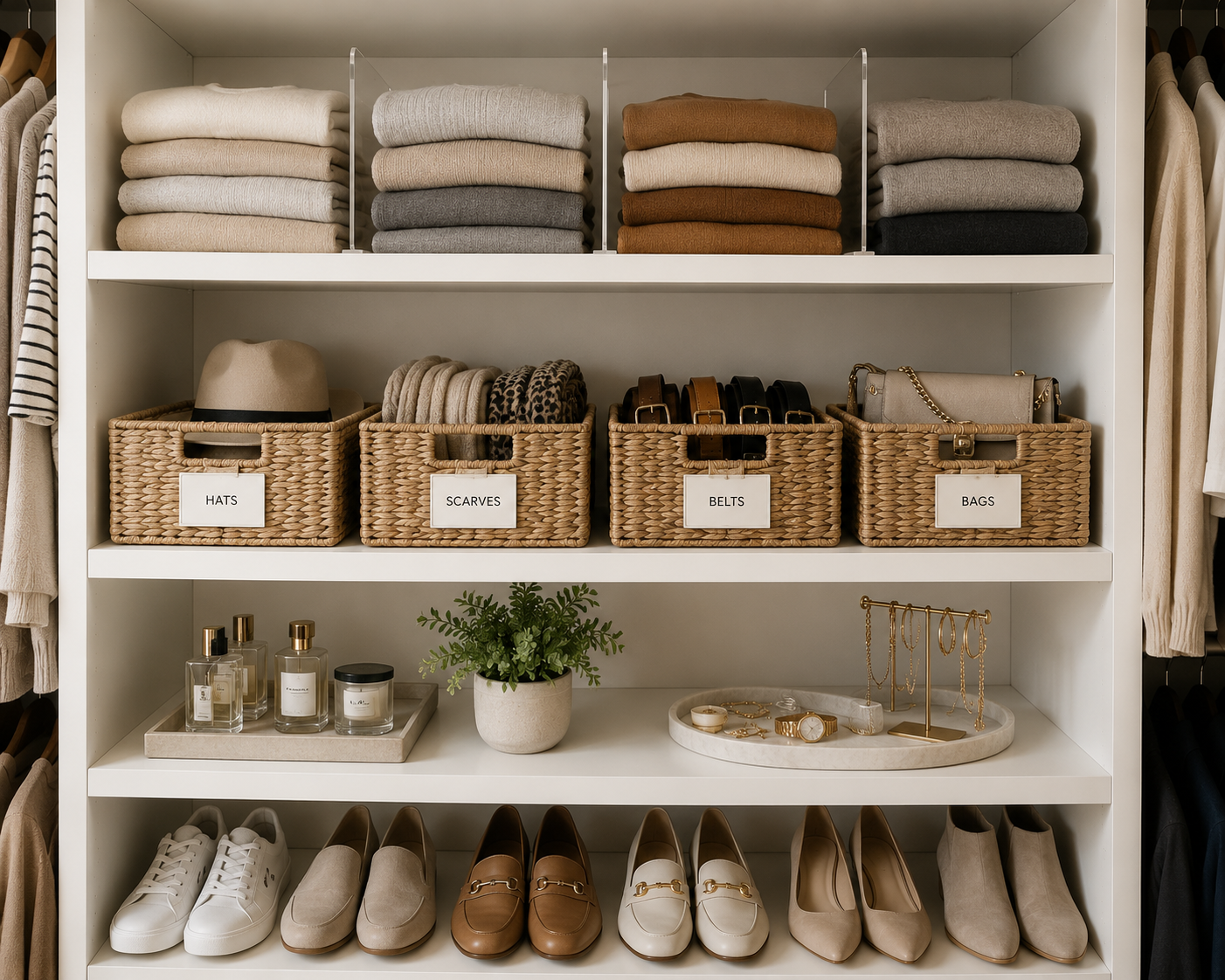
Calm Closets Have Room to Breathe
One of the easiest ways to make a closet feel calmer is surprisingly simple:
Don't fill every available inch.
Open space isn't wasted space.
It's what allows your closet to function.
When shelves aren't packed full, folded clothing stays neat longer.
When hangers aren't crowded together, finding what you need becomes easier.
When baskets aren't overflowing, putting things away takes less effort.
Creating breathing room helps your closet stay organized naturally instead of requiring constant resets.
Build Habits Instead of Chasing Perfection
A sustainable closet isn't maintained during one big organizing weekend.
It's maintained through small habits that fit into everyday life.
A few minutes after laundry.
Straightening one shelf before bed.
Returning shoes to the same place each evening.
Donating clothing before it begins overflowing again.
These small routines don't feel overwhelming because they're part of everyday living—not extra work.
Over time, those habits become the system.
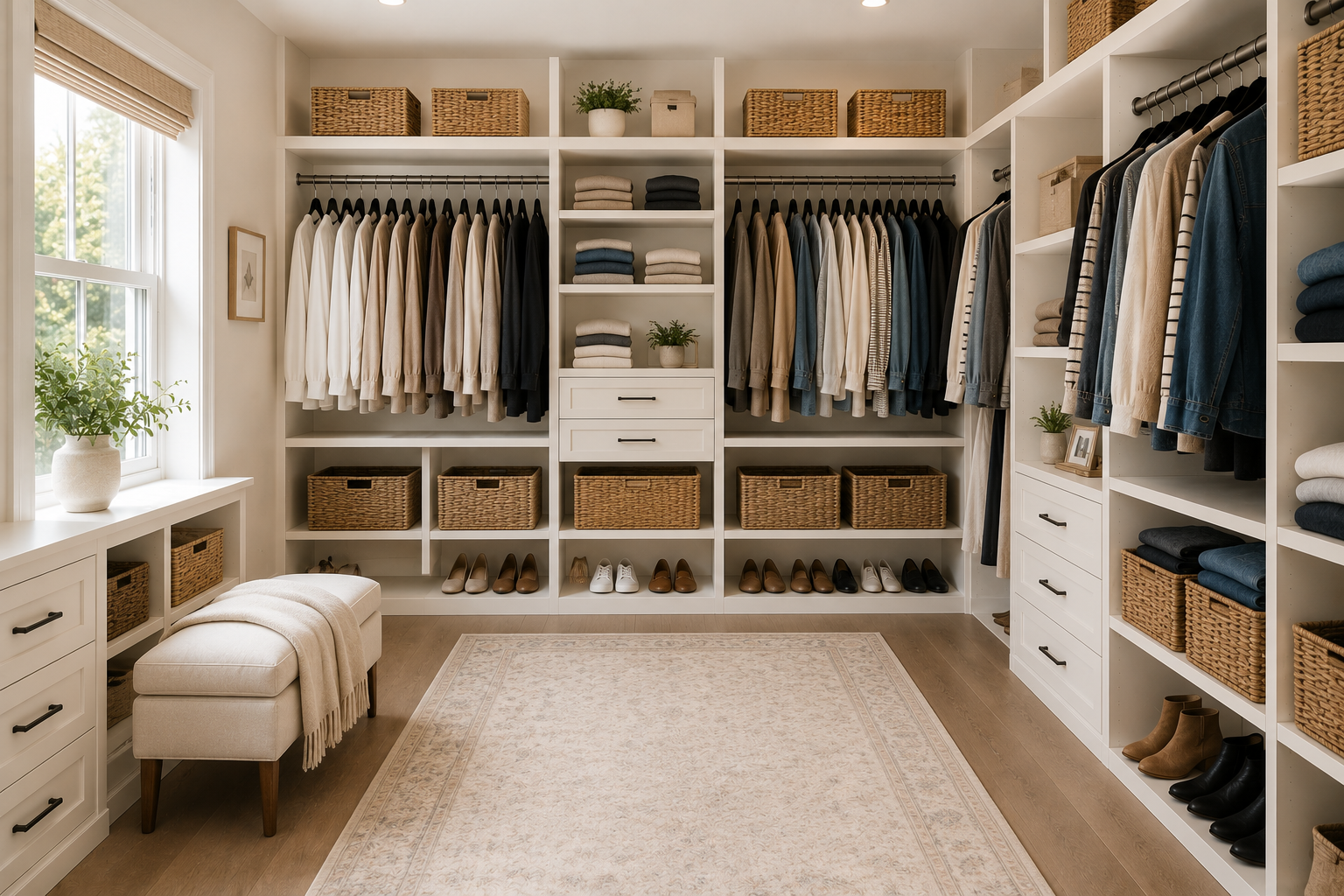
Five Small Habits That Keep a Closet Organized
Once your system is in place, these simple habits help it stay that way:
Return clean laundry to its designated section as soon as it's folded.
Keep shoes in their assigned location after wearing them.
Remove clothing you no longer wear before the closet begins feeling crowded.
Spend five minutes straightening shelves during your weekly home reset.
Adjust your closet with the seasons so your everyday clothing is always easiest to reach.
Small habits create lasting results because they support your daily routine instead of interrupting it.
Calm Home Organization Favorites
These products support a simple closet system without making it more complicated.
Slim Velvet Hangers
Create a consistent look, prevent clothing from slipping, and save valuable hanging space while making your closet easier to maintain.
Shelf Dividers
Keep folded sweaters, jeans, and linens standing neatly instead of collapsing into untidy piles.
Woven Storage Baskets
Perfect for scarves, hats, handbags, seasonal accessories, or smaller items that benefit from one clearly defined home.
Clear Shoe Storage Boxes
Protect shoes while making it easy to see every pair without opening multiple containers.
Drawer Organizers
Create simple sections for socks, undergarments, belts, and accessories so everything is easy to find each morning.
Final Thoughts
Your closet doesn't have to look perfect to make your life easier.
When getting dressed feels simple, putting laundry away takes less effort, and everything has an obvious place to return, your closet begins working for you instead of creating one more thing to manage.
That's what sustainable organization looks like.
It's not about maintaining perfection.
It's about creating simple systems that make everyday life feel a little calmer.
And sometimes, those small changes are the ones that last the longest.