Why Your Home Keeps Getting Cluttered Again—and the Simple Systems That Help
Does it feel like clutter comes back almost as soon as you put it away? The problem may not be how much you're tidying, but the systems underneath it. These simple changes can make everyday clutter easier to manage and help your home feel calmer.
You clear the kitchen counter.
You put away the shoes by the door. You straighten the living room, carry the random things upstairs, and finally deal with the pile that's been sitting on the dining room table.
For a little while, your home feels lighter.
And then, somehow, the clutter starts creeping back.
The counter collects mail. Shoes appear by the door again. Something gets set on the stairs because it needs to go upstairs. The dining room table slowly becomes a landing place for everything that doesn't have an obvious place to go.
It can make you wonder why it's so hard to keep your home organized.
But when clutter keeps returning to the same places, the problem usually isn't that you need to try harder.
It's often a sign that your home needs a simpler system.
An organized home isn't one where nothing ever gets left out. It's a home where the things you use every day have easy places to go—and putting them away feels almost as natural as setting them down.
That's what makes organization easier to maintain.
Not perfection.
Not more storage.
Just simple systems that support the way you actually live.
Why Clutter Keeps Coming Back
Most clutter doesn't appear because we're careless.
It appears because we're busy.
We walk through the door carrying keys, sunglasses, mail, a water bottle and maybe a grocery bag. Something has to get set down.
We make coffee before we're fully awake.
We change clothes quickly.
We open packages.
We bring things from one room to another.
We live in our homes.
And every one of those little moments creates a decision:
Where does this go?
When the answer isn't obvious—or the correct place is inconvenient—the easiest option is usually to set it down.
That's how clutter begins.
One item becomes three. Three become a pile. Eventually the pile feels like something you'll deal with later.
A better organization system removes some of those decisions.
Instead of asking yourself where something belongs every time you use it, your home begins answering the question for you.
1. Pay Attention to Where Clutter Naturally Lands
Before you buy an organizer or rearrange a closet, notice where things already collect.
Your clutter is giving you information.
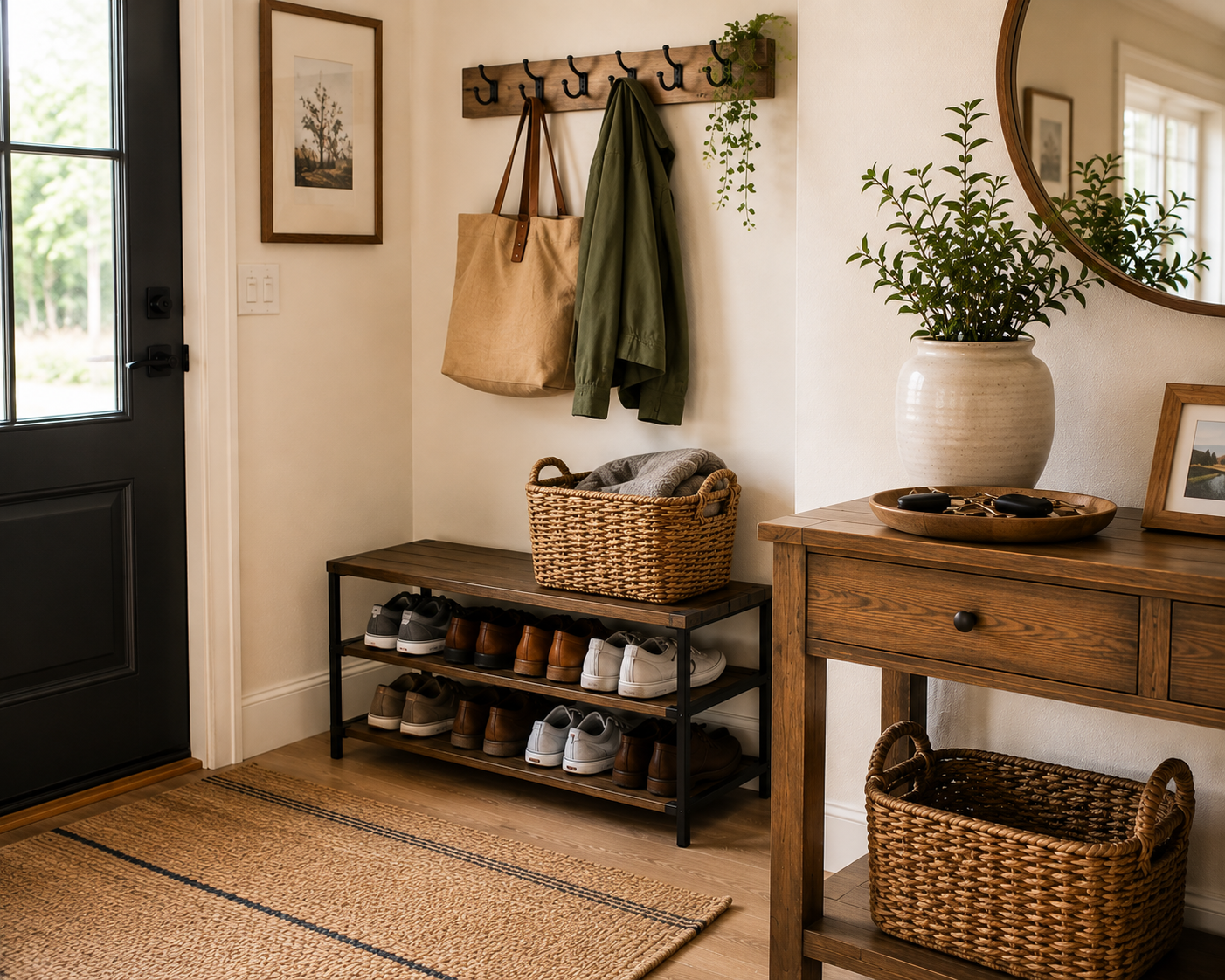
If shoes are always beside the door instead of inside the bedroom closet, your family may need shoe storage closer to where they actually take their shoes off.
If mail always lands on the kitchen counter, you may simply need a designated place for incoming papers.
If blankets are constantly piled on the sofa, a basket nearby may make more sense than storing them across the room.
Instead of fighting where things naturally land, build a simple system around the way your household already behaves.
That's often the difference between an organization system that looks good for a week and one you can actually maintain.
2. Give Everyday Things an Easy Home
You've probably heard that everything should have a place.
But there's another part that's just as important:
That place needs to be easy to use.
If putting something away requires opening a closet, moving three things, lifting a lid and fitting the item perfectly into a container, there's a good chance it will eventually end up sitting outside the container instead.
Think about the things you reach for constantly:
Keys.
Shoes.
Chargers.
Mail.
Dog leashes.
Water bottles.
Remote controls.
Cleaning supplies.
These everyday items deserve especially easy homes.
A small tray, hook, basket, drawer or open shelf may be all you need.
The goal isn't to create the prettiest storage system.
The goal is to make the easiest choice the organized choice.
3. Create Small Landing Zones Where Life Happens
Some of the most useful organization systems aren't hidden inside closets.
They're right where daily life happens.
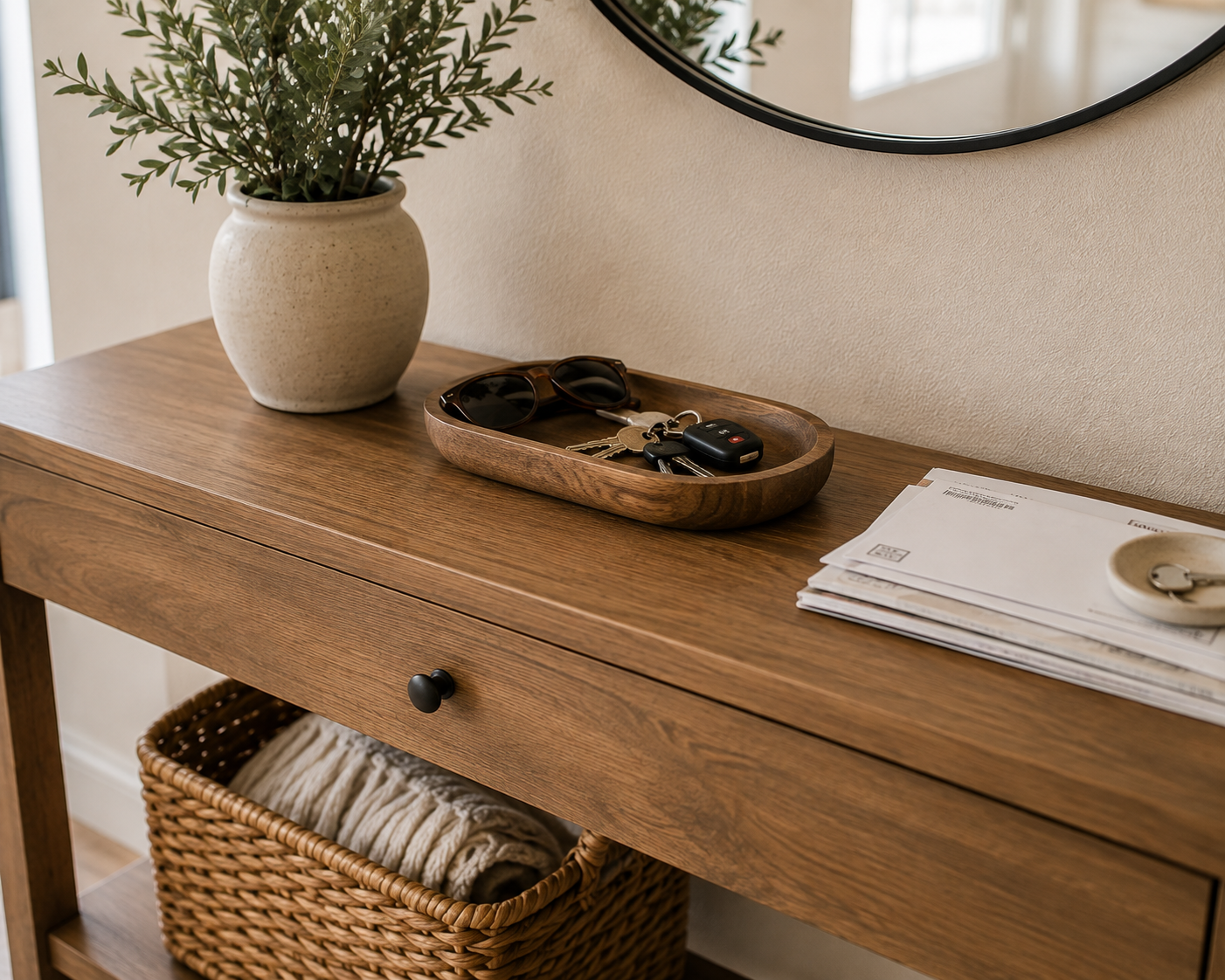
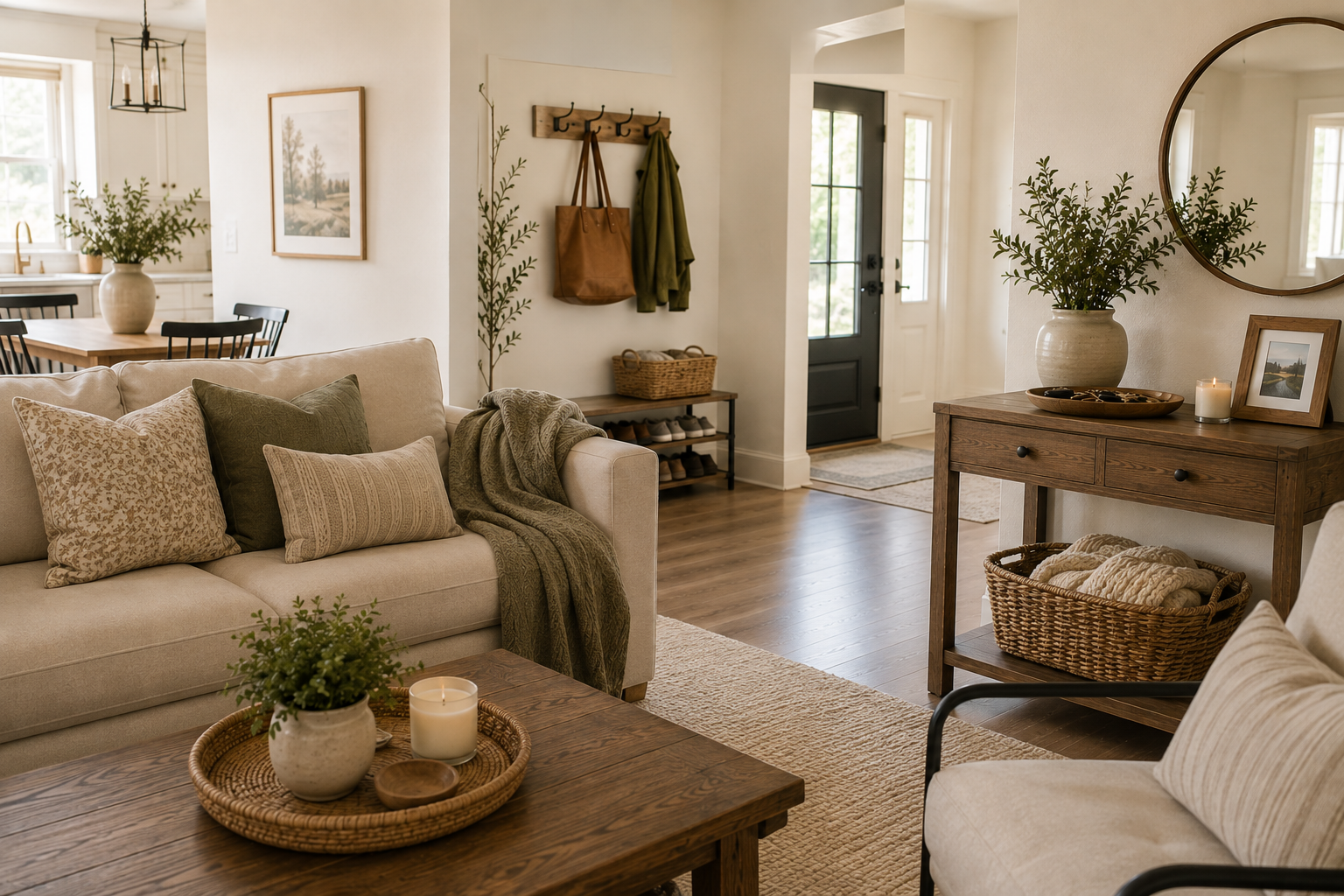
A tray near the entry can catch keys and sunglasses.
A basket near the stairs can hold things that need to go upstairs.
A small spot for incoming mail can keep papers from spreading across the kitchen.
A hamper where clothes actually come off is much more useful than one placed where you think a hamper should go.
These little landing zones give everyday clutter somewhere to pause without taking over the room.
The important part is keeping them intentional.
A landing zone shouldn't become permanent storage. It simply makes the next step easier.
When the basket fills, take the items upstairs.
When the mail tray starts accumulating, sort it.
When the return basket has something in it, take it with you the next time you leave.
Small systems work because they fit naturally into routines you're already doing.
4. Make Putting Things Away Easier Than Leaving Them Out
Here's a simple test for any organization system:
How much effort does it take to put something away?
If backpacks land on the floor every afternoon, hooks near the place where everyone walks in may work better than repeatedly asking people to carry them somewhere else.
If your kitchen counter constantly collects things that belong elsewhere, a nearby drop zone may help intercept them.
If laundry piles up because the hamper is in the wrong room, move the hamper.
Good organization doesn't depend on everyone remembering complicated rules.
It reduces friction.
Whenever clutter repeatedly appears somewhere, ask:
What would make putting this away easier?
Sometimes the answer is surprisingly small.
One hook.
One basket.
One drawer.
One designated spot.
Small changes like these are often what make a home easier to maintain.
5. Stop Asking One Space to Do Too Much
Clutter often builds when one surface quietly becomes responsible for everything.
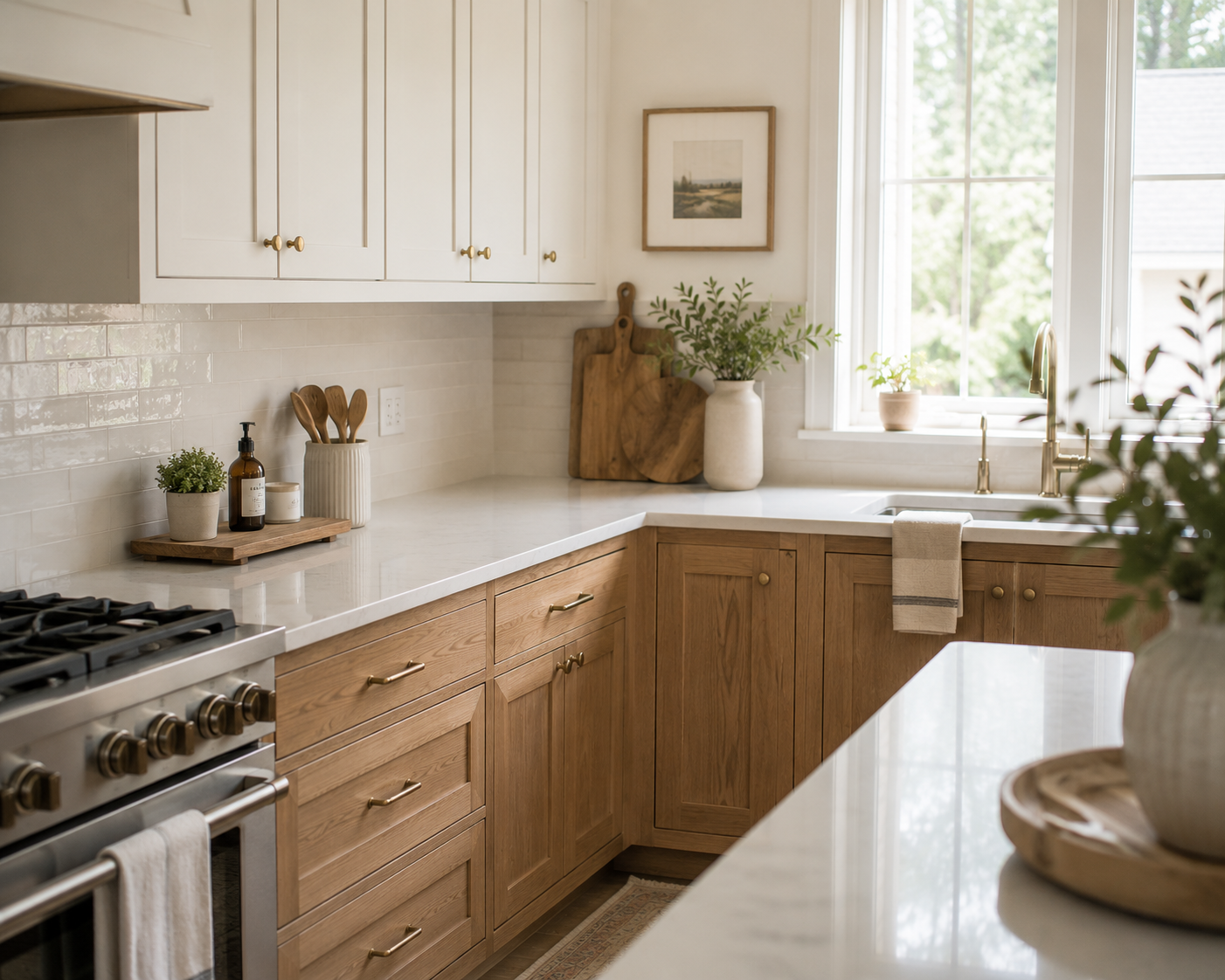
The kitchen counter becomes the mail station, charging station, school-paper station, grocery-unloading area and place where everyone leaves whatever they're carrying.
The entryway becomes shoe storage, coat storage, backpack storage, sports-equipment storage and package-return storage.
Eventually the space can't keep up.
When this happens, you don't necessarily need more storage.
You may need clearer categories.
Ask yourself what the space actually needs to support.
Maybe the entryway only needs to hold the things your family uses when leaving the house.
Maybe the kitchen counter only needs to support food preparation and one small everyday station.
Giving a space a clear job makes it easier to recognize what belongs there—and what doesn't.
6. Create a Simple Reset Instead of Constantly Tidying
Even the best systems won't keep a home completely clutter-free.
Things will still get left out.
That's normal.
The goal isn't to spend your entire day putting things away the moment they're used.
Instead, create a small reset point in your routine.
Maybe it's five minutes before you go upstairs for the night.
Maybe it's while the coffee brews in the morning.
Maybe everyone puts away a few things before settling in for the evening.
You're not cleaning the entire house.
You're simply returning everyday things to the homes you've already created for them.
Once your systems are working, a reset becomes much easier because you aren't standing in the middle of the room wondering where everything belongs.
You're just putting things back.
7. When Clutter Returns, Fix the System
This may be the most important shift of all.
If the same pile keeps appearing, don't automatically assume you need to be more disciplined.
Get curious about it.
Why does this keep landing here?
Where are these items supposed to go?
Is that place convenient?
Does everyone know where they belong?
Is the storage already too full?
Is there an unnecessary step making the system harder than it needs to be?
Recurring clutter is often a clue.
Once you start seeing it that way, maintaining your home can feel very different.
Instead of constantly battling the mess, you begin adjusting the systems underneath it.
Start With the Spot That Bothers You Most
You don't need to reorganize your whole house.
In fact, don't.
Look around your home and find one place where clutter keeps returning.
Maybe it's the kitchen counter.
The entryway.
The bathroom vanity.
The chair in your bedroom.
The stairs.
Then ask:
What keeps ending up here—and why?
Choose one category and give it a simple, convenient home.
Live with that change for a while.
If it works, keep it.
If it doesn't, adjust it.
Organization should support your life—not give you another set of rules to follow.
Our Calm Home Favorites
Creates an easy landing place for keys, sunglasses and the little things you reach for every day.
Keeps blankets, everyday necessities or items headed to another room contained without making them difficult to reach.
Give bags, jackets, hats and dog leashes an easy place to land the moment you walk through the door.
Keeps everyday shoes contained near the place where they naturally come off.
Creates a simple boundary for mail, returns or other small categories that tend to collect around the house.
Final Thoughts
A home that gets cluttered isn't a home that's failing.
It's a home that's being lived in.
The goal isn't to stop every pair of shoes, piece of mail or coffee cup from ever being left out.
The goal is to make it easier to know what happens next.
When everyday things have easy homes, surfaces have clear purposes and small resets are built into your routine, clutter becomes much easier to manage.
And when something keeps ending up in the same place?
Don't immediately try harder.
Look at the system.
Sometimes the smallest adjustment—a basket where things naturally collect, a hook where a bag always lands or a tray where keys are already being dropped—is enough to make everyday life feel a little easier.
You don't need to fix your whole home today.
Start with one recurring pile. Give it a better place to land.
Simple is enough.
You May Also Like
Your Home Isn’t Hard to Maintain—It’s Missing These 5 Simple Organization Setups
The 15-Minute Evening Reset That Helps Your Home Stay Calm
The Entryway Drop Zone That Makes Coming Home Feel Instantly Calmer
The Kitchen Counter System That Keeps Your Kitchen Looking Clean Every Day