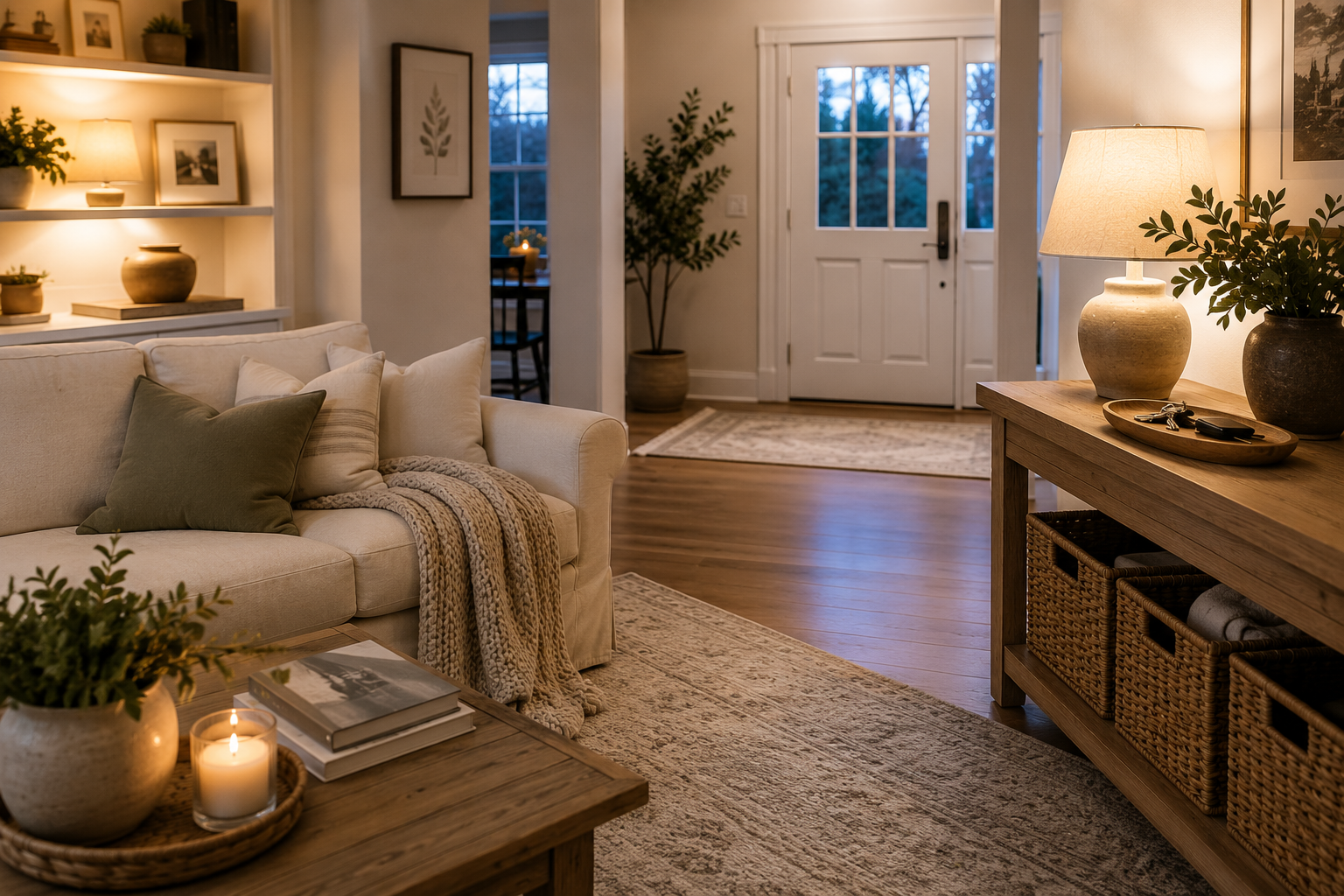
The 15-Minute Evening Reset That Helps Your Home Stay Calm
Discover a simple 15-minute evening reset routine that helps your home stay calm, organized, and ready for tomorrow. Learn how a few intentional habits each evening can reduce clutter, simplify your mornings, and make everyday life feel easier.
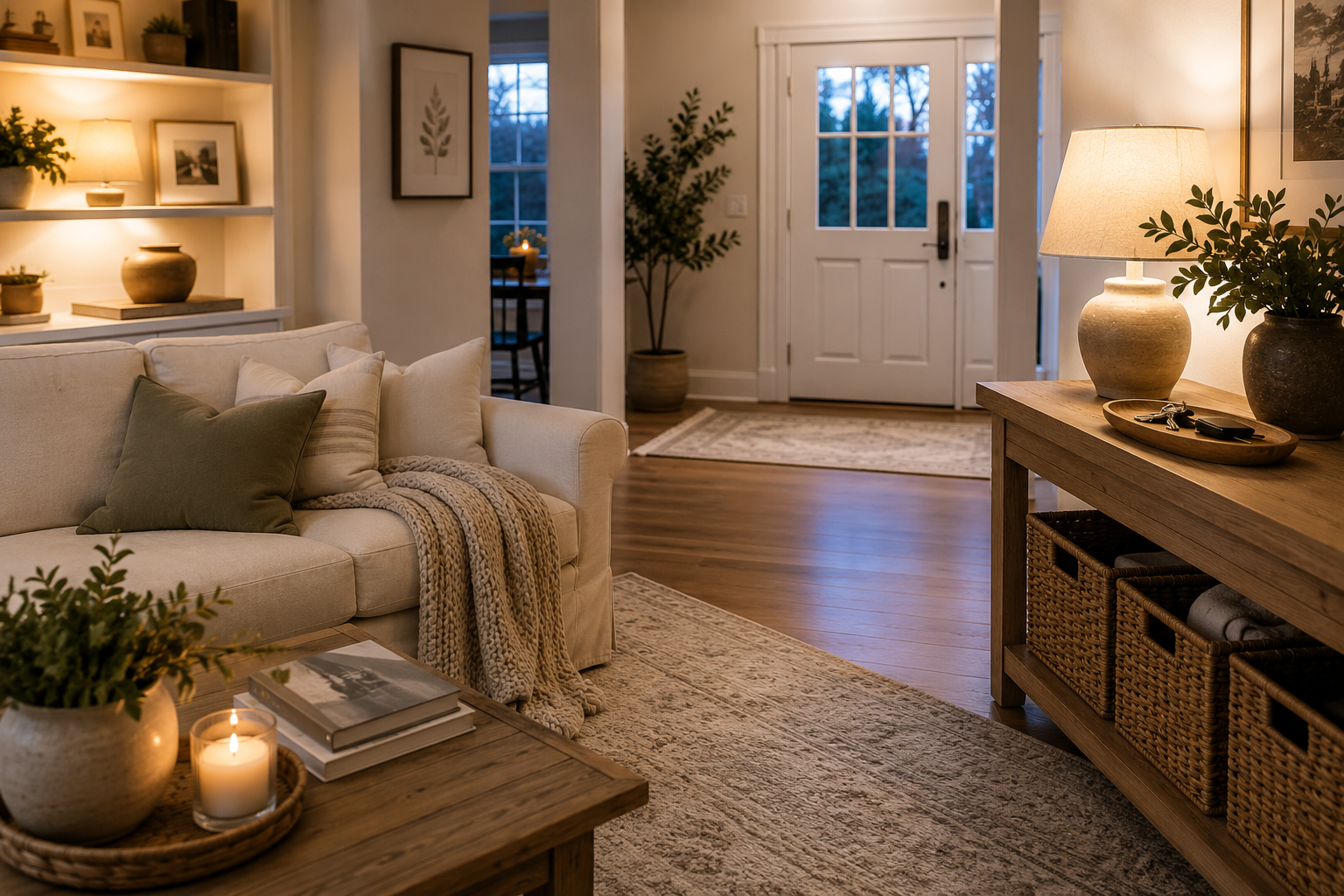
Some homes seem to stay tidy almost effortlessly.
The secret usually isn't that someone spends hours cleaning every evening. It's that they have a simple reset routine that prevents small messes from turning into overwhelming clutter.
A 15-minute evening reset gives your home a fresh start every morning. Instead of waking up to dishes in the sink, shoes by the door, and yesterday's clutter waiting for you, you begin the day with calm.
The goal isn't perfection.
It's creating a home that supports your everyday life.
Why Evening Resets Work
Mess doesn't usually appear all at once.
It builds one coffee mug, one unopened package, one jacket on the chair, and one pile of mail at a time.
An evening reset interrupts that cycle before it grows.
Instead of spending hours catching up every weekend, you're maintaining your home in small, manageable pieces.
Small resets create lasting calm.
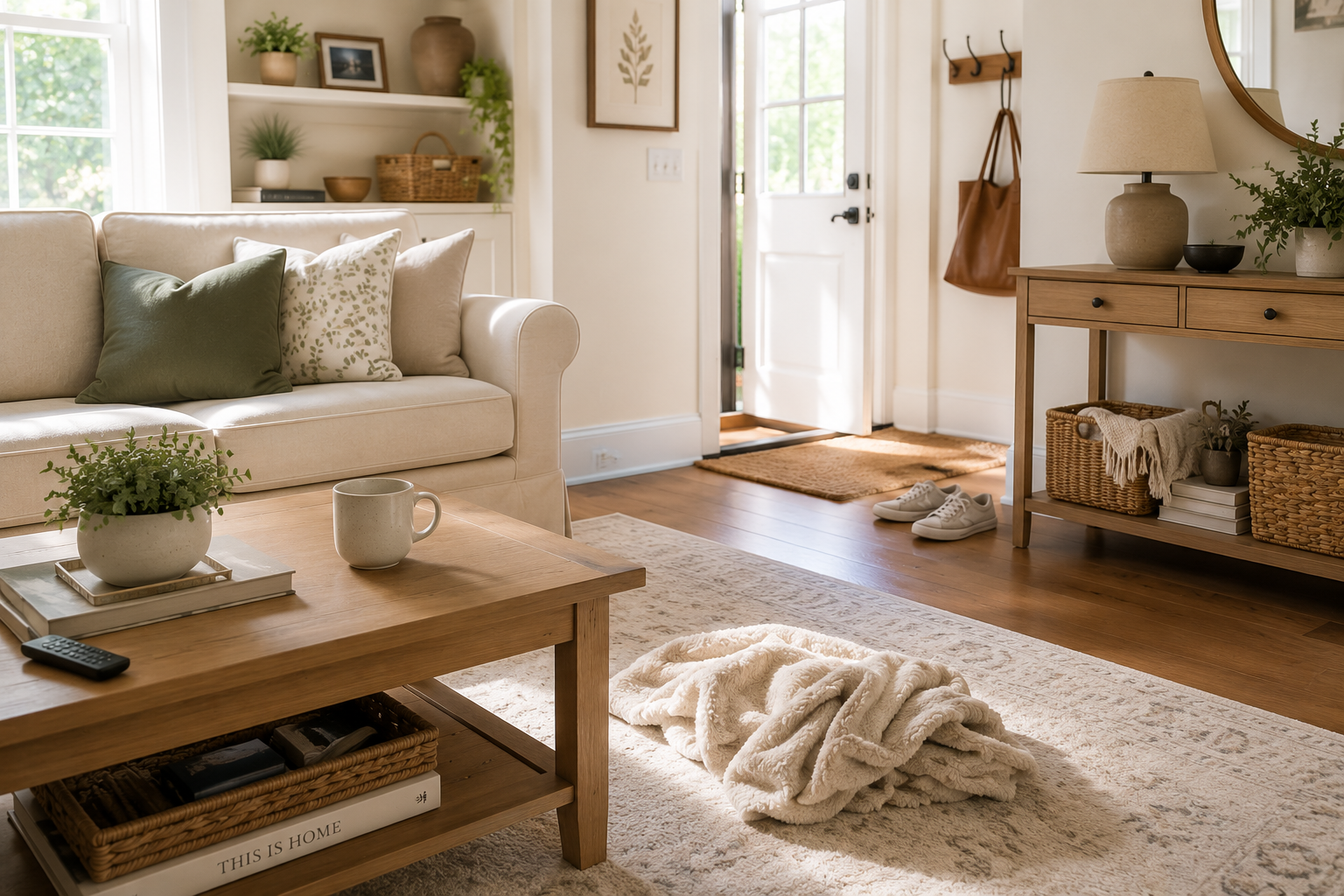
Step 1: Put Away the Easy Things First (3 Minutes)
Start with the quickest wins.
Walk through your main living spaces carrying a basket.
Pick up:
Shoes
Jackets
Water bottles
Toys
Books
Mail
Random household items
Return everything to its home.
You'll be surprised how much calmer your home feels after just a few minutes.
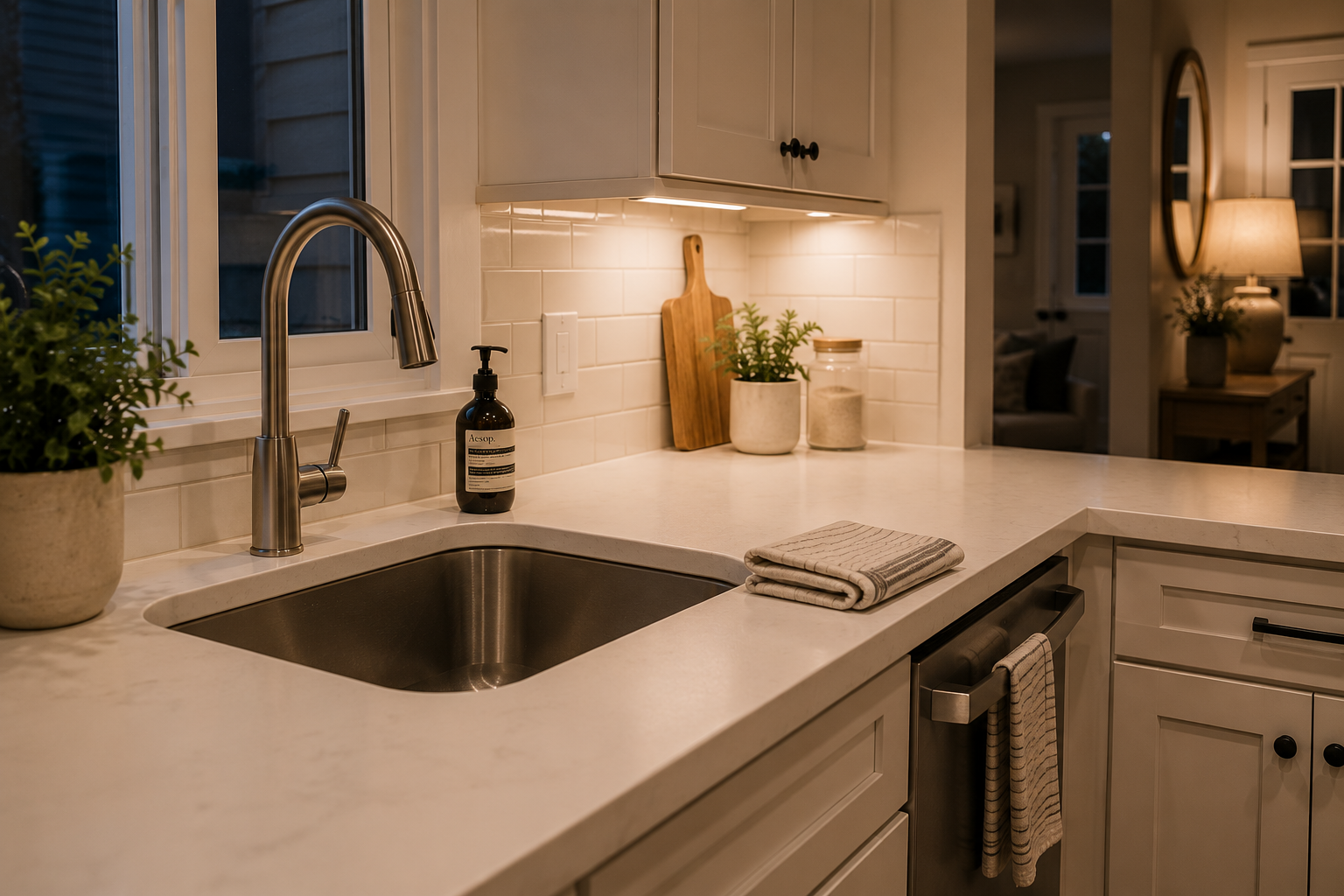
Step 2: Reset the Kitchen (5 Minutes)
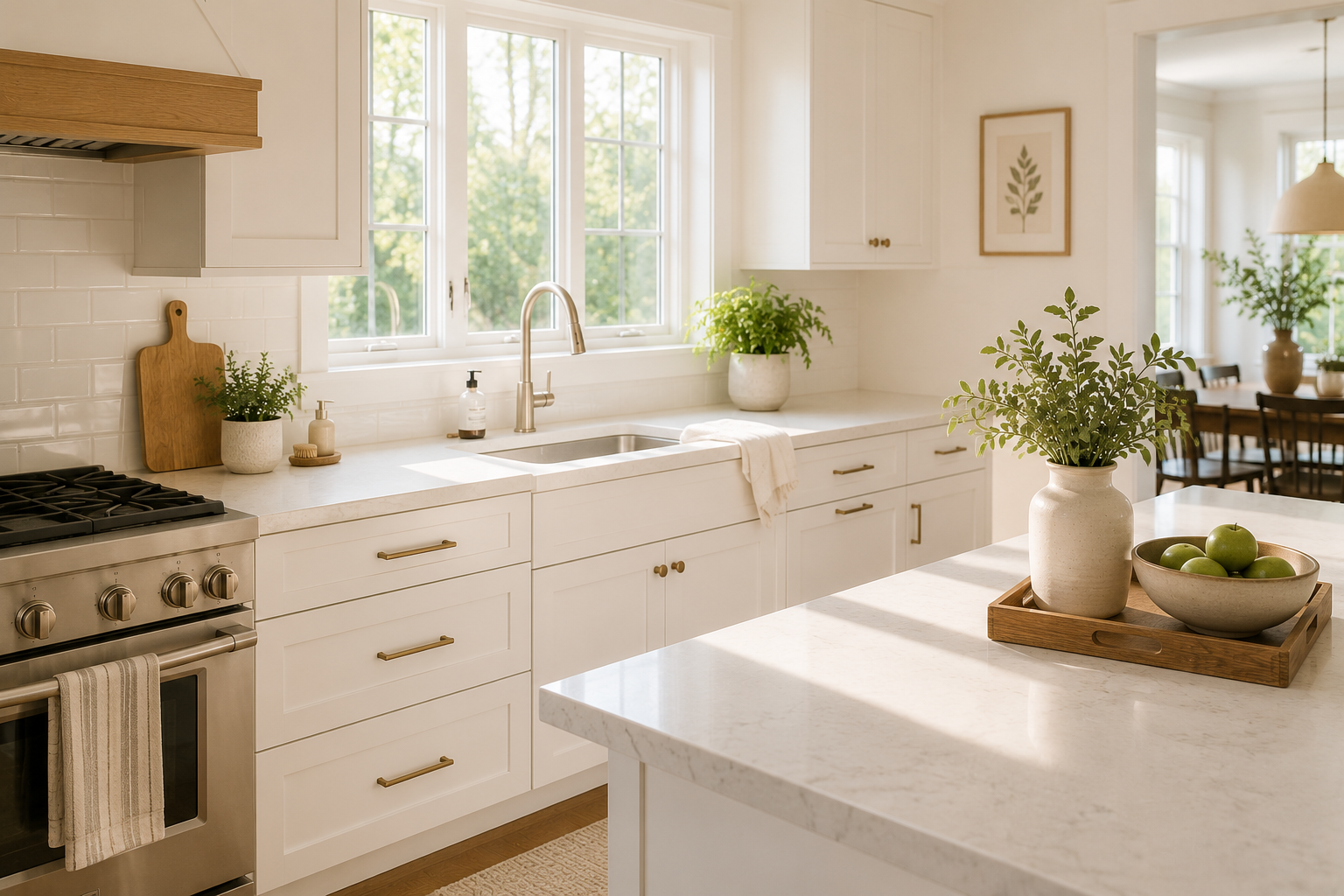
The kitchen sets the tone for tomorrow morning.
Take a few minutes to:
Load or run the dishwasher
Wipe the counters
Put food away
Empty the sink
Straighten hand towels
You don't need a deep clean.
You're simply giving tomorrow's version of yourself a fresh start.
Step 3: Prepare for Tomorrow (4 Minutes)
Reduce tomorrow's decisions tonight.
Simple ideas include:
Set out coffee supplies.
Put your purse or work bag by the door.
Charge electronics.
Review tomorrow's calendar.
Refill water bottles.
Lay out gym clothes.
These tiny actions make mornings noticeably smoother.
Step 4: End With One Calm Space (3 Minutes)
You don't need every room to be perfect.
Choose one area to finish completely.
Maybe it's:
the living room
the kitchen island
the entryway
your bedside table
Ending your evening with one peaceful space creates a sense of completion and helps your home feel intentionally cared for.

A Simple Evening Reset Checklist
Every evening:
✔ Return items to their homes
✔ Reset kitchen counters
✔ Load the dishwasher
✔ Put tomorrow's essentials by the door
✔ Empty the sink
✔ Fold blankets
✔ Turn off lights in finished rooms
✔ Enjoy one calm space before bed
The goal isn't doing everything.
It's creating consistency.
Calm Home Organization Favorites
These are a few of my favorite products that make an evening reset simpler and help create everyday systems that are easy to maintain. They aren't about creating a perfect home—they're about making it easier to keep your home calm, functional, and ready for tomorrow.
Decorative Catch-All Tray
A simple catch-all tray gives keys, wallets, sunglasses, and mail a designated home, helping entry tables, kitchen counters, and other flat surfaces stay clear.
Woven Storage Basket
Perfect for quickly gathering blankets, books, toys, or other everyday items during your evening reset. It's an easy way to tidy a room in just a few minutes.
Bamboo Drawer Organizer
Create designated spaces for everyday essentials so everything has a home and is easy to put away after each use.
Microfiber Cleaning Cloths
Keep a few within easy reach for quickly wiping kitchen counters, tables, and other surfaces before bed, making your morning feel like a fresh start.
Slim Velvet Hangers
Matching slim hangers help closets stay neat, save space, and make putting away clean laundry quick and effortless.
These simple products support the system—they don't replace it. Small habits paired with practical organizing solutions make it easier to maintain a calm home every day.
Final Thoughts
Your home doesn't stay calm because you clean more.
It stays calm because you reset it regularly.
Fifteen intentional minutes each evening can prevent hours of weekend catch-up, reduce everyday stress, and help you wake up to a home that feels peaceful instead of overwhelming.
Small habits create lasting change.
And sometimes the smallest routine becomes the one that makes the biggest difference.
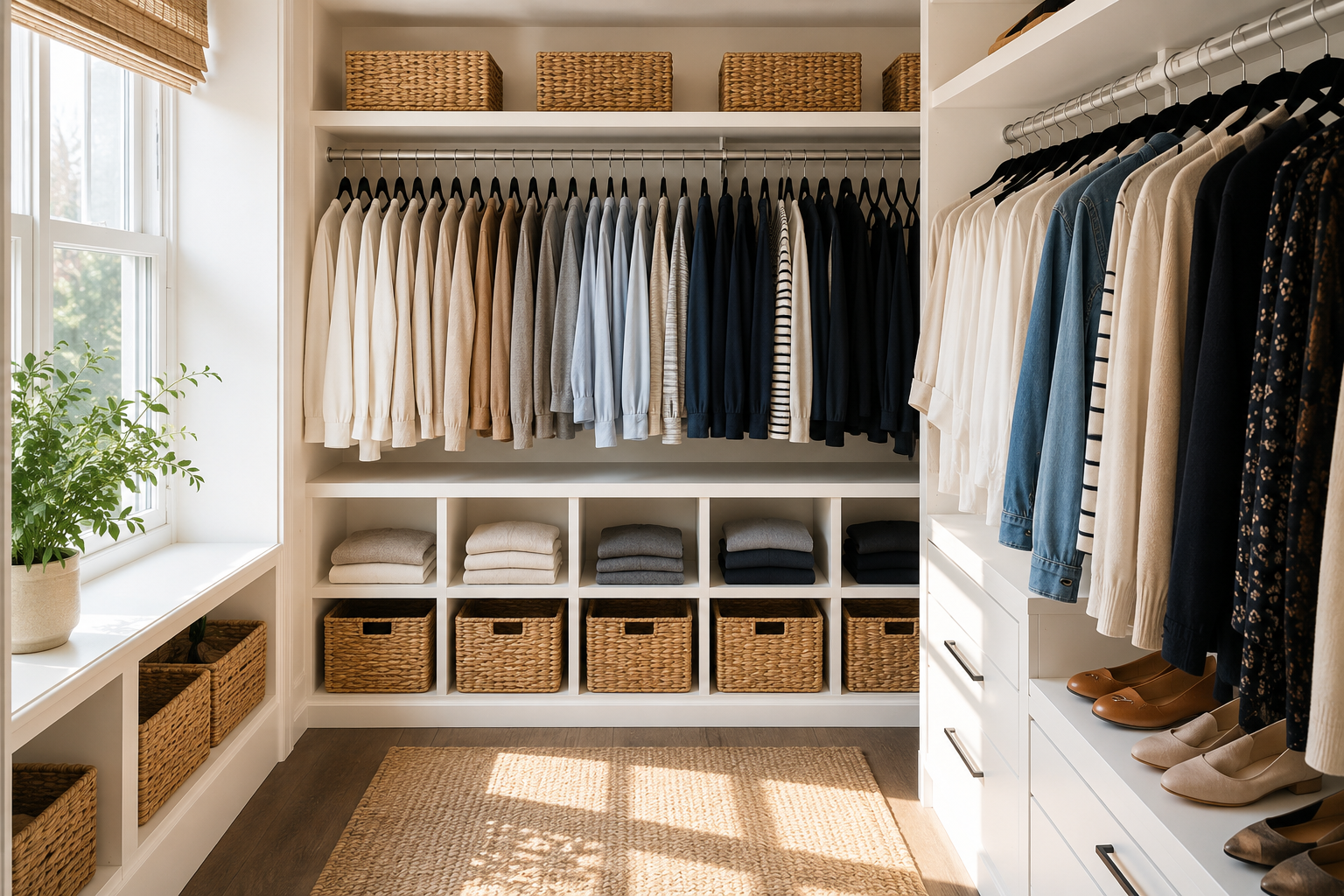
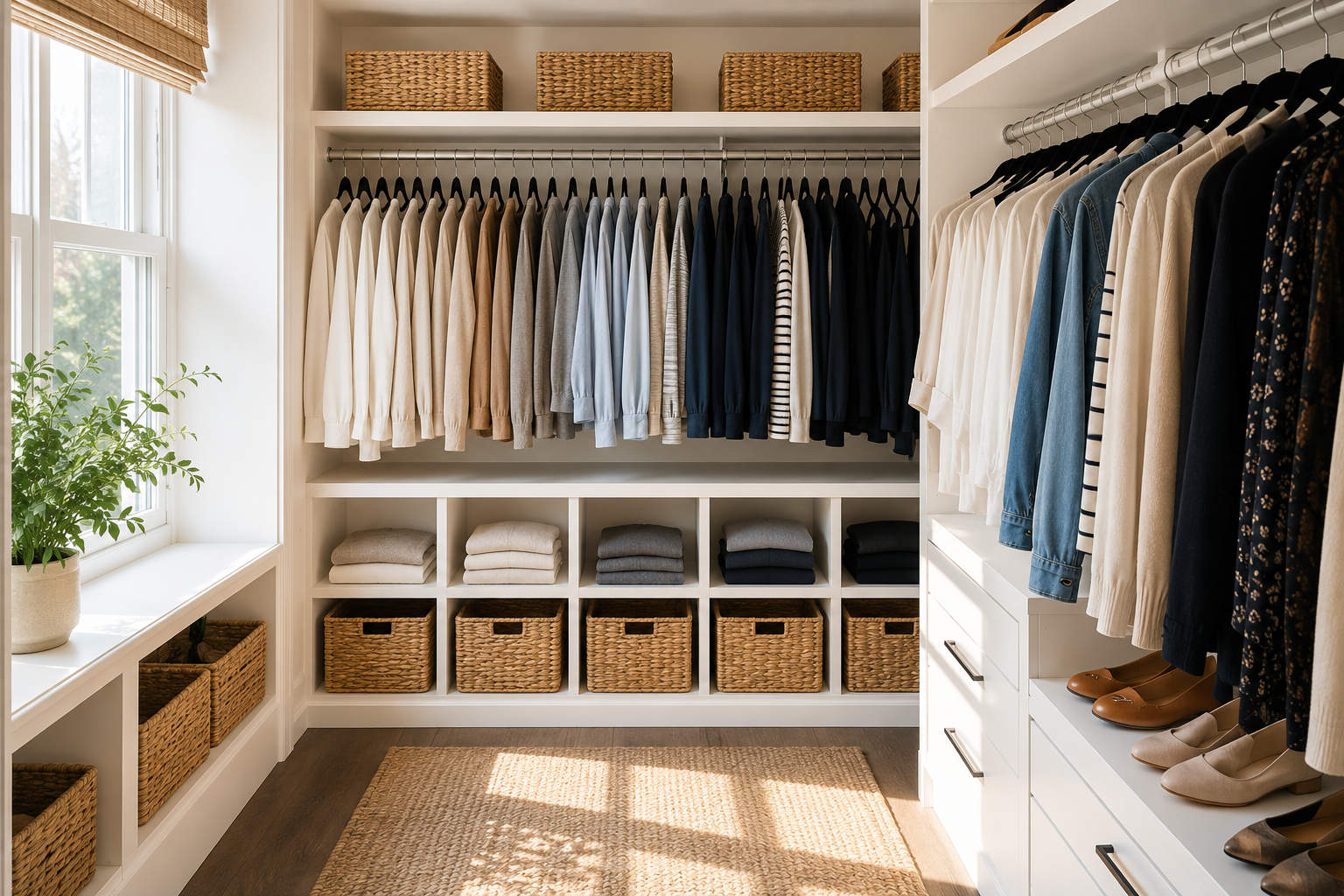
A Closet Organization System You'll Actually Keep Up
A well-organized closet isn't about perfection—it's about creating simple systems that make everyday life easier. Learn how to build a closet organization system that's easy to maintain, reduces everyday stress, and helps your home feel calmer.
Create a simple closet system that makes everyday routines easier—not one that's impossible to maintain.
Some mornings, getting dressed feels harder than it should.
You slide hangers back and forth searching for one shirt. A sweater slips from the shelf. Shoes have gathered near the door, and yesterday's outfit is still draped over a chair because putting everything away felt like one more task at the end of a busy day.
It doesn't take long before a closet that once felt organized begins to feel overwhelming again.
If you've ever wondered why that happens, you're not alone.
The problem usually isn't that your closet is too small. It isn't that you need more organizing products, either.
More often, it's because the system wasn't designed for real life.
A closet should quietly support your everyday routine. It should make mornings feel calmer, laundry easier to put away, and getting ready something you rarely have to think about.
That's what sustainable organization looks like.
It's not about creating a perfect closet.
It's about creating one that's easy to keep.
Why Perfect Systems Usually Don't Last
Many closets look beautifully organized on the day they're finished.
Every hanger matches. Every sweater is folded just right. Every basket is perfectly labeled.
But life doesn't stay picture perfect.
Laundry piles up.
Work gets busy.
Kids borrow sweatshirts.
Seasons change.
The systems that last aren't the ones that require constant attention. They're the ones that make putting things away almost automatic.
The easier it is to maintain your closet, the more likely it is to stay organized.
That's why the goal shouldn't be perfection.
It should be simplicity.
Organize Around Your Daily Routine
Instead of thinking about where every individual item belongs, think about how you naturally move through your mornings.
What do you reach for most often?
Those are the items that deserve the easiest access.
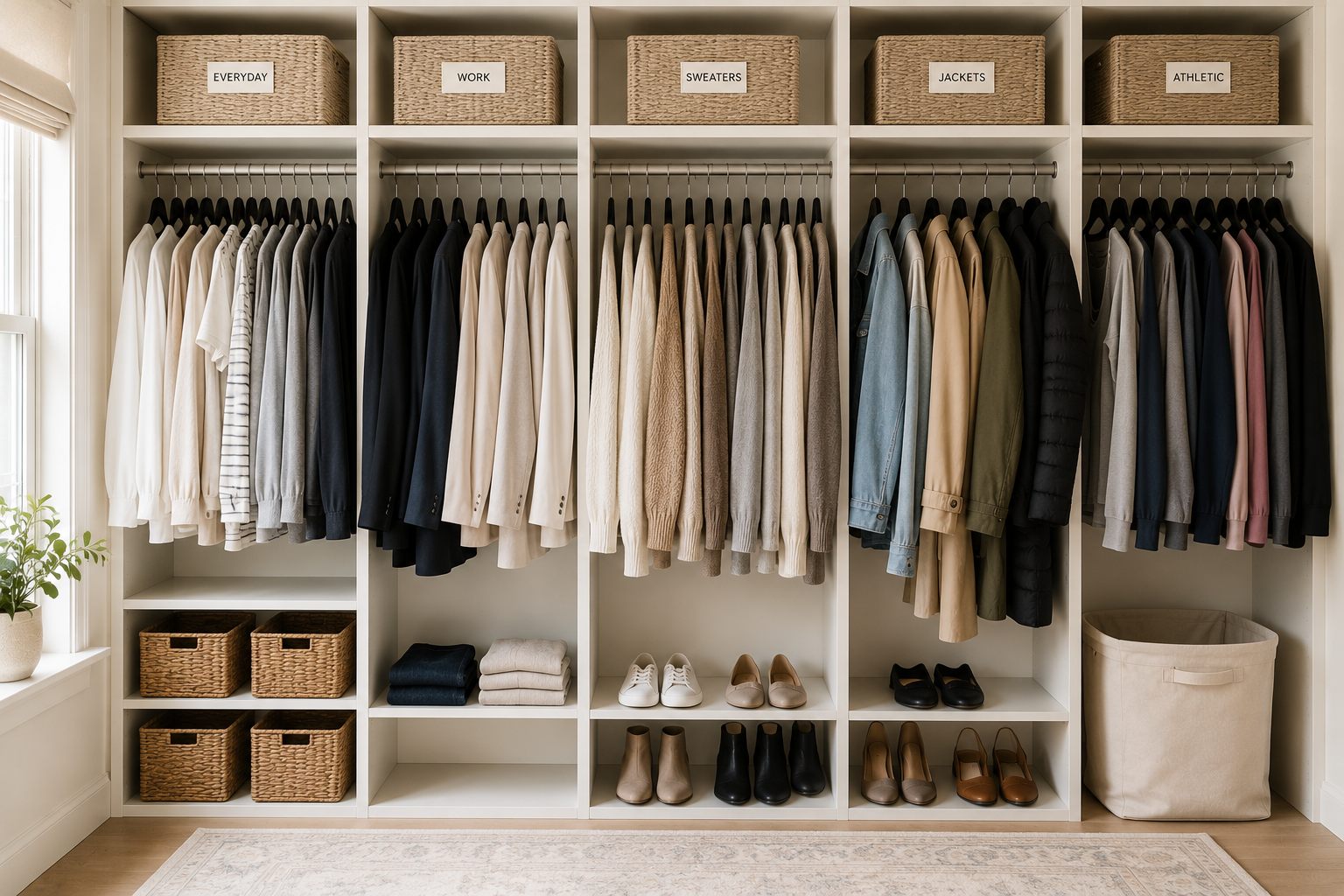
Create simple sections like:
Everyday Clothing
Work Clothes
Athletic Wear
Sweaters
Jackets
Shoes
Accessories
These broad categories are easier to remember than complicated organizing systems.
When everything has an obvious home, putting laundry away becomes faster because there are fewer decisions to make.
Good organization removes decisions.
That's what makes it sustainable.
Make It Easier to Put Things Away Than Leave Them Out
One of the biggest reasons closets become messy isn't because people don't care.
It's because the system asks too much of them.
If hanging one shirt means squeezing it between overcrowded hangers…
If folded clothes immediately topple over…
If finding the right basket takes longer than leaving something on the floor…
The system is working against you.
Instead, look for small ways to remove friction.
Leave a little extra space between hanging clothes.
Avoid overfilling shelves.
Keep frequently used items within easy reach.
When putting something away takes only a few seconds, you're much more likely to do it consistently.
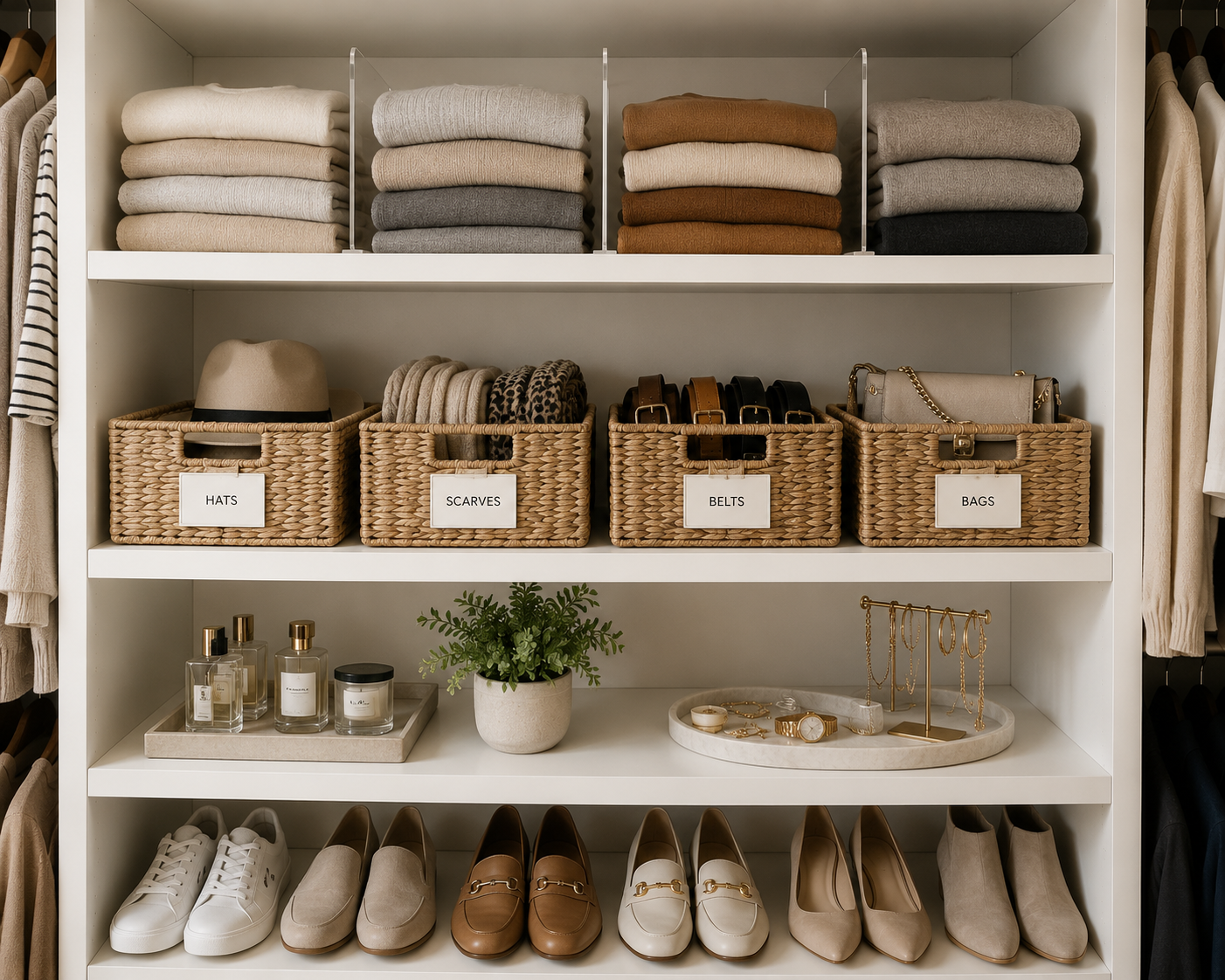
Calm Closets Have Room to Breathe
One of the easiest ways to make a closet feel calmer is surprisingly simple:
Don't fill every available inch.
Open space isn't wasted space.
It's what allows your closet to function.
When shelves aren't packed full, folded clothing stays neat longer.
When hangers aren't crowded together, finding what you need becomes easier.
When baskets aren't overflowing, putting things away takes less effort.
Creating breathing room helps your closet stay organized naturally instead of requiring constant resets.
Build Habits Instead of Chasing Perfection
A sustainable closet isn't maintained during one big organizing weekend.
It's maintained through small habits that fit into everyday life.
A few minutes after laundry.
Straightening one shelf before bed.
Returning shoes to the same place each evening.
Donating clothing before it begins overflowing again.
These small routines don't feel overwhelming because they're part of everyday living—not extra work.
Over time, those habits become the system.
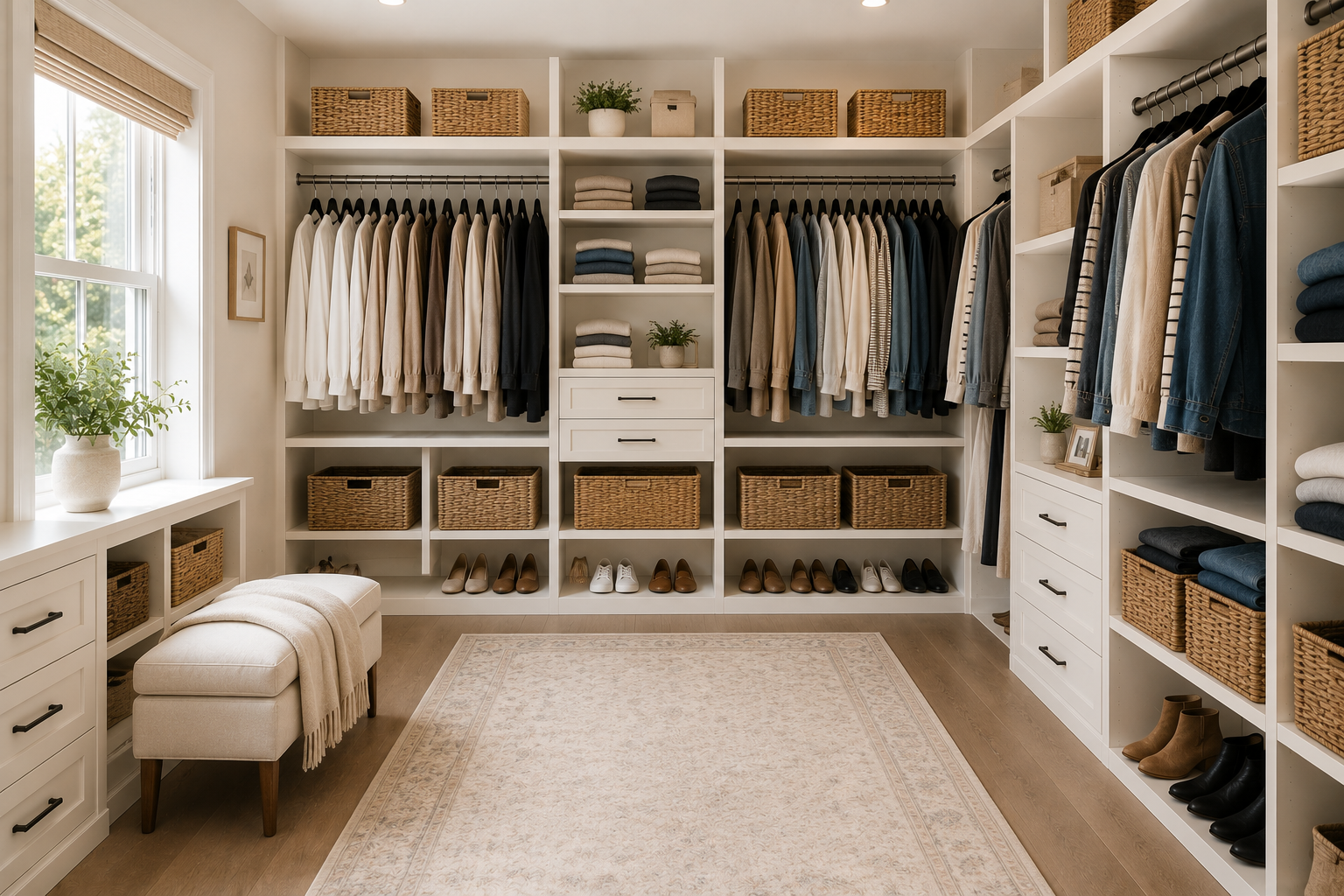
Five Small Habits That Keep a Closet Organized
Once your system is in place, these simple habits help it stay that way:
Return clean laundry to its designated section as soon as it's folded.
Keep shoes in their assigned location after wearing them.
Remove clothing you no longer wear before the closet begins feeling crowded.
Spend five minutes straightening shelves during your weekly home reset.
Adjust your closet with the seasons so your everyday clothing is always easiest to reach.
Small habits create lasting results because they support your daily routine instead of interrupting it.
Calm Home Organization Favorites
These products support a simple closet system without making it more complicated.
Slim Velvet Hangers
Create a consistent look, prevent clothing from slipping, and save valuable hanging space while making your closet easier to maintain.
Shelf Dividers
Keep folded sweaters, jeans, and linens standing neatly instead of collapsing into untidy piles.
Woven Storage Baskets
Perfect for scarves, hats, handbags, seasonal accessories, or smaller items that benefit from one clearly defined home.
Clear Shoe Storage Boxes
Protect shoes while making it easy to see every pair without opening multiple containers.
Drawer Organizers
Create simple sections for socks, undergarments, belts, and accessories so everything is easy to find each morning.
Final Thoughts
Your closet doesn't have to look perfect to make your life easier.
When getting dressed feels simple, putting laundry away takes less effort, and everything has an obvious place to return, your closet begins working for you instead of creating one more thing to manage.
That's what sustainable organization looks like.
It's not about maintaining perfection.
It's about creating simple systems that make everyday life feel a little calmer.
And sometimes, those small changes are the ones that last the longest.
You May Also Like
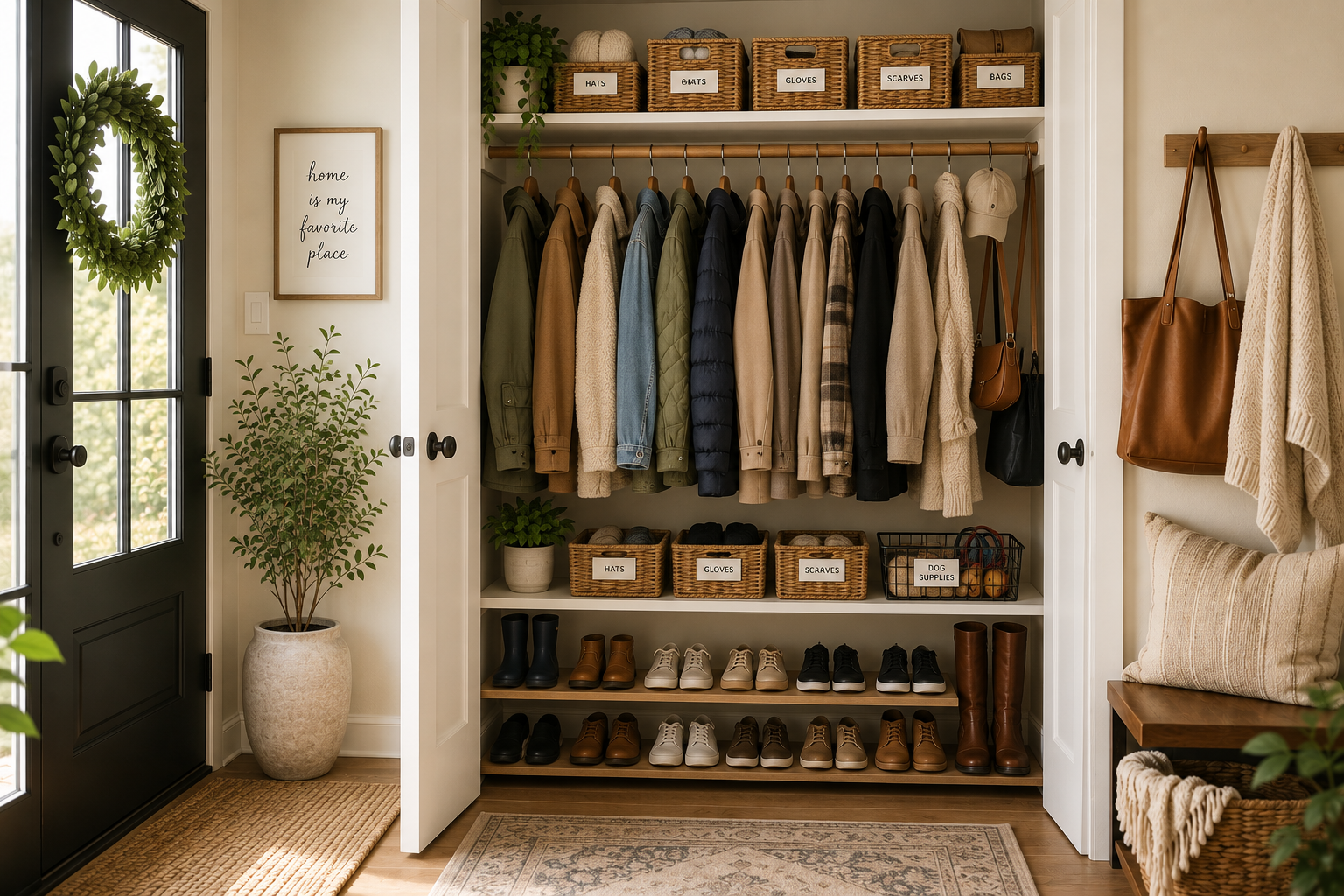
Create a Coat Closet That Makes Coming Home Feel Calmer
A bright, welcoming entryway with an open coat closet featuring a few neatly hung neutral coats on wooden hangers, woven baskets on the upper shelf, a simple shoe rack below, natural light streaming through the front door, and a small plant nearby. The space should feel peaceful, lived-in, and attainable—not perfectly staged.
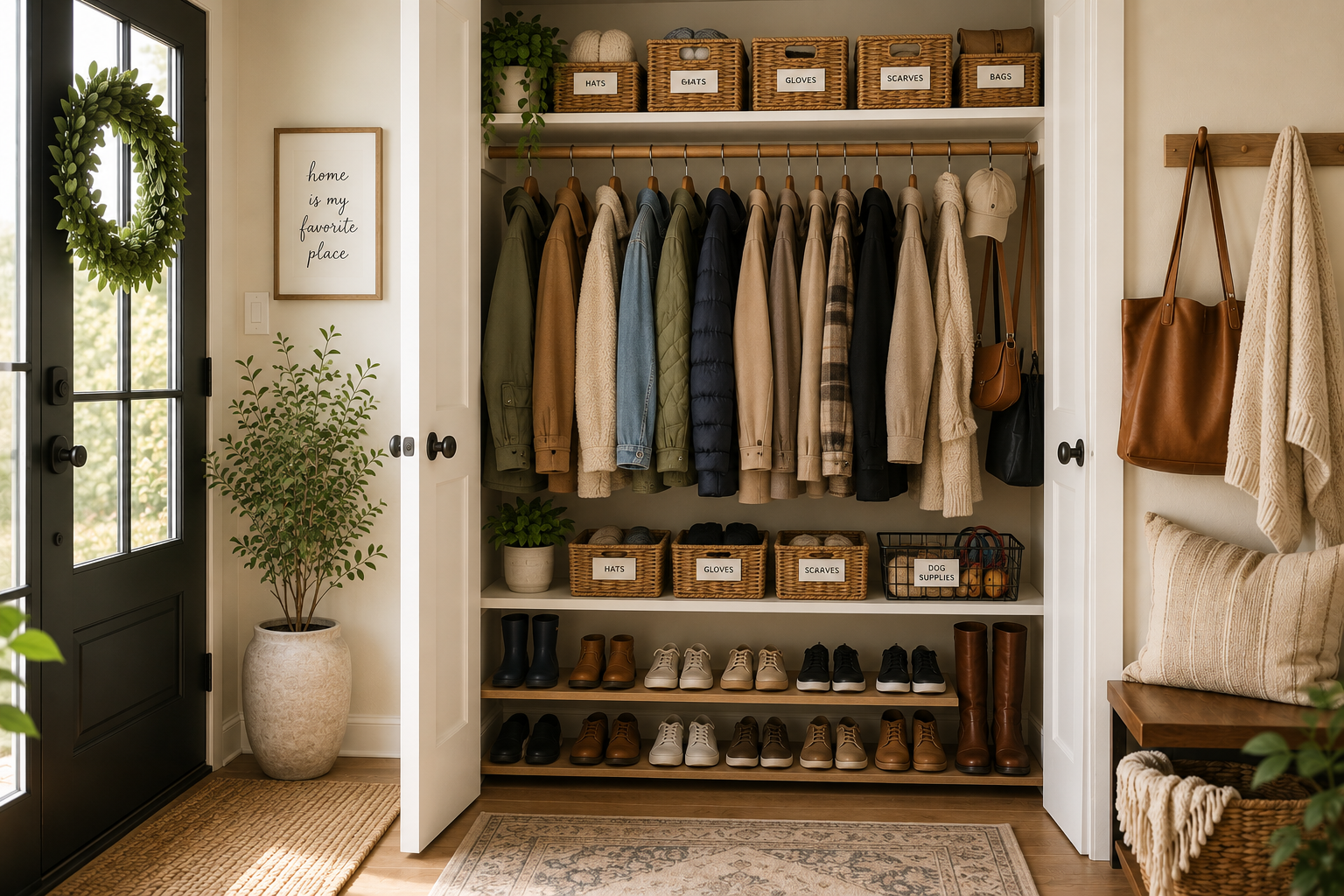
Coming Home Should Feel Like a Deep Breath
There's something special about finally walking through your front door after a long day.
Whether you've been at work, running errands, picking up kids, or simply tackling a busy schedule, home should be the place where your shoulders relax and your mind begins to slow down.
But for many of us, the first thing we see is clutter.
Coats hanging on doorknobs. Shoes scattered across the floor. Bags tossed wherever there was space. Mail piling up before we've even had a chance to take off our jacket.
It's a small area, but it quietly sets the tone for the rest of your home.
The good news is that creating a calmer home doesn't require a complete makeover. Sometimes, one simple system in one small space can change how your entire house feels.
A thoughtfully organized coat closet doesn't just store coats.
It creates a peaceful arrival, supports your daily routines, and welcomes you home every single day.
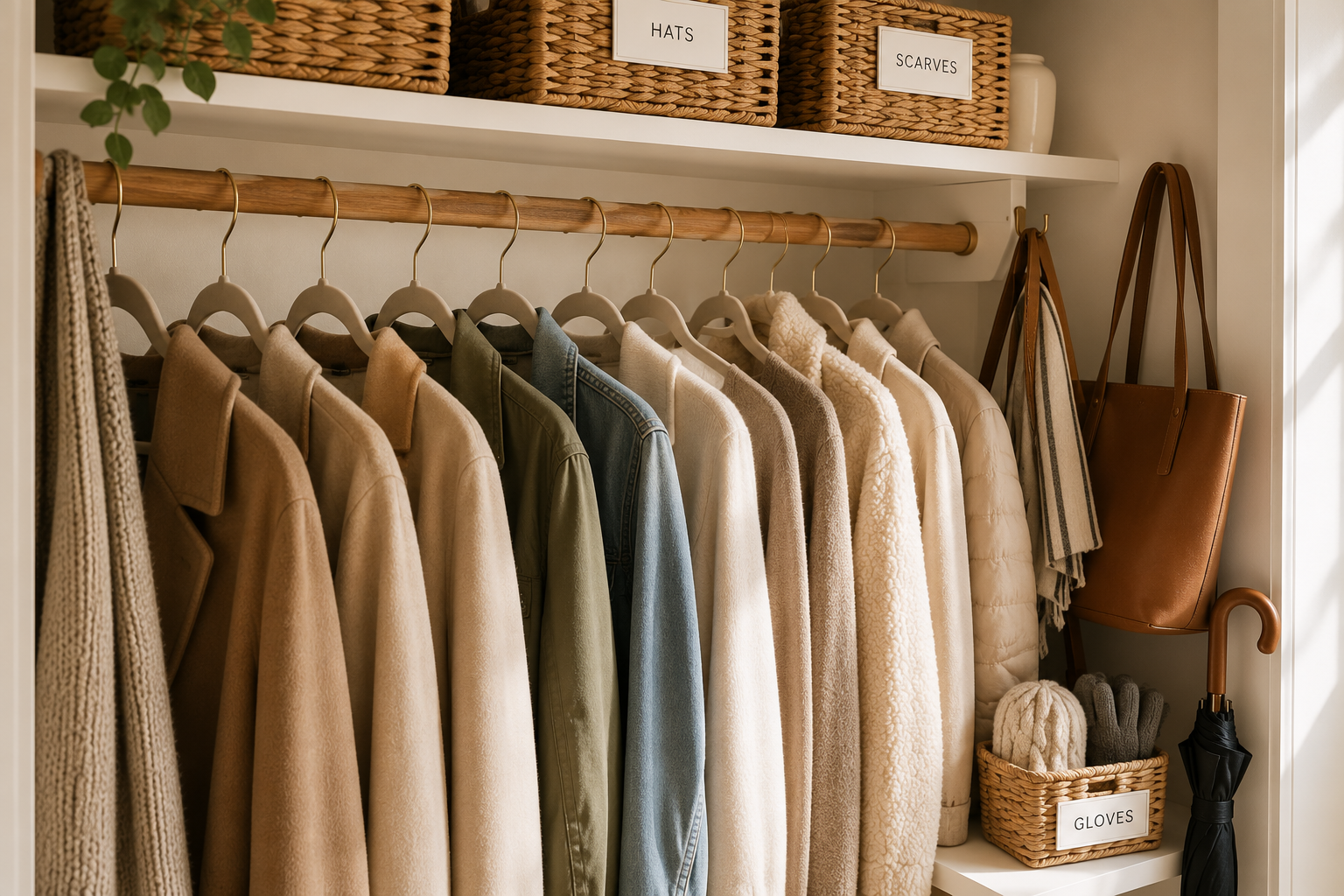
Why Your Coat Closet Sets the Tone for Your Entire Home
It may only be a small closet, but it has one of the biggest jobs in your home.
Every time you leave, it helps you get out the door. Every time you return, it becomes the first space that welcomes you back.
When that space is cluttered, the stress of the day has a way of following you inside.
You step over shoes. Search for keys. Toss your bag on the kitchen counter because there's nowhere else to put it. Jackets end up draped over chairs, and the clutter slowly spreads into the rest of your home.
It happens so gradually that you may not even notice.
But when your coat closet has a simple system, your arrival feels completely different.
You hang up your coat without thinking. Shoes have a designated place. Your bag goes exactly where you'll find it tomorrow morning. Instead of walking into another task waiting to be done, you're greeted by a space that quietly supports your routine.
That's the real purpose of organizing a coat closet.
It's not about making it look perfect.
It's about creating one small system that makes coming home feel easier every single day.
The best organization is often the kind you hardly notice—because it simply works.
Step 1: Clear Everything Out Before You Organize
It's tempting to start buying baskets or moving things around, but the best coat closet systems begin with a clean slate.
Take everything out of the closet so you can see exactly what you're working with.
As you sort through each item, ask yourself a few simple questions:
Does someone actually wear this?
Is it the right season?
Does it belong somewhere else?
Would we notice if it were gone?
You'll probably find coats that no longer fit, umbrellas that don't open, mismatched gloves, and bags you forgot you owned.
Removing what you no longer use creates space for the things that truly support your everyday routine.
Remember, the goal isn't to fill every inch of your closet.
The goal is to make everyday life easier.
Step 2: Keep Only the Current Season Within Reach
One of the simplest ways to make a coat closet feel calm is to reduce visual clutter.
Instead of storing every jacket, coat, and winter accessory all year long, keep only the items you'll actually use during the current season.
Heavy winter coats can be stored elsewhere during the summer, while lightweight rain jackets can move to the front when the weather changes.
This simple rotation instantly creates more breathing room and makes it easier to find what you need without digging through a crowded closet.
Less to manage means less stress every time you walk through the door.
Step 3: Give Every Category a Home
A calm coat closet isn't organized because everything is hidden away.
It's organized because every item has an obvious place to return to.
Rather than creating one large pile of miscellaneous accessories, divide your closet into simple categories that match the way your family actually lives.
You might create spaces for:
Everyday coats
Guest jackets
Hats
Gloves
Scarves
Reusable shopping bags
Dog walking supplies
Umbrellas
Simple woven baskets make these categories easy to see and even easier to maintain.
When everyone knows where something belongs, putting it away becomes part of the routine instead of another chore.
That's how small systems create lasting organization.
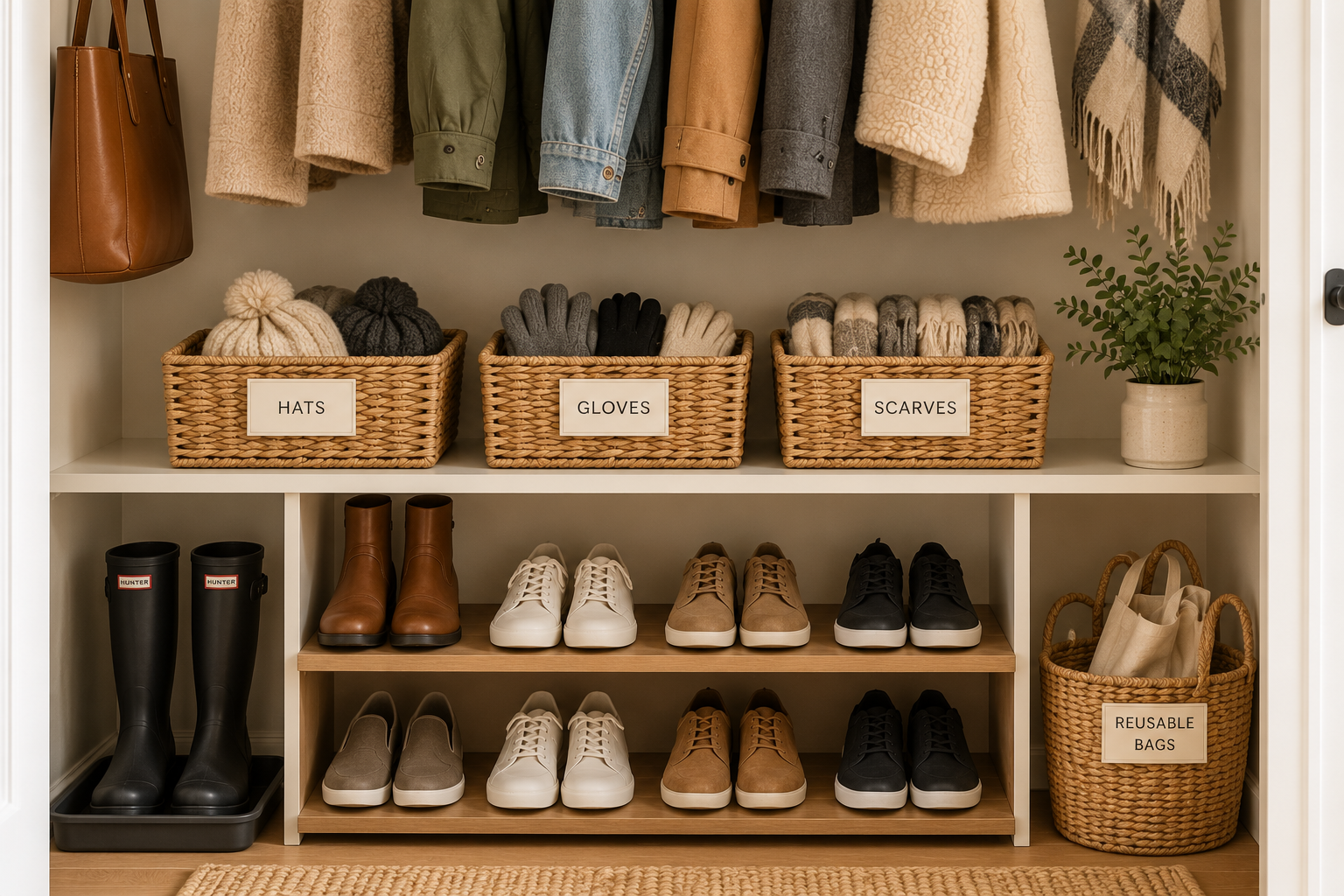
Step 4: Make Shoe Storage Part of the System
Shoes have a way of spreading throughout an entryway before you even realize it.
One pair by the door quickly becomes several, and suddenly your calm entrance feels crowded before you've even taken off your coat.
Instead of letting shoes collect wherever they land, give them a designated home.
If your closet has enough space, use the bottom shelf for the pairs your family wears most often. A simple shoe rack keeps everything visible, organized, and easy to grab on the way out the door.
For boots, consider adding a boot tray to catch dirt and moisture before it reaches your floors.
The goal isn't to store every pair of shoes you own.
It's to make everyday arrivals and departures feel effortless.
Step 5: Create a Simple Everyday Drop Zone
A coat closet can do much more than store jackets.
It can become the place where everything you carry every day naturally comes to rest.
Think about the items that often end up on your kitchen counter or dining table:
Keys
Wallet
Sunglasses
Purse or backpack
Dog leash
Reusable shopping bags
Mail
Giving these everyday essentials a permanent home means you'll spend less time searching for them tomorrow morning.
A small basket, hook, or shelf is often all you need.
When everything has a place, leaving the house becomes just as peaceful as coming home.
Step 6: Choose Products That Support the System
The right organizing products don't create organization on their own.
They simply make your system easier to maintain.
Instead of buying containers first, build your system around how you actually use your space. Then choose products that help everyone in your home keep that system going.
Some of our favorite coat closet essentials include:
Slim velvet hangers to maximize hanging space
Woven baskets for hats, gloves, and scarves
Shoe rack or stackable shoe shelves
Boot tray for wet shoes
Labels for baskets and bins
Hooks for reusable bags or dog leashes
Simple products can make everyday habits feel almost automatic.
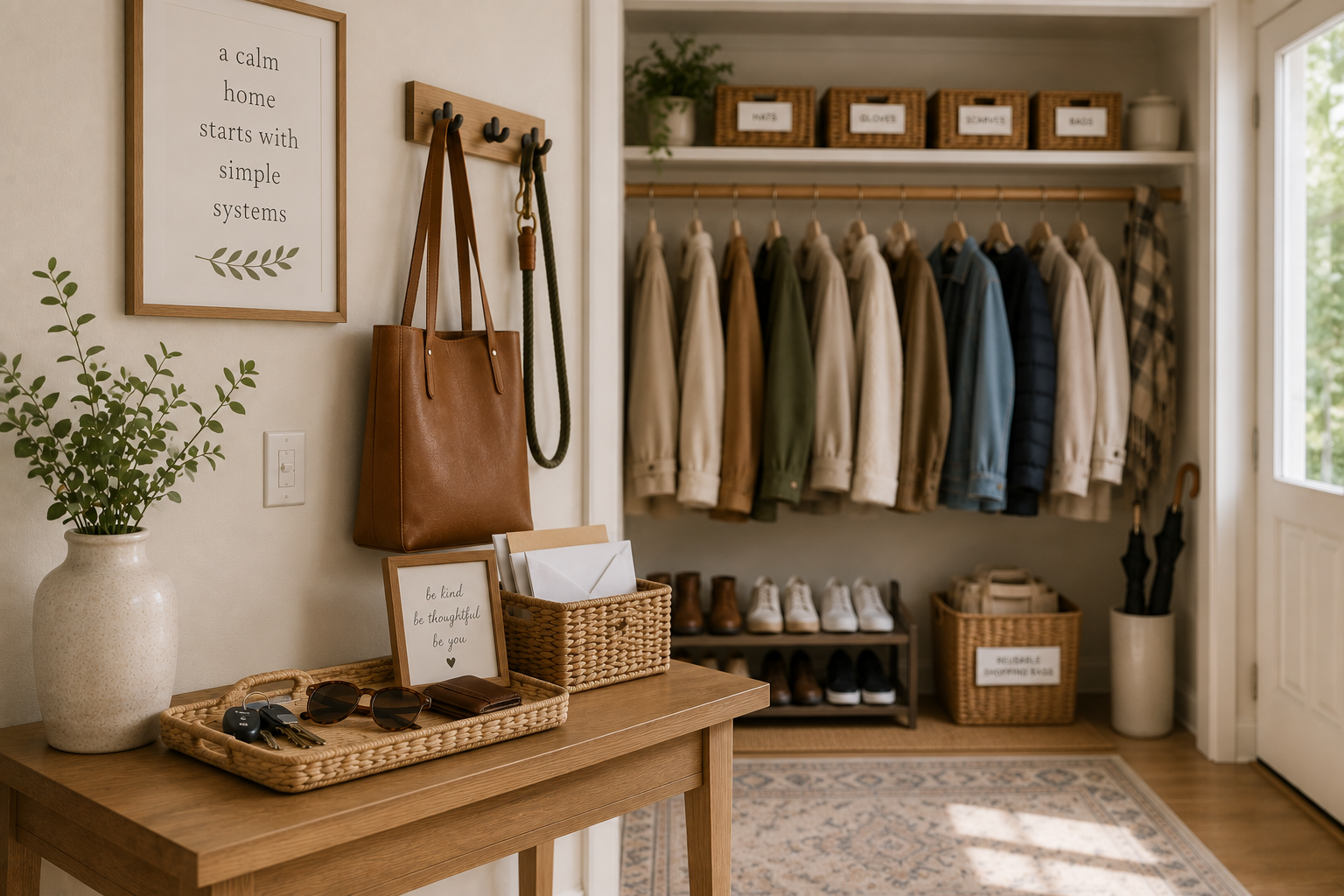
A Five-Minute Weekly Reset Keeps Everything Working
One of the biggest myths about organization is that it requires constant upkeep.
In reality, the best systems stay organized because they're easy to maintain.
Once a week, spend just five minutes resetting your coat closet.
You can:
Hang up any coats that were left out.
Return shoes to the rack.
Empty reusable shopping bags.
Put hats and gloves back into their labeled baskets.
Toss junk mail or receipts that have collected.
That's it.
Small resets prevent overwhelming cleanups later and help your system continue working with very little effort.
Calm Home Organization Favorites
The right products don't create organization—they simply make it easier to maintain the systems you've built. These are a few of our favorite tools for creating a coat closet that stays organized and makes coming home feel a little calmer.
Slim Velvet Hangers
Save space while keeping coats neatly hung and easy to grab. Their slim profile helps maximize hanging space without sacrificing a clean, organized look.
Storage Baskets
Create simple categories for hats, gloves, scarves, and other everyday essentials. Matching baskets make your closet feel organized while helping everyone know where things belong.
Wood Shoe Rack
Keep everyday shoes organized, easy to find, and off the floor. A simple shoe rack helps prevent clutter from spreading into the rest of your entryway.
Boot Tray
Protect your floors by catching dirt, water, and mud from wet shoes and boots. It's an easy way to keep your entryway cleaner throughout the year.
Umbrella Stand
Keep umbrellas upright, organized, and ready for rainy days instead of leaning against the wall or collecting in a corner.
Wall Hooks
Perfect for purses, backpacks, dog leashes, or other grab-and-go essentials you use every day.
Affiliate Disclosure: As an Amazon Associate, Clear to Close earns from qualifying purchases at no additional cost to you.
Final Thoughts
A calm home doesn't begin in the living room.
It begins the moment you walk through your front door.
When your coat closet is built around simple, thoughtful systems, coming home feels different. You know exactly where your coat belongs. Your shoes have a place. Tomorrow's essentials are ready when you need them.
It's a small space, but it quietly supports every day.
You don't need a custom mudroom or an expensive renovation to create that feeling.
Just a few intentional systems that make life a little easier.
Because that's what organization is really about.
Not creating a perfect home.
Creating a home that welcomes you back with calm every single day.
You May Also Like
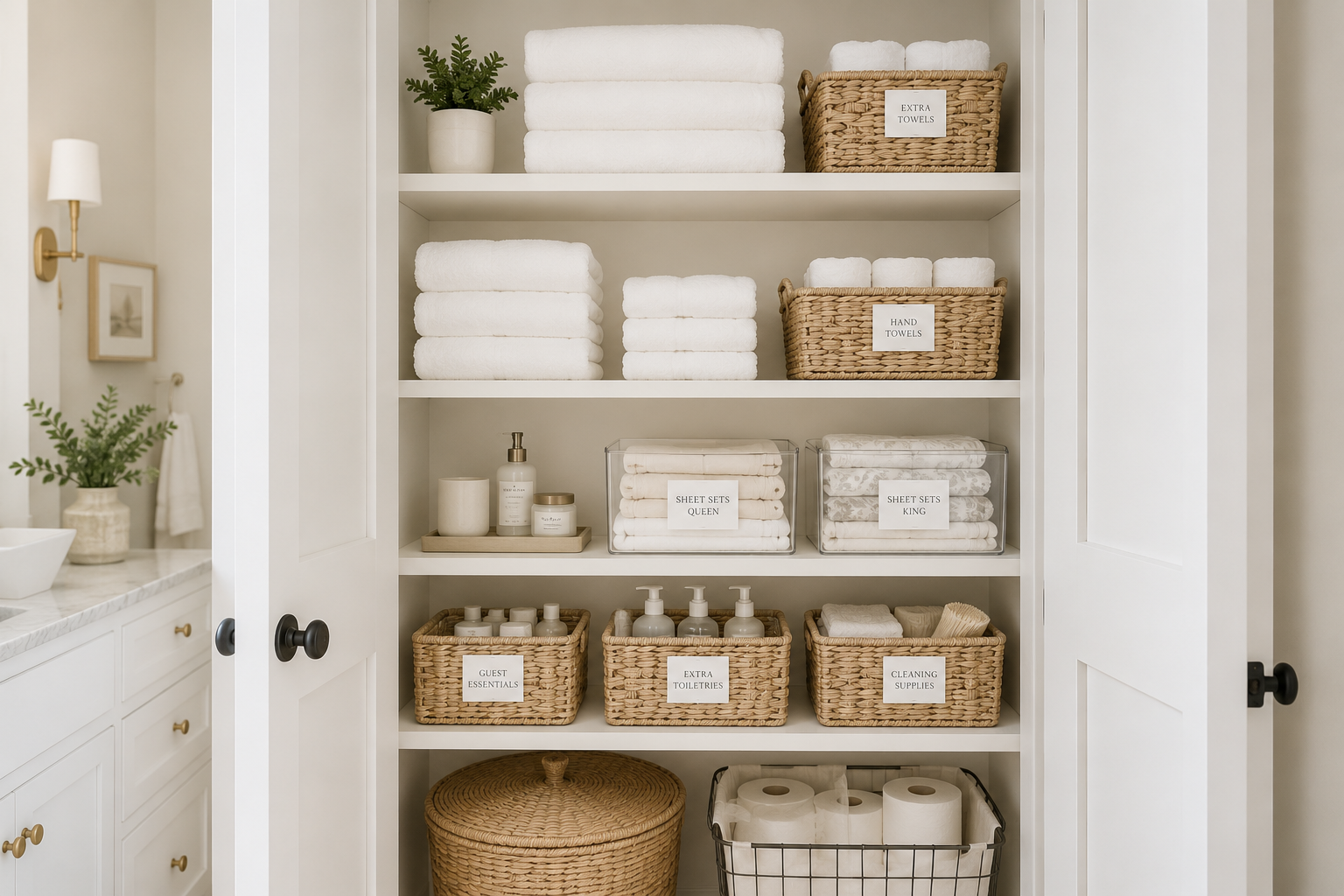
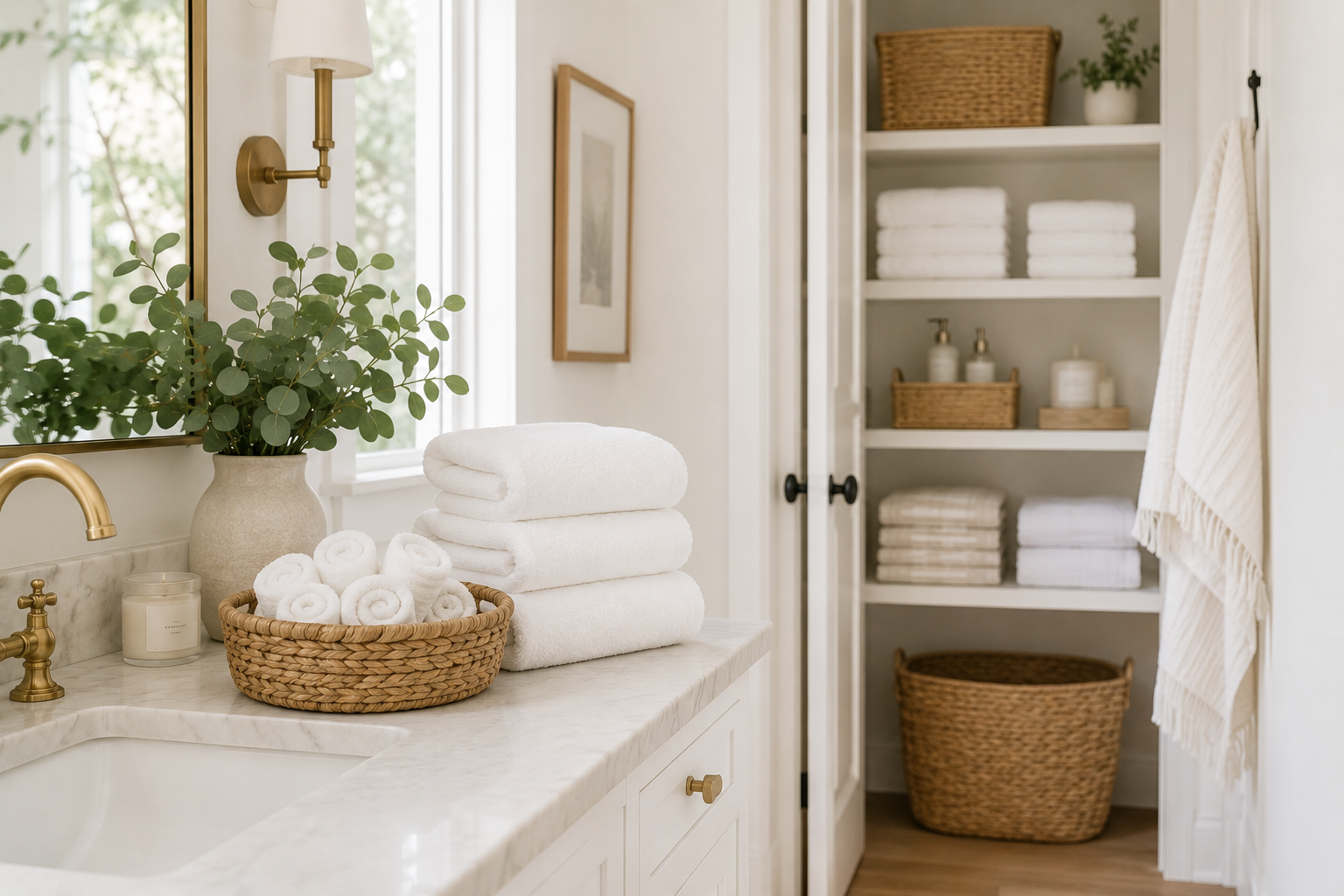
The Linen Closet System That Makes Everyday Life Simpler
Learn how to organize your linen closet with simple systems that make towels, sheets, guest supplies, and everyday essentials easy to find. Create a functional linen closet that stays organized and makes daily routines simpler.
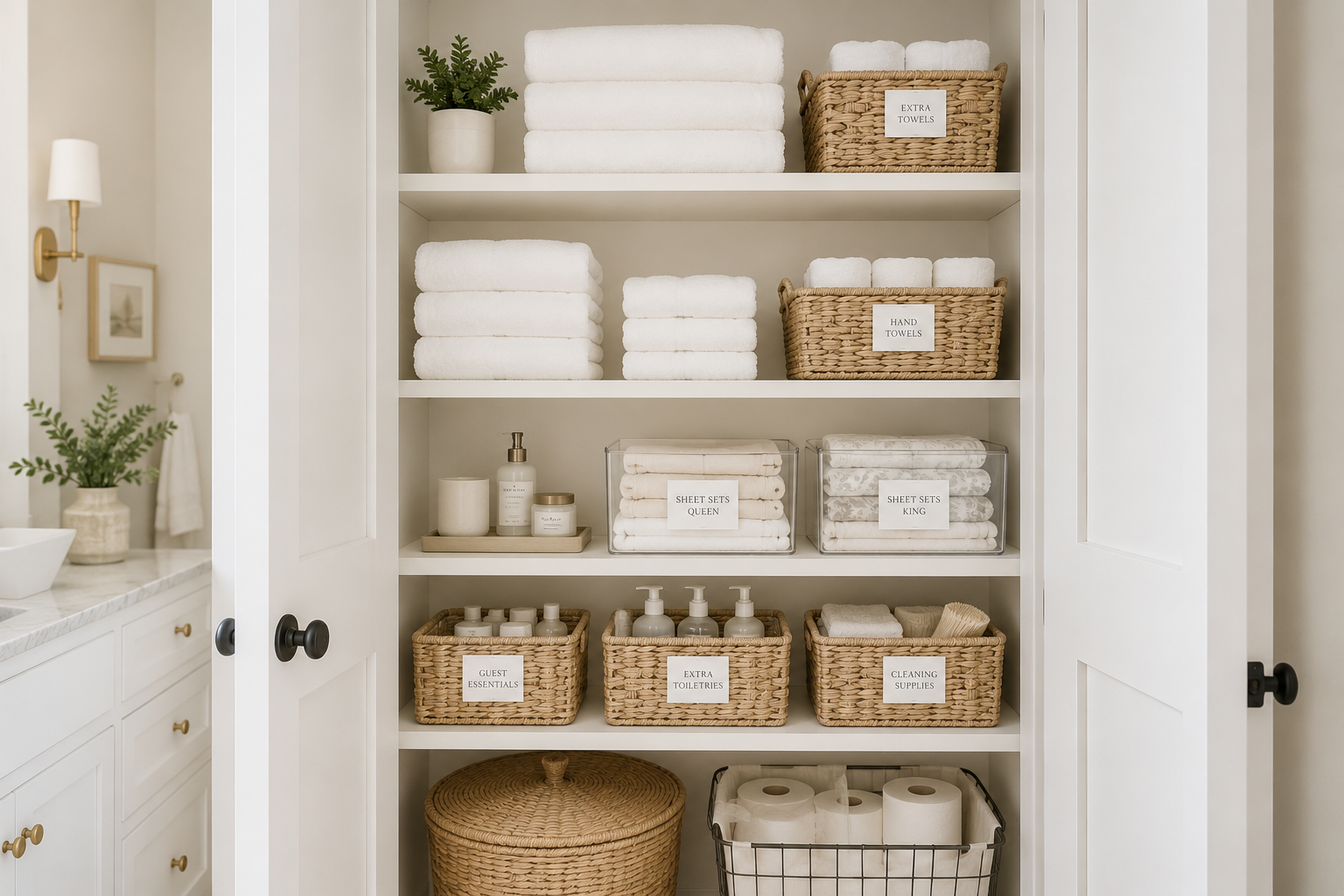
A linen closet should make everyday routines easier—not create frustration every time you need a clean towel or fresh sheets.
If you've ever stood in front of an overflowing closet searching for a matching pillowcase, digging through stacks of towels, or wondering where the guest toiletries disappeared, you're not alone.
The goal isn't perfectly folded towels or magazine-worthy shelves. The goal is creating simple systems that help you find what you need quickly and keep everything easy to put away.
In this guide, I'll show you how to organize your linen closet so it supports your daily routines, simplifies laundry day, and makes preparing for guests almost effortless.
Start by Emptying Everything
Take everything out of the closet so you can see exactly what you're working with.
Group similar items together:
Bath towels
Hand towels
Washcloths
Bed sheets
Pillowcases
Blankets
Guest supplies
Toiletries
Cleaning linens
Once everything is visible, it's much easier to decide what deserves space.
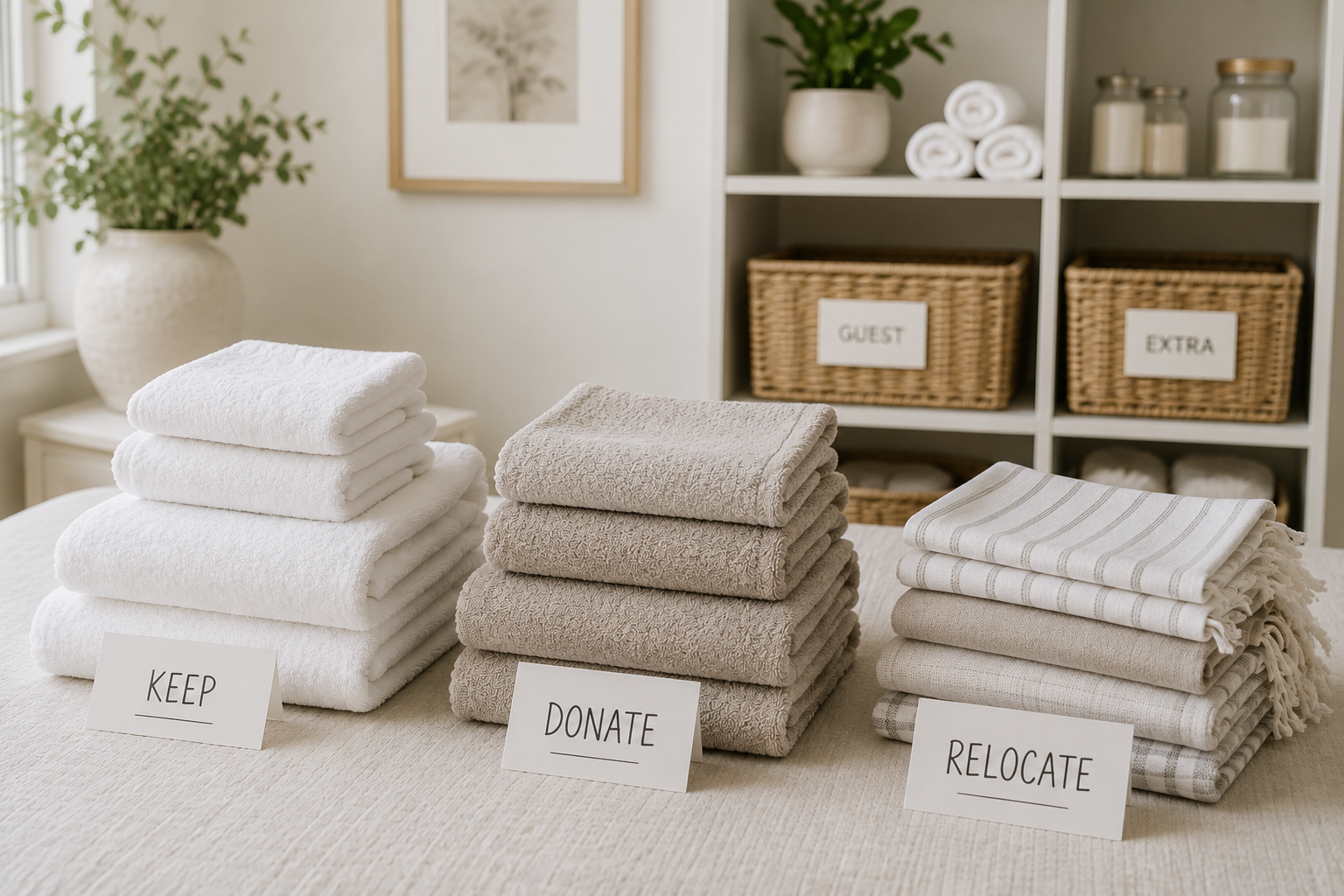
Keep Only What You Actually Use
Most linen closets contain far more than most families need.
Donate or relocate:
Worn-out towels
Mismatched sheet sets
Extra blankets that never get used
Expired toiletries
Duplicate travel items
A little empty space makes your closet much easier to maintain.
Give Every Category Its Own Home
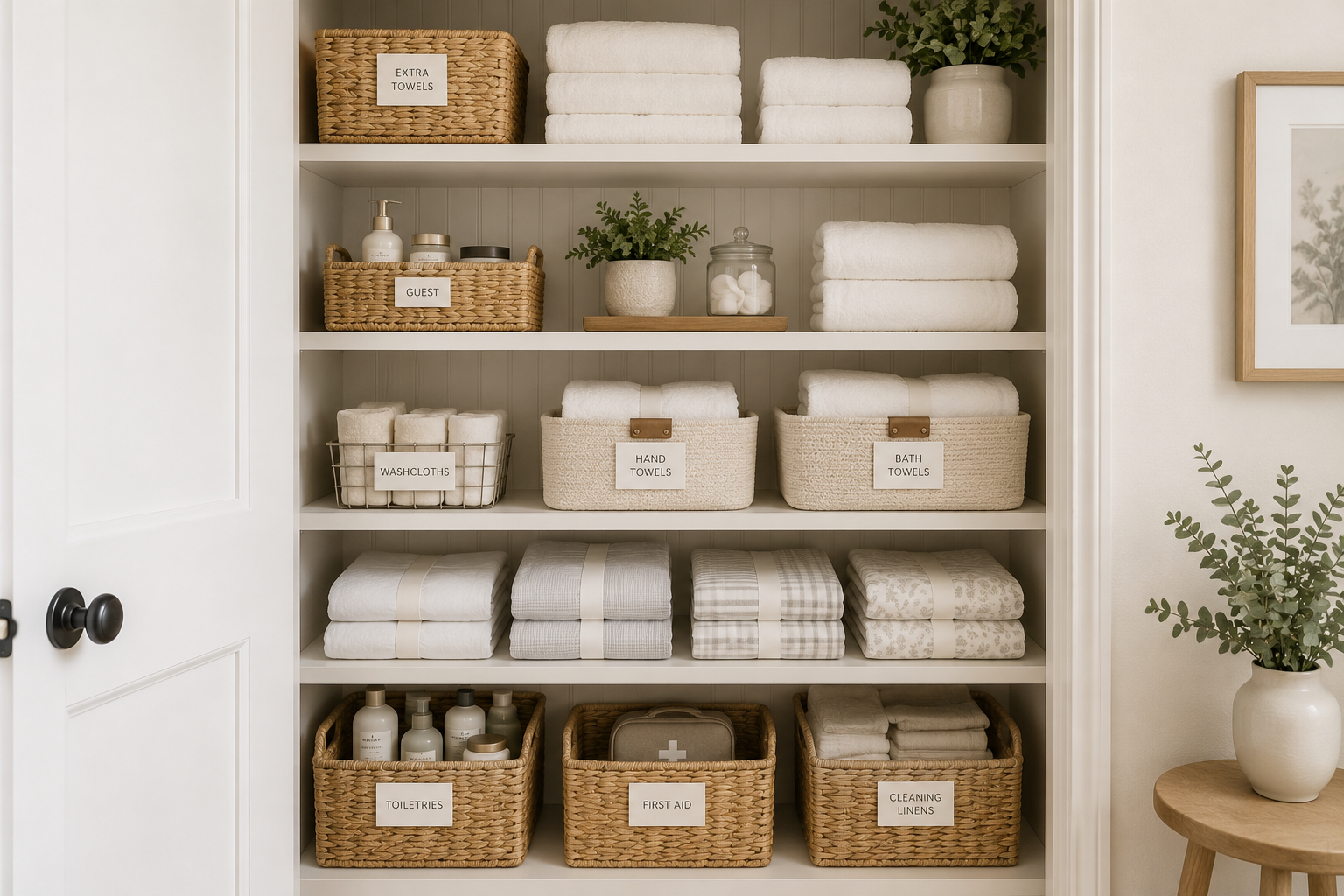
Instead of organizing by shelf, organize by purpose.
Create simple zones like:
Everyday Towels
Keep bath towels, hand towels, and washcloths together so grabbing what you need takes seconds.
Bedding
Store each sheet set inside one matching pillowcase so every set stays together.
Guest Essentials
Create one basket containing:
Guest toiletries
Extra toothbrushes
Travel-size shampoo
Soap
Tissues
When company arrives, everything is already together.
Extra Blankets
Fold and store blankets vertically when possible so each one is easy to remove.
Make Laundry Day Easier
One of the biggest benefits of an organized linen closet is simplifying laundry.
Instead of wondering where everything belongs:
Towels return to the towel section.
Sheets return to the bedding shelf.
Guest supplies go back into one basket.
Extra paper products stay together.
The easier it is to put things away, the easier it is to stay organized.
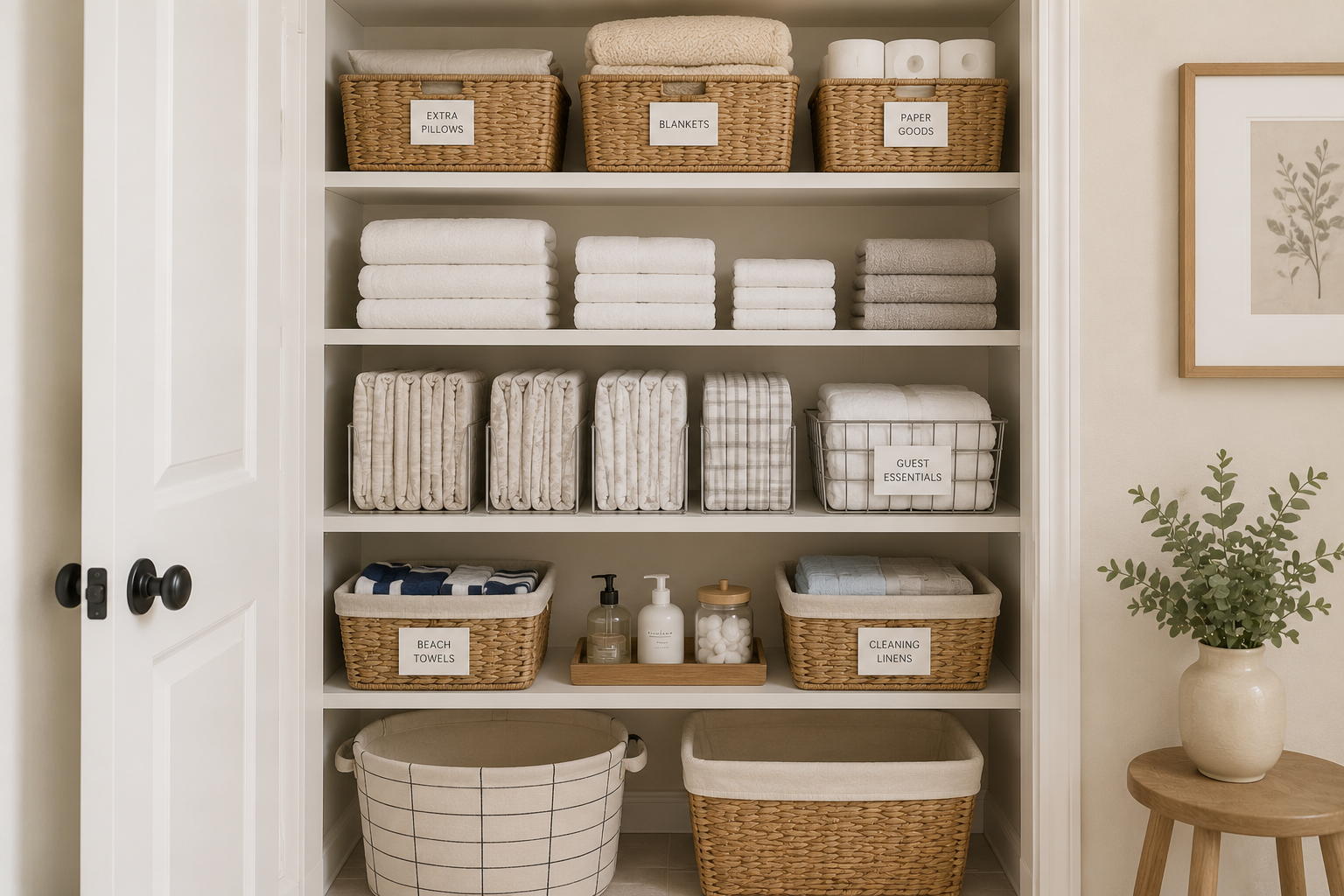
Keep Frequently Used Items Within Reach
Place everyday essentials between waist and eye level.
Reserve higher shelves for:
Seasonal blankets
Extra pillows
Backup paper products
Lower shelves work well for:
Bulk towels
Laundry baskets
Larger storage bins
A little planning makes daily routines noticeably easier.
Create a Five-Minute Monthly Reset
Your linen closet doesn't need constant attention.
Once each month:
Refold anything that's become messy.
Return misplaced items.
Replace used guest supplies.
Check toiletries for expiration dates.
Donate anything you no longer use.
Small resets prevent overwhelming reorganizing projects later.
Calm Home Organization Favorites
These simple products help create a linen closet that's easy to maintain and supports your everyday routines.
Use baskets to group guest supplies, extra toiletries, cleaning cloths, or backup essentials so everything stays together.
Perfect for storing first-aid supplies, travel toiletries, or seasonal items while keeping everything visible.
If your linen closet includes robes or garment storage, slim hangers maximize space and create a neat, consistent look.
Simple labels make it easy for everyone in the household to know where items belong, helping the system stay organized.
These favorites support the system—they don't replace it. A few thoughtfully chosen organizing tools make it easier to keep your linen closet functional, organized, and ready for everyday life.
Final Thoughts
An organized linen closet isn't about perfectly folded towels—it's about making everyday life simpler.
When every towel, sheet set, and guest item has a designated home, laundry feels easier, preparing for visitors takes less effort, and busy mornings become just a little less stressful.
Simple systems create calmer homes, and small changes like organizing your linen closet can make a surprising difference in your daily routine.
You May Also Like
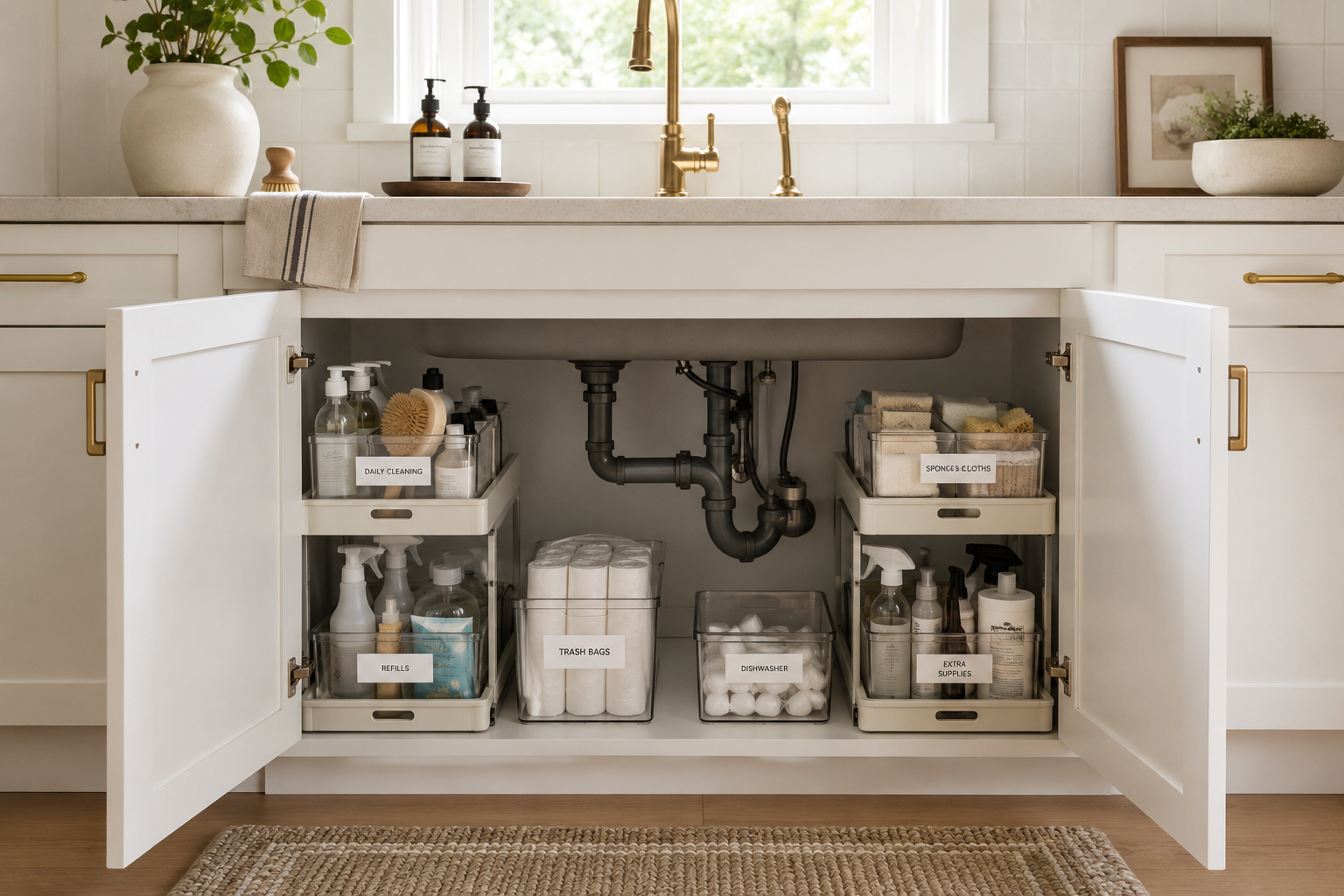
The Under-Sink System That Makes Cleaning Faster and Less Stressful
Create a simple under-sink organization system that keeps cleaning supplies easy to find, reduces clutter, and makes everyday cleaning faster and less stressful.
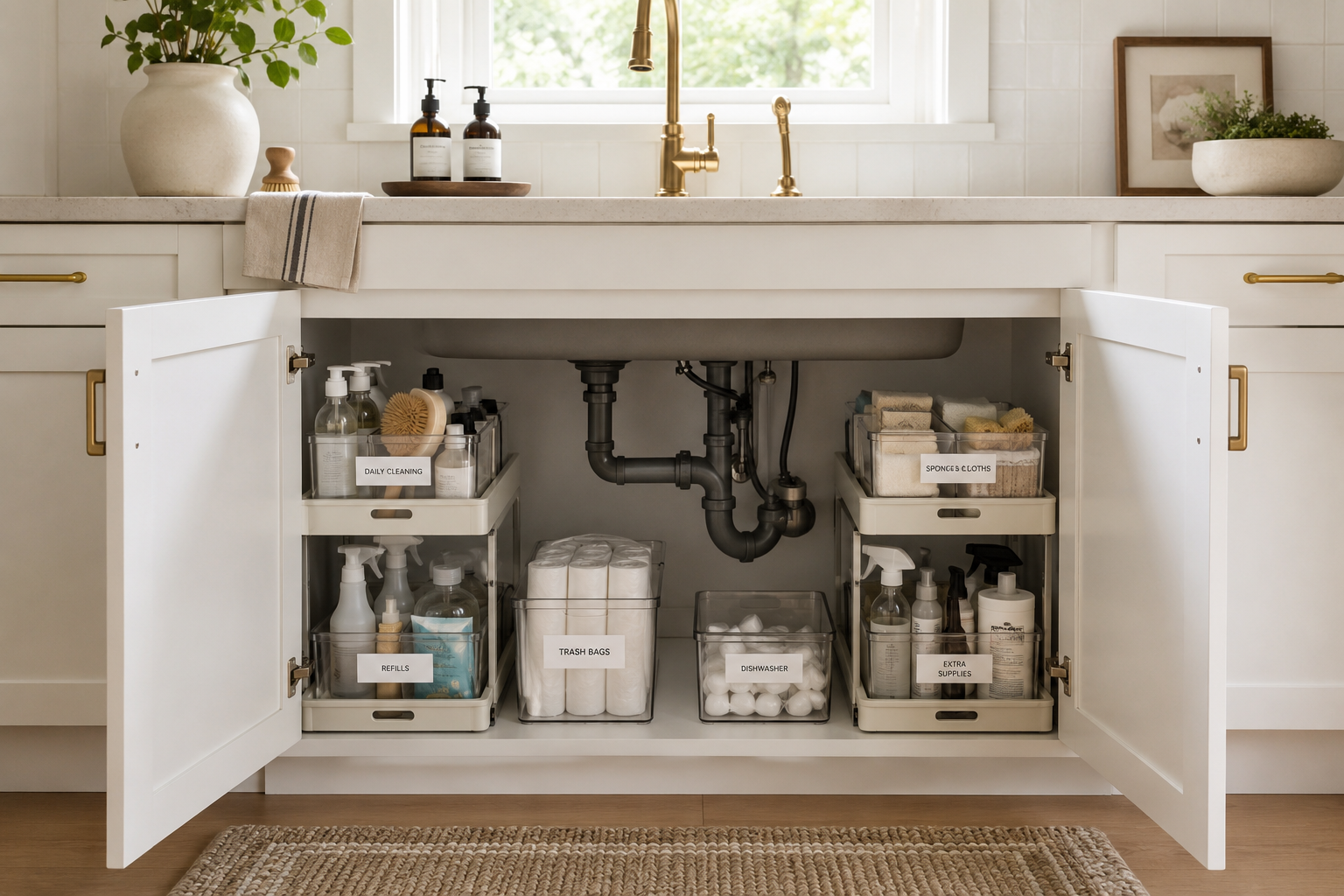
The cabinet under your kitchen sink is one of the hardest-working spaces in your home. It's where cleaning supplies, trash bags, dish soap, sponges, and extra products all compete for limited space.
Before long, bottles tip over, supplies disappear behind the plumbing, and every time you need something, you end up pulling everything out just to find it.
The good news is you don't need a perfectly organized cabinet to make cleaning easier.
A few simple systems can turn this small space into one that saves time, reduces frustration, and makes everyday cleaning feel much more manageable.
Why the Space Under Your Sink Gets So Messy
Unlike a pantry or closet, the space under the sink has awkward plumbing that interrupts storage.
That often leads to:
Random cleaning bottles piled together
Extra products hidden in the back
Trash bags shoved wherever they'll fit
Wet sponges mixed with clean supplies
Duplicate cleaners because you can't find what you already own
Instead of trying to fit everything into the cabinet, the goal is to create simple zones that make every item easy to reach.
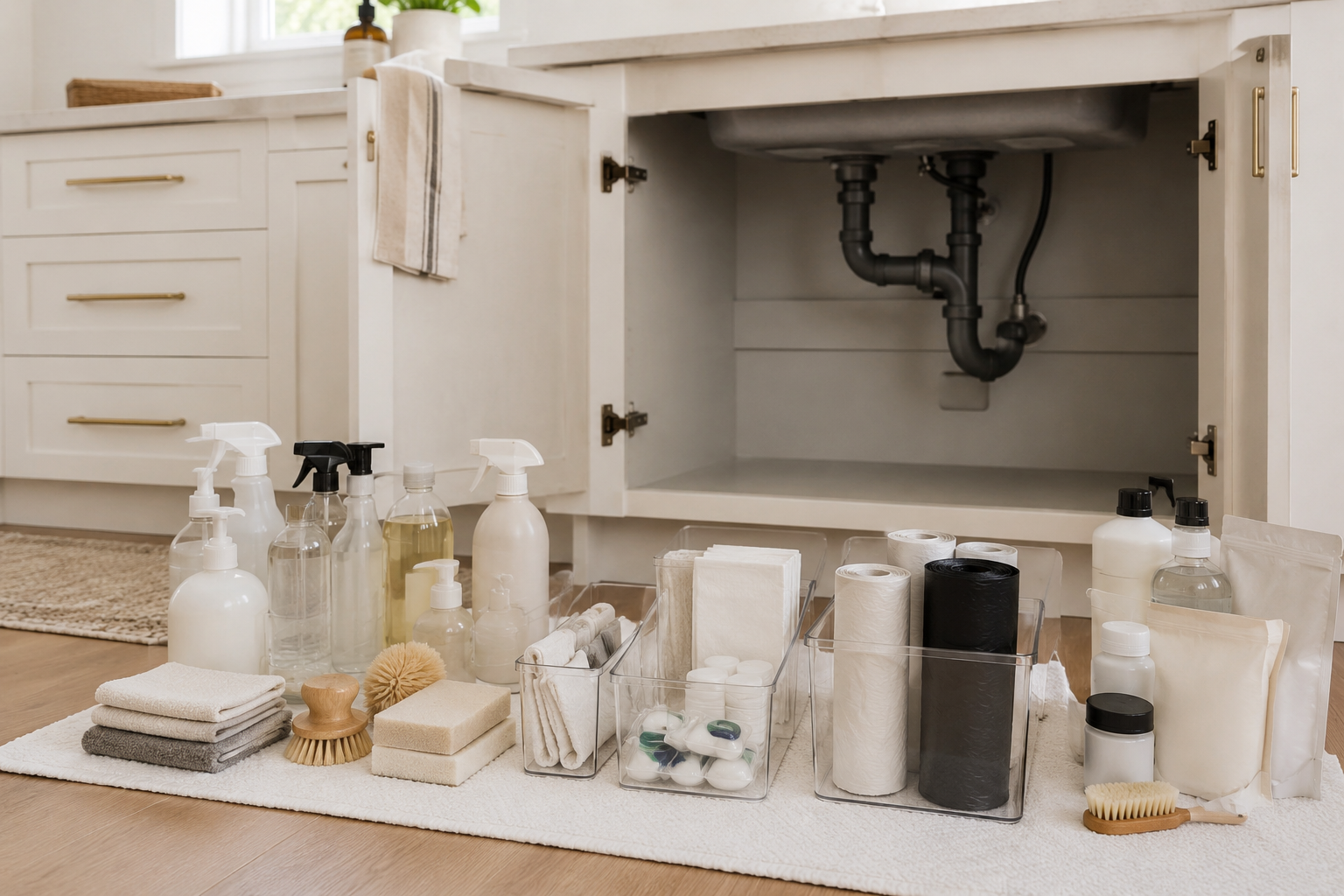
Step 1: Empty Everything First
Take everything out of the cabinet.
As you go, sort items into simple categories:
Everyday cleaning supplies
Dishwashing products
Trash bags
Dishwasher supplies
Extra sponges and cloths
Refill products
Items that belong somewhere else
This gives you a fresh start and helps you see exactly what you actually use.
Step 2: Keep Only What You Use Regularly
Under-sink cabinets are small.
They work best when they hold only the items you use often.
Store overflow products in another location instead of filling every inch of this cabinet.
Leaving a little empty space makes everything easier to grab.
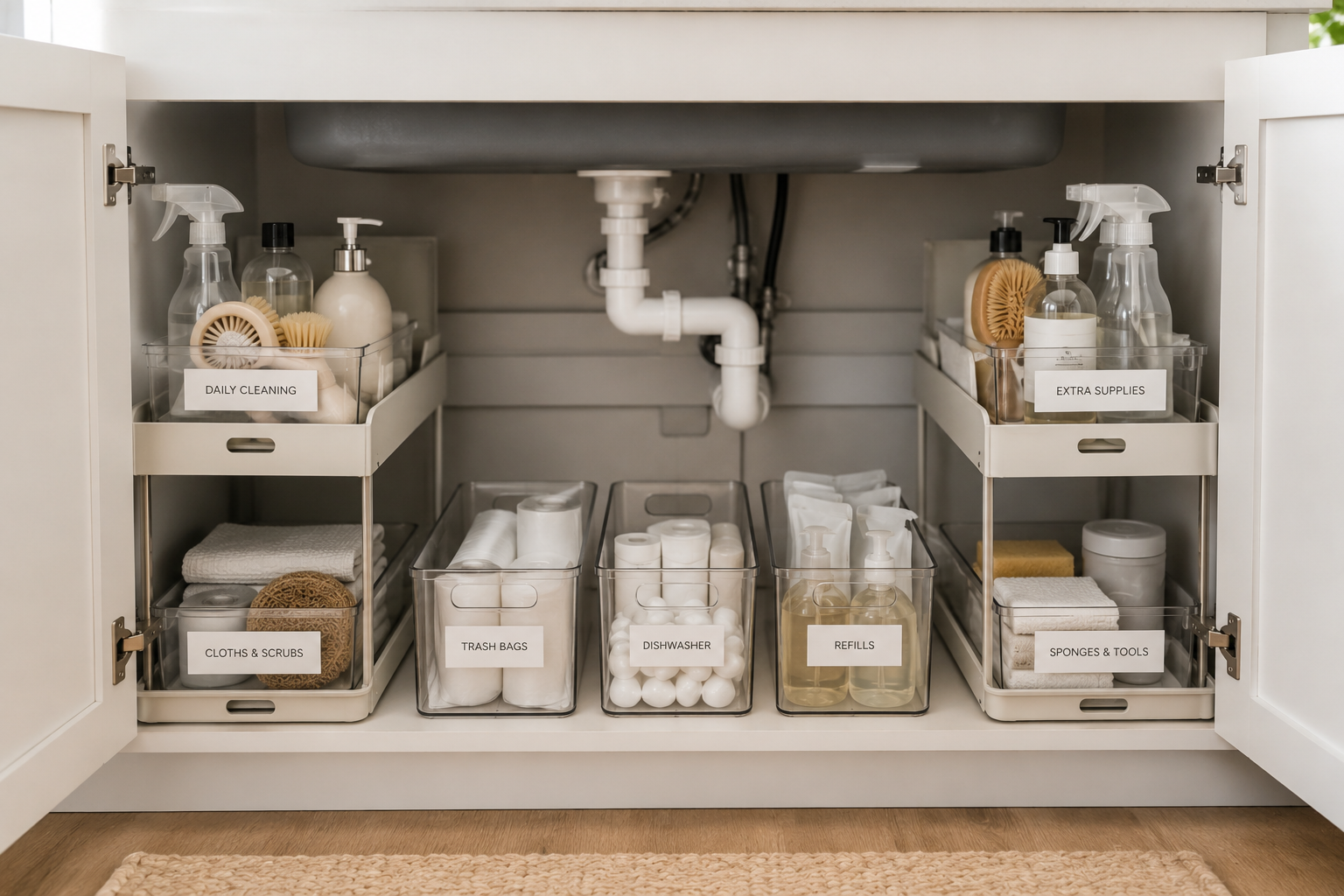
Step 3: Create Simple Zones
Think about how you naturally clean your kitchen.
Group similar items together, such as:
Daily Cleaning
Counter spray
Microfiber cloths
Sponge
Dish soap
Dishwashing
Dishwasher pods
Rinse aid
Gloves
Trash Station
Trash bags
Recycling bags
Refills
Backup soap
Extra sponges
Cleaning concentrates
When everything has a dedicated home, cleaning becomes quicker because you aren't searching for supplies.
Step 4: Use Vertical Space
The biggest mistake most people make is storing everything on the cabinet floor.
Instead, add simple storage that works around the plumbing:
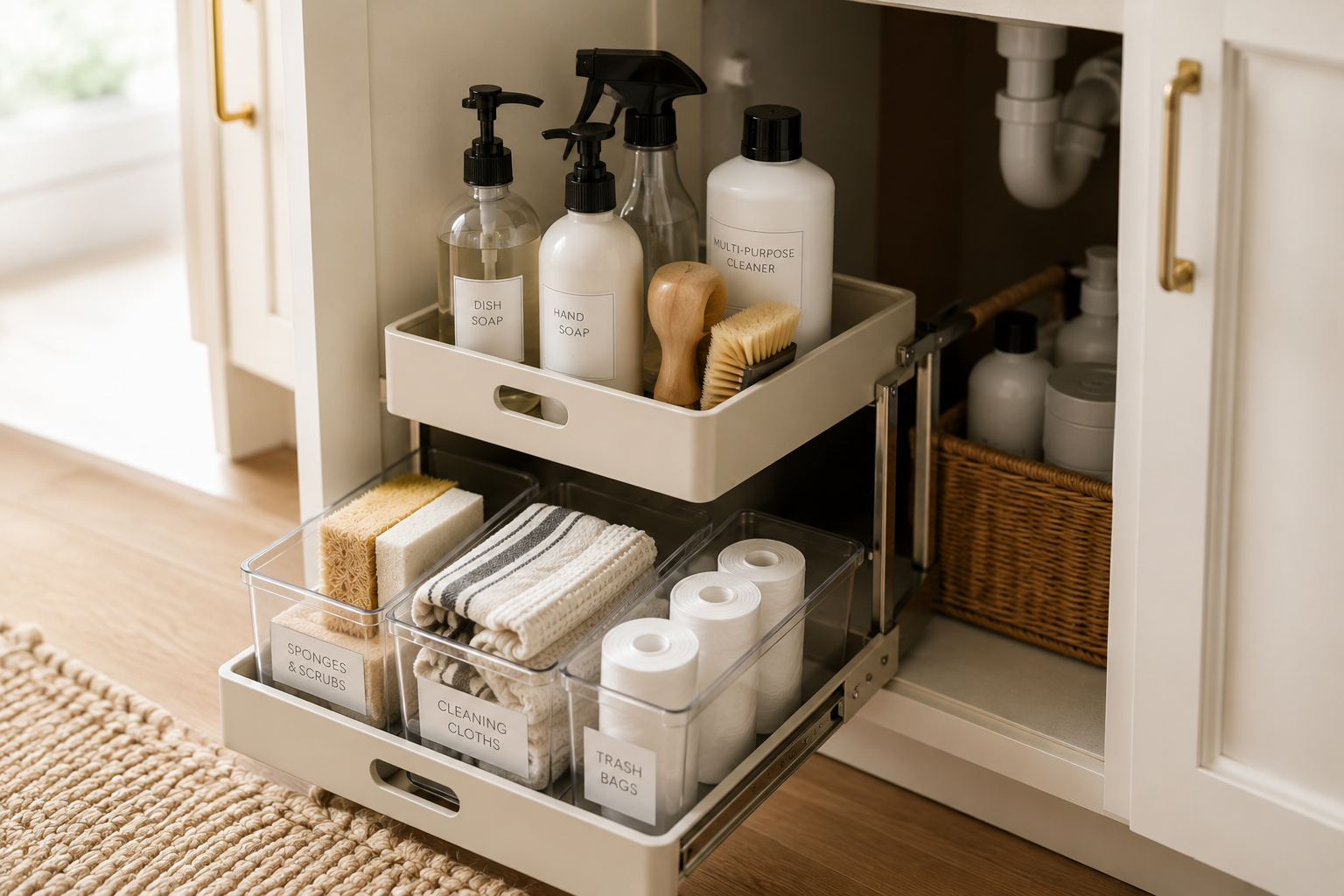
Two-tier sliding organizers
Clear stackable bins
Small turntables for bottles
Door-mounted organizers for brushes or gloves
These products make it much easier to reach supplies without digging through clutter.
Step 5: Keep Everyday Items Front and Center
The products you reach for every day should always be the easiest to grab.
Keep daily cleaners toward the front and less-used supplies toward the back.
This small habit saves time every time you clean.
Simple Habits That Keep It Organized
You don't need a complicated maintenance routine.
Just remember these habits:
Return items after using them.
Replace empty bottles instead of storing them.
Wipe the cabinet when spills happen.
Restock supplies before they run out.
Do a quick five-minute reset once each month.
Small habits help the system continue working without much effort.
Calm Home Favorites
These simple products help create an under-sink system that's functional, easy to maintain, and designed to make everyday cleaning less stressful.
Creates accessible storage around plumbing and brings supplies within easy reach without digging through the cabinet.
Keep similar products together so every category has a designated home and nothing gets lost in the back.
Adds simple labels to bins so everyone in the household knows where supplies belong and where to return them.
Reusable cloths that are easy to grab for everyday wipe-downs and help reduce the need for disposable paper towels.
Final Thoughts
An organized under-sink cabinet isn't about creating a picture-perfect space you'll never touch.
It's about making one of your most-used cabinets work better for the way you actually live.
When every cleaning supply has a home and everything is easy to reach, everyday chores become faster, simpler, and less stressful.
Small systems like this don't just organize a cabinet—they help create a calmer home and a simpler life.