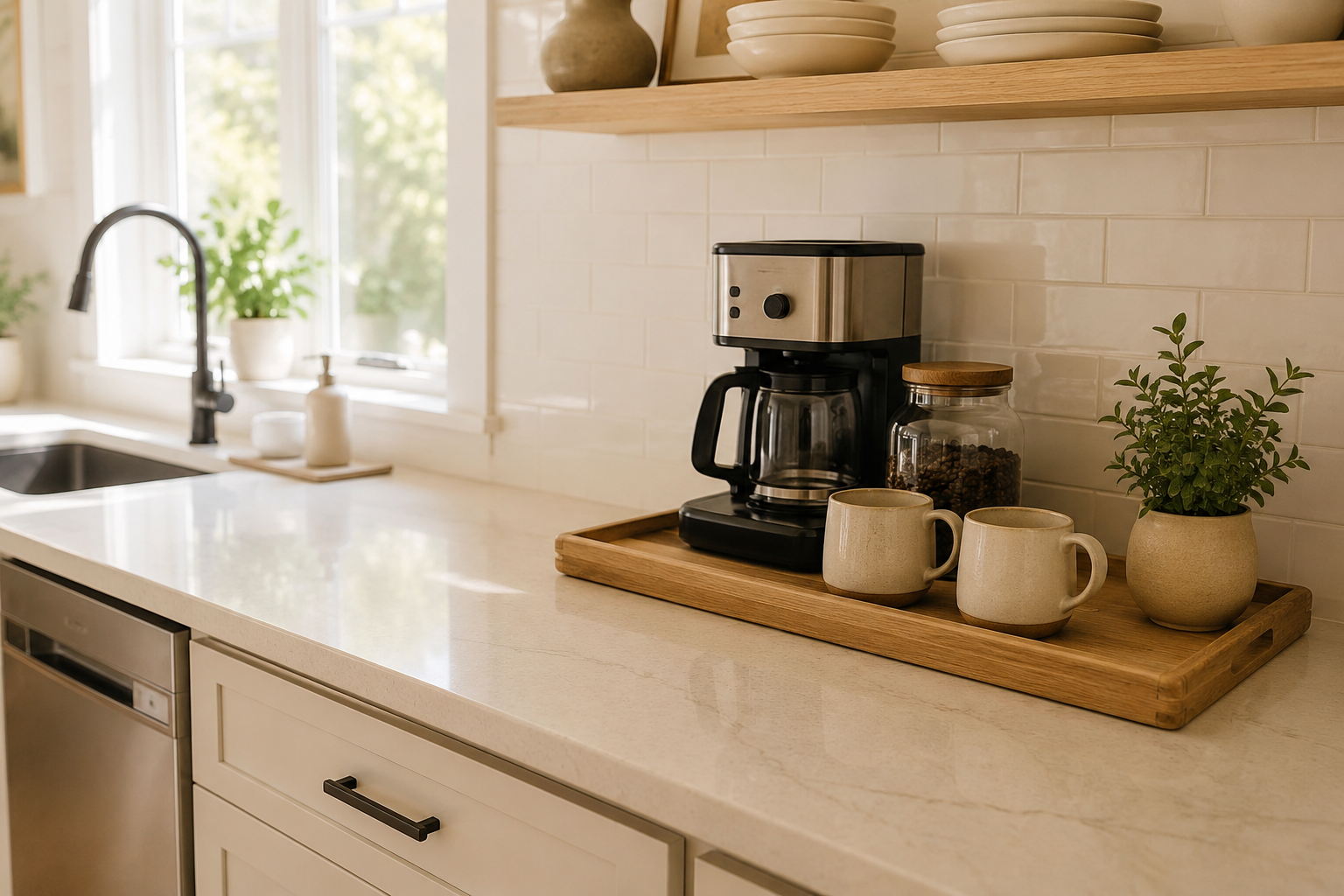
Create a Coffee Station That Makes Busy Mornings Easier
Create a simple coffee station that keeps everyday essentials together, reduces kitchen counter clutter, and makes busy mornings feel calmer and easier.
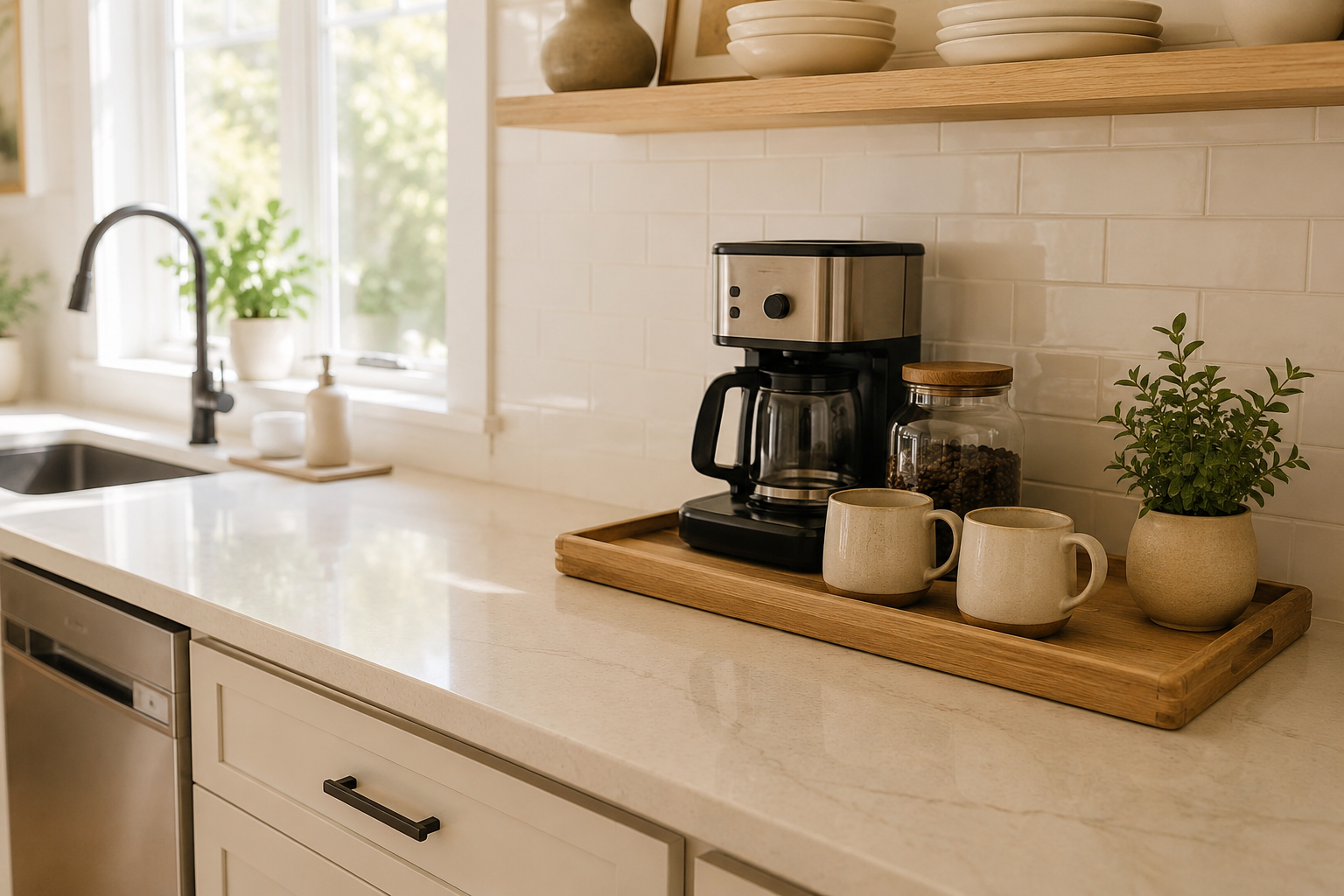
Mornings have a way of making even a relatively organized kitchen feel busy.
You're making coffee while someone is looking for breakfast. You're opening one cabinet for a mug, another for coffee and a drawer across the kitchen for a spoon. The creamer is in the refrigerator, the filters are somewhere else, and somehow the counter starts collecting everything before the day has really begun.
None of those things are a big problem on their own.
But when you repeat the same routine every morning, all those extra steps add up.
A simple coffee station brings everything you use for one everyday routine into one intentional place. Instead of creating another styled corner of your kitchen, you're creating a small system that makes mornings easier.
And that's the difference.
A good coffee station isn't about displaying beautiful mugs or buying matching containers.
It's about making your kitchen work better for the way you actually live.
Why a Coffee Station Makes Mornings Easier
Think about everything you reach for when you make coffee.
Coffee.
Filters or pods.
Mugs.
Spoons.
Sugar or sweetener.
Maybe tea bags, honey or a favorite syrup.
When those things are stored in several different places, making one cup of coffee can mean moving back and forth across the kitchen.
A coffee station creates one simple zone for the entire routine.
Everything you use together lives together.
That means fewer cabinets to open, fewer things left scattered across the counter and fewer little decisions first thing in the morning.
The goal isn't to create a coffee shop in your kitchen.
It's simply to make something you already do every day feel easier.
1. Start With the Way You Actually Make Coffee
Before moving anything, walk through your normal morning routine.
What do you reach for first?
What do you use every single day?
What do you occasionally use?
And what has somehow ended up near the coffee maker even though you rarely touch it?
Your answers should determine how you organize the space.
If you use a traditional coffee maker, you may need coffee, filters and a scoop nearby.
If you use pods, you'll need an easy place to keep the varieties you actually drink.
If you're a tea drinker too, you may want a small section for tea bags and honey.
The system should fit your routine—not someone else's idea of what a coffee station should look like.
That's what makes it easier to maintain.
2. Choose One Defined Coffee Zone
Your coffee station doesn't need an entire wall of cabinetry.
It may only need a small section of counter.
Choose a spot close to an outlet and, when possible, near the cabinet or drawer where you can store the supplies that support the routine.
Then give the station a clear boundary.
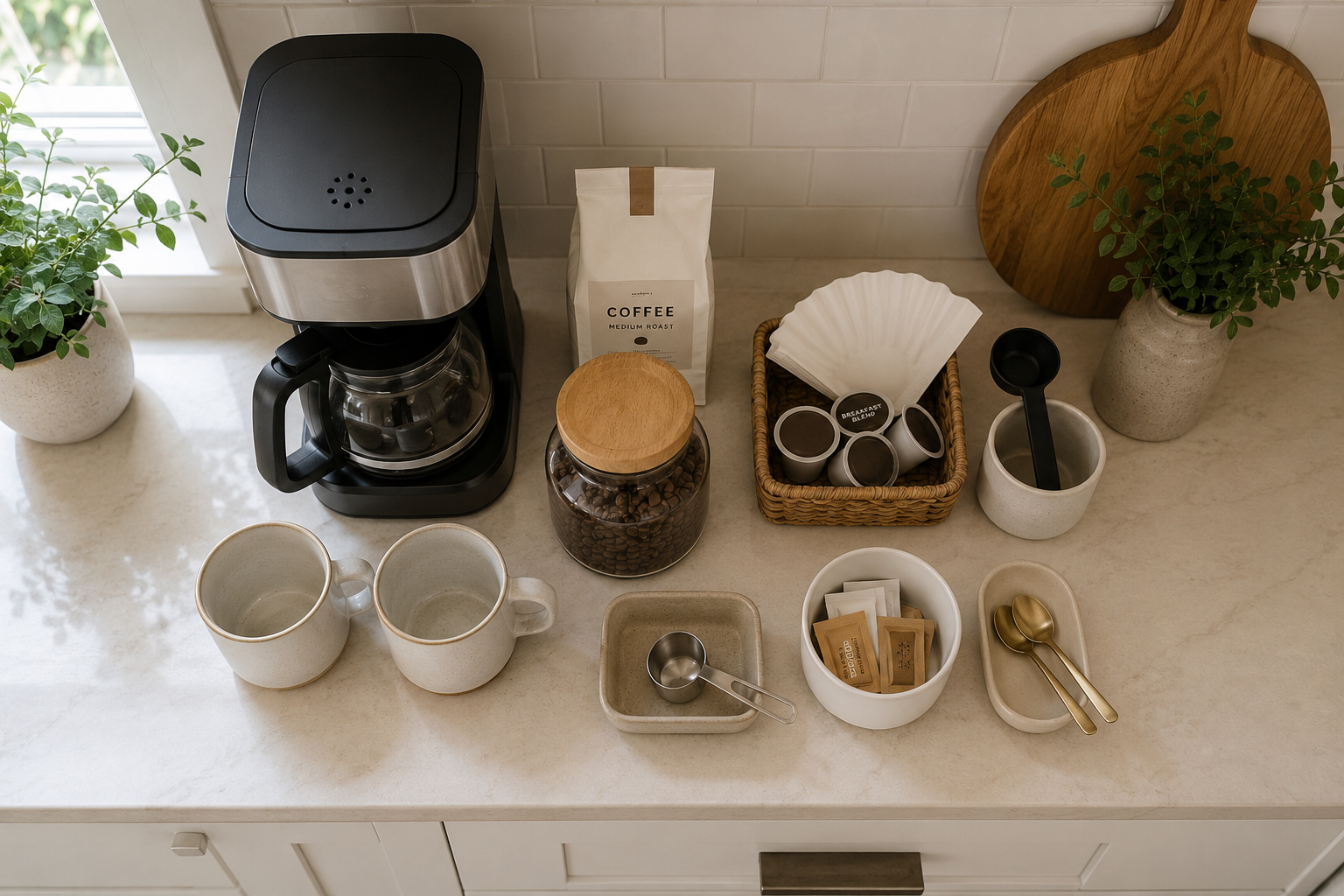
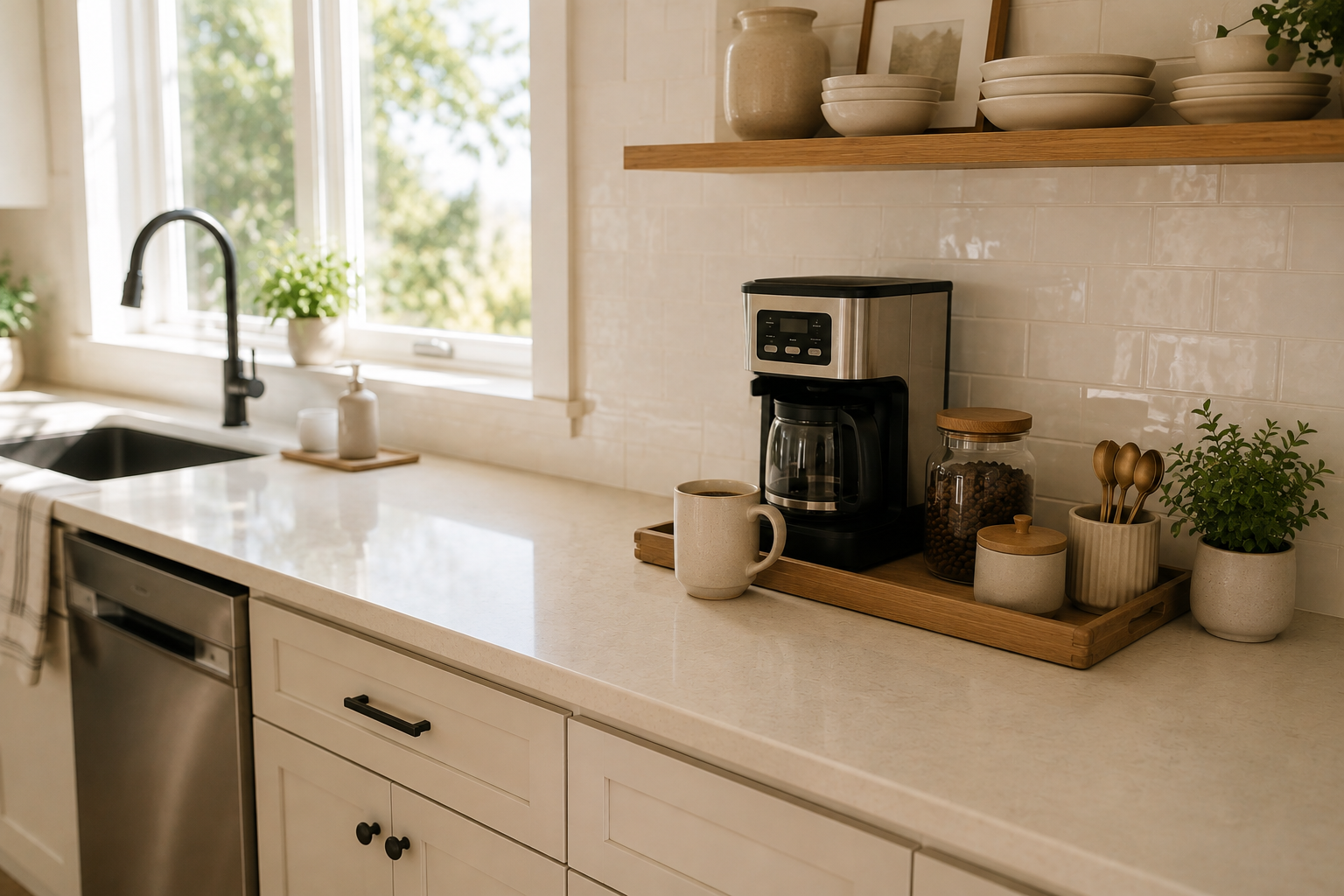
A simple tray can work beautifully because it visually groups the coffee maker and a few everyday essentials together.
Instead of several unrelated objects spreading across the counter, your eye sees one intentional collection.
Just as important, the boundary tells you when the station is becoming too full.
If everything no longer fits comfortably within the space you've given it, that's a sign to decide what really needs to stay there.
3. Keep Everyday Essentials Within Reach
The easiest systems reduce unnecessary movement.
Keep the things you use every morning closest to the coffee maker.
That might include:
Coffee or pods
Filters
A coffee scoop
Sugar or sweetener
A few favorite mugs
Spoons or stirrers
But don't mistake “within reach” for “everything on the counter.”
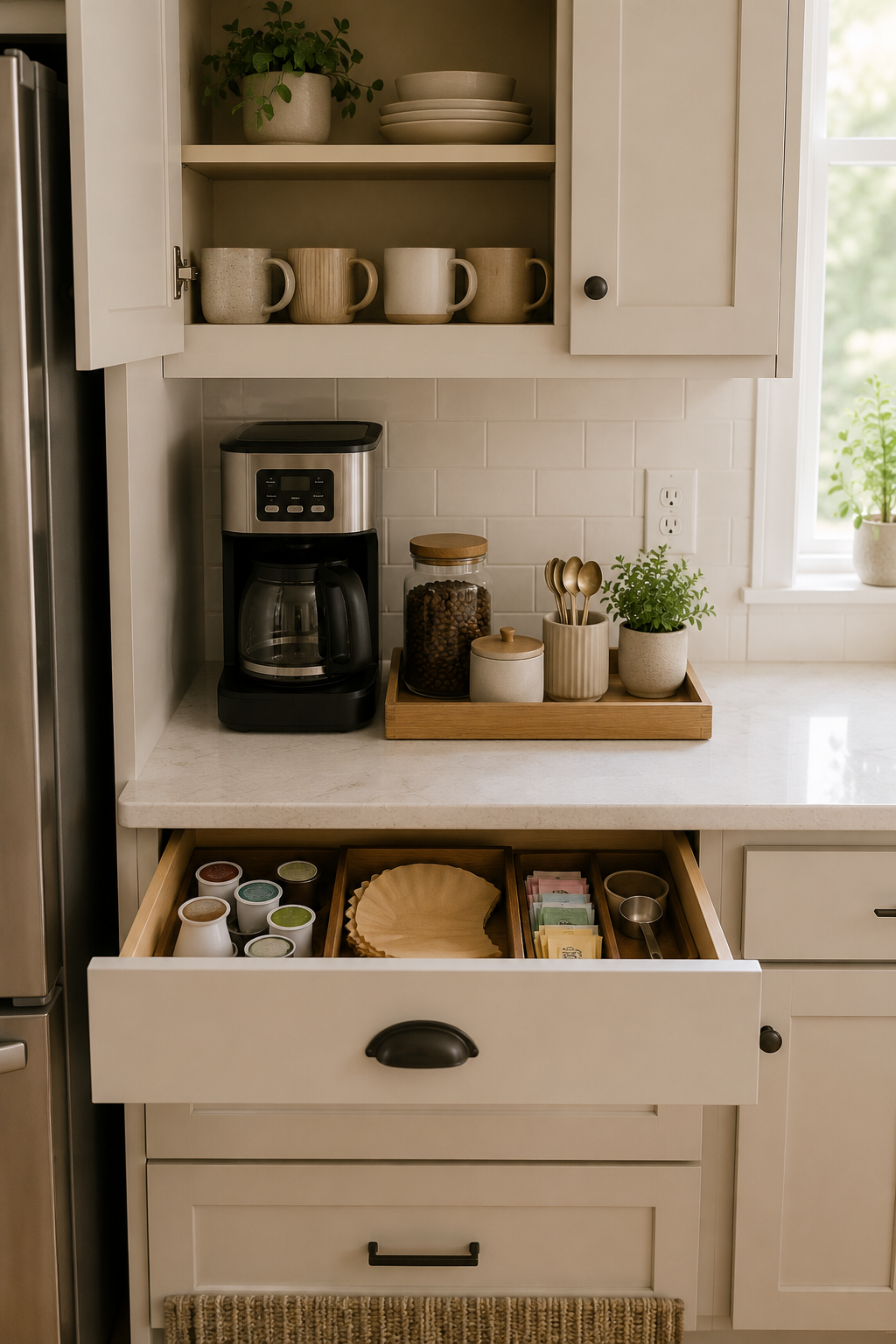
Some of the best coffee-station storage may be directly above or below it.
Mugs can live in the cabinet overhead.
Extra coffee can stay in the drawer underneath.
Backstock can go in the pantry.
Your counter only needs to hold the items that genuinely make the routine easier.
Leaving some breathing room helps the kitchen feel calmer, even during a busy morning.
4. Separate Everyday Supplies From Backstock
One of the easiest ways for a coffee station to become cluttered is to store too much there.
You don't need three bags of coffee, an entire box of filters and every mug you own beside the coffee maker.
Think of the station as your working supply.
Keep enough coffee, filters, pods or tea there for everyday use.
Store unopened packages and extras somewhere else.
When the working supply runs low, refill it from your backstock.
This simple separation keeps the station functional without allowing it to slowly take over the counter.
5. Give Small Items a Home
Small items create visual clutter quickly.
Loose coffee pods, tea bags, sugar packets, measuring scoops and stirrers can make a small area feel busy even when there isn't actually much there.
Give those items a simple home.
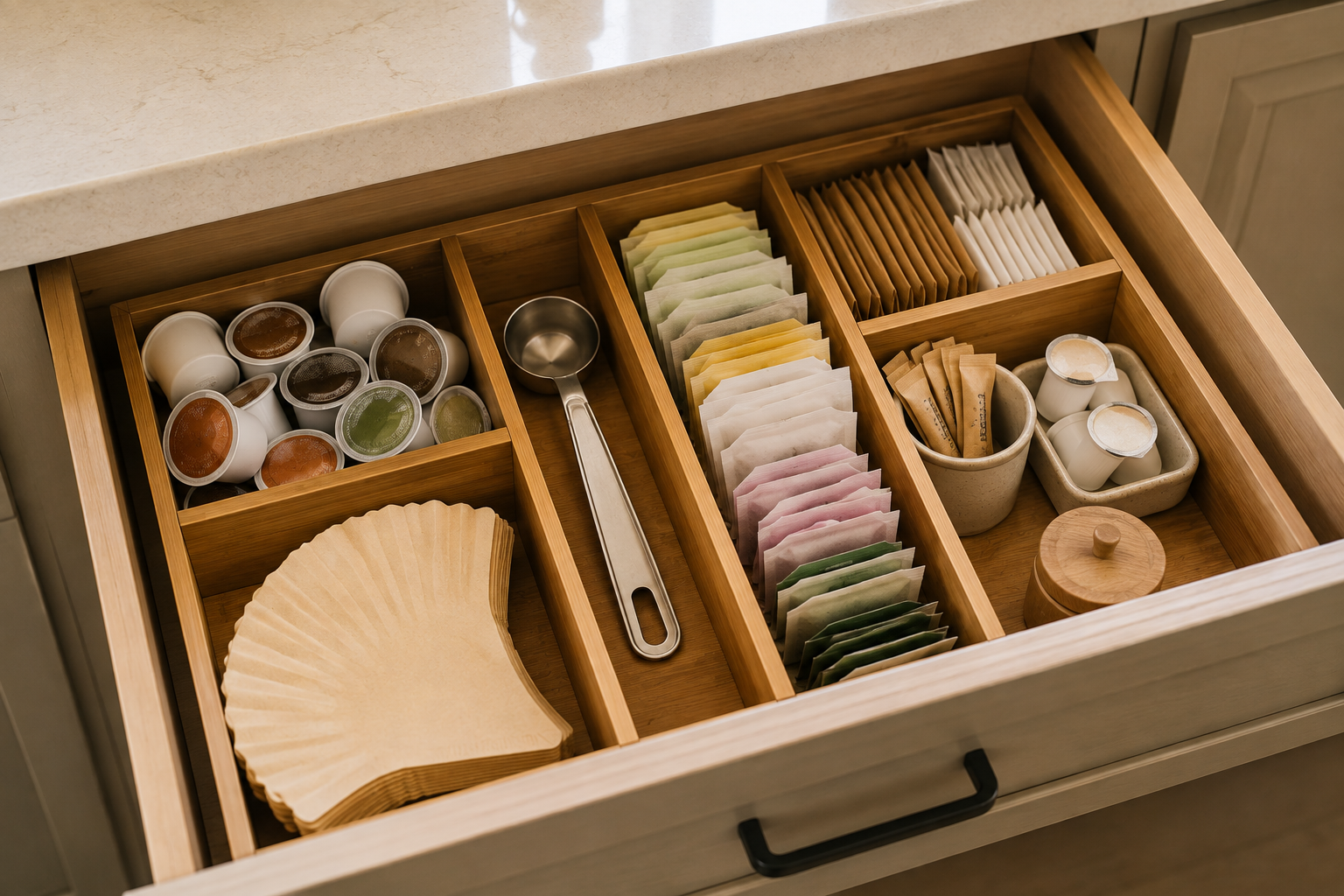
A shallow drawer organizer can separate coffee supplies.
A small container can hold tea bags.
A jar can keep coffee beans together.
A small cup can hold spoons or stirrers.
The container isn't the organization system.
The category is.
You're simply creating an obvious place for each category so putting things away requires almost no thought.
Every item deserves a home—even the tiny things.
6. Keep Only the Mugs You Actually Use Nearby
Mugs have a tendency to multiply.
And because they're associated with coffee, it's tempting to squeeze all of them into the cabinet above your coffee station.
You don't need to.
Keep your everyday favorites in the easiest-to-reach location.
Move seasonal mugs, sentimental mugs and extras to another shelf or cabinet.
This creates more room around the things you actually use and makes it easier to grab a mug without rearranging an entire cabinet.
Organization doesn't require getting rid of everything.
Sometimes it simply means giving your most-used items the best real estate.
7. Make Cleanup Part of the System
A coffee station will inevitably collect a few coffee grounds, drips and crumbs.
Instead of waiting until the area feels messy, build a tiny reset into the routine.
After making coffee—or whenever you clean up breakfast—take a few seconds to:
Return coffee and supplies to their homes.
Put used spoons in the dishwasher.
Wipe the counter or tray.
Refill anything that's running low.
Put stray items back where they belong.
It doesn't need to become another chore.
It's simply the last step of making coffee.
When resetting the station takes less than a minute, it's much easier for the space to stay organized.
The Real Goal: A Smoother Morning
The best part of an organized coffee station isn't how it looks when everything is perfectly arranged.
It's what happens at 7:15 on a busy Tuesday.
You walk into the kitchen.
Your mug is where you expect it to be.
The coffee is beside the machine.
The filter is within reach.
You don't have to search for anything.
You simply make your coffee and move on with your morning.
That's what a functional home should do.
It should quietly make everyday life easier.
Our Calm Favorites
You don't need to buy anything to create a functional coffee station.
Start by using trays, containers and organizers you already own whenever they work for the space.
If your coffee station needs a little more structure, these are a few simple products that can support the system.
Creates a defined boundary for the coffee maker and everyday essentials, helping the station stay contained instead of slowly spreading across the counter.
Keeps the coffee you use every day contained and within reach while allowing unopened bags and extra supplies to stay with your backstock.
Creates simple categories for coffee scoops, filters, tea bags, sweeteners and other small supplies so they stay easy to find without adding more items to the counter.
Keeps a working supply of coffee pods together and makes it easy to see what you have and when it's time to refill.
Makes better use of the cabinet directly above the coffee station and keeps everyday mugs easy to reach without stacking them several mugs high.
The products aren't what make the coffee station work. They simply support a system designed around your morning.
Final Thoughts
A coffee station doesn't need to look like something from a magazine.
It doesn't need custom cabinetry, matching containers or an entire collection of new organizers.
It simply needs to make your morning easier.
Bring the things you use together.
Give each category a home.
Keep extras somewhere else.
Leave enough breathing room for the space to feel calm.
And create a tiny reset that makes the system easy to maintain.
It's one small corner of your kitchen.
But when that corner supports something you do every single morning, the difference can be felt throughout your day.
Because a calmer home isn't created by organizing everything at once.
Sometimes it begins with making tomorrow morning just a little easier.
You May Also Like
The Kitchen Counter System That Keeps Your Kitchen Calm Every Day
Kitchen counters don't have to become the catch-all for everyday clutter. Learn a simple countertop system that helps your kitchen stay calm, functional, and easy to maintain every day.
Sometimes it isn't the whole kitchen that feels overwhelming—it's just the counters.
When your countertops become the landing place for mail, backpacks, grocery bags, appliances, water bottles, and yesterday's coffee mug, the entire kitchen can begin to feel chaotic. Even after you've cleaned, the clutter quickly returns, making it seem like you're constantly starting over.
The good news is that you don't need perfectly empty countertops to create a peaceful kitchen.
What you need is a simple system.
At Clear to Close, we believe organization isn't about removing every visible item or buying dozens of storage products. It's about giving everyday things a purpose and a place so your home works with you instead of against you.
When your counters have clear boundaries, your kitchen becomes easier to clean, easier to cook in, and far more enjoyable to spend time in. Small changes create calmer homes—and your countertops are one of the best places to begin.
Why Kitchen Counters Become Cluttered
Most countertop clutter isn't caused by having too much stuff.
It's caused by having too many things without a designated home.
Think about what usually ends up on your counters:
Mail waiting to be sorted
Keys and sunglasses
Water bottles
Grocery bags
Small appliances
School papers
Chargers
Reusable shopping bags
Snacks
Random items that belong somewhere else
None of these items are the problem by themselves.
The problem is that they slowly collect until your counters become the easiest place to set something down instead of putting it away.
Before long, preparing dinner feels more stressful because you're constantly moving things just to find enough workspace.
A calm kitchen isn't created by clearing everything off once a week.
It's created by building a simple system that keeps clutter from collecting in the first place.
1. Decide What Deserves Permanent Counter Space
One of the biggest mistakes people make is believing every appliance needs to live on the counter.
Instead, ask yourself one simple question:
Do I use this almost every day?
If the answer is yes, it may deserve permanent counter space.
If not, it can probably live inside a cabinet or pantry until you need it.
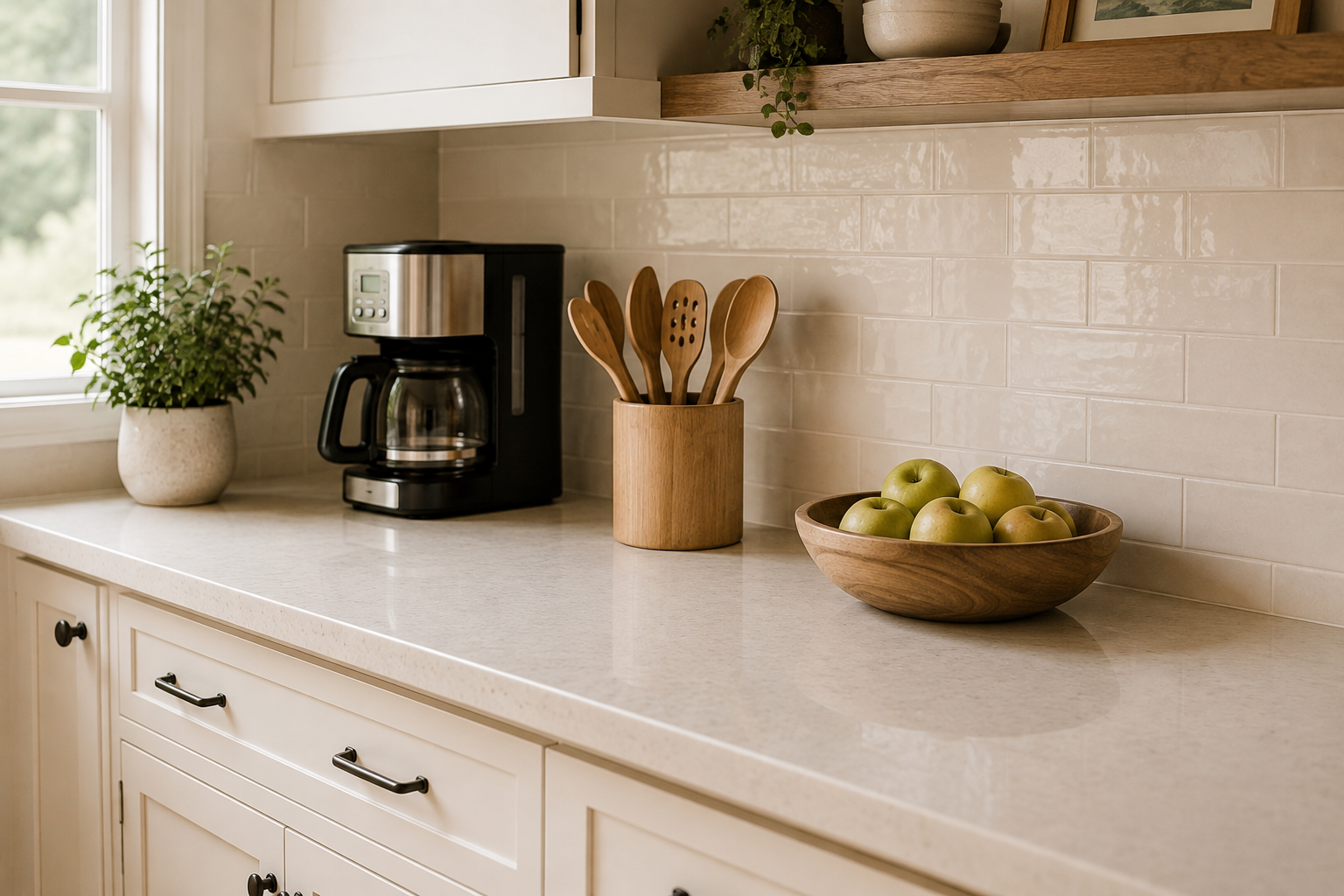
Most kitchens feel calmer when only everyday essentials remain visible.
Examples might include:
Coffee maker
Toaster
Knife block
Fruit bowl
Everything else should earn its place.
Remember, your goal isn't empty counters.
Your goal is intentional counters.
Every visible item should make your daily routine easier.
2. Create One Simple Drop Zone
No matter how organized your family is, things will always come into the kitchen.
Mail.
Keys.
Receipts.
Wallets.
Packages.
Without a designated landing spot, these items slowly spread across every available surface.
Instead of fighting this reality, build a system around it.
Choose one small area that becomes your kitchen's official drop zone.
A decorative tray, small basket, or mail organizer can quietly contain everyday items without allowing them to spread across the entire kitchen.
When everything has one home, cleanup becomes much faster because you're putting items back in the same place every day.
The drop zone isn't there to collect clutter forever.
It's there to keep clutter contained until you're ready to deal with it.
3. Give Every Family Member a Home Base
Counters often become crowded because everyone's everyday items end up in one shared space.
Water bottles.
Lunch boxes.
Charging cords.
Backpacks.
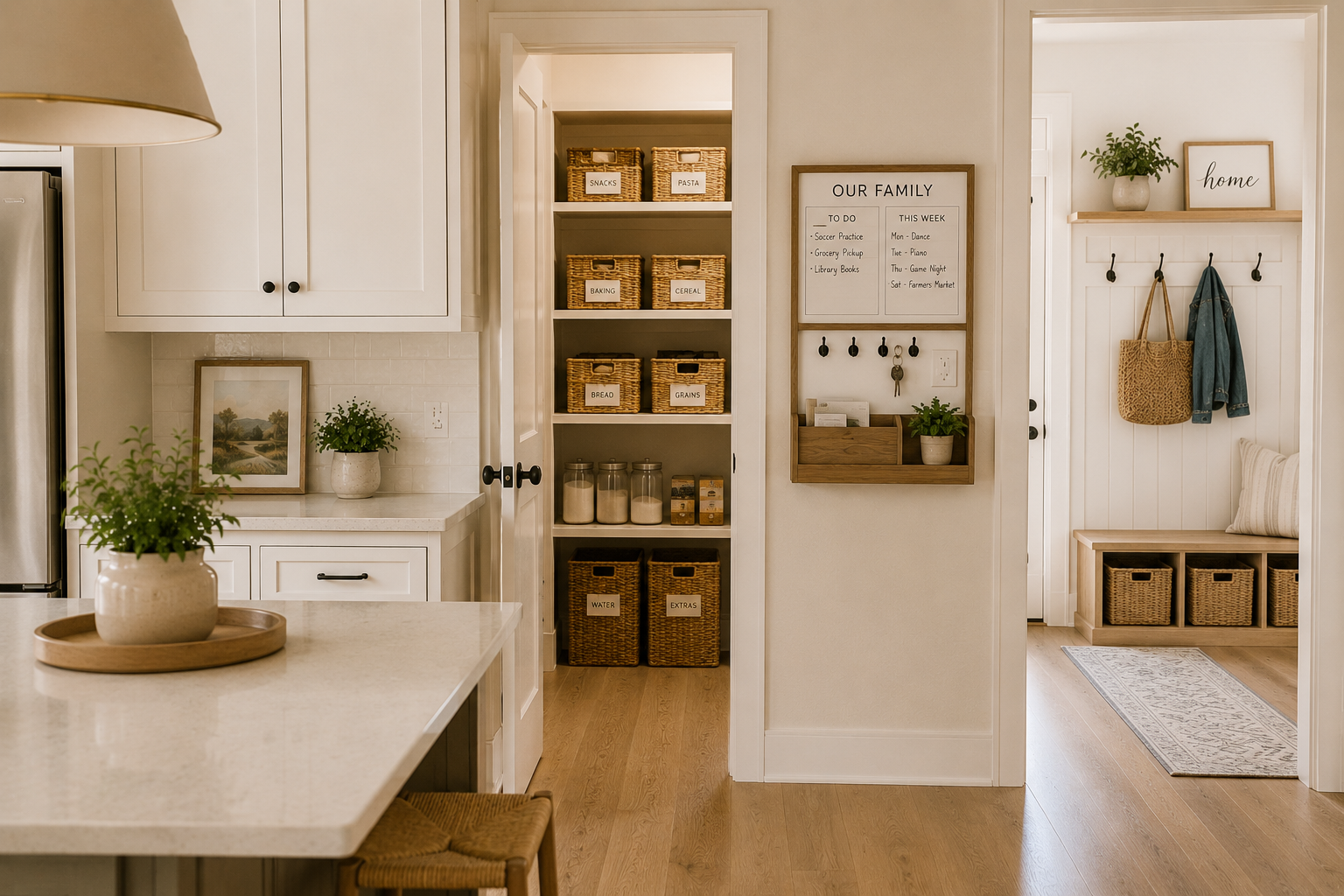
Instead of allowing these items to gather on the kitchen island or counters, create individual homes nearby.
A basket inside a pantry.
A cabinet shelf.
An entryway drop zone.
A mudroom cubby.
When each family member knows exactly where their belongings belong, your countertops naturally stay cleaner without constant reminders.
Simple systems reduce daily decisions.
And fewer decisions create calmer homes.
4. Keep Everyday Items Together
Have you ever noticed how much easier a kitchen feels when similar items stay together?
Instead of spreading frequently used items across your counters, create small functional zones.
For example:
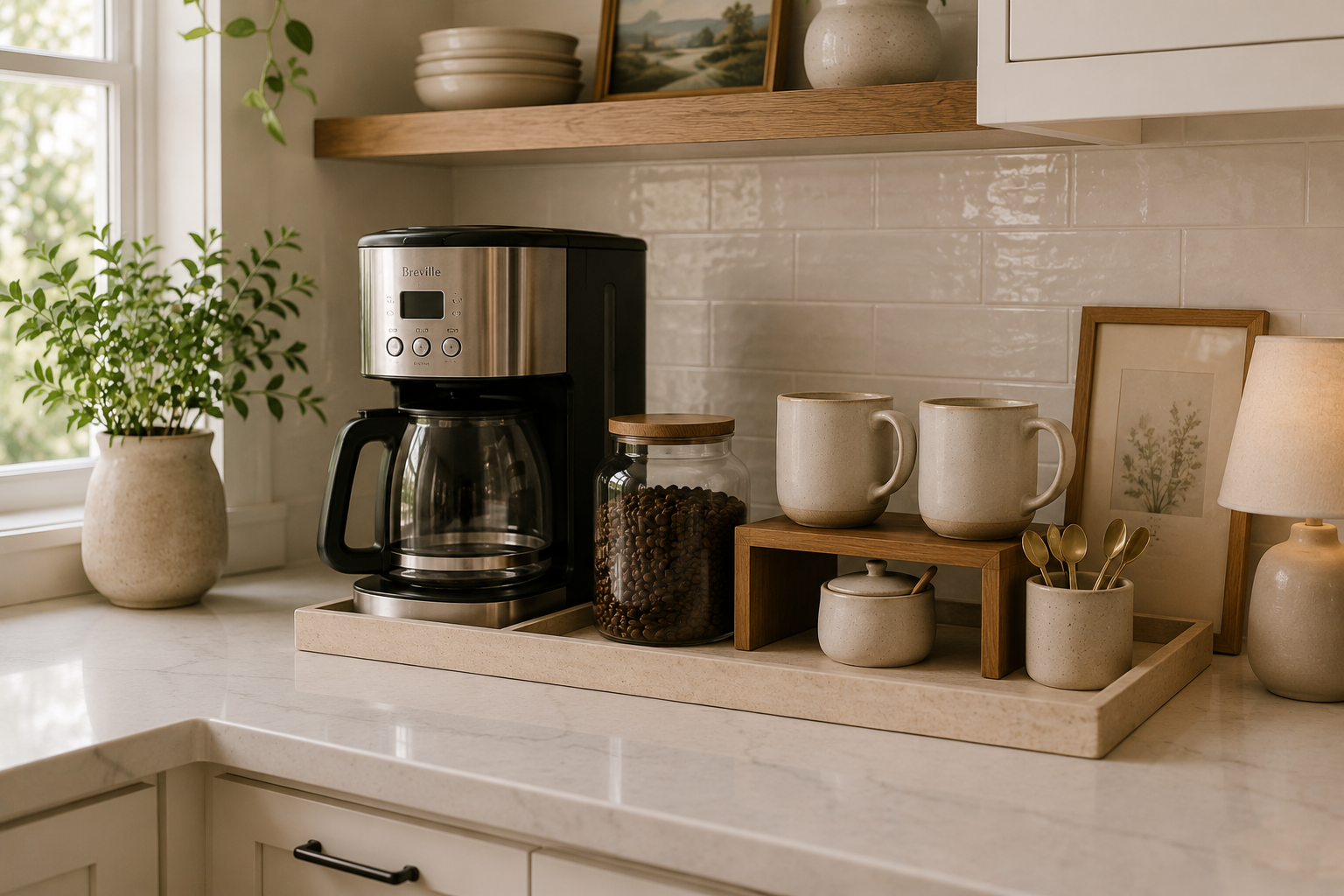
A coffee station with mugs, coffee, and sweeteners together.
A baking station inside a cabinet near your mixer.
A breakfast area with cereal, bowls, and spoons nearby.
A cooking zone close to the stove with oils, utensils, and spices.
Grouping everyday items by how you use them reduces unnecessary movement around the kitchen and helps keep countertops from becoming catch-all spaces.
The goal isn't to add more to your counters—it's to make everything you keep there feel intentional.
5. Follow the One-Minute Reset
One of the simplest habits you can build is a quick countertop reset at the end of the day.
It doesn't need to take long.
Spend just one minute returning items to their designated homes.
Throw away junk mail.
Return reusable bags to the pantry.
Put chargers away.
Move dishes to the dishwasher.
Wipe the counters.
Because your kitchen already has a system, the reset becomes easy instead of overwhelming.
Small daily habits prevent weekend-sized messes.
6. Protect Your Prep Space
Every kitchen needs open workspace.
Even if you have beautiful countertops, they can't function well when every inch is occupied.
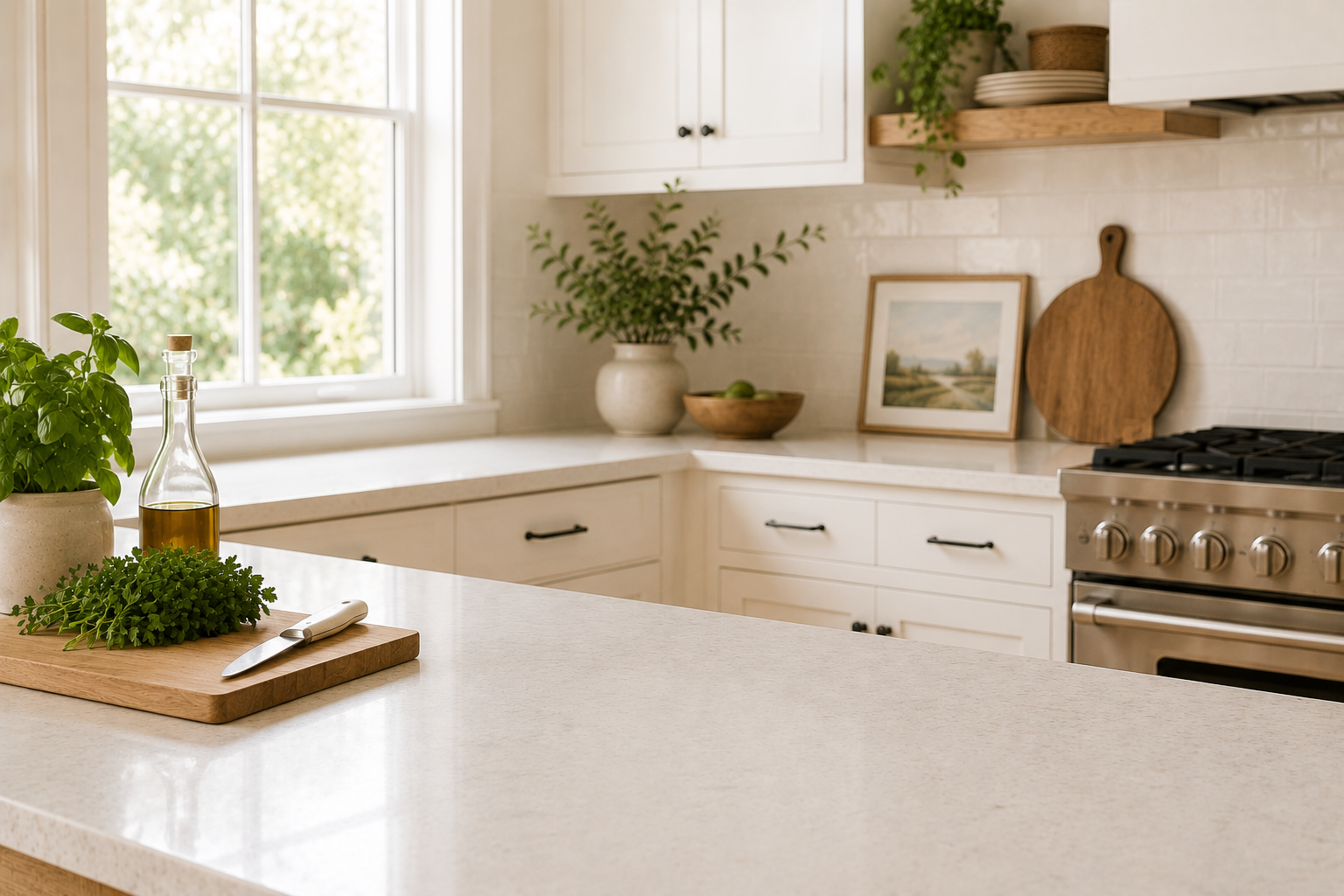
Try reserving one section of your countertop strictly for food preparation.
Nothing lives there permanently.
Not appliances.
Not mail.
Not decorative items.
This dedicated workspace makes cooking easier and instantly helps your kitchen feel more open and organized.
7. Remember That Calm Doesn't Mean Empty
Magazine kitchens often feature completely empty countertops.
Real homes don't.
Your kitchen should support the way you actually live.
If your family uses a coffee station every morning, it belongs there.
If you bake every weekend, keeping your mixer nearby may make perfect sense.
The goal isn't perfection.
It's creating a kitchen that feels peaceful, functional, and easy to maintain.
When every visible item has a purpose, your counters begin working for you instead of against you.
And that's where lasting organization begins.
Calm Favorites
These are a few simple products that can support your countertop system without adding unnecessary clutter:
Keeps keys, wallets, and sunglasses contained in one designated drop zone.
Encourages healthy snacking while providing an intentional place for fresh produce.
Stores frequently used cooking utensils within reach while reducing drawer clutter.
Gives phones and tablets one designated charging location instead of multiple cords across the kitchen.
Each of these products supports the system—not the other way around. Choose only what fits the way your family actually lives.
Final Thoughts
A calm kitchen isn't created by clearing everything off your countertops once a week.
It's created by giving everyday items thoughtful homes, creating simple routines, and making it easier to put things away than to leave them out.
You don't need perfectly empty counters to create a peaceful space.
You simply need a system that works for your home.
Start with one change today. Maybe it's creating a small drop zone, moving one appliance into a cabinet, or spending one minute resetting your counters tonight.
Those small, intentional choices add up.
Because when your kitchen feels calmer, everyday life often does too.
You May Also Like
If you're creating a calmer kitchen, these articles are a great next step: