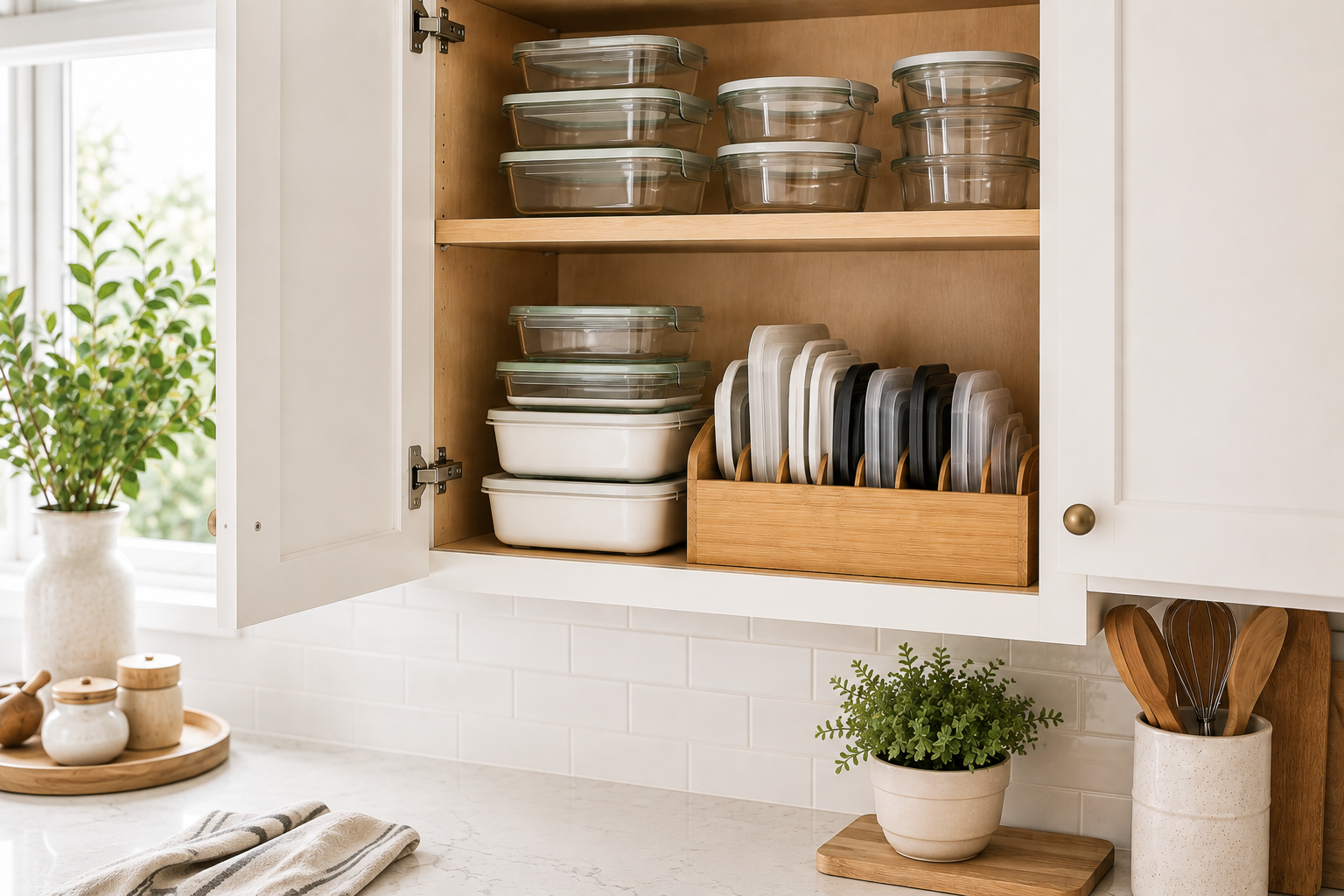
How to Organize Food Storage Containers Without the Frustration
A practical system for organizing food storage containers and lids so your kitchen cabinet stays neat, functional, and easy to maintain.
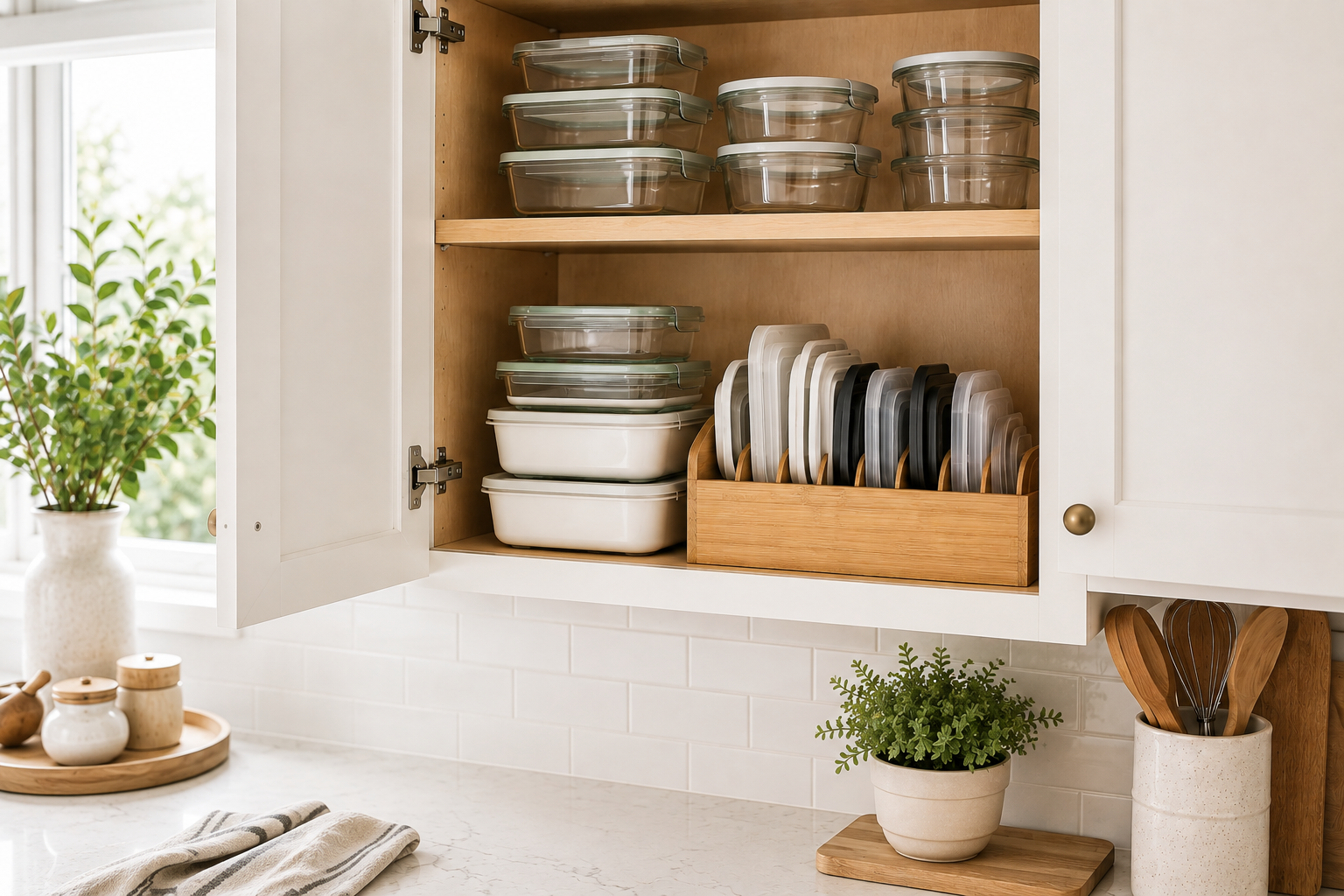
Have you ever opened the cabinet where you keep your food storage containers only to have a lid tumble onto the counter—or discovered the one container you need doesn't have a matching top?
You're not alone.
Food storage containers are one of the most frequently used items in the kitchen, which also makes them one of the easiest areas to become disorganized. Between mismatched lids, overflowing stacks, and containers collected over the years, even an organized kitchen can have one cabinet that feels frustrating.
The good news is that organizing food storage containers doesn't require buying an entirely new matching set. A few simple systems can help you find what you need quickly, keep the cabinet organized, and make putting everything away after unloading the dishwasher much easier.
Why Food Storage Containers Become So Frustrating
Most food storage cabinets don't become cluttered because people aren't organized.
They become cluttered because there's no simple system for putting everything away.
Containers get stacked too high.
Lids are tossed together in one pile.
Different brands don't nest well.
Extra containers slowly accumulate over time.
Instead of creating more storage, the goal is to create a system that makes everyday use simple.
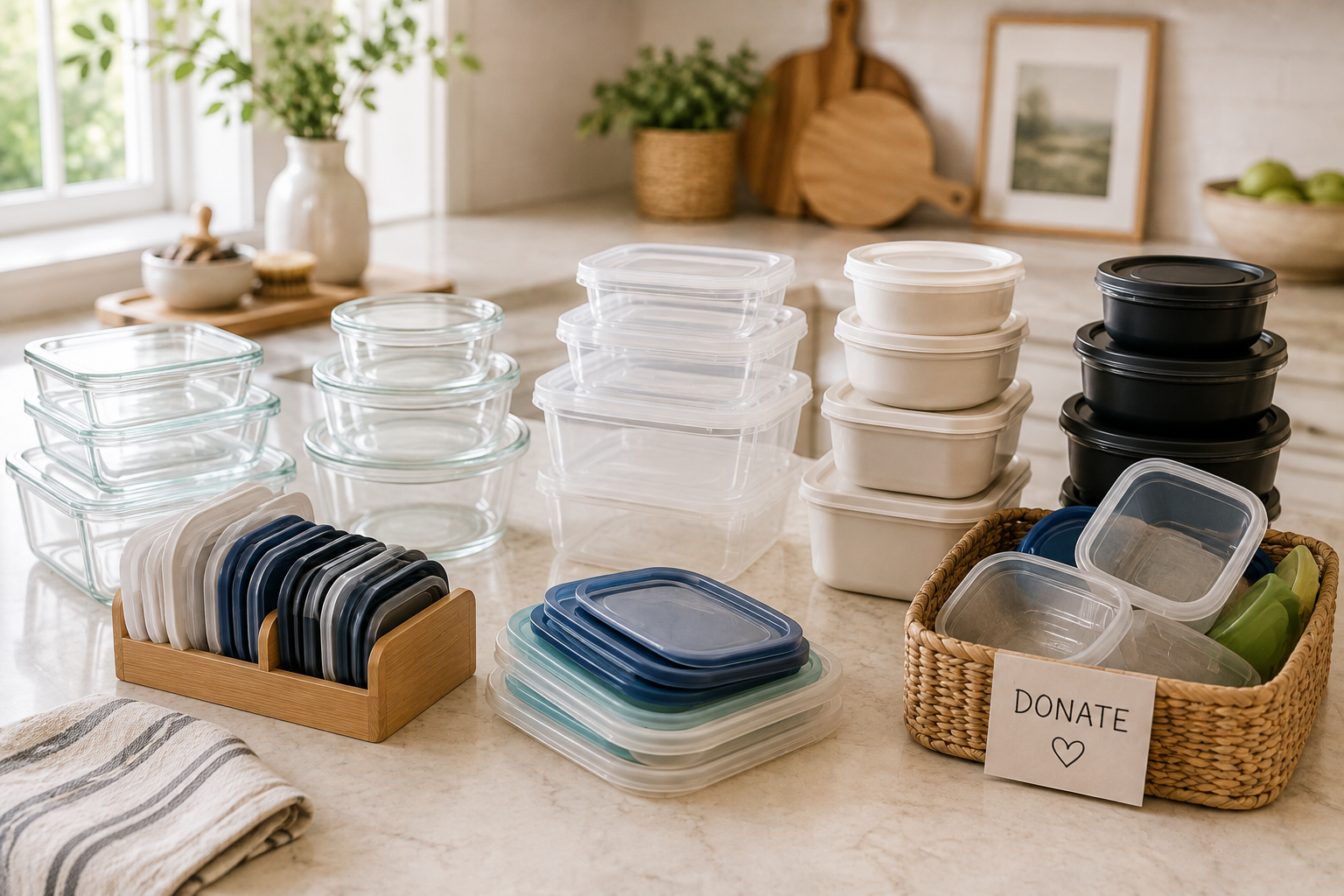
1. Keep Only the Containers You Actually Use
The easiest way to improve any food storage cabinet is to start with less.
Take every container and lid out of the cabinet.
Recycle cracked containers, stained plastic, and anything missing its matching piece.
If you have several different brands that don't stack together, keep the ones you reach for most often and donate the rest.
A smaller collection that's easy to maintain is far more useful than an overflowing cabinet full of containers you rarely use.
2. Separate Containers and Lids
Containers and lids work best when they each have their own dedicated space.
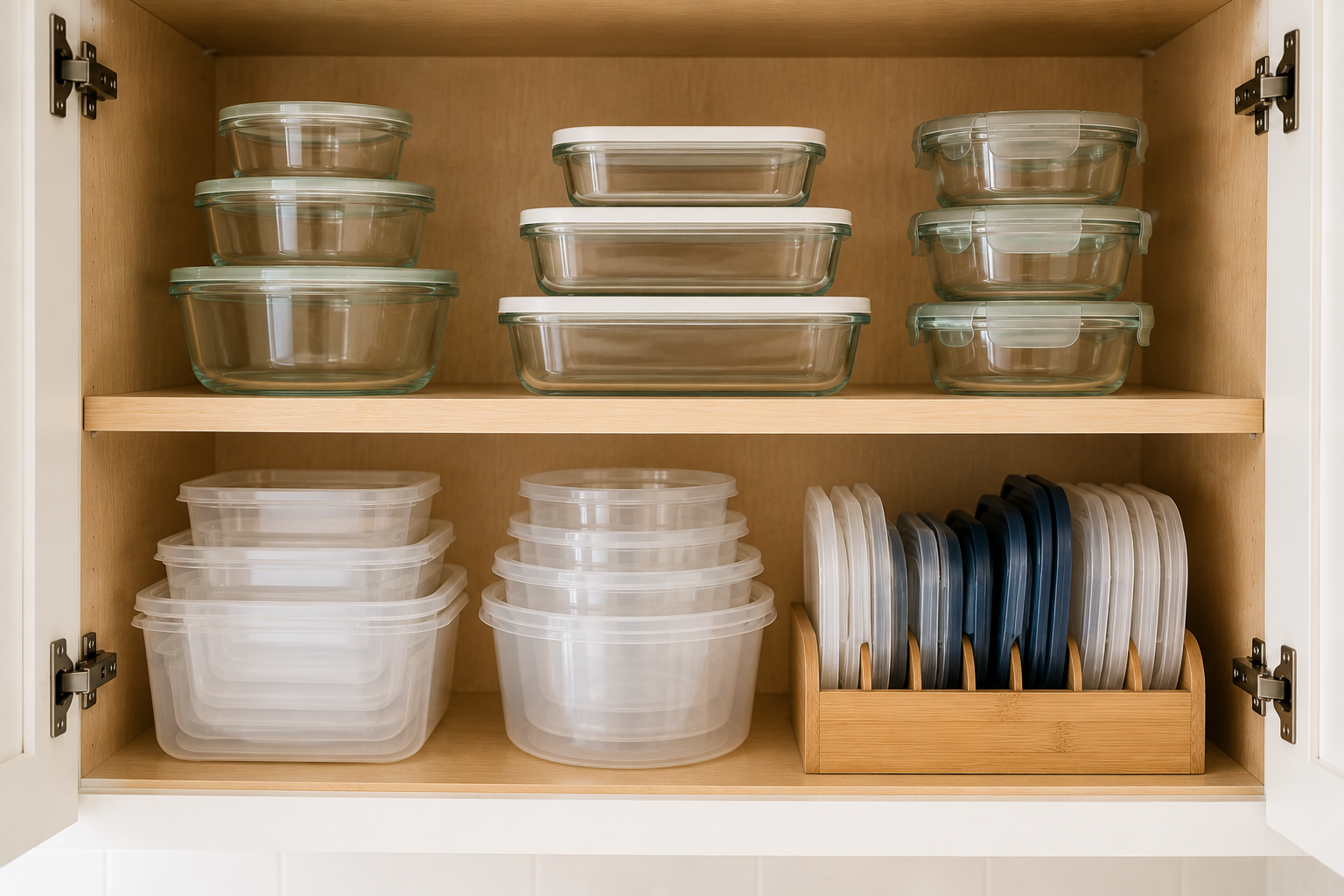
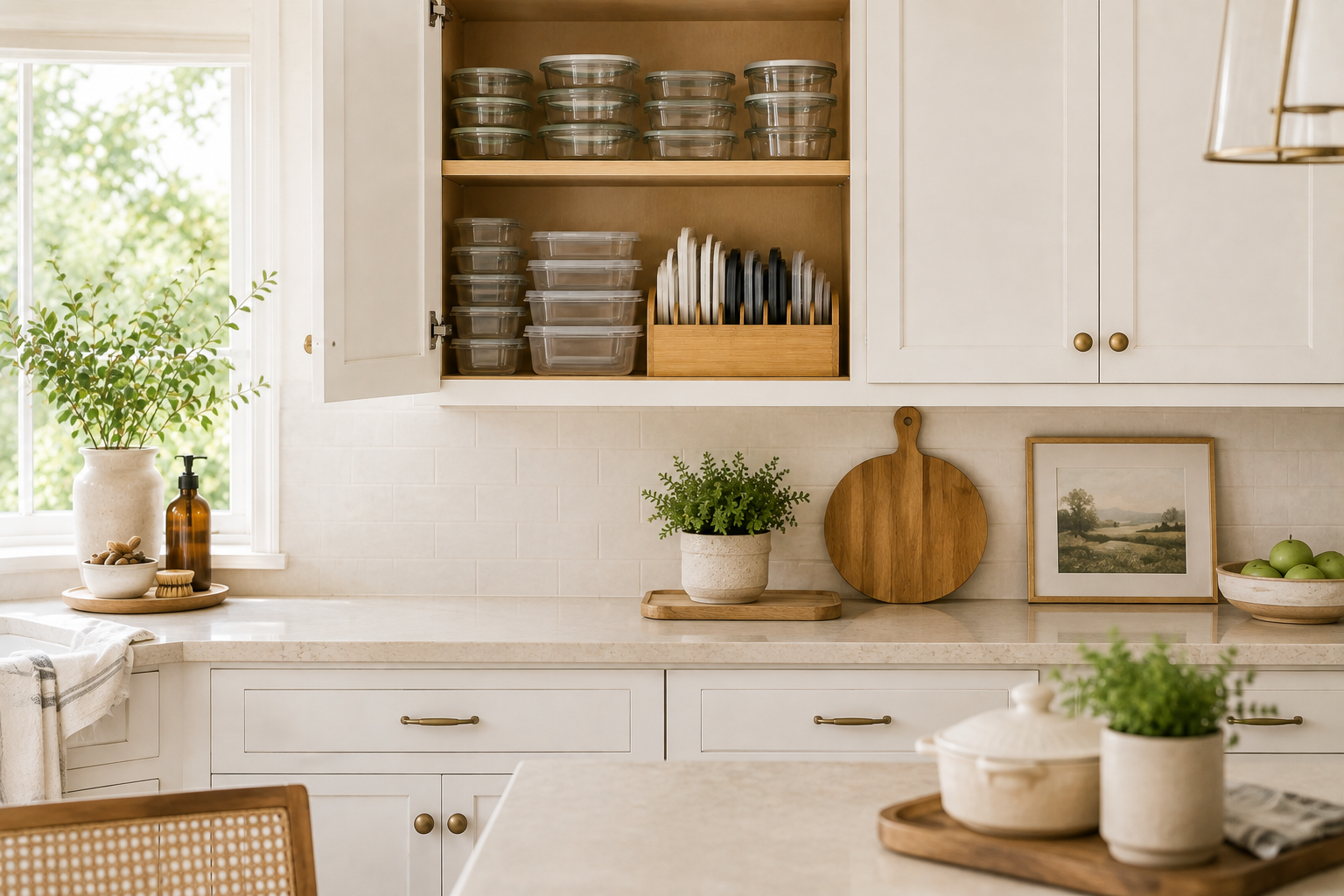
Instead of snapping lids onto every container, stack containers together by size and store lids upright in a divider.
This makes every piece easier to see while preventing unstable stacks from falling over every time you open the cabinet.
3. Stack Similar Sizes Together
Rather than building one tall tower of containers, create several smaller stacks.
For example:
Snack-size containers
Medium meal-prep containers
Leftover containers
Large family-size containers
Grouping similar sizes keeps stacks stable and makes it much easier to return containers after they've been washed.
4. Give Every Lid a Home
Lids are usually the biggest source of frustration.
Instead of tossing them into one pile, stand them vertically inside a bamboo or acrylic divider.
Grouping similar sizes together allows you to quickly flip through them instead of digging through a tangled stack.
A dedicated lid organizer is one of the simplest improvements you can make.

5. Leave a Little Empty Space
A cabinet that's packed completely full is difficult to maintain.
Leaving a little breathing room allows containers to be returned quickly without rearranging everything each time.
Think of empty space as part of your organizing system—not wasted storage.
A little extra room makes everyday routines feel much easier.
6. Keep the System Simple
You don't need dozens of organizers.
You don't need matching containers.
You don't need a picture-perfect cabinet.
You simply need a system that's easy to maintain after unloading the dishwasher.
Simple systems are the ones that last.
7. Spend One Minute Resetting the Cabinet
Every few days, take one minute to:
Return lids to their divider.
Restack leaning containers.
Put stray pieces back where they belong.
Recycle damaged containers when you notice them.
Small resets prevent small messes from becoming overwhelming projects.
Calm Favorites
Keeps food storage lids standing upright so they're easy to find without digging through a messy pile.
Nested containers reduce clutter and make putting everything away much faster.
Keeps everyday pantry staples visible, organized, and easy to grab.
Adds another storage level for larger containers without creating unstable stacks.
Makes deep cabinets easier to access while keeping everything visible.
Perfect for leftovers and meal prep while helping keep the refrigerator organized.
A simple place to organize bag clips, reusable food bags, and other small kitchen accessories.
Final Thoughts
An organized food storage container cabinet isn't about having perfectly matching containers.
It's about creating a simple system that's easy to maintain every day.
When containers stack neatly, lids have a designated home, and everything is easy to put away after unloading the dishwasher, your kitchen feels calmer—and everyday routines become just a little easier.
Remember, organization isn't about perfection.
It's about creating simple systems that support the way you live.