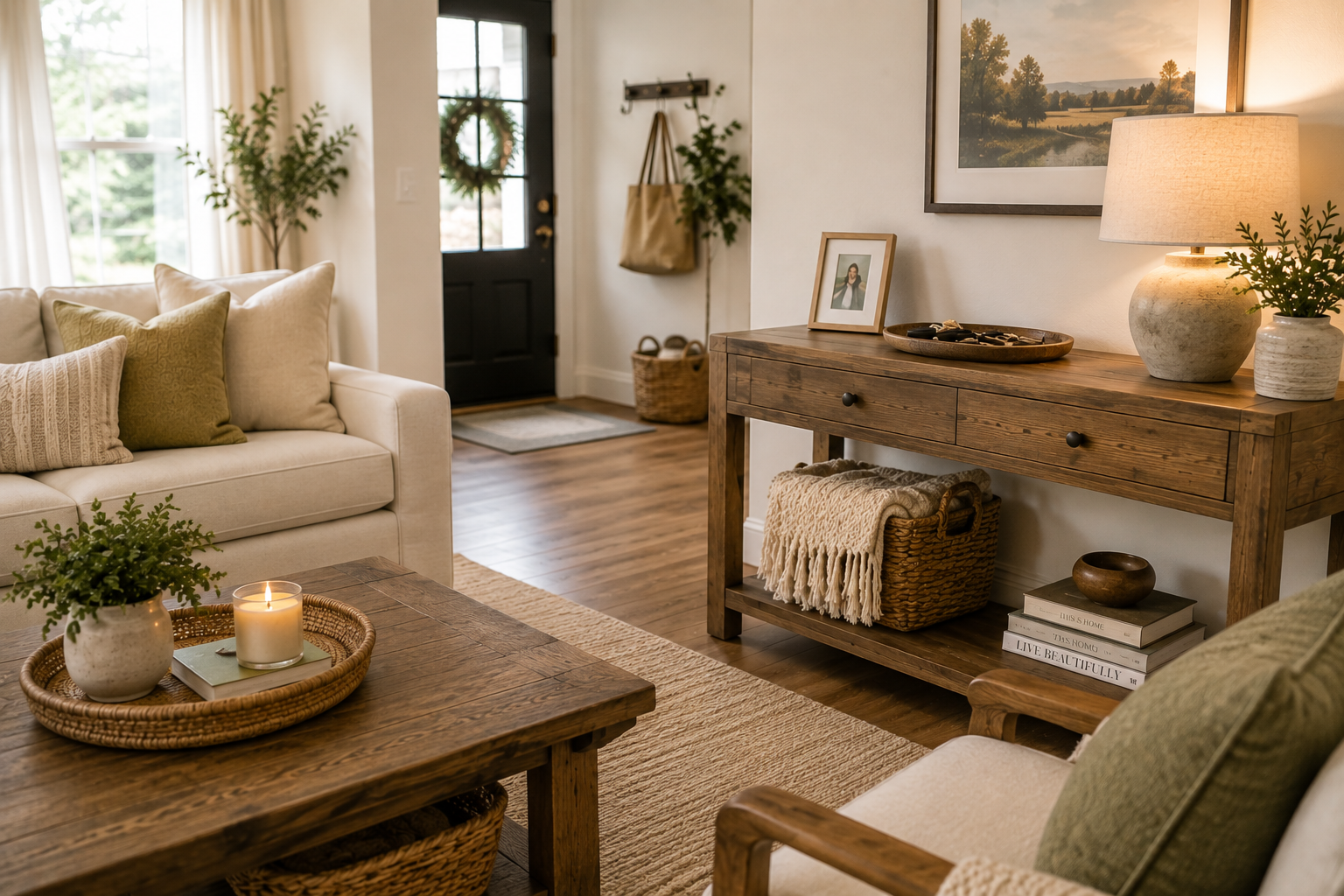
Why Your Home Keeps Getting Cluttered Again—and the Simple Systems That Help
Does it feel like clutter comes back almost as soon as you put it away? The problem may not be how much you're tidying, but the systems underneath it. These simple changes can make everyday clutter easier to manage and help your home feel calmer.
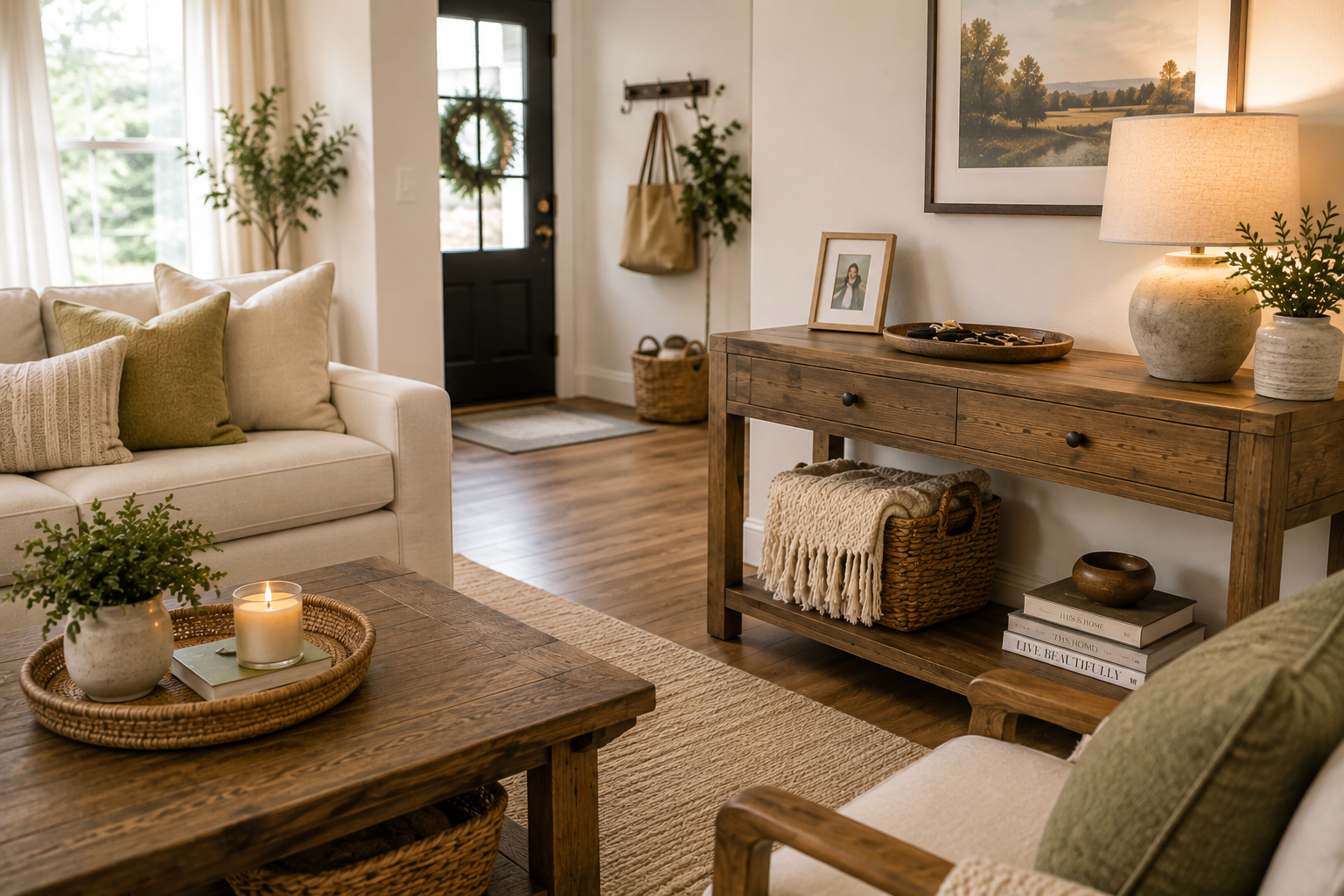
You clear the kitchen counter.
You put away the shoes by the door. You straighten the living room, carry the random things upstairs, and finally deal with the pile that's been sitting on the dining room table.
For a little while, your home feels lighter.
And then, somehow, the clutter starts creeping back.
The counter collects mail. Shoes appear by the door again. Something gets set on the stairs because it needs to go upstairs. The dining room table slowly becomes a landing place for everything that doesn't have an obvious place to go.
It can make you wonder why it's so hard to keep your home organized.
But when clutter keeps returning to the same places, the problem usually isn't that you need to try harder.
It's often a sign that your home needs a simpler system.
An organized home isn't one where nothing ever gets left out. It's a home where the things you use every day have easy places to go—and putting them away feels almost as natural as setting them down.
That's what makes organization easier to maintain.
Not perfection.
Not more storage.
Just simple systems that support the way you actually live.
Why Clutter Keeps Coming Back
Most clutter doesn't appear because we're careless.
It appears because we're busy.
We walk through the door carrying keys, sunglasses, mail, a water bottle and maybe a grocery bag. Something has to get set down.
We make coffee before we're fully awake.
We change clothes quickly.
We open packages.
We bring things from one room to another.
We live in our homes.
And every one of those little moments creates a decision:
Where does this go?
When the answer isn't obvious—or the correct place is inconvenient—the easiest option is usually to set it down.
That's how clutter begins.
One item becomes three. Three become a pile. Eventually the pile feels like something you'll deal with later.
A better organization system removes some of those decisions.
Instead of asking yourself where something belongs every time you use it, your home begins answering the question for you.
1. Pay Attention to Where Clutter Naturally Lands
Before you buy an organizer or rearrange a closet, notice where things already collect.
Your clutter is giving you information.
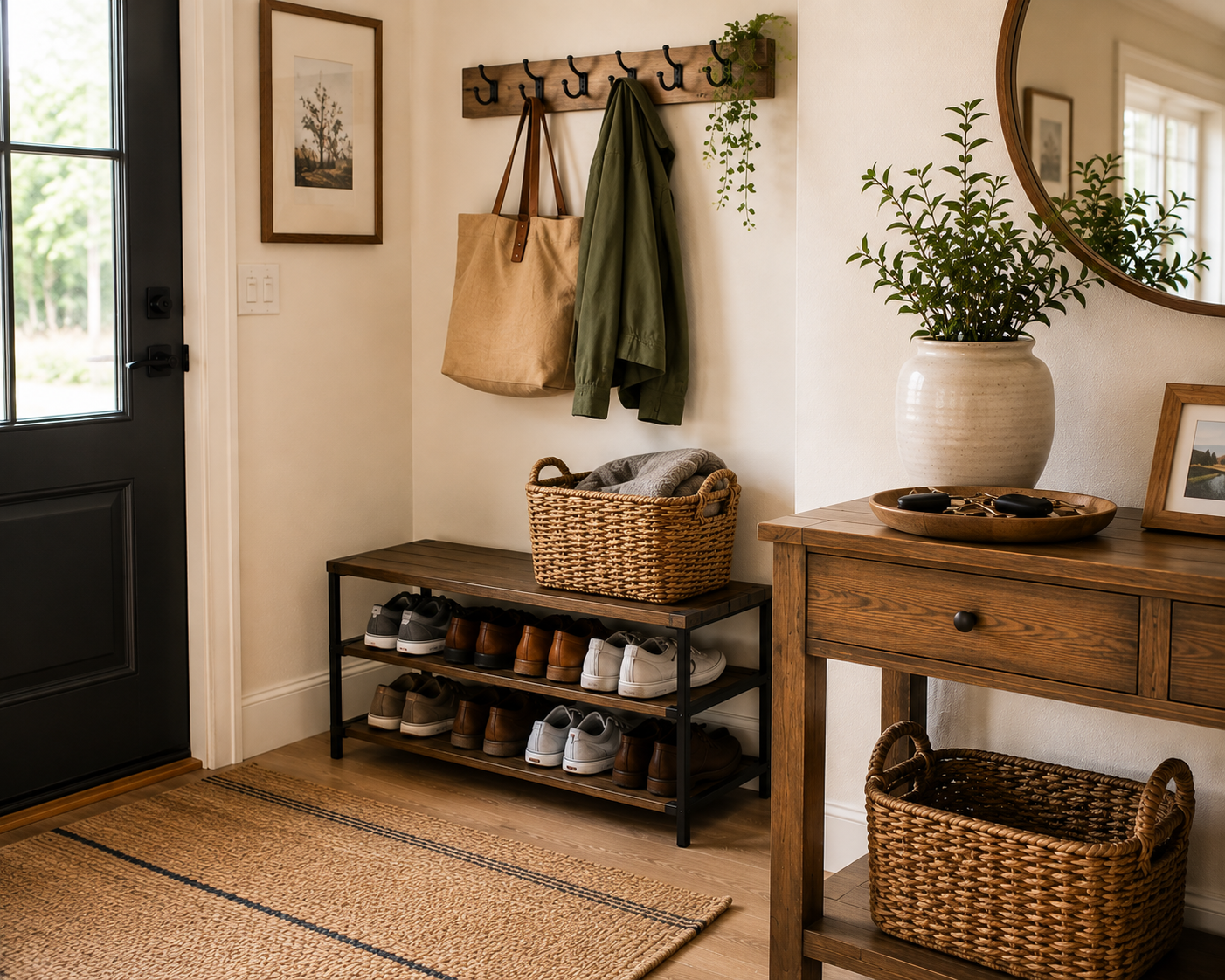
If shoes are always beside the door instead of inside the bedroom closet, your family may need shoe storage closer to where they actually take their shoes off.
If mail always lands on the kitchen counter, you may simply need a designated place for incoming papers.
If blankets are constantly piled on the sofa, a basket nearby may make more sense than storing them across the room.
Instead of fighting where things naturally land, build a simple system around the way your household already behaves.
That's often the difference between an organization system that looks good for a week and one you can actually maintain.
2. Give Everyday Things an Easy Home
You've probably heard that everything should have a place.
But there's another part that's just as important:
That place needs to be easy to use.
If putting something away requires opening a closet, moving three things, lifting a lid and fitting the item perfectly into a container, there's a good chance it will eventually end up sitting outside the container instead.
Think about the things you reach for constantly:
Keys.
Shoes.
Chargers.
Mail.
Dog leashes.
Water bottles.
Remote controls.
Cleaning supplies.
These everyday items deserve especially easy homes.
A small tray, hook, basket, drawer or open shelf may be all you need.
The goal isn't to create the prettiest storage system.
The goal is to make the easiest choice the organized choice.
3. Create Small Landing Zones Where Life Happens
Some of the most useful organization systems aren't hidden inside closets.
They're right where daily life happens.
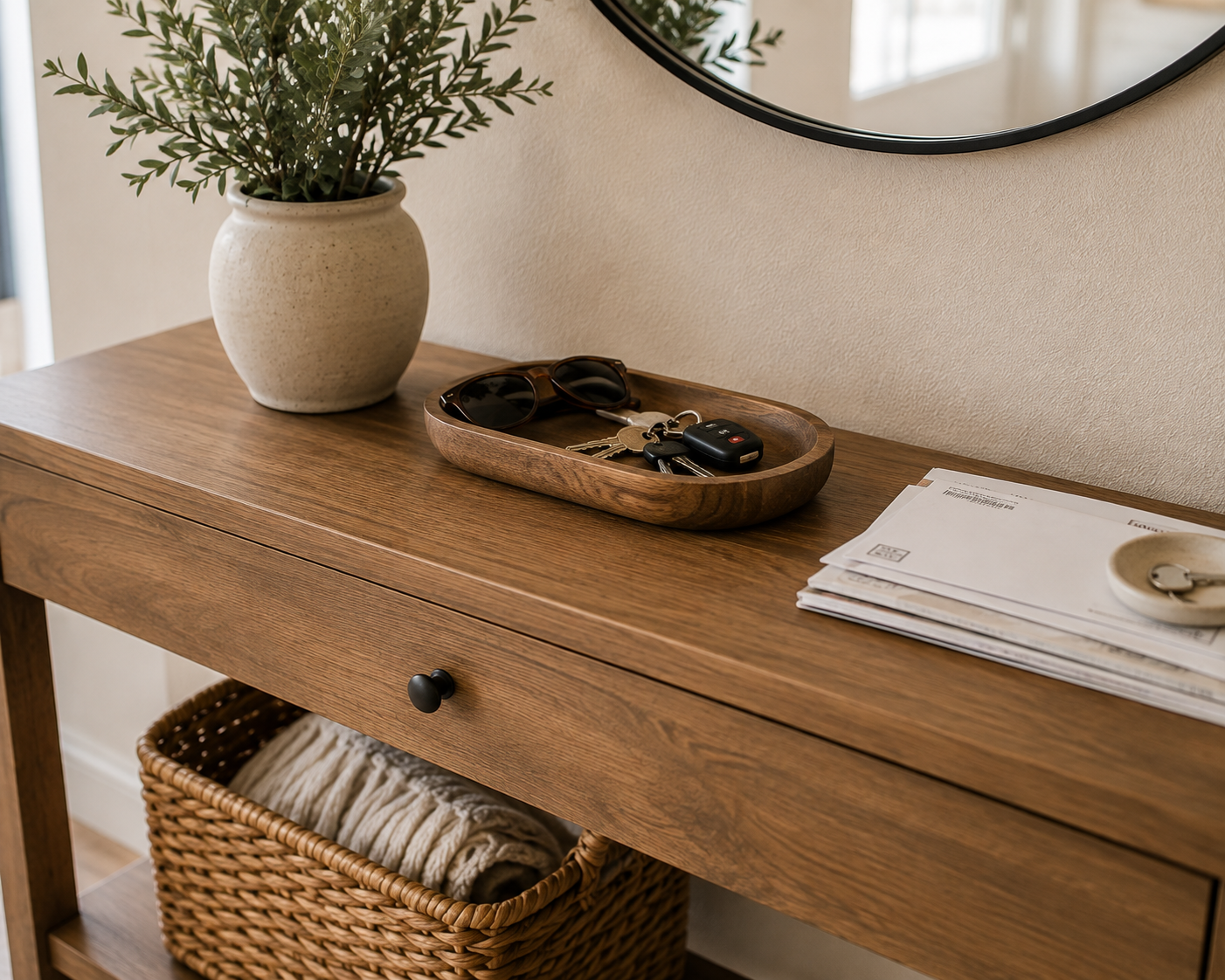
A tray near the entry can catch keys and sunglasses.
A basket near the stairs can hold things that need to go upstairs.
A small spot for incoming mail can keep papers from spreading across the kitchen.
A hamper where clothes actually come off is much more useful than one placed where you think a hamper should go.
These little landing zones give everyday clutter somewhere to pause without taking over the room.
The important part is keeping them intentional.
A landing zone shouldn't become permanent storage. It simply makes the next step easier.
When the basket fills, take the items upstairs.
When the mail tray starts accumulating, sort it.
When the return basket has something in it, take it with you the next time you leave.
Small systems work because they fit naturally into routines you're already doing.
4. Make Putting Things Away Easier Than Leaving Them Out
Here's a simple test for any organization system:
How much effort does it take to put something away?
If backpacks land on the floor every afternoon, hooks near the place where everyone walks in may work better than repeatedly asking people to carry them somewhere else.
If your kitchen counter constantly collects things that belong elsewhere, a nearby drop zone may help intercept them.
If laundry piles up because the hamper is in the wrong room, move the hamper.
Good organization doesn't depend on everyone remembering complicated rules.
It reduces friction.
Whenever clutter repeatedly appears somewhere, ask:
What would make putting this away easier?
Sometimes the answer is surprisingly small.
One hook.
One basket.
One drawer.
One designated spot.
Small changes like these are often what make a home easier to maintain.
5. Stop Asking One Space to Do Too Much
Clutter often builds when one surface quietly becomes responsible for everything.
The kitchen counter becomes the mail station, charging station, school-paper station, grocery-unloading area and place where everyone leaves whatever they're carrying.
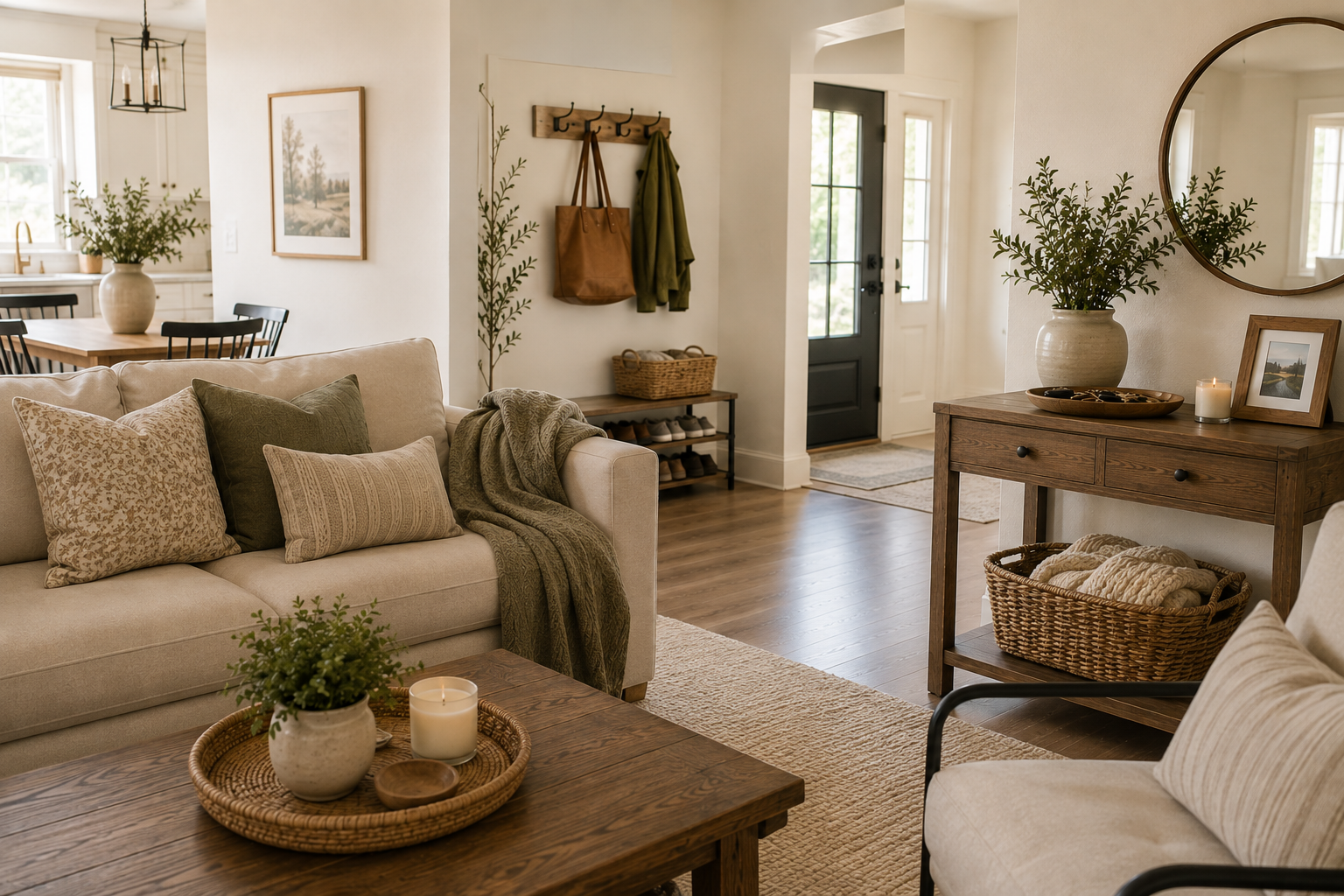
The entryway becomes shoe storage, coat storage, backpack storage, sports-equipment storage and package-return storage.
Eventually the space can't keep up.
When this happens, you don't necessarily need more storage.
You may need clearer categories.
Ask yourself what the space actually needs to support.
Maybe the entryway only needs to hold the things your family uses when leaving the house.
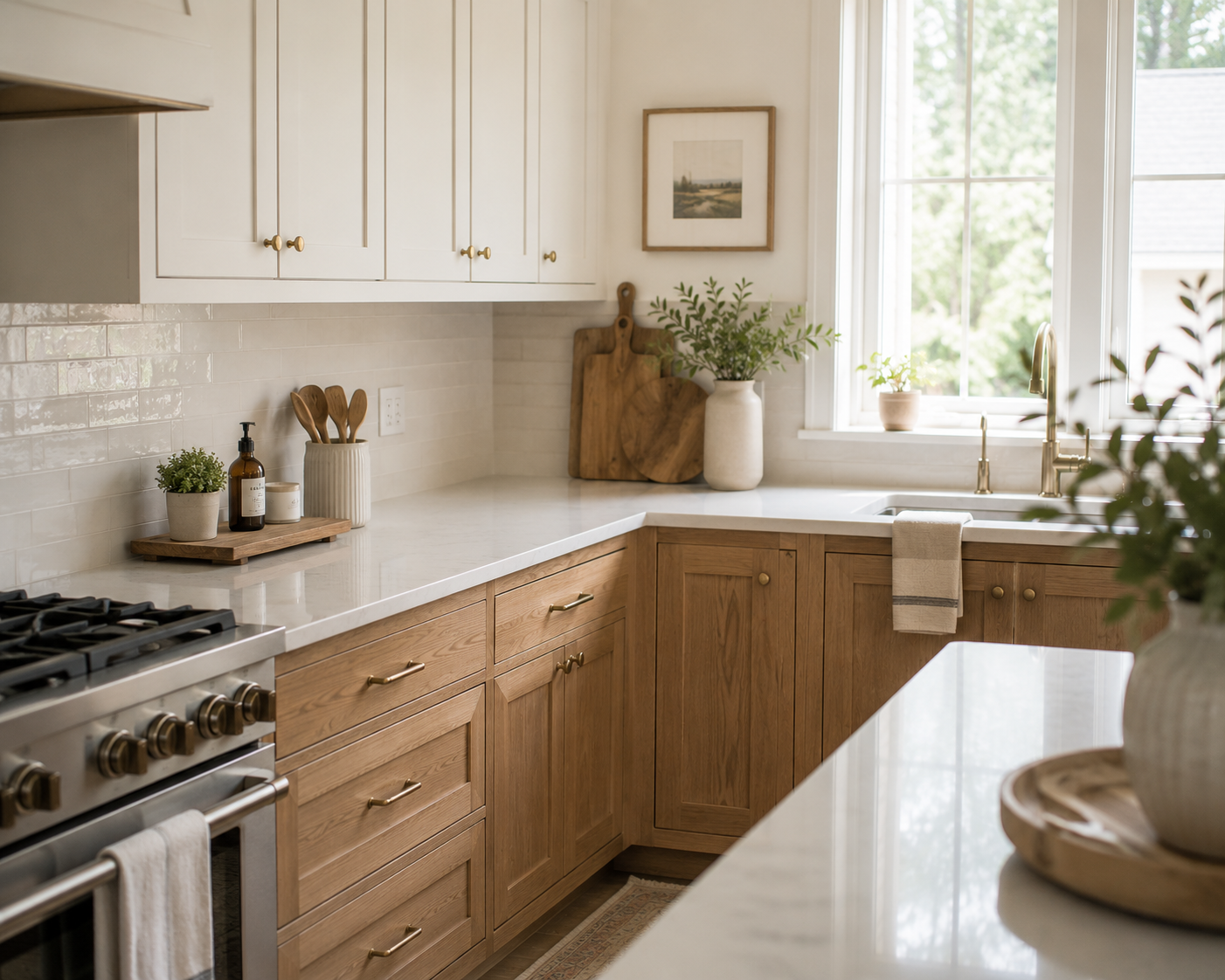
Maybe the kitchen counter only needs to support food preparation and one small everyday station.
Giving a space a clear job makes it easier to recognize what belongs there—and what doesn't.
6. Create a Simple Reset Instead of Constantly Tidying
Even the best systems won't keep a home completely clutter-free.
Things will still get left out.
That's normal.
The goal isn't to spend your entire day putting things away the moment they're used.
Instead, create a small reset point in your routine.
Maybe it's five minutes before you go upstairs for the night.
Maybe it's while the coffee brews in the morning.
Maybe everyone puts away a few things before settling in for the evening.
You're not cleaning the entire house.
You're simply returning everyday things to the homes you've already created for them.
Once your systems are working, a reset becomes much easier because you aren't standing in the middle of the room wondering where everything belongs.
You're just putting things back.
7. When Clutter Returns, Fix the System
This may be the most important shift of all.
If the same pile keeps appearing, don't automatically assume you need to be more disciplined.
Get curious about it.
Why does this keep landing here?
Where are these items supposed to go?
Is that place convenient?
Does everyone know where they belong?
Is the storage already too full?
Is there an unnecessary step making the system harder than it needs to be?
Recurring clutter is often a clue.
Once you start seeing it that way, maintaining your home can feel very different.
Instead of constantly battling the mess, you begin adjusting the systems underneath it.
Start With the Spot That Bothers You Most
You don't need to reorganize your whole house.
In fact, don't.
Look around your home and find one place where clutter keeps returning.
Maybe it's the kitchen counter.
The entryway.
The bathroom vanity.
The chair in your bedroom.
The stairs.
Then ask:
What keeps ending up here—and why?
Choose one category and give it a simple, convenient home.
Live with that change for a while.
If it works, keep it.
If it doesn't, adjust it.
Organization should support your life—not give you another set of rules to follow.
Our Calm Home Favorites
Creates an easy landing place for keys, sunglasses and the little things you reach for every day.
Keeps blankets, everyday necessities or items headed to another room contained without making them difficult to reach.
Give bags, jackets, hats and dog leashes an easy place to land the moment you walk through the door.
Keeps everyday shoes contained near the place where they naturally come off.
Creates a simple boundary for mail, returns or other small categories that tend to collect around the house.
Final Thoughts
A home that gets cluttered isn't a home that's failing.
It's a home that's being lived in.
The goal isn't to stop every pair of shoes, piece of mail or coffee cup from ever being left out.
The goal is to make it easier to know what happens next.
When everyday things have easy homes, surfaces have clear purposes and small resets are built into your routine, clutter becomes much easier to manage.
And when something keeps ending up in the same place?
Don't immediately try harder.
Look at the system.
Sometimes the smallest adjustment—a basket where things naturally collect, a hook where a bag always lands or a tray where keys are already being dropped—is enough to make everyday life feel a little easier.
You don't need to fix your whole home today.
Start with one recurring pile. Give it a better place to land.
Simple is enough.
You May Also Like
Your Home Isn’t Hard to Maintain—It’s Missing These 5 Simple Organization Setups
The 15-Minute Evening Reset That Helps Your Home Stay Calm
The Entryway Drop Zone That Makes Coming Home Feel Instantly Calmer
The Kitchen Counter System That Keeps Your Kitchen Looking Clean Every Day
The Entryway Drop Zone That Makes Coming Home Feel Instantly Calmer
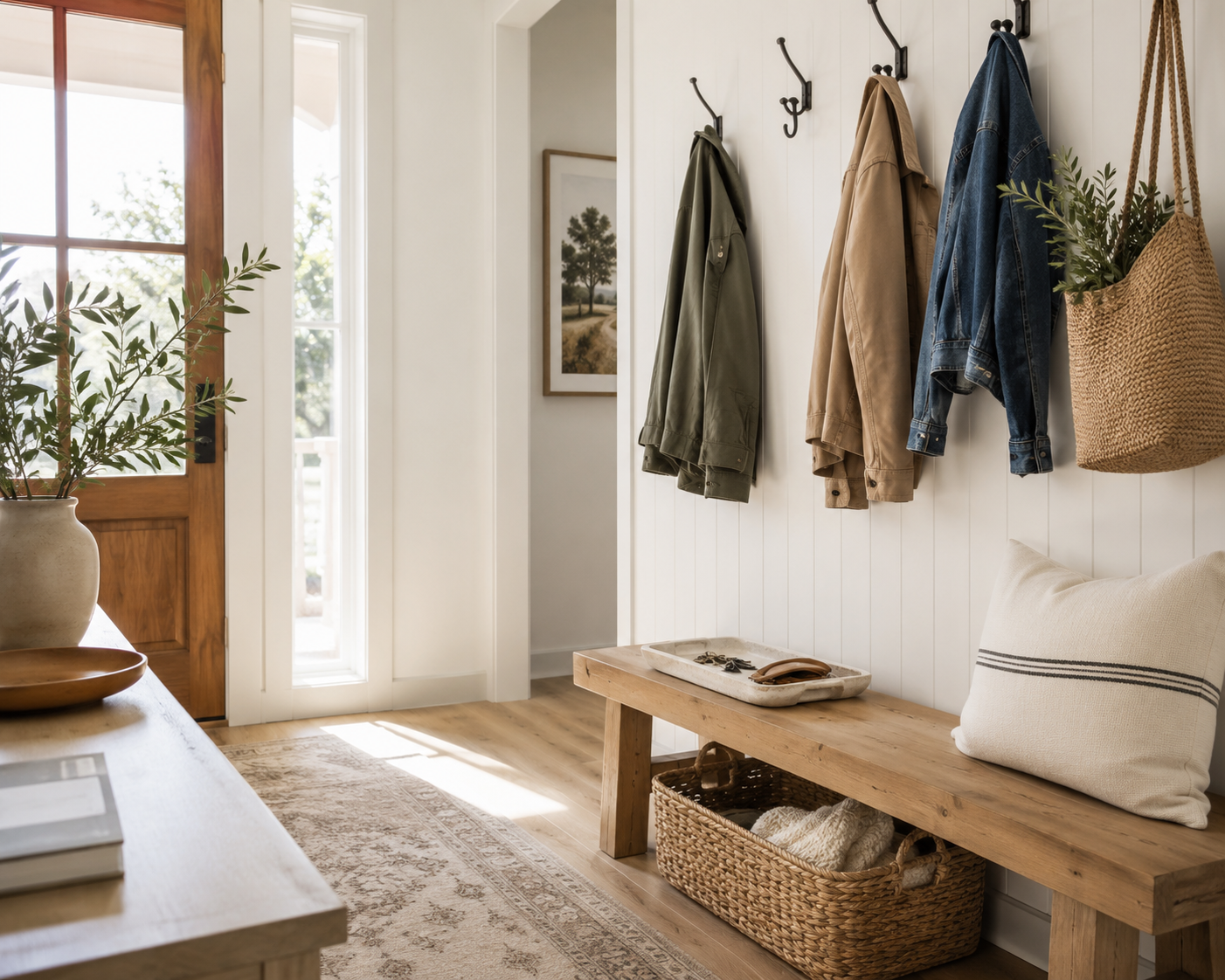
Create a welcoming entryway that stays organized with simple drop zone systems for shoes, coats, keys, bags, and everyday essentials. Learn practical ideas that make coming home feel calmer and your daily routine easier.
Have you ever walked through the front door only to feel like your home is already asking something from you?
Shoes are scattered across the floor. Keys disappear into random piles. Mail lands on the kitchen counter. Jackets end up draped over dining chairs. Before you've even had a chance to relax, clutter has already started following you from room to room.
It isn't because you're disorganized.
It's because your home may be missing one simple system.
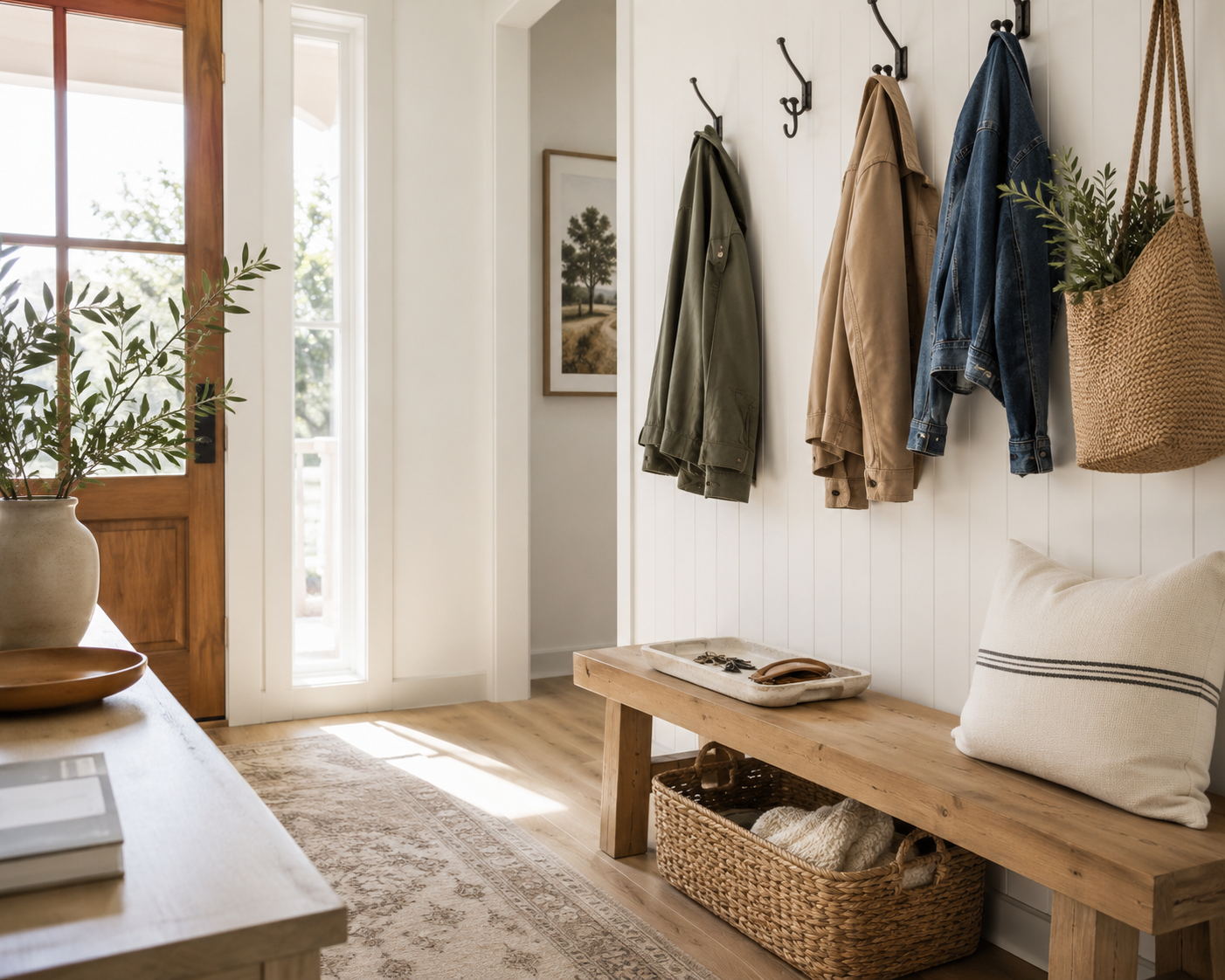
An entryway drop zone creates a designated place for the things that enter and leave your home every day. Instead of making dozens of small decisions every time you walk through the door, your routine becomes automatic. Everyone knows where shoes belong. Keys always have a home. Bags aren't left in random rooms.
Small systems like this don't just reduce clutter—they make coming home feel calmer.
The best part is that you don't need a large mudroom or a professionally designed entryway to make it work. Whether your front door opens into a spacious foyer, a hallway, or directly into your living room, you can create a drop zone that fits your space and your everyday routine.
Why Entryways Become Clutter Magnets
The front door is one of the busiest places in your home.
Every day, items move in and out constantly:
Shoes
Keys
Wallets
Purses
Backpacks
Jackets
Sunglasses
Mail
Water bottles
Dog leashes
Without designated homes, these everyday essentials naturally end up wherever they're dropped.
Over time, that small pile by the front door spreads to nearby counters, dining tables, and kitchen islands. The clutter doesn't stay in one place—it slowly travels through your home.
Creating a drop zone isn't about adding more storage.
It's about creating one simple routine that makes every arrival and departure easier.
Start With What Your Family Uses Every Day
Before buying baskets or hooks, spend a few days paying attention to what actually lands near your front door.
Ask yourself:
What do we carry in every day?
What do we grab before leaving?
What constantly ends up on the floor?
What do we waste time searching for?
Your answers become the foundation of your drop zone.
A household with young children may need backpack storage and shoe baskets.
A dog owner might need a dedicated place for leashes and waste bags.
Someone who works from home may only need a tray for keys, sunglasses, and outgoing mail.
The goal isn't to copy someone else's entryway.
It's to build one that supports the way your family already lives.
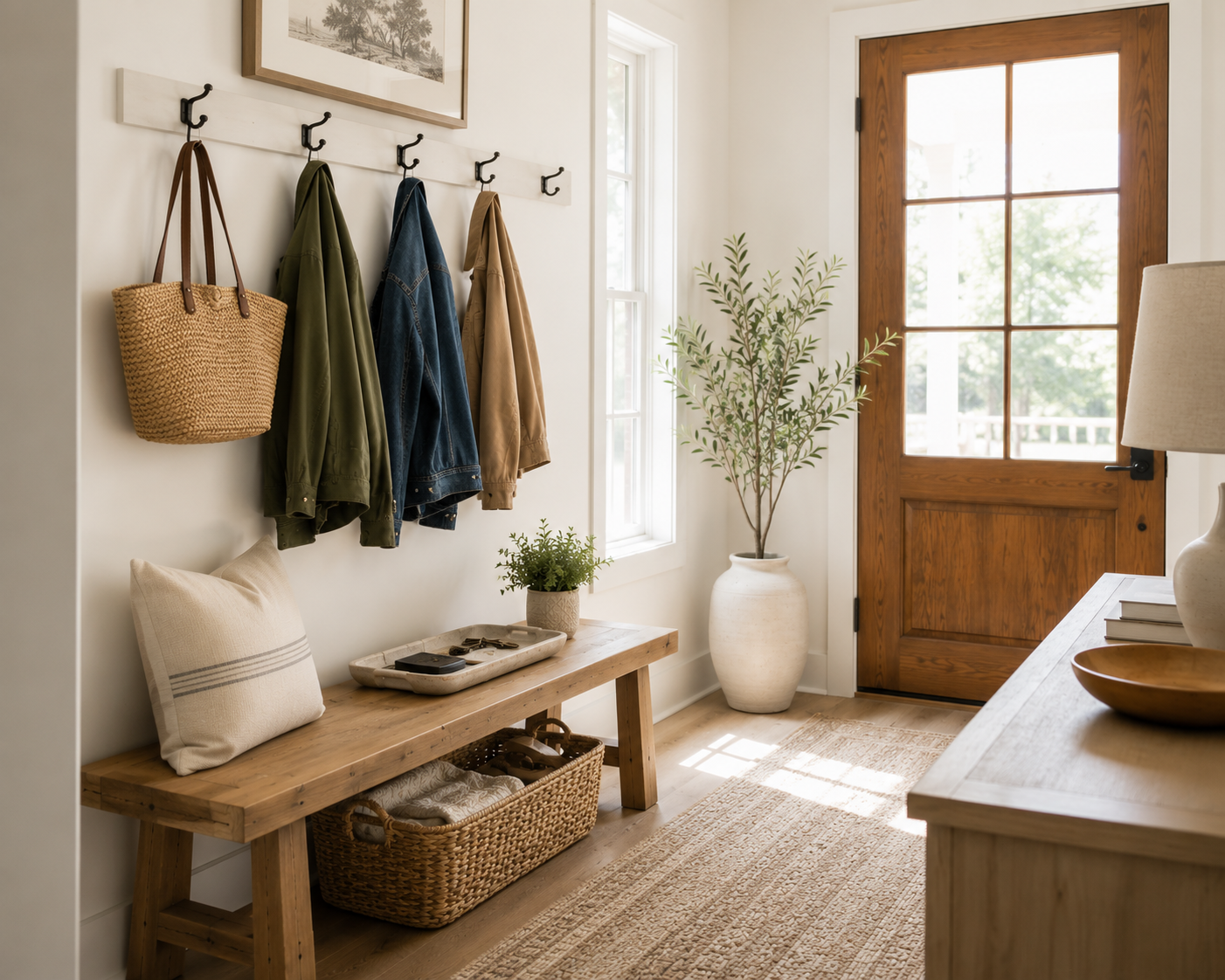
Create Simple Zones
One of the easiest ways to keep an entryway organized is by giving every category its own home.
Instead of thinking about organizing individual items, organize by purpose.
For example:
Shoes
Place a basket, tray, or low shoe rack near the door so shoes naturally come off in one location.
Jackets
Install sturdy wall hooks that everyone can reach. Hooks are often easier to use than closets for everyday coats.
Keys and Wallets
Use a decorative catchall tray on a console table or floating shelf so these essentials never disappear into random piles.
Instead of carrying mail into the kitchen, create a small basket labeled "To Sort." This keeps paper contained until you're ready to go through it.
Bags
Assign each family member a hook or basket for backpacks, purses, reusable shopping bags, or work totes.
Simple zones reduce daily decision-making, making it easier for everyone to maintain the system.
Keep the System Simple
The most successful entryway drop zones aren't filled with dozens of organizers. They're built around a few thoughtful systems that are easy to maintain every day.
Instead of creating storage for every possible item, focus on the things your family actually uses.
If something doesn't belong in the entryway, don't create permanent storage for it.
Keeping the space simple makes it easier to keep tidy.
Here are a few habits that help the system last:
Return keys to the tray every time you come home.
Hang coats before walking into the rest of the house.
Place shoes on the rack or in the basket instead of the floor.
Empty the mail basket once or twice each week.
Return reusable shopping bags to their hook after unloading groceries.
These tiny habits take only seconds, but together they prevent clutter from building up over time.
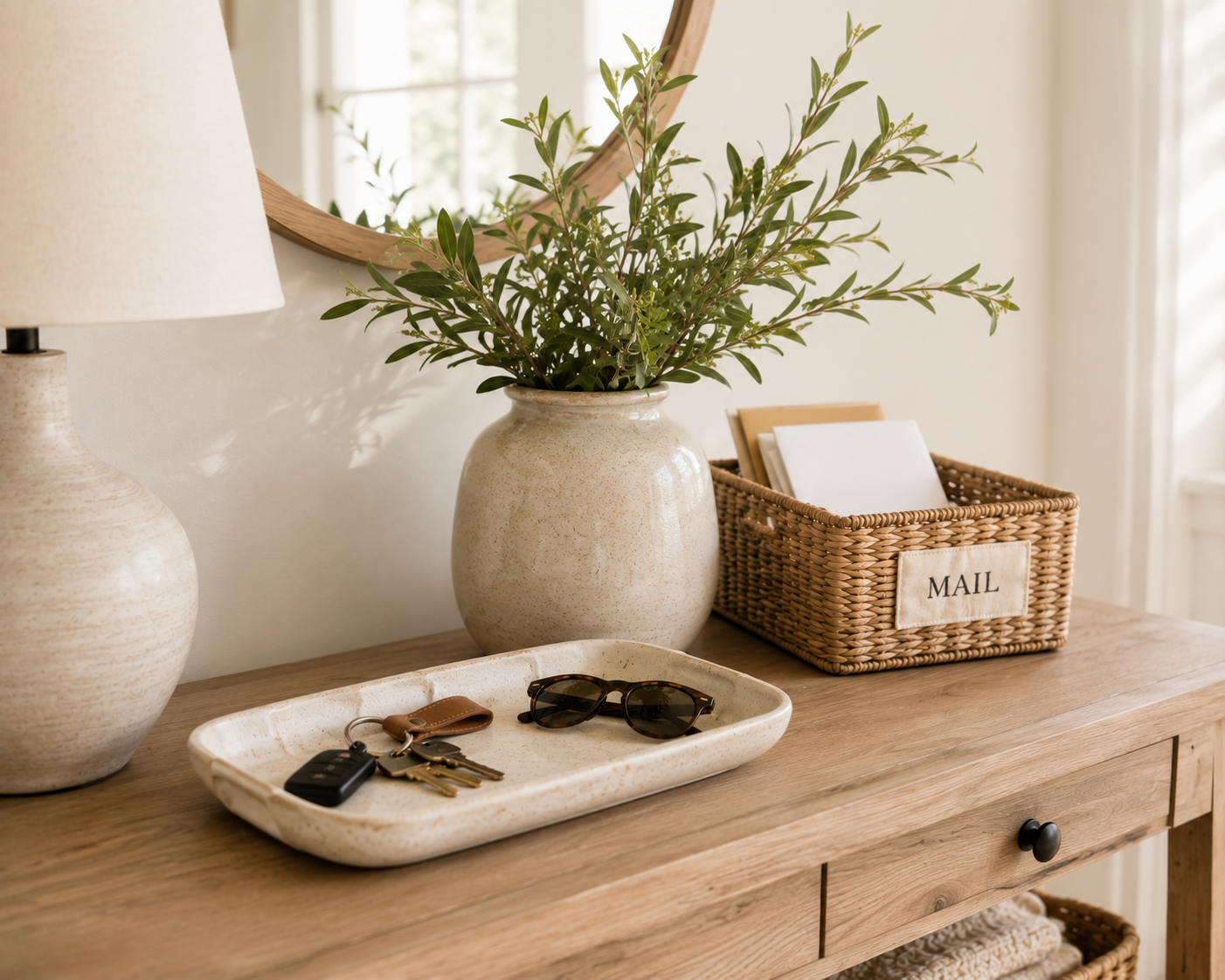
Make It Easy for Everyone to Use
The best organizing systems don't rely on perfect habits—they make the right choice the easiest choice.
Think about every member of your household.
Can children reach the hooks?
Is there a place for backpacks?
Can guests easily see where to leave their shoes or coats?
Does everyone know where to return keys?
When your system is easy to use, it naturally becomes part of your routine.
If someone has to open several doors, move other items, or search for storage, they're much less likely to put things away.
Organization should remove friction—not create it.
Don't Forget Seasonal Changes
Your entryway needs change throughout the year.
In winter, you may need room for boots, heavy coats, hats, and gloves.
During summer, sandals, baseball caps, sunglasses, and beach bags may become everyday essentials.
Rather than trying to store everything year-round, rotate seasonal items every few months.
This simple habit keeps your entryway feeling open instead of overcrowded.
When the seasons change, take five minutes to remove anything you no longer use every day.
A little maintenance keeps the system working without requiring a major reorganization.
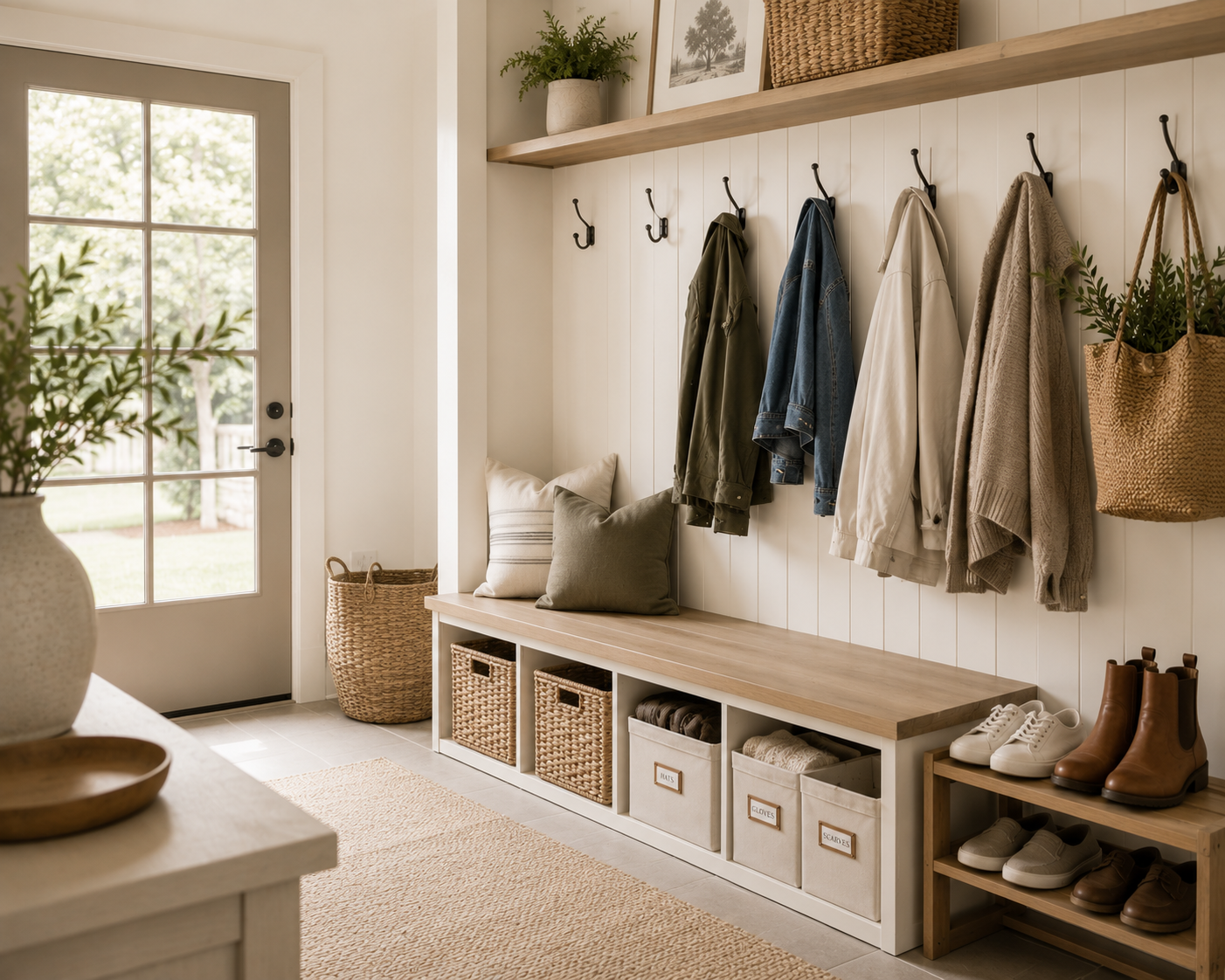
Small Spaces Can Still Have Great Systems
You don't need a large foyer to create an organized entryway.
Even a narrow hallway can become an effective drop zone with a few simple additions.
Consider using:
A slim floating shelf for keys and mail
Wall-mounted hooks instead of bulky furniture
A narrow shoe rack
One woven basket for everyday accessories
A small bench with hidden storage underneath
When floor space is limited, think vertically.
Using wall space allows you to keep everyday essentials organized without making your entryway feel crowded.
Remember, it's not about the size of the space.
It's about giving everyday items a consistent home.
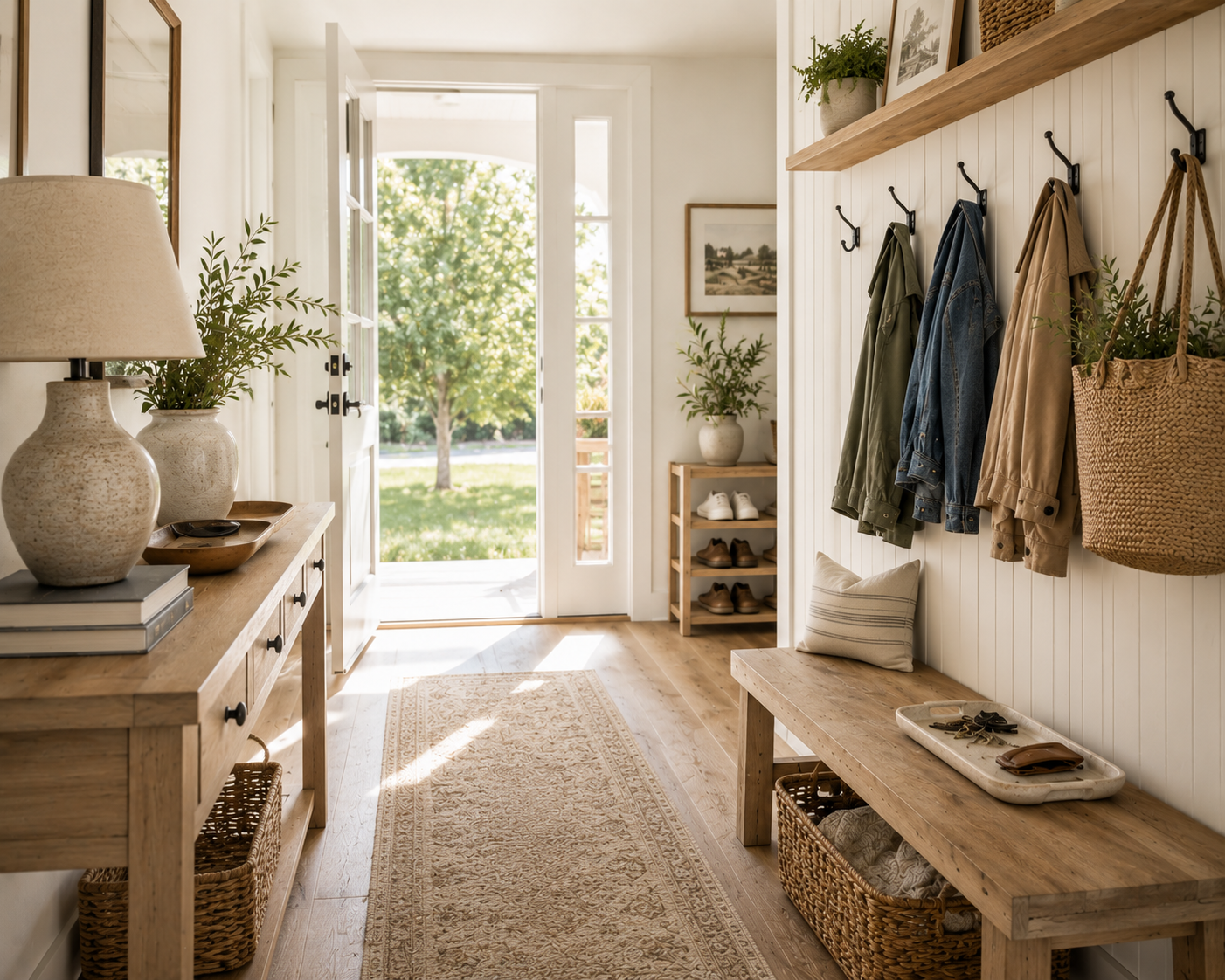
Our Calm Favorites
These are a few of our favorite products for creating a simple, functional entryway that supports everyday routines. Each one helps reinforce the system without adding unnecessary clutter.
A simple tray gives keys, wallets, sunglasses, and loose change a permanent home so they're easy to grab on your way out the door.
Wall hooks make it easy for everyone to hang jackets, backpacks, purses, and reusable shopping bags instead of leaving them on chairs or the floor.
Perfect for shoes, dog supplies, scarves, hats, or seasonal accessories while adding warmth and texture to your entryway.
Keeps everyday footwear contained near the door without taking up unnecessary space, helping floors stay clear and easy to clean.
Final Thoughts
Your entryway is more than just the place where you come and go—it's the first space that welcomes you home each day.
When it has a simple system, your entire home feels calmer from the moment you walk through the door.
Remember, you don't need a large mudroom or custom built-ins to create an organized entryway. A few intentional zones, a handful of practical storage solutions, and consistent daily habits are often all it takes.
Start with one small change. Add a tray for your keys. Install a few hooks. Place a basket by the door for shoes.
Those simple systems quickly become everyday routines, and those routines help create a home that feels lighter, more welcoming, and easier to live in.
A calm home begins at the front door. And sometimes, the smallest changes make the biggest difference.
You May Also Like
Continue creating a calmer home with these helpful organization guides:
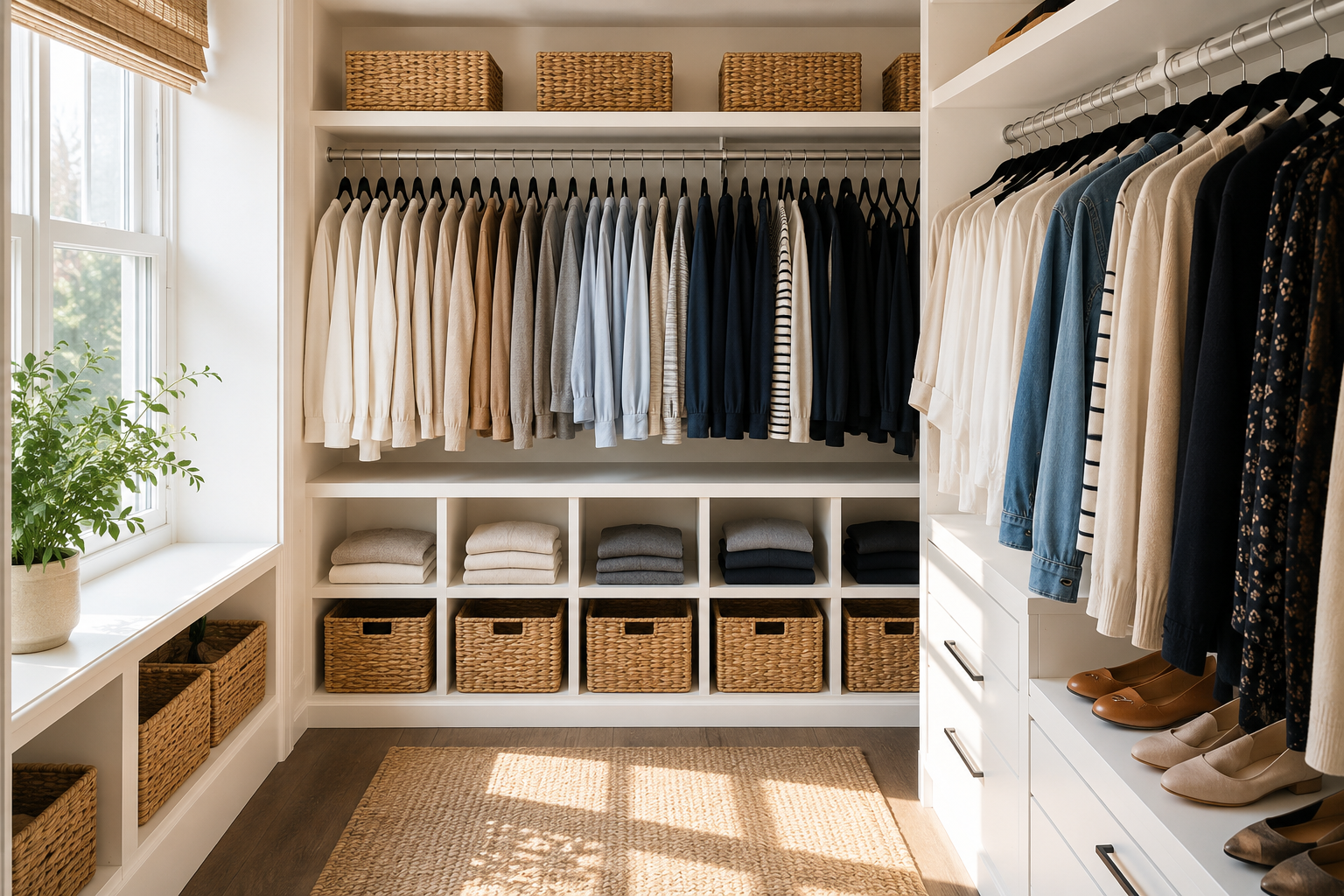
A Closet Organization System You'll Actually Keep Up
A well-organized closet isn't about perfection—it's about creating simple systems that make everyday life easier. Learn how to build a closet organization system that's easy to maintain, reduces everyday stress, and helps your home feel calmer.
Create a simple closet system that makes everyday routines easier—not one that's impossible to maintain.
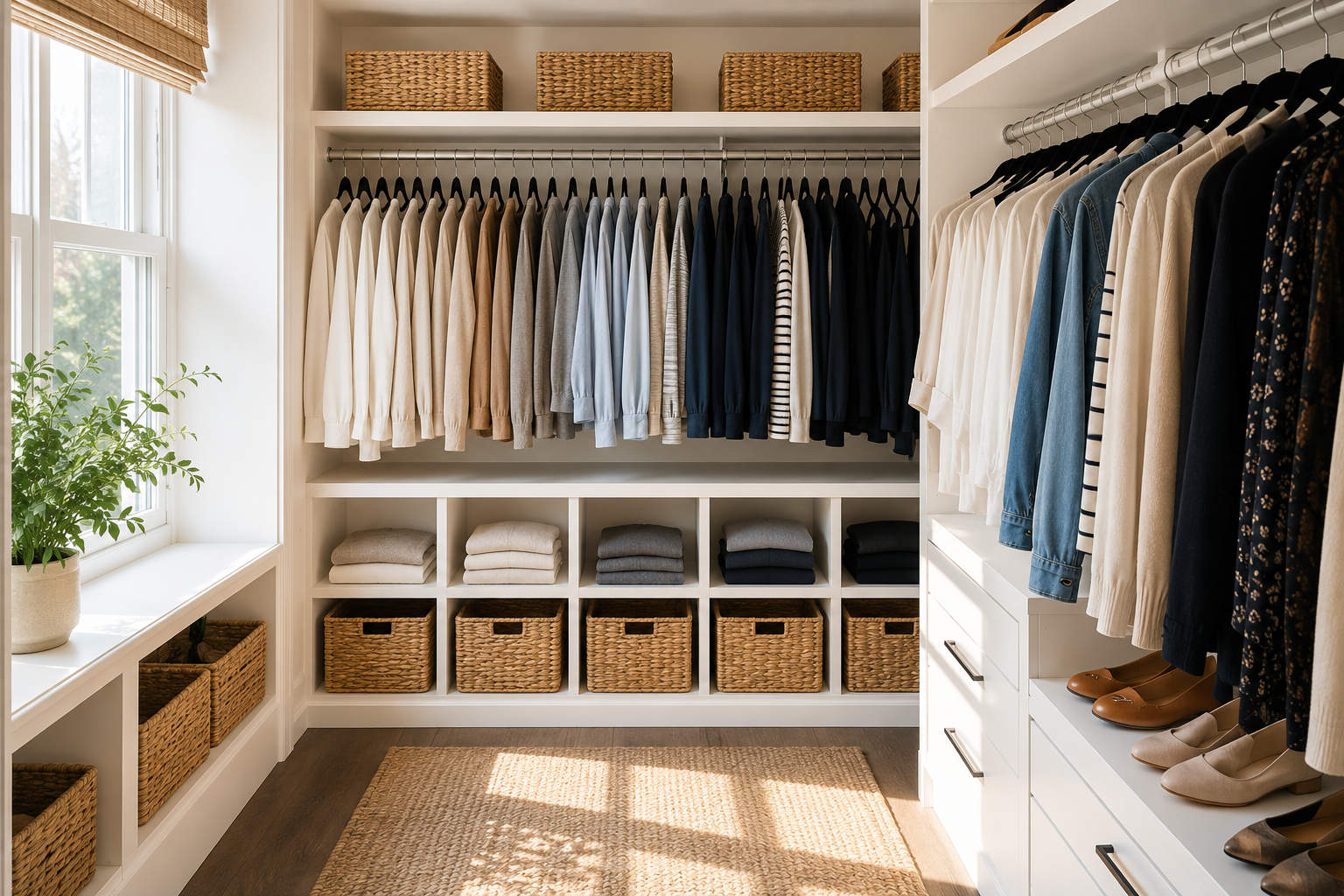
Some mornings, getting dressed feels harder than it should.
You slide hangers back and forth searching for one shirt. A sweater slips from the shelf. Shoes have gathered near the door, and yesterday's outfit is still draped over a chair because putting everything away felt like one more task at the end of a busy day.
It doesn't take long before a closet that once felt organized begins to feel overwhelming again.
If you've ever wondered why that happens, you're not alone.
The problem usually isn't that your closet is too small. It isn't that you need more organizing products, either.
More often, it's because the system wasn't designed for real life.
A closet should quietly support your everyday routine. It should make mornings feel calmer, laundry easier to put away, and getting ready something you rarely have to think about.
That's what sustainable organization looks like.
It's not about creating a perfect closet.
It's about creating one that's easy to keep.
Why Perfect Systems Usually Don't Last
Many closets look beautifully organized on the day they're finished.
Every hanger matches. Every sweater is folded just right. Every basket is perfectly labeled.
But life doesn't stay picture perfect.
Laundry piles up.
Work gets busy.
Kids borrow sweatshirts.
Seasons change.
The systems that last aren't the ones that require constant attention. They're the ones that make putting things away almost automatic.
The easier it is to maintain your closet, the more likely it is to stay organized.
That's why the goal shouldn't be perfection.
It should be simplicity.
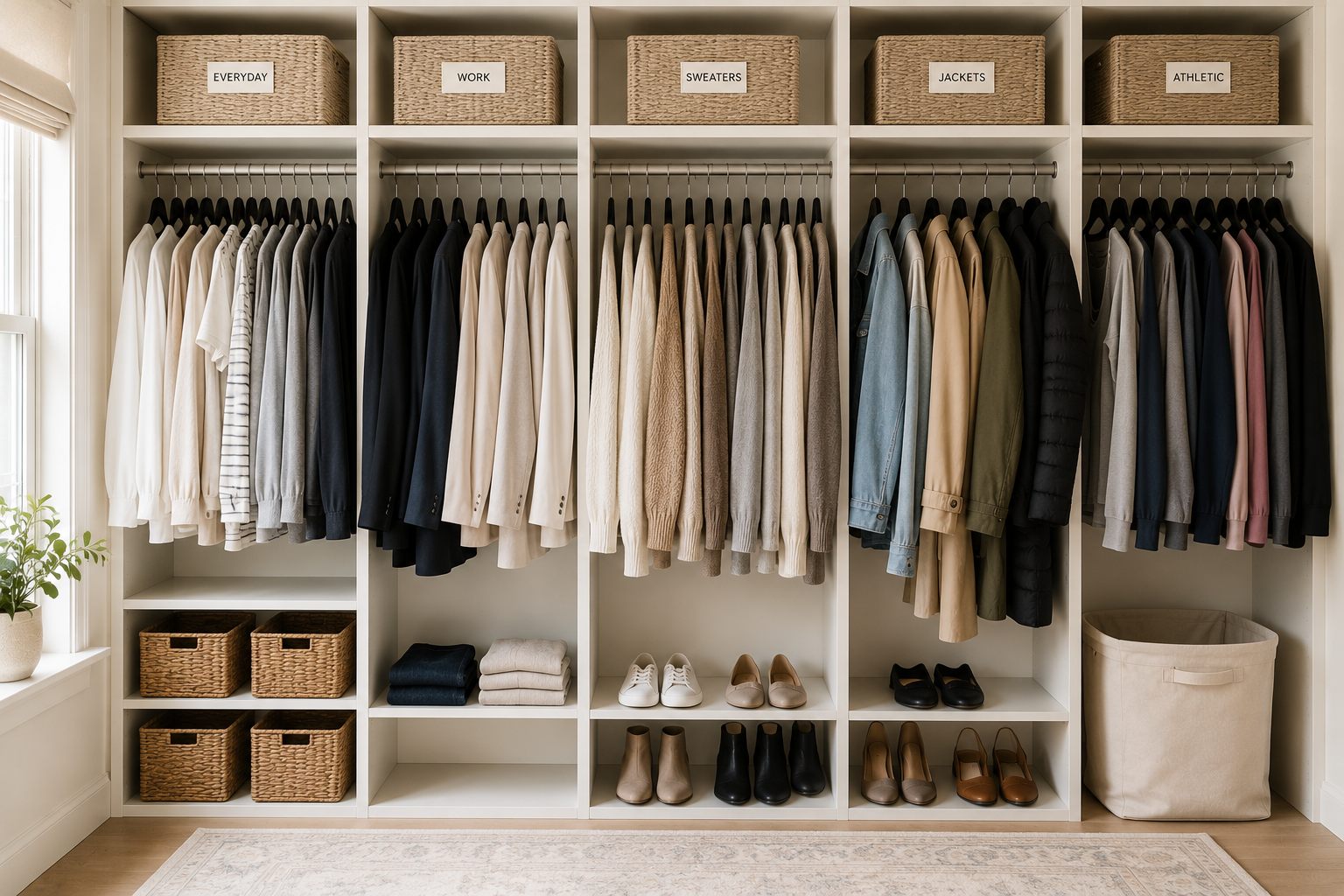
Organize Around Your Daily Routine
Instead of thinking about where every individual item belongs, think about how you naturally move through your mornings.
What do you reach for most often?
Those are the items that deserve the easiest access.
Create simple sections like:
Everyday Clothing
Work Clothes
Athletic Wear
Sweaters
Jackets
Shoes
Accessories
These broad categories are easier to remember than complicated organizing systems.
When everything has an obvious home, putting laundry away becomes faster because there are fewer decisions to make.
Good organization removes decisions.
That's what makes it sustainable.
Make It Easier to Put Things Away Than Leave Them Out
One of the biggest reasons closets become messy isn't because people don't care.
It's because the system asks too much of them.
If hanging one shirt means squeezing it between overcrowded hangers…
If folded clothes immediately topple over…
If finding the right basket takes longer than leaving something on the floor…
The system is working against you.
Instead, look for small ways to remove friction.
Leave a little extra space between hanging clothes.
Avoid overfilling shelves.
Keep frequently used items within easy reach.
When putting something away takes only a few seconds, you're much more likely to do it consistently.
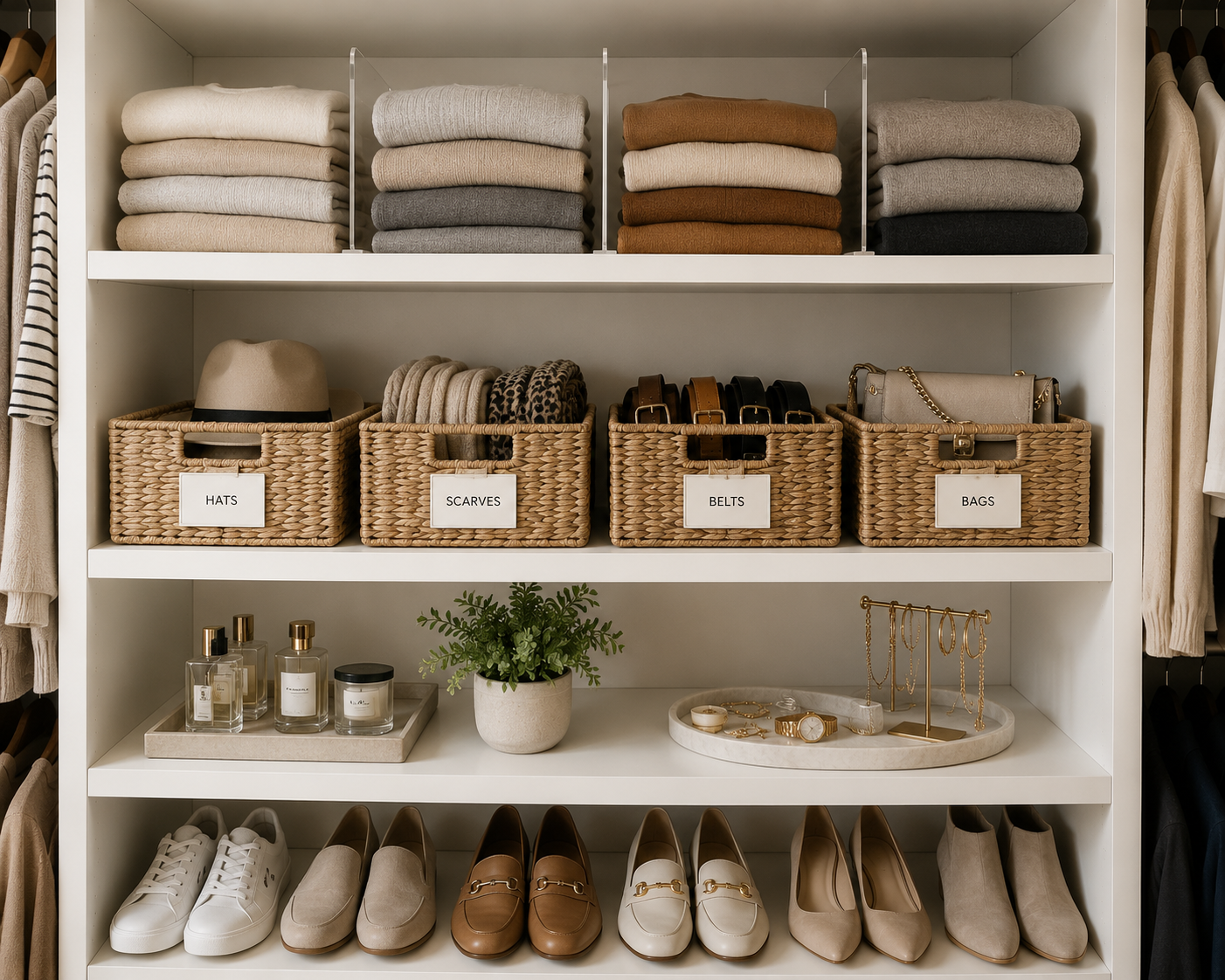
Calm Closets Have Room to Breathe
One of the easiest ways to make a closet feel calmer is surprisingly simple:
Don't fill every available inch.
Open space isn't wasted space.
It's what allows your closet to function.
When shelves aren't packed full, folded clothing stays neat longer.
When hangers aren't crowded together, finding what you need becomes easier.
When baskets aren't overflowing, putting things away takes less effort.
Creating breathing room helps your closet stay organized naturally instead of requiring constant resets.
Build Habits Instead of Chasing Perfection
A sustainable closet isn't maintained during one big organizing weekend.
It's maintained through small habits that fit into everyday life.
A few minutes after laundry.
Straightening one shelf before bed.
Returning shoes to the same place each evening.
Donating clothing before it begins overflowing again.
These small routines don't feel overwhelming because they're part of everyday living—not extra work.
Over time, those habits become the system.
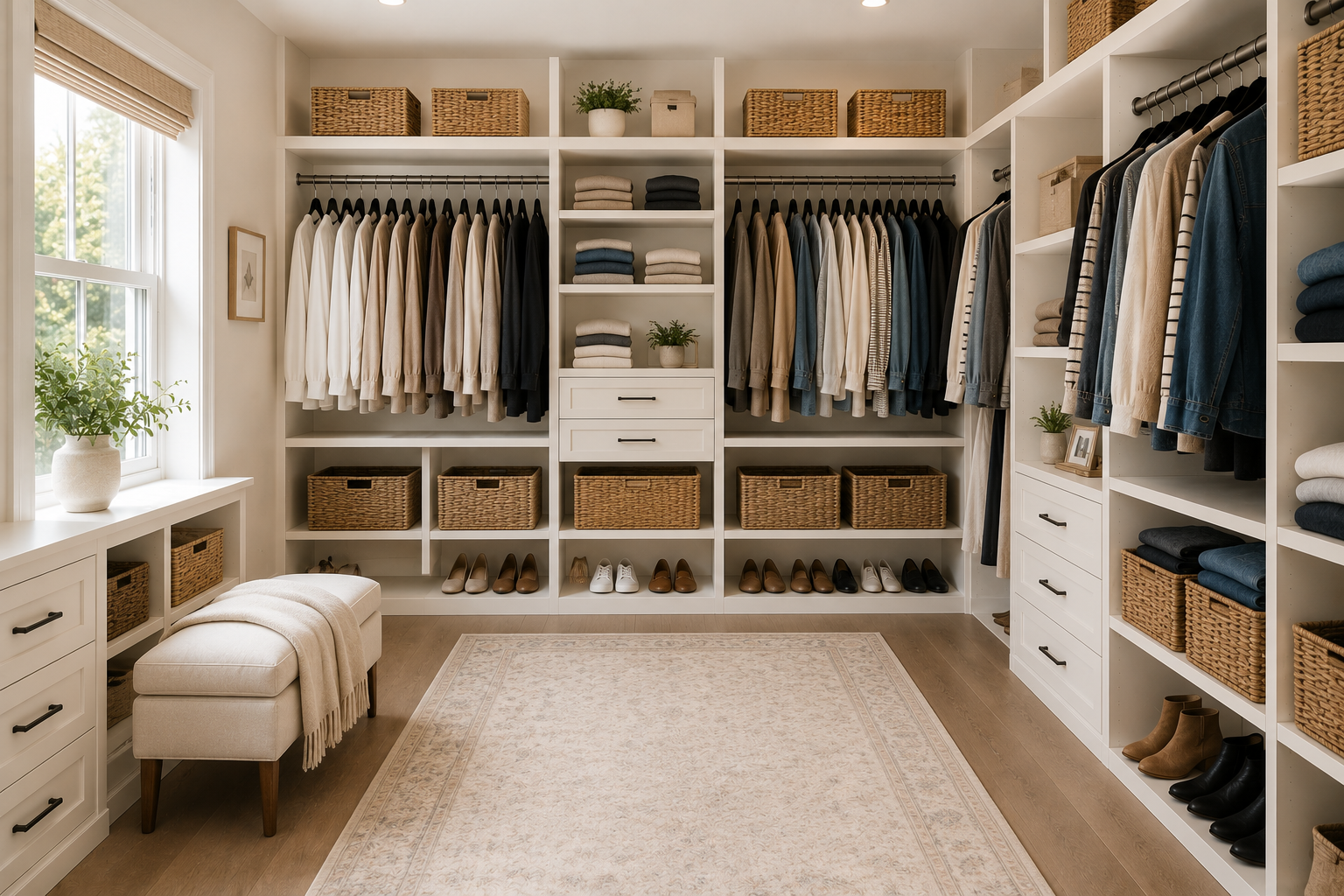
Five Small Habits That Keep a Closet Organized
Once your system is in place, these simple habits help it stay that way:
Return clean laundry to its designated section as soon as it's folded.
Keep shoes in their assigned location after wearing them.
Remove clothing you no longer wear before the closet begins feeling crowded.
Spend five minutes straightening shelves during your weekly home reset.
Adjust your closet with the seasons so your everyday clothing is always easiest to reach.
Small habits create lasting results because they support your daily routine instead of interrupting it.
Calm Home Organization Favorites
These products support a simple closet system without making it more complicated.
Slim Velvet Hangers
Create a consistent look, prevent clothing from slipping, and save valuable hanging space while making your closet easier to maintain.
Shelf Dividers
Keep folded sweaters, jeans, and linens standing neatly instead of collapsing into untidy piles.
Woven Storage Baskets
Perfect for scarves, hats, handbags, seasonal accessories, or smaller items that benefit from one clearly defined home.
Clear Shoe Storage Boxes
Protect shoes while making it easy to see every pair without opening multiple containers.
Drawer Organizers
Create simple sections for socks, undergarments, belts, and accessories so everything is easy to find each morning.
Final Thoughts
Your closet doesn't have to look perfect to make your life easier.
When getting dressed feels simple, putting laundry away takes less effort, and everything has an obvious place to return, your closet begins working for you instead of creating one more thing to manage.
That's what sustainable organization looks like.
It's not about maintaining perfection.
It's about creating simple systems that make everyday life feel a little calmer.
And sometimes, those small changes are the ones that last the longest.
You May Also Like
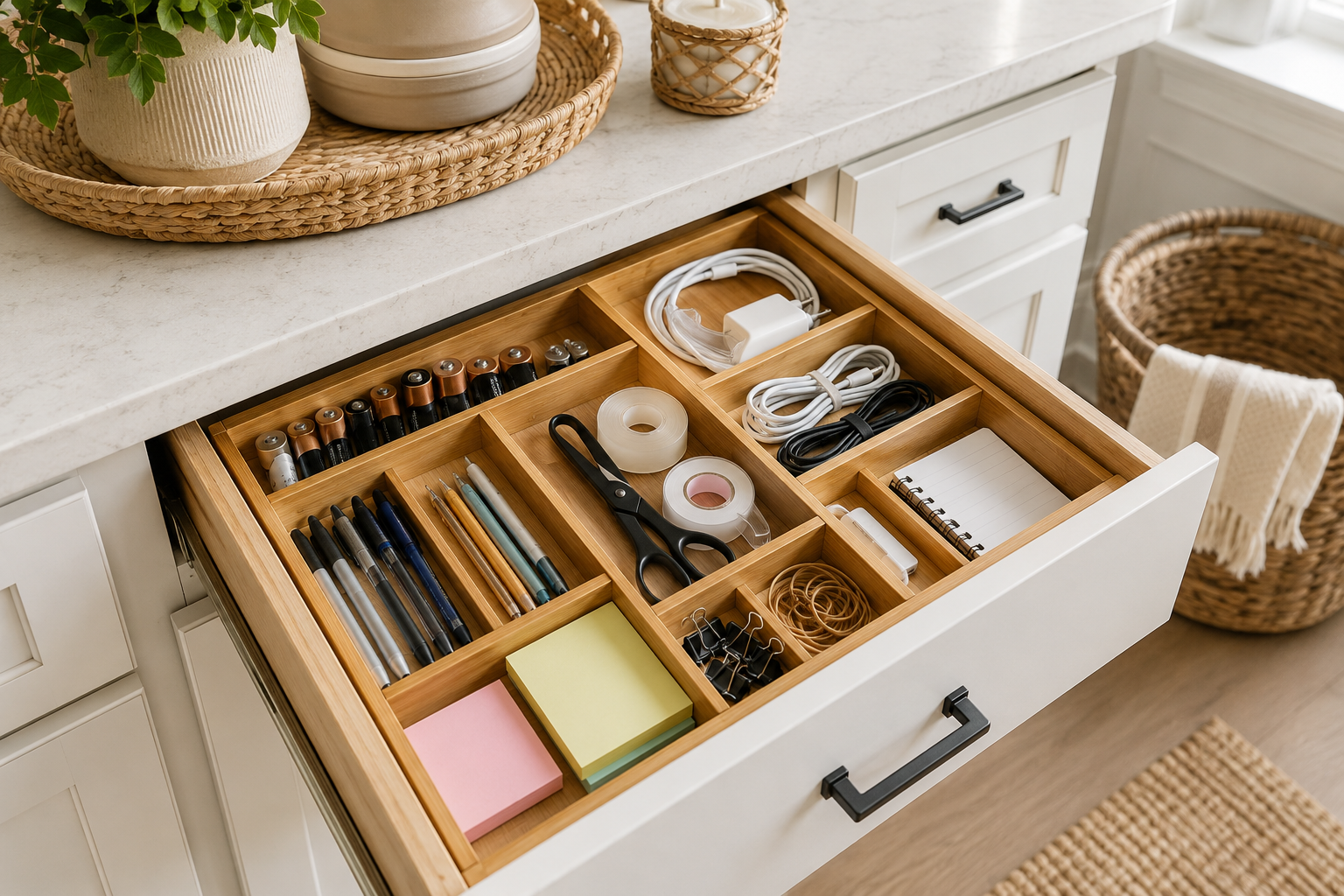
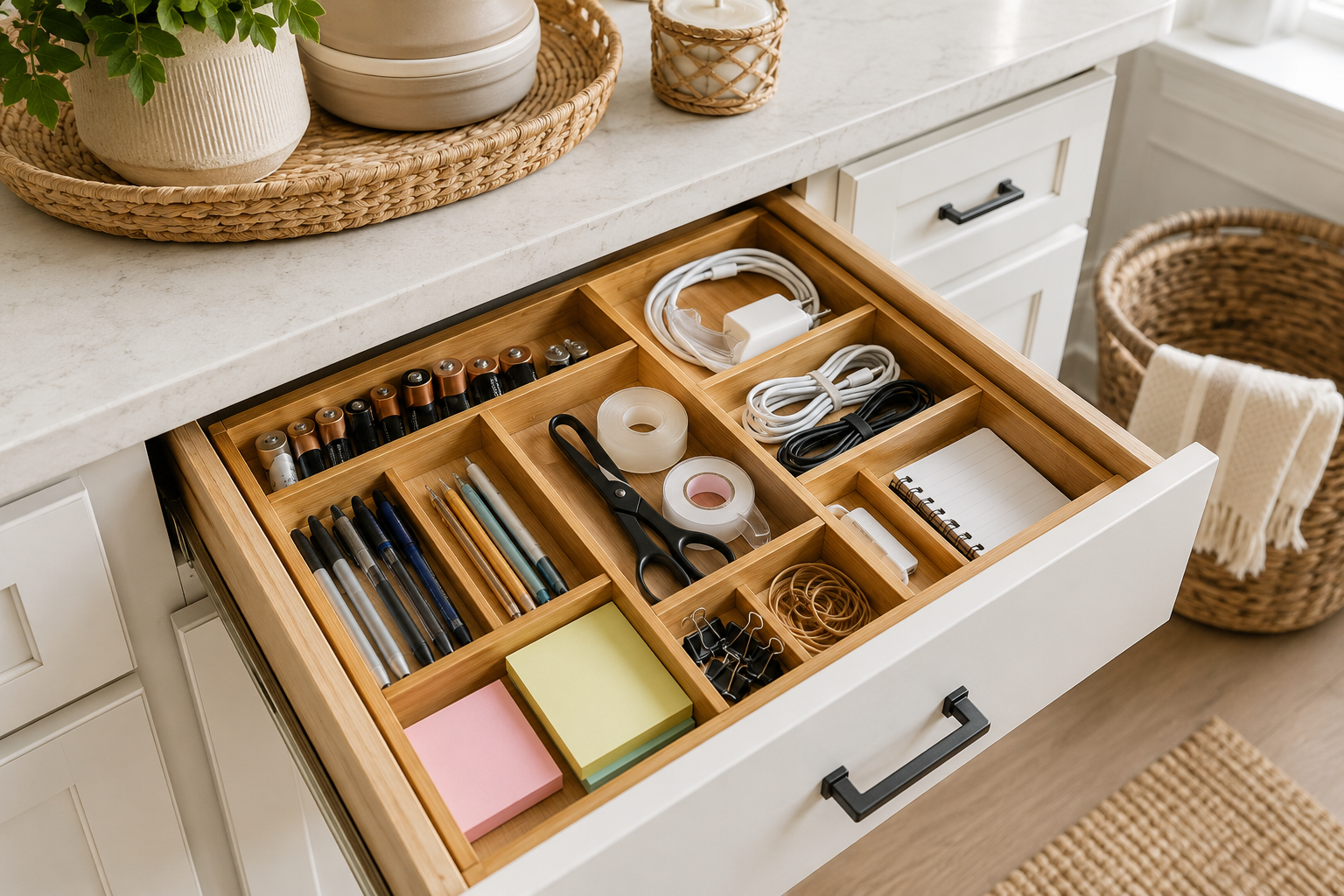
How to Finally Organize That Junk Drawer So Everyday Life Feels Easier
A cluttered junk drawer doesn't have to stay that way. Learn how to organize a junk drawer with simple systems that make everyday essentials easy to find, reduce clutter, and help your kitchen feel calmer and more functional.
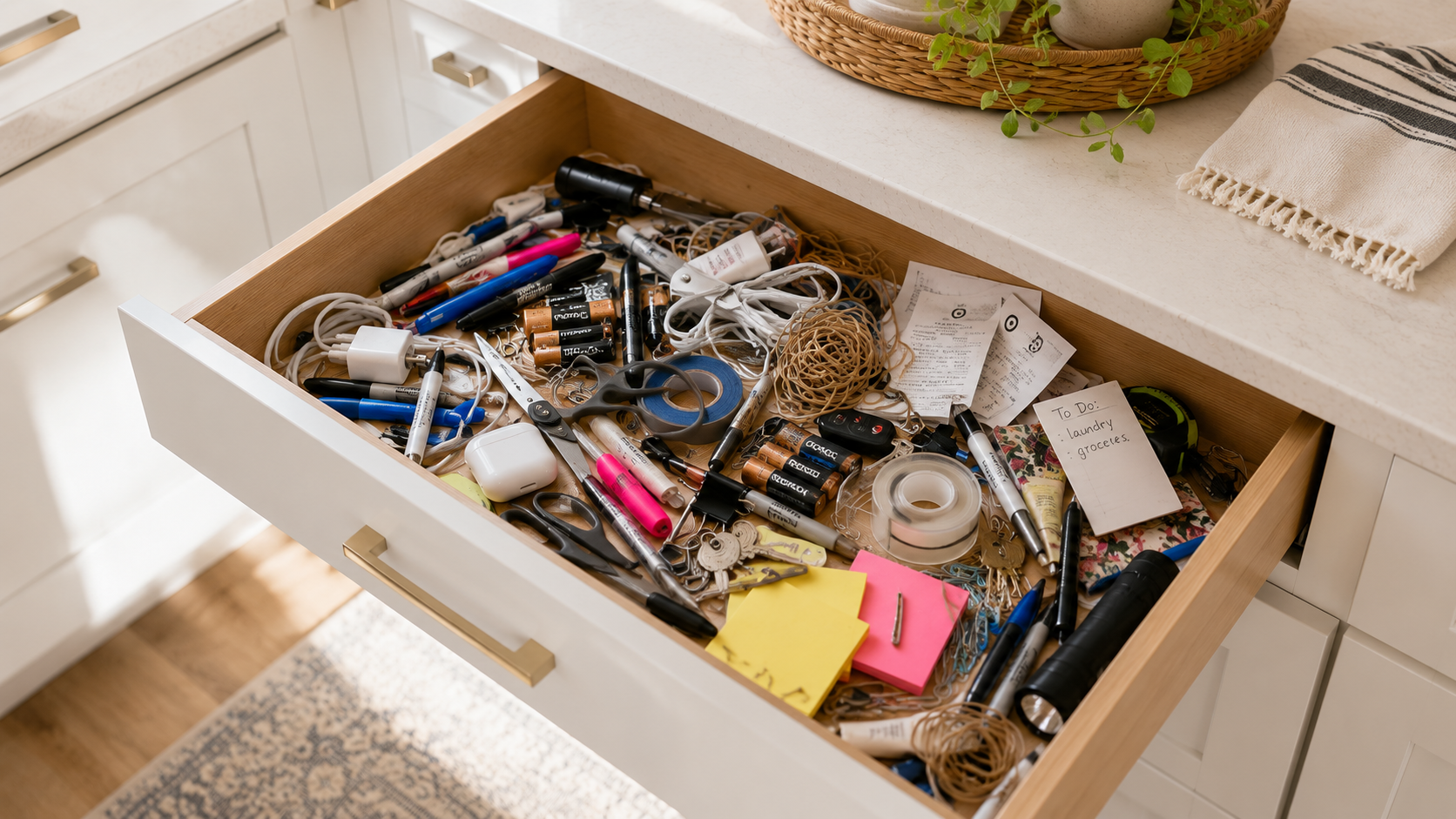
If opening your junk drawer feels like digging through a pile of random cords, batteries, pens, and takeout menus, you're not alone.
Almost every home has one.
The good news? A junk drawer doesn't have to disappear—it just needs a simple system.
When everything has a place, you can find what you need in seconds instead of wasting time searching. It's one small project that can make everyday routines feel noticeably easier.
Today we'll create a junk drawer that works with your life instead of against it.
Why Junk Drawers Become So Overwhelming
The problem usually isn't having a junk drawer.
It's that everything gets tossed into one space without any simple organization.
Over time, useful items become buried beneath things you no longer need.
Before long, finding one battery or a pair of scissors turns into a frustrating search.
A few thoughtful systems can completely change that.
Step 1: Empty Everything Out
Take everything out of the drawer.
Place it on the counter where you can see it all.
Don't organize as you remove items.
Simply create one pile.
This gives you a clear picture of what's actually living in your drawer.
Step 2: Throw Away the Obvious Trash
You'll probably find:
Old receipts
Dead batteries
Broken pens
Expired coupons
Random screws
Dried-out markers
Instruction manuals you no longer need
Removing these first makes the rest of the project much easier.
Remember:
Small changes create peaceful homes.
Step 3: Group Similar Items Together
Now begin making simple categories.
Examples include:
Pens & Pencils
Batteries
Tape & Glue
Chargers & Cords
Scissors
Flashlights
Sticky Notes
Rubber Bands
Small Tools
Gift Cards
You'll quickly notice which categories deserve their own space.
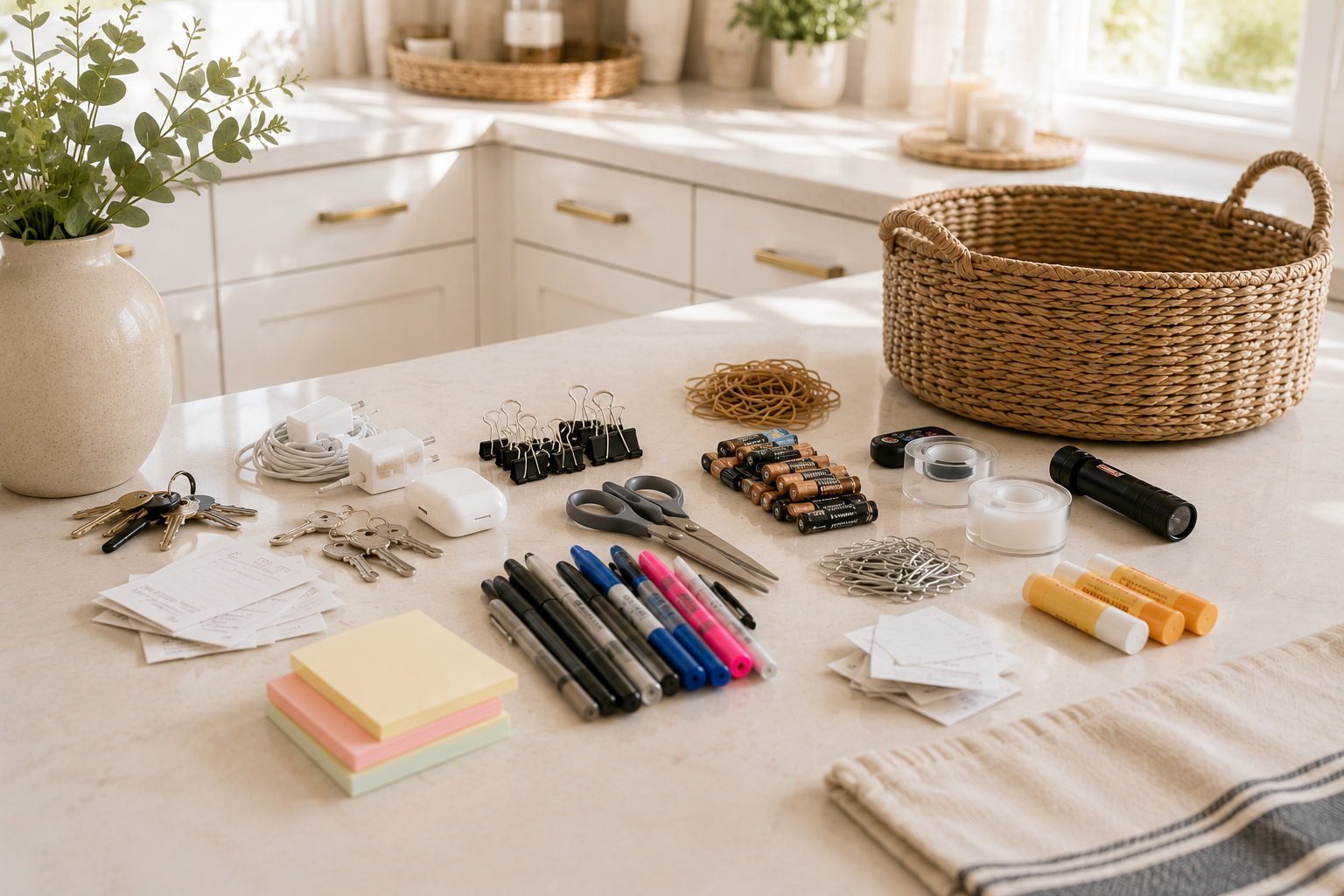
Step 4: Give Every Category a Home
This is where the transformation happens.
Instead of tossing everything back into the drawer, create small sections using drawer organizers.
The organizers aren't what solve the problem.
The system does.
When every category has a designated home, everyone in the family knows exactly where things belong.
Simple Organizers That Work Well
These are a few inexpensive products that help maintain your new system.
Affiliate Recommendations
Bamboo Drawer Organizer
Expandable Drawer Dividers
Small Acrylic Organizer Trays
Rechargeable Battery Organizer
Cable Cord Wraps
Label Maker (optional)
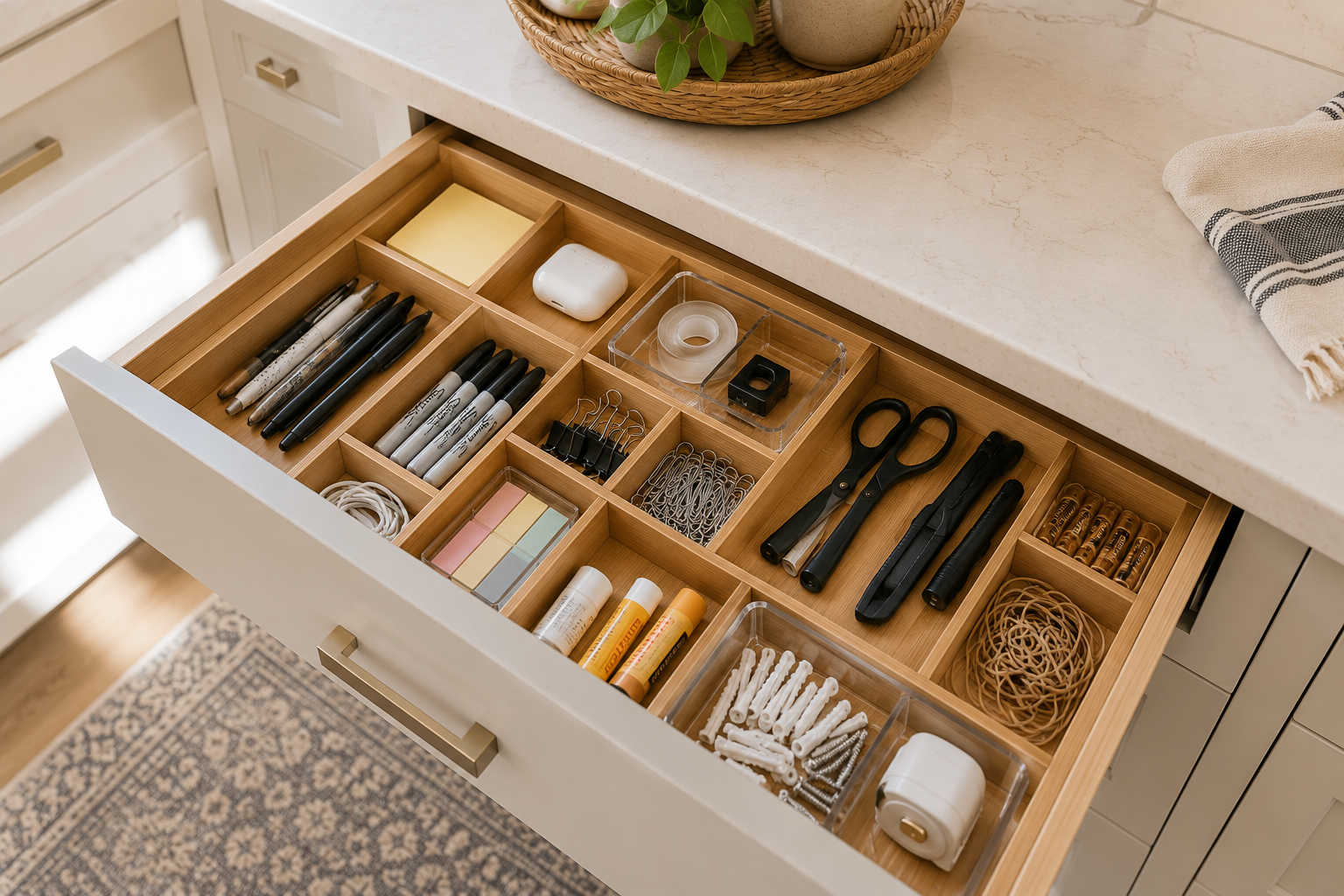
Step 5: Create Simple Rules
The easiest junk drawers stay organized because they have just a few simple habits.
Try these:
Don't let mail pile up.
Return items after using them.
Remove trash immediately.
Limit duplicates.
Do a five-minute reset once a month.
That's it.
No complicated maintenance.
What Doesn't Belong in a Junk Drawer?
Some items deserve another home.
Consider relocating:
Important documents
Prescription medication
Large tools
Valuable jewelry
Keys you never use
Large charging cables
Office supplies used daily
The junk drawer should only hold small everyday essentials.
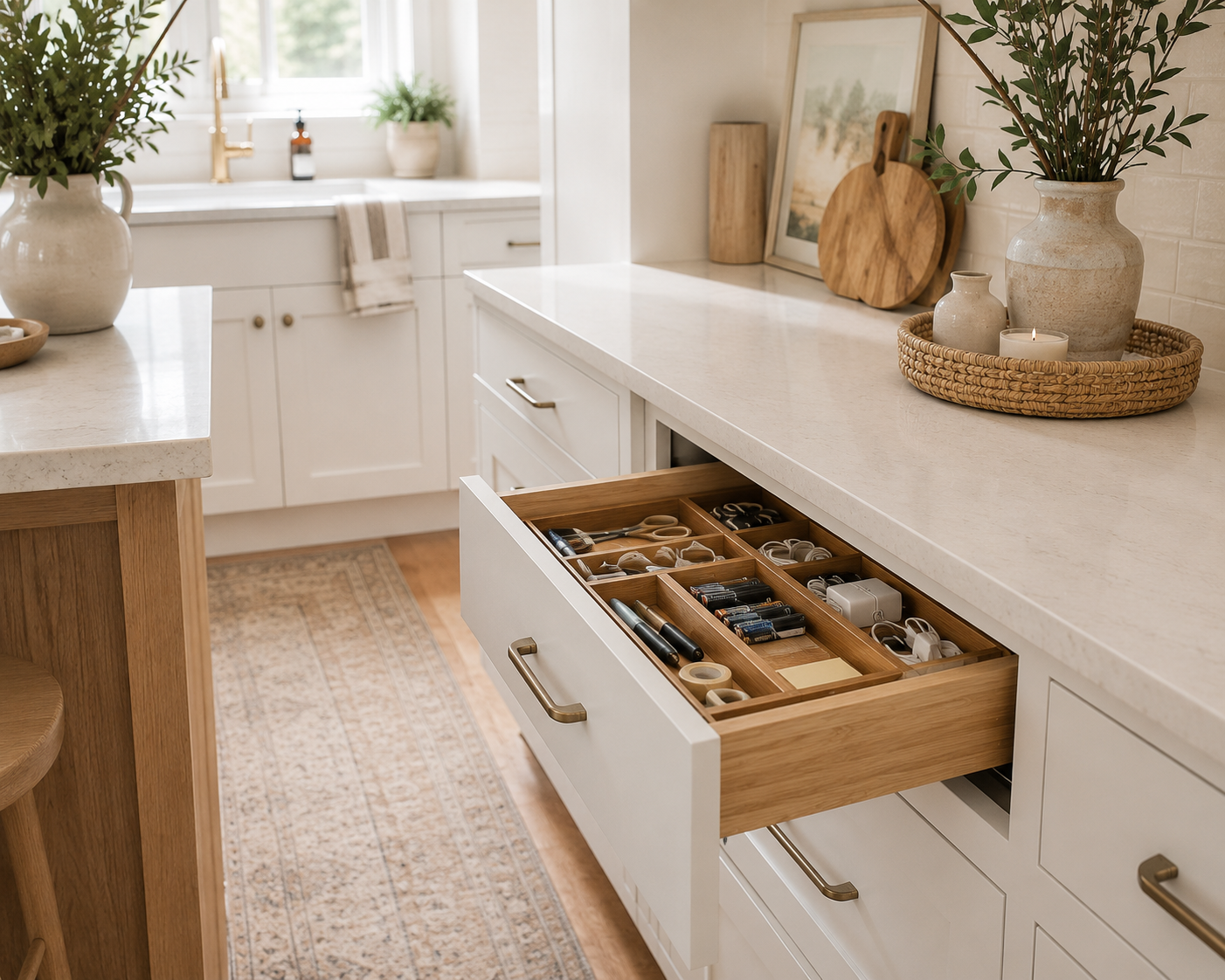
Quick Calm Tip
You don't need to organize your entire kitchen today.
One drawer is enough.
Every small project builds confidence—and every simple system makes your home feel a little calmer.
Frequently Asked Questions
How often should I organize my junk drawer?
A quick five-minute reset once a month is usually enough.
What's the best organizer for a junk drawer?
Expandable bamboo organizers work well because they fit many drawer sizes and create flexible sections.
Is it okay to have a junk drawer?
Absolutely. The goal isn't to eliminate it—it's to give it a simple system that supports your everyday routines.
Calm Home Organization Favorites
These are a few of my favorite products for creating a junk drawer that stays organized. Remember, the products aren't what create the system—they simply make it easier to maintain.
Bamboo Expandable Drawer Organizer
Adjustable compartments create dedicated spaces for everyday essentials like pens, scissors, tape, and sticky notes, making it easy to find what you need and return items to their proper place.
Acrylic Drawer Organizer Trays
Small clear trays are perfect for grouping loose items like paper clips, batteries, thumbtacks, and rubber bands so they don't end up scattered throughout the drawer.
Battery Storage Organizer
Keeping batteries together in one organized case makes them easy to find when you need them and helps prevent half-used batteries from getting mixed with new ones.
Reusable Cable Ties
A few simple cable ties keep charging cords neatly bundled so they don't become tangled with everything else in the drawer.
Compact Label Maker
If multiple family members use the drawer, simple labels can help everyone know where items belong, making it easier to maintain your new system over time.
Final Thoughts
A junk drawer isn't a sign that your home is disorganized.
It's simply a space that needs a little structure.
When every item has a home, everyday tasks become easier, frustrations disappear, and your kitchen feels calmer without requiring more work.
Remember, creating a peaceful home isn't about perfection.
It's about building simple systems that make everyday life easier.
You May Also Like
The 10-Minute Kitchen Reset That Makes Your Home Feel Cleaner Every Day
Your Home Isn’t Hard to Maintain—It’s Missing These 5 Simple Organization Setups
The Hidden Clutter That Makes Your Home Feel Messy (Even When It’s Clean)