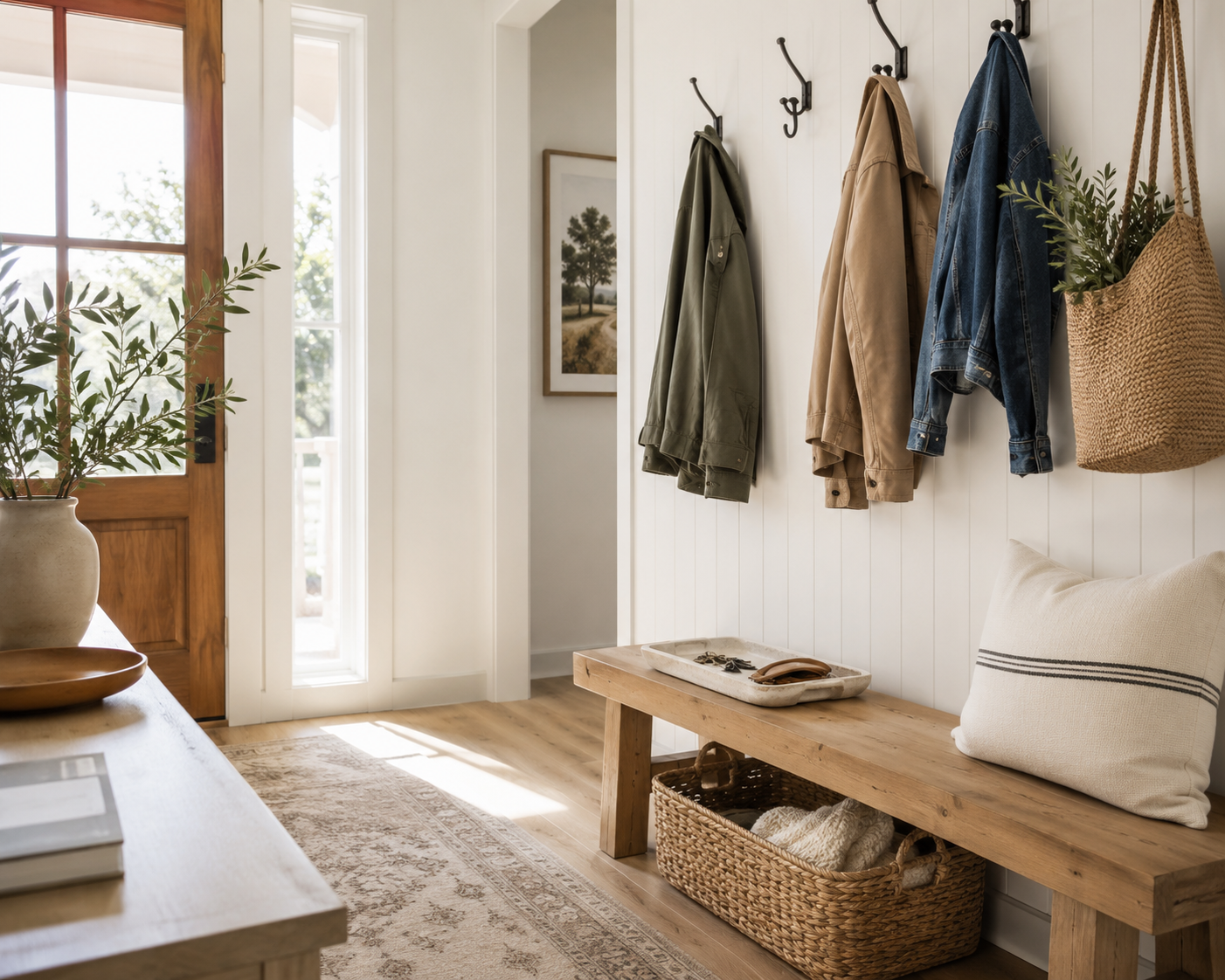
The Entryway Drop Zone That Makes Coming Home Feel Instantly Calmer
Create a welcoming entryway that stays organized with simple drop zone systems for shoes, coats, keys, bags, and everyday essentials. Learn practical ideas that make coming home feel calmer and your daily routine easier.
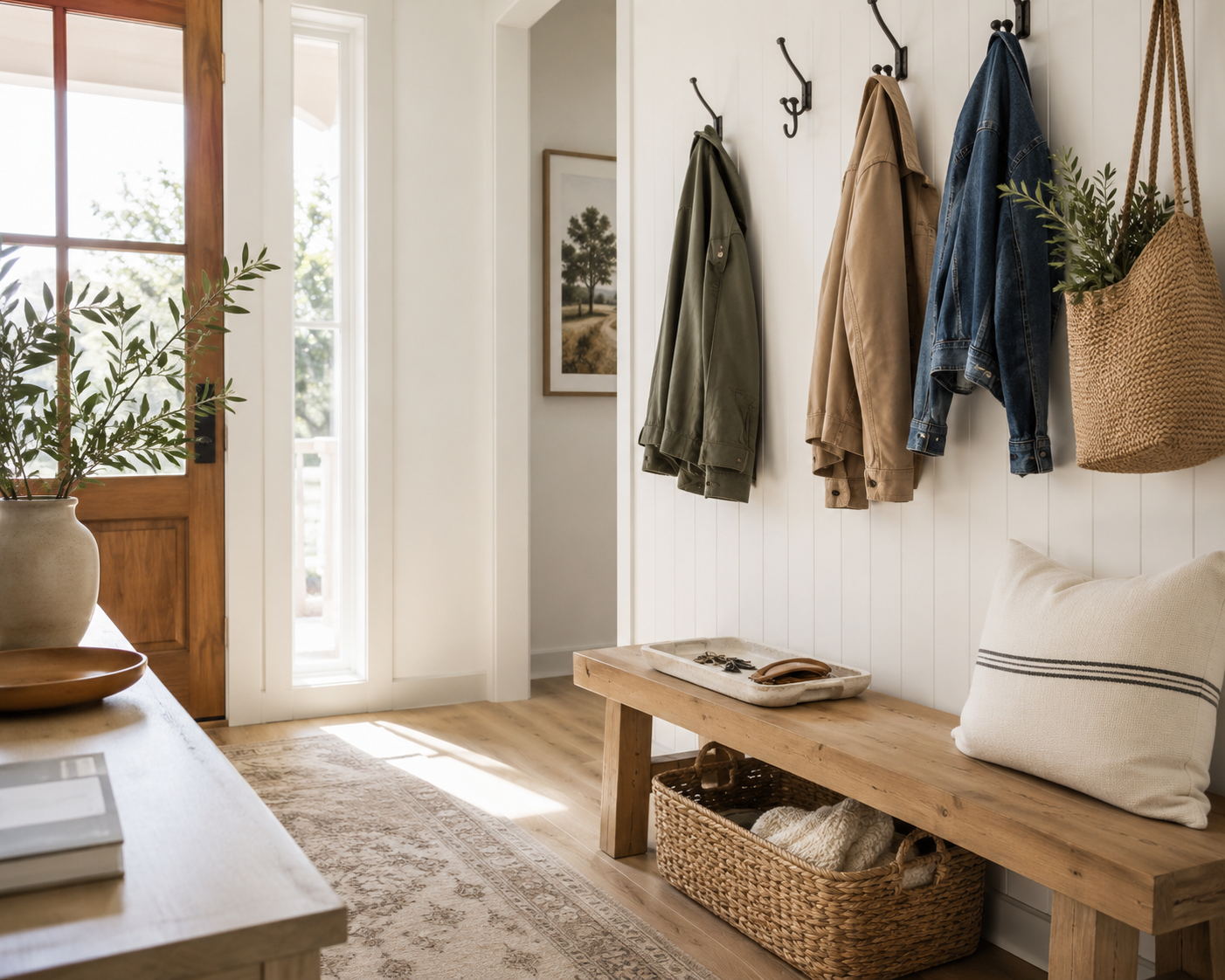
Have you ever walked through the front door only to feel like your home is already asking something from you?
Shoes are scattered across the floor. Keys disappear into random piles. Mail lands on the kitchen counter. Jackets end up draped over dining chairs. Before you've even had a chance to relax, clutter has already started following you from room to room.
It isn't because you're disorganized.
It's because your home may be missing one simple system.
An entryway drop zone creates a designated place for the things that enter and leave your home every day. Instead of making dozens of small decisions every time you walk through the door, your routine becomes automatic. Everyone knows where shoes belong. Keys always have a home. Bags aren't left in random rooms.
Small systems like this don't just reduce clutter—they make coming home feel calmer.
The best part is that you don't need a large mudroom or a professionally designed entryway to make it work. Whether your front door opens into a spacious foyer, a hallway, or directly into your living room, you can create a drop zone that fits your space and your everyday routine.
Why Entryways Become Clutter Magnets
The front door is one of the busiest places in your home.
Every day, items move in and out constantly:
Shoes
Keys
Wallets
Purses
Backpacks
Jackets
Sunglasses
Mail
Water bottles
Dog leashes
Without designated homes, these everyday essentials naturally end up wherever they're dropped.
Over time, that small pile by the front door spreads to nearby counters, dining tables, and kitchen islands. The clutter doesn't stay in one place—it slowly travels through your home.
Creating a drop zone isn't about adding more storage.
It's about creating one simple routine that makes every arrival and departure easier.
Start With What Your Family Uses Every Day
Before buying baskets or hooks, spend a few days paying attention to what actually lands near your front door.
Ask yourself:
What do we carry in every day?
What do we grab before leaving?
What constantly ends up on the floor?
What do we waste time searching for?
Your answers become the foundation of your drop zone.
A household with young children may need backpack storage and shoe baskets.
A dog owner might need a dedicated place for leashes and waste bags.
Someone who works from home may only need a tray for keys, sunglasses, and outgoing mail.
The goal isn't to copy someone else's entryway.
It's to build one that supports the way your family already lives.
Create Simple Zones
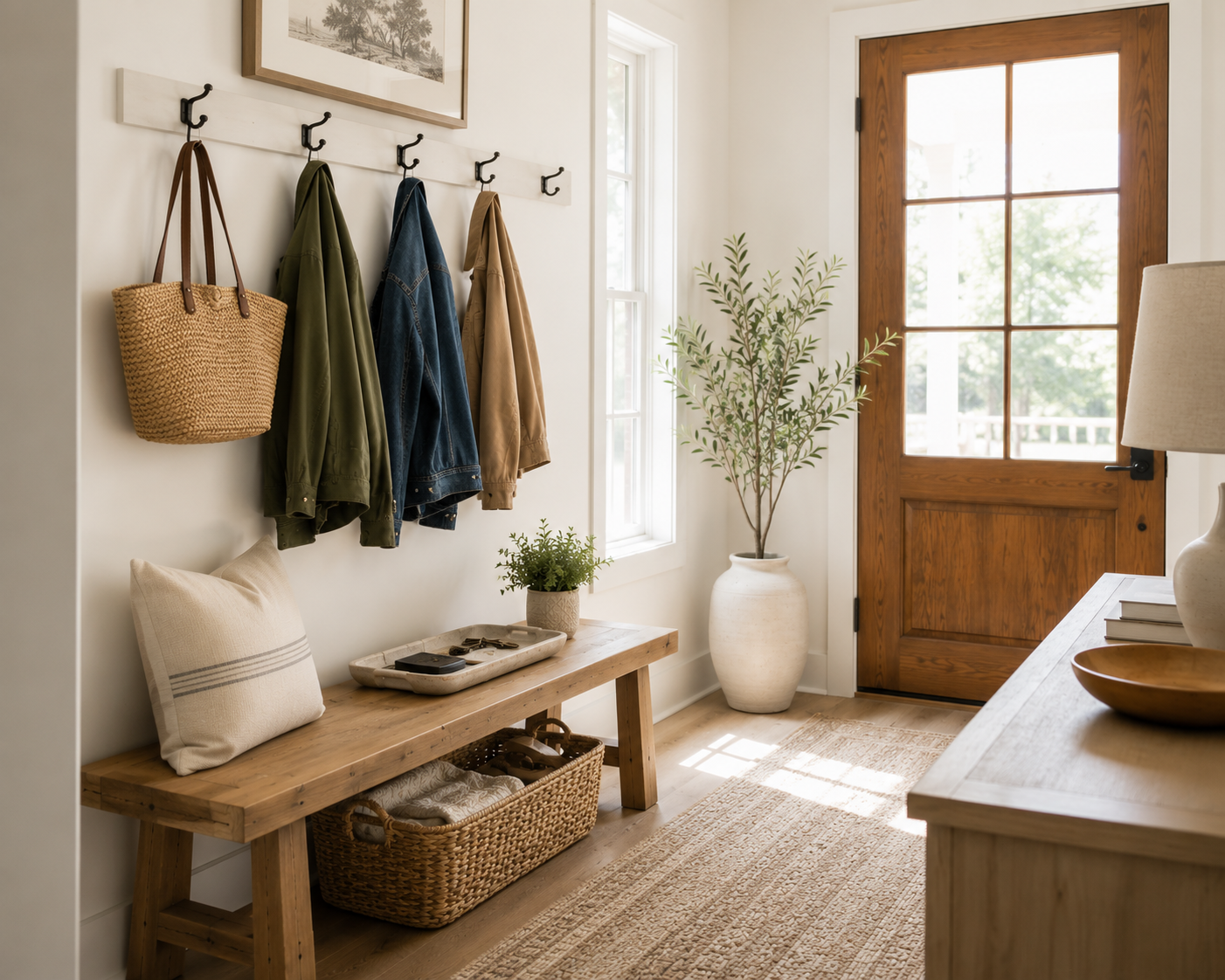
One of the easiest ways to keep an entryway organized is by giving every category its own home.
Instead of thinking about organizing individual items, organize by purpose.
For example:
Shoes
Place a basket, tray, or low shoe rack near the door so shoes naturally come off in one location.
Jackets
Install sturdy wall hooks that everyone can reach. Hooks are often easier to use than closets for everyday coats.
Keys and Wallets
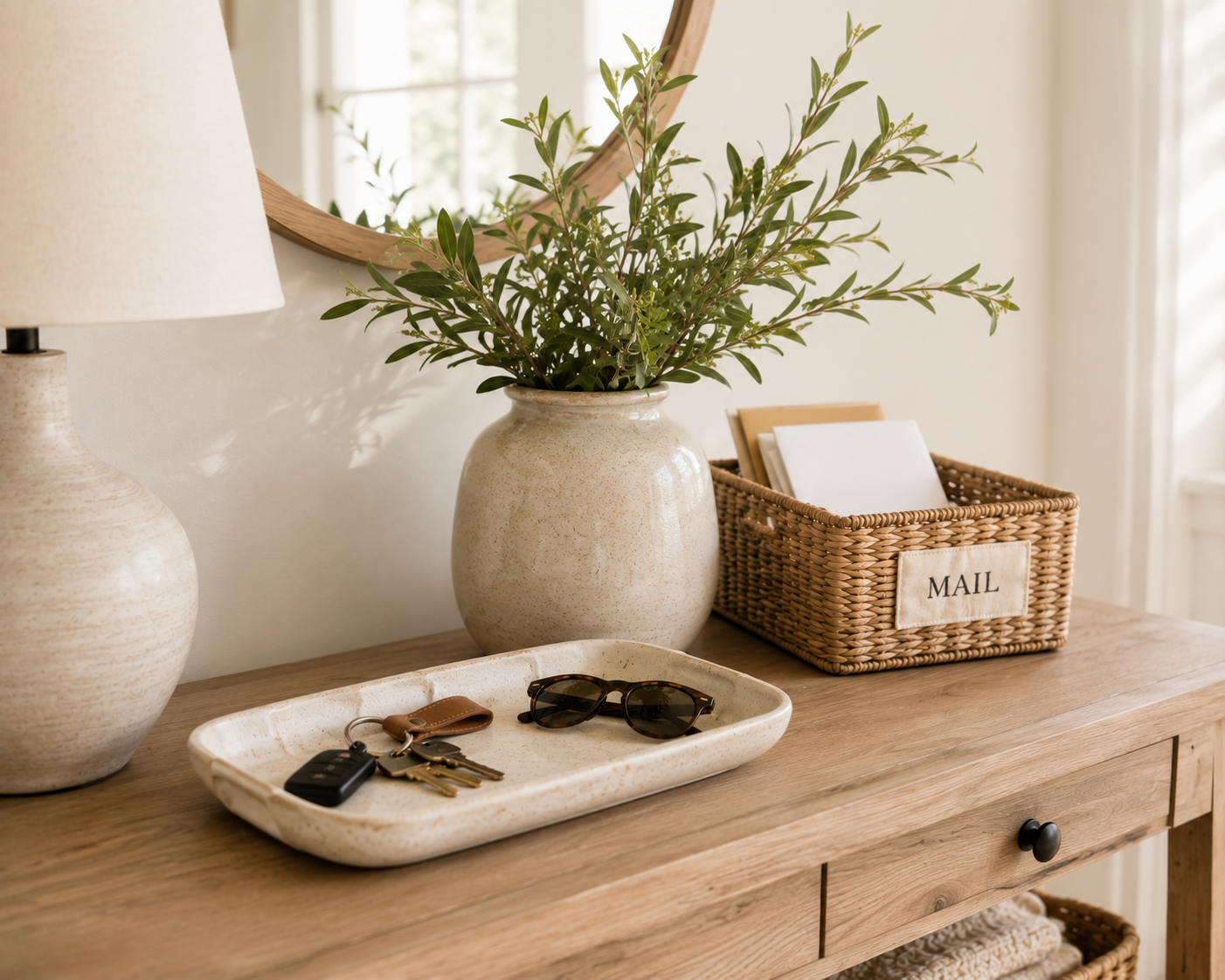
Use a decorative catchall tray on a console table or floating shelf so these essentials never disappear into random piles.
Instead of carrying mail into the kitchen, create a small basket labeled "To Sort." This keeps paper contained until you're ready to go through it.
Bags
Assign each family member a hook or basket for backpacks, purses, reusable shopping bags, or work totes.
Simple zones reduce daily decision-making, making it easier for everyone to maintain the system.
Keep the System Simple
The most successful entryway drop zones aren't filled with dozens of organizers. They're built around a few thoughtful systems that are easy to maintain every day.
Instead of creating storage for every possible item, focus on the things your family actually uses.
If something doesn't belong in the entryway, don't create permanent storage for it.
Keeping the space simple makes it easier to keep tidy.
Here are a few habits that help the system last:
Return keys to the tray every time you come home.
Hang coats before walking into the rest of the house.
Place shoes on the rack or in the basket instead of the floor.
Empty the mail basket once or twice each week.
Return reusable shopping bags to their hook after unloading groceries.
These tiny habits take only seconds, but together they prevent clutter from building up over time.
Make It Easy for Everyone to Use
The best organizing systems don't rely on perfect habits—they make the right choice the easiest choice.
Think about every member of your household.
Can children reach the hooks?
Is there a place for backpacks?
Can guests easily see where to leave their shoes or coats?
Does everyone know where to return keys?
When your system is easy to use, it naturally becomes part of your routine.
If someone has to open several doors, move other items, or search for storage, they're much less likely to put things away.
Organization should remove friction—not create it.
Don't Forget Seasonal Changes
Your entryway needs change throughout the year.
In winter, you may need room for boots, heavy coats, hats, and gloves.
During summer, sandals, baseball caps, sunglasses, and beach bags may become everyday essentials.
Rather than trying to store everything year-round, rotate seasonal items every few months.
This simple habit keeps your entryway feeling open instead of overcrowded.
When the seasons change, take five minutes to remove anything you no longer use every day.
A little maintenance keeps the system working without requiring a major reorganization.
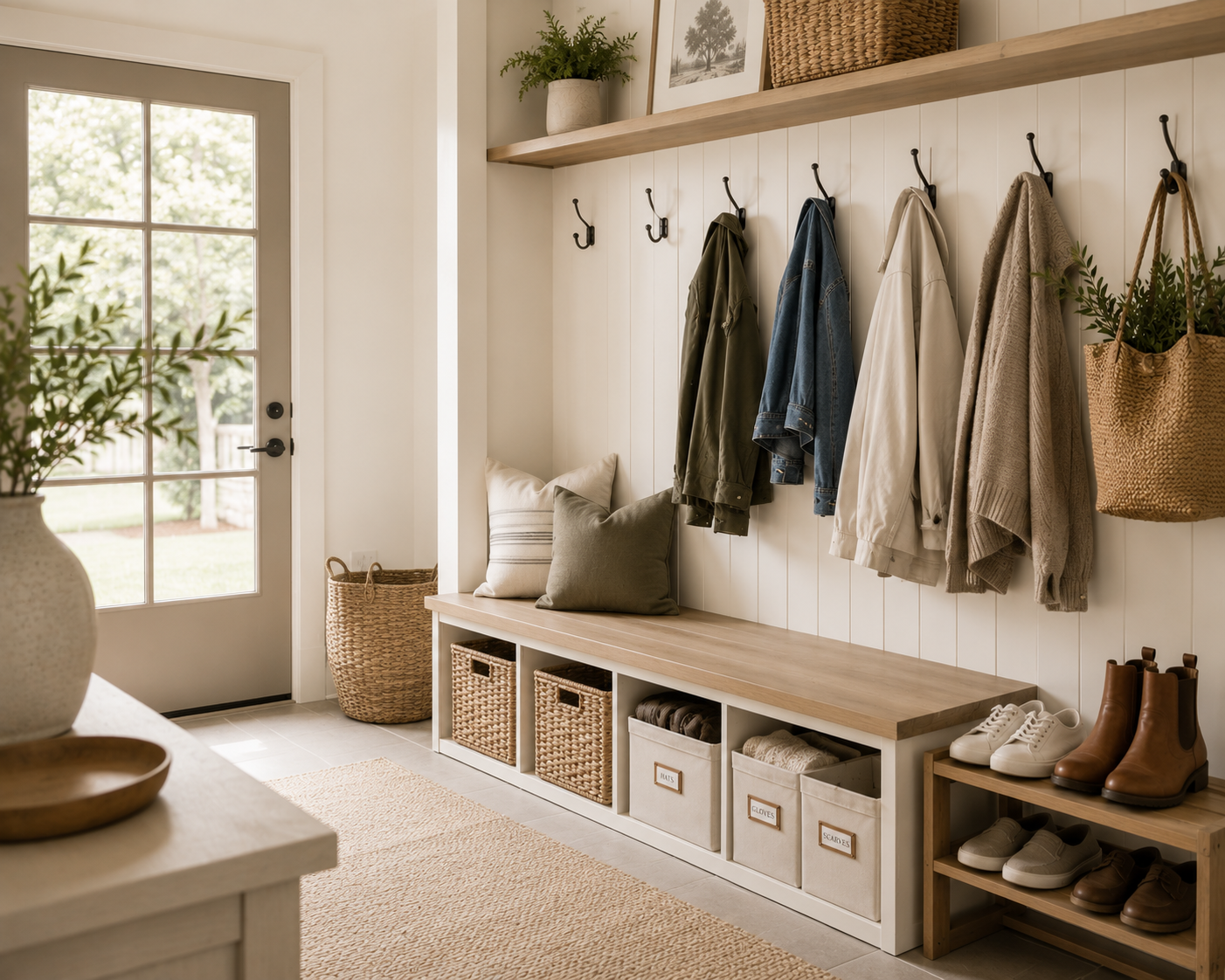
Small Spaces Can Still Have Great Systems
You don't need a large foyer to create an organized entryway.
Even a narrow hallway can become an effective drop zone with a few simple additions.
Consider using:
A slim floating shelf for keys and mail
Wall-mounted hooks instead of bulky furniture
A narrow shoe rack
One woven basket for everyday accessories
A small bench with hidden storage underneath
When floor space is limited, think vertically.
Using wall space allows you to keep everyday essentials organized without making your entryway feel crowded.
Remember, it's not about the size of the space.
It's about giving everyday items a consistent home.
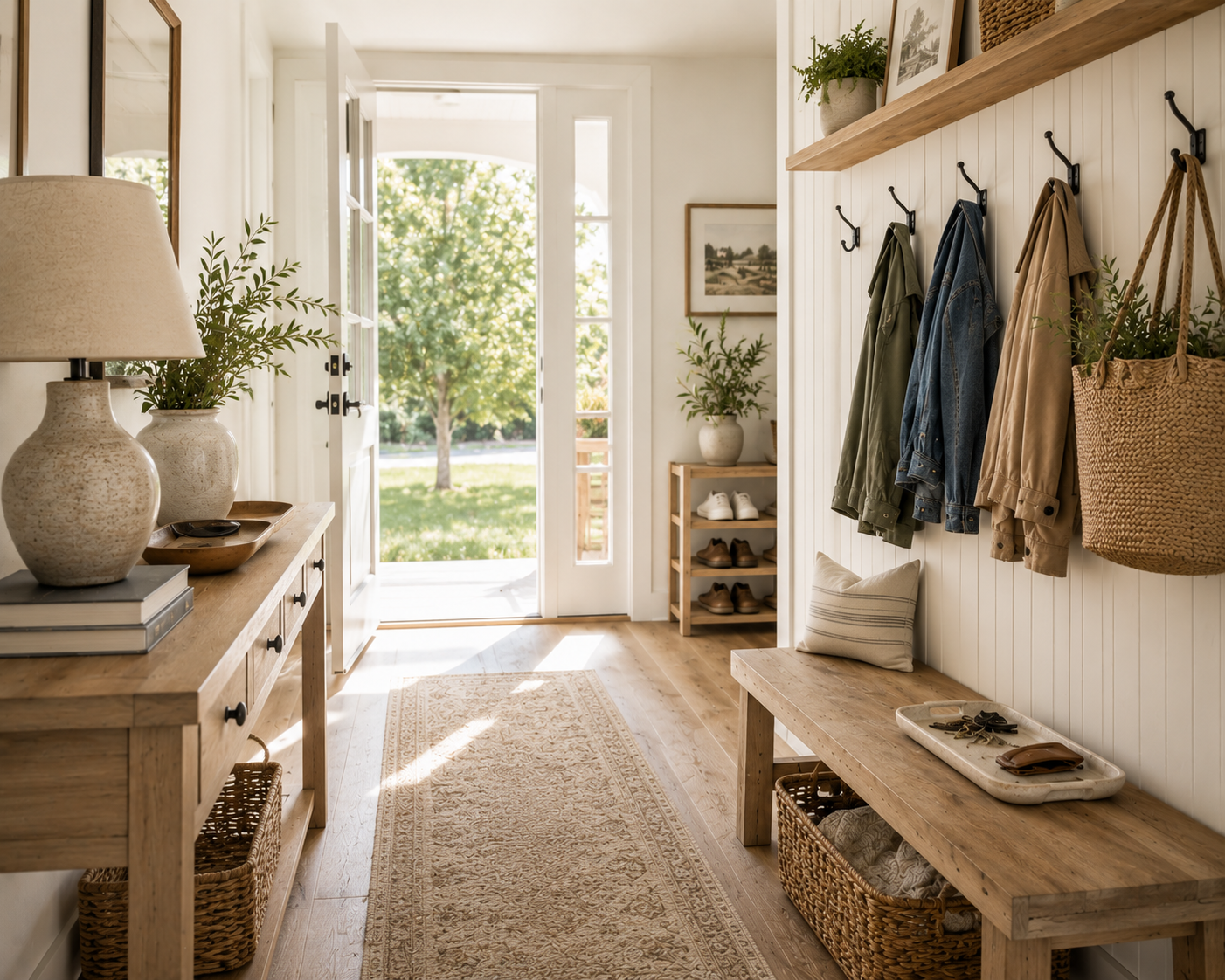
Our Calm Favorites
These are a few of our favorite products for creating a simple, functional entryway that supports everyday routines. Each one helps reinforce the system without adding unnecessary clutter.
A simple tray gives keys, wallets, sunglasses, and loose change a permanent home so they're easy to grab on your way out the door.
Wall hooks make it easy for everyone to hang jackets, backpacks, purses, and reusable shopping bags instead of leaving them on chairs or the floor.
Perfect for shoes, dog supplies, scarves, hats, or seasonal accessories while adding warmth and texture to your entryway.
Keeps everyday footwear contained near the door without taking up unnecessary space, helping floors stay clear and easy to clean.
Final Thoughts
Your entryway is more than just the place where you come and go—it's the first space that welcomes you home each day.
When it has a simple system, your entire home feels calmer from the moment you walk through the door.
Remember, you don't need a large mudroom or custom built-ins to create an organized entryway. A few intentional zones, a handful of practical storage solutions, and consistent daily habits are often all it takes.
Start with one small change. Add a tray for your keys. Install a few hooks. Place a basket by the door for shoes.
Those simple systems quickly become everyday routines, and those routines help create a home that feels lighter, more welcoming, and easier to live in.
A calm home begins at the front door. And sometimes, the smallest changes make the biggest difference.
You May Also Like
Continue creating a calmer home with these helpful organization guides: